
Industry News
Curation by industry experts
Hot Articles
Popular Tags
Choosing a Radioisotope Management System for Multi-Site Research Facilities
A multi-site research network can appear well controlled until a transfer exposes the gaps: one laboratory records a vial under a local identifier, another receives it under a different naming convention, and the central radiation safety team cannot immediately reconcile the movement. The issue is not merely inventory accuracy. It affects authorization checks, contamination response, waste characterization, shipment records, and the ability to demonstrate that radioactive material remained under accountable control throughout its lifecycle.
The strongest choice is usually not the system with the longest feature list. A suitable radioisotope management system must create one governed record for each material item while allowing laboratories to work within their own approved workflows. For multi-site facilities, the decision should begin with material traceability, role-based controls, regulatory record retention, and integration feasibility. A system that tracks stock well but cannot preserve chain-of-custody events, segregate site permissions, or manage waste endpoints will create manual workarounds exactly where accountability matters most.
Start with the movement of material, not the software demonstration
Before comparing vendors or internal platforms, map how isotopes actually enter, move through, and leave the organization. This exercise often reveals why a single-site inventory tool becomes difficult to govern across several research locations.
Trace a representative item from purchasing request to final disposal. Include receipt at the loading point, package survey, container identification, storage assignment, aliquoting, transfer to another room or site, experimental use, decay-in-storage, waste accumulation, shipment, and closure of the final record. The map should distinguish between physical events and administrative events. A transfer may be physically completed in minutes, yet approval, acknowledgment, or receipt verification may occur later. The system should preserve both facts rather than overwrite one with the other.
For example, an isotope received at a central site may be split into multiple working containers before distribution. The parent container, child aliquots, original activity, calculated remaining activity, responsible person, and physical location should remain connected. If the receiving site records only a new local stock item, the organization loses a reliable material genealogy. That creates problems when investigating discrepancies, validating waste activity, or checking whether a planned transfer exceeds an approved authorization.
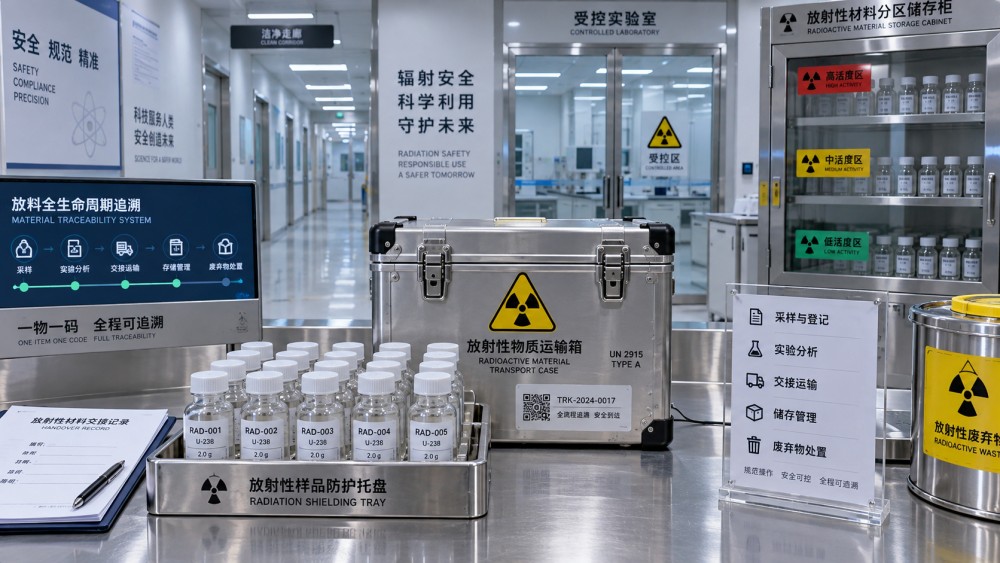
The non-negotiable requirement: traceability at item level
“Inventory tracking” can mean very different things. Some systems record isotope type and total stock by laboratory. Others maintain a unique record for each sealed source, vial, stock solution, aliquot, waste container, or shipment package. Multi-site facilities generally need the second approach, with the ability to aggregate information for management reporting without losing the underlying item history.
During evaluation, ask whether the system can record and retain the following without relying on free-text notes:
- Radionuclide, activity value, reference date, physical form, and unit of measure.
- Supplier or origin, purchase order or receiving reference, package identifier, and receipt condition.
- Container lineage when stock is divided, combined, repackaged, or converted into waste.
- Exact location hierarchy, such as organization, site, building, room, storage unit, and controlled work area.
- Custodian, responsible investigator or laboratory, approved user status, and transfer recipient.
- Time-stamped transactions, including who initiated, approved, verified, corrected, or closed each event.
- Activity decay calculations that preserve the original entered value and the calculation basis.
A useful test is to present an evaluator with a realistic question: “Where did this container originate, who handled it after receipt, what quantity remains, and what waste record resulted from its use?” The answer should be available through linked records and an audit trail. It should not depend on a staff member reconstructing events from spreadsheets, email approvals, or paper logbooks.
Multi-site control needs a shared data model with local boundaries
Centralization does not mean every site should see or edit every record. Research facilities may operate under different licenses, local procedures, access restrictions, or institutional arrangements. A system must therefore support a common data model while enforcing site-level boundaries.
Review the location and organization structure carefully. It should be possible to assign an item to one legal entity, campus, or site while retaining corporate-level reporting where governance permits it. Site administrators may need to manage local rooms, users, and routine transactions, whereas a central radiation safety group needs visibility across the network and authority over controlled configuration changes.
Permissions should be more granular than “administrator” and “user.” Useful role controls may separate receiving staff, authorized users, laboratory supervisors, waste coordinators, radiation safety reviewers, transport approvers, and read-only auditors. A user authorized to consume a small quantity in an assigned laboratory should not necessarily be able to alter activity history, approve an inter-site movement, or reopen a completed disposal record.
Ask how the system handles temporary access. Visiting researchers, contract maintenance personnel, and project staff may need limited visibility for a defined period. The platform should support controlled onboarding, expiration, and removal of access without requiring broad shared credentials. Shared accounts make audit records unreliable because the system cannot identify the actual person who performed a transaction.
Assess chain of custody as an operational workflow
Inter-site movement is where otherwise competent inventory applications often fail. A status field labeled “transferred” is not enough. The workflow should reflect the handoff points that matter: request, authorization review, release by the sending location, dispatch details, receipt by the destination, discrepancy handling, and final acceptance into local inventory.
The appropriate level of control depends on material type, activity, transport method, and internal rules, but the platform should be configurable enough to match those distinctions. Routine movement of low-activity research materials may need a streamlined path. Higher-risk materials, sealed sources, or transfers requiring specialized packaging may require additional approvals, shipment documentation, and independent confirmation of receipt.
Do not assume that barcode scanning alone solves custody control. Barcode or QR identification can reduce transcription errors and speed routine transactions, but scanning is valuable only when the underlying record structure is sound. Confirm whether labels can identify both a unique container and its current status, whether relabeling is controlled, and how the system handles damaged, unreadable, or duplicate labels.
Waste management must connect to the original material record
Waste handling is frequently evaluated as a separate module, then disconnected from inventory decisions. That separation can produce inconsistent activity estimates and unclear provenance. The better approach is to determine whether consumed material can be assigned to a waste stream, waste container, or decay-storage record while retaining the calculation method and source relationship.
Facilities may need to track solid waste, liquid waste, sharps, animal bedding, contaminated equipment, sealed-source return, and mixed or special waste categories. The software does not need to prescribe every local procedure, but it should let authorized administrators configure categories, container limits, storage areas, hold periods, labels, and required review steps. A system that forces every waste item into a generic “disposed” status may be too limited for environments where waste remains under control for extended periods.
Evaluate whether the system can distinguish between activity at the time of waste generation and activity at the time of survey, release, shipment, or disposal. Decay calculations should be visible and reproducible. Users should be able to understand which reference date was used rather than receiving an unexplained current value.
Integration decisions should be made early
A multi-site deployment rarely operates in isolation. Receiving information may originate in procurement systems; personnel eligibility may come from identity management tools; room lists may be maintained in facility databases; and safety teams may need exportable records for internal reviews. Integration does not always require complex automation, but it should be addressed before selection rather than added as an afterthought.
Clarify which information must be synchronized, which can be imported periodically, and which should remain manually validated. Identity integration may reduce inactive accounts and duplicate users. Procurement integration can reduce duplicate entry at receipt, yet receiving staff must still be able to record package surveys and the actual material received. Automated data should not bypass safety checks simply because a purchase order exists.
Technical reviewers should request clear information on supported interfaces, import/export formats, data ownership, retention options, error handling, and auditability of external updates. A polished application interface is less useful if the organization cannot retrieve its own complete inventory and transaction history in a usable format during migration, audit preparation, or system recovery.
Use demonstrations to test exceptions, not just normal transactions
Most systems can demonstrate a clean receipt, a simple use record, and a standard disposal entry. The decision becomes clearer when the supplier or implementation team is asked to work through exceptions that occur in real research operations.
- A delivery arrives with a damaged label, and the package contents must be verified before release.
- A vial is aliquoted into several containers, but one child container is later found in the wrong storage location.
- A user’s authorization expires while an assigned item remains in that person’s work area.
- A transfer is dispatched to another site, but receipt confirmation is delayed or the quantity does not match the sending record.
- A waste container reaches a configured limit and must be closed, surveyed, and moved to a controlled decay-storage area.
- An auditor asks for all changes made to a record after its original receipt date.
Observe whether the system guides the user through controlled correction or simply permits editing. In radioactive material management, an incorrect entry will occasionally occur. The important distinction is whether corrections preserve the original value, reason, user identity, and timestamp. Deleting history may make the record look clean while weakening accountability.
Security and resilience are part of safety performance
Because the system may contain material locations, access roles, shipment information, and operational records, security design deserves more than a generic vendor statement. Confirm how authentication is managed, whether multi-factor authentication can be supported where required, how permissions are reviewed, and whether privileged actions are separately logged. Security controls should fit site operations; an overly burdensome login process can drive staff back to paper notes and delayed data entry.
Availability also matters. A temporary outage should not force uncontrolled material movement. Establish the expected procedure for receiving, transfers, emergency access, and later reconciliation when the system is unavailable. The chosen platform should support reliable backup, recovery, and record retention practices appropriate to the facility’s governance requirements. For hosted services, clarify responsibility boundaries for backups, incident notification, data export, and account administration.
A practical selection path
Shortlist systems only after defining the material classes, sites, transaction volumes, user roles, and reporting obligations that the platform must support. Then score each candidate against scenario-based requirements rather than vague categories such as “ease of use” or “compliance.” Ease of use should be tested through common actions: receiving a package, locating an item, recording an aliquot, accepting a transfer, and closing a waste container without bypassing required controls.
Implementation planning should include data cleanup. Migrating inconsistent local spreadsheets into a central system can reproduce old problems at a larger scale. Decide which historical records must be imported, which should be archived, how duplicate containers will be resolved, and who has authority to validate initial locations and quantities. A controlled opening inventory, reviewed by responsible local personnel, is usually more defensible than an uncontrolled bulk upload.
The final decision should favor a system that can maintain item-level history, enforce appropriate site and role boundaries, and adapt to documented workflows without concealing exceptions. In a distributed research environment, that combination is more valuable than attractive dashboards or a large number of optional fields. The purpose is to make every material movement, custody change, and waste decision easier to verify when it matters.
Recommended News

When does high recovery ZLD equipment justify its higher capital cost?
High recovery ZLD equipment can justify higher capital cost when water scarcity, discharge risks, brine disposal, and downtime threaten operations. Explore the decision factors.

How high purity heavy metal recovery affects recovered metal value
High purity heavy metal recovery boosts recovered metal value by improving payability, reducing penalties, and unlocking stronger buyer opportunities. Explore smarter netback strategies.

When does environmental equipment intelligence reduce wastewater plant energy use?
Environmental equipment intelligence for wastewater plants cuts energy use through smarter aeration, pumping, and data-driven controls—without compromising compliance. Discover when it delivers measurable savings.
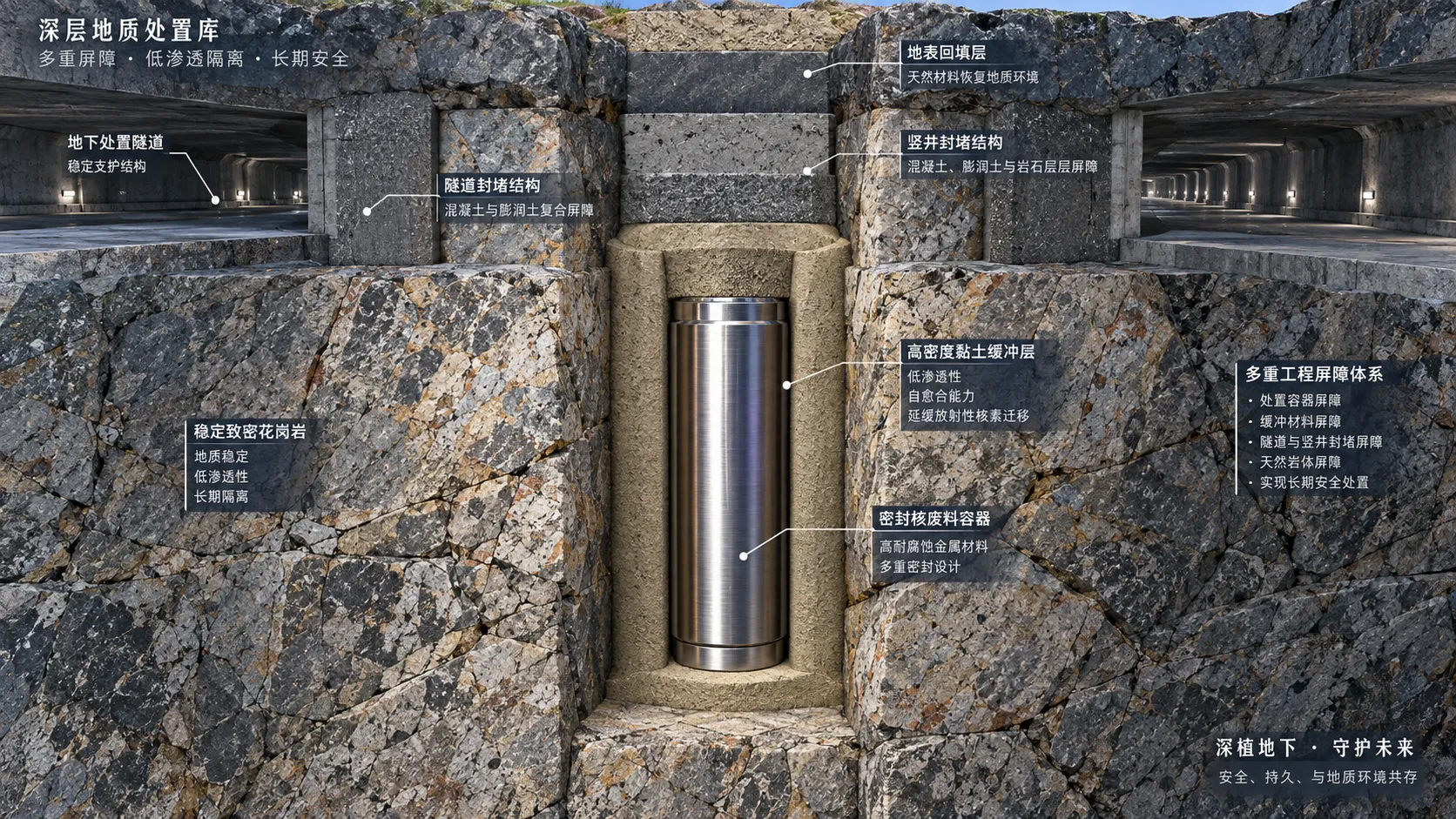
Applying C. McCombie’s Disposal Principles to Long-Lived Radioactive Waste
Explore principles and standards for the disposal of long-lived radioactive wastes C. McCombie, covering geological isolation, engineered barriers, safety cases, and intergenerational protection.
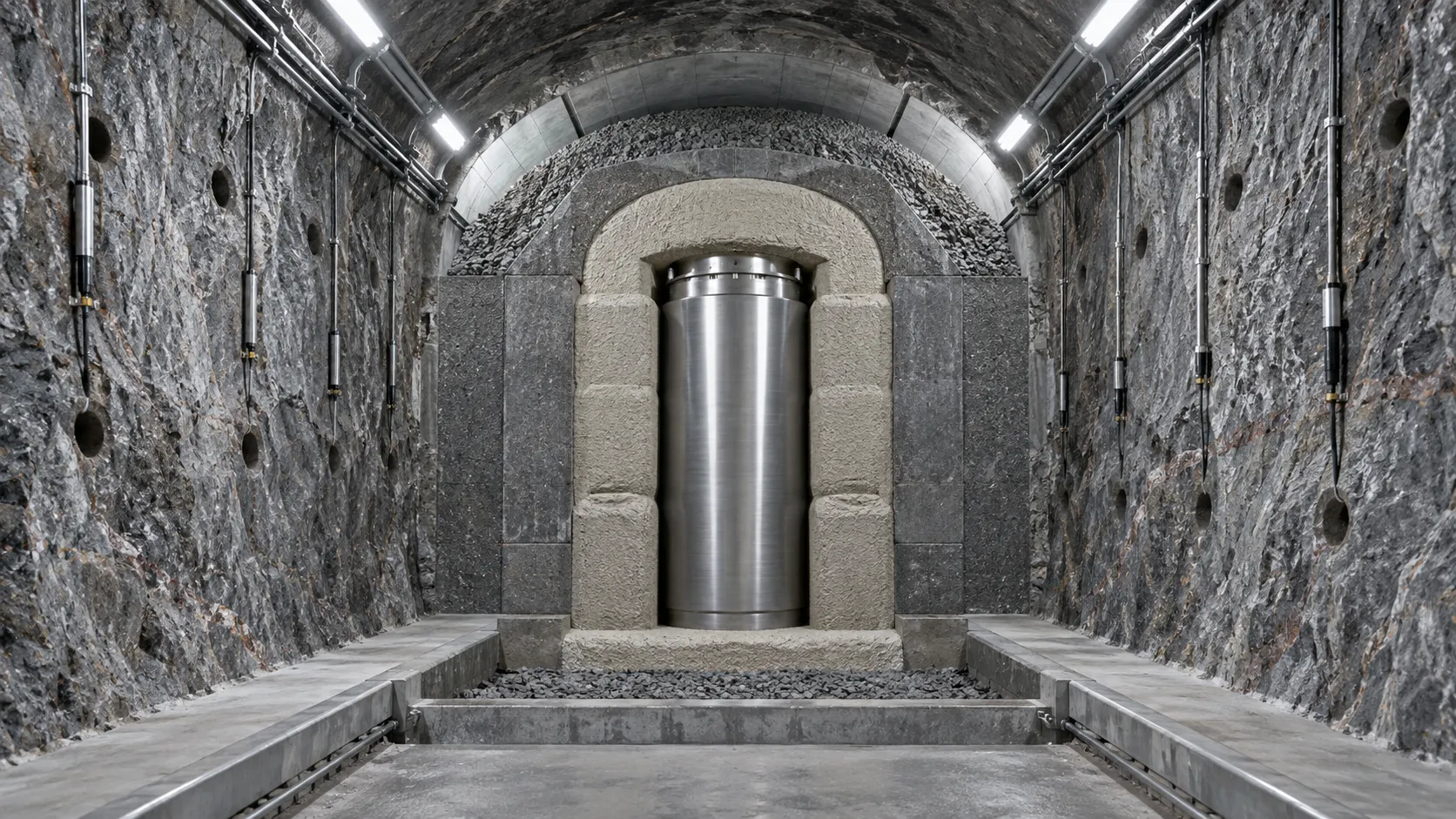
What Evidence Supports the Long-Term Safety Case for Geological Disposal?
Long-term safety of geological disposal: explore the evidence behind multi-barrier systems, site science, uncertainty testing, and auditable safety cases.

What Do Seawater Disinfection Systems Cost Over Their Full Operating Life?
What are the costs associated with seawater disinfection systems? Explore lifecycle expenses for equipment, energy, chemicals, maintenance, compliance, and risk.

How to Improve Industrial Seawater Quality Before Cooling or Membrane Treatment
How can I improve the quality of seawater used for industrial processes? Explore proven pretreatment strategies for cooling systems and RO membranes.

Desalination Plant Maintenance Priorities That Prevent Unplanned Downtime
Desalination plant maintenance priorities that reduce unplanned downtime: protect pretreatment, RO membranes, pumps, chemical dosing, and critical controls.

Which supplier evaluation support tools improve audit consistency?
Supplier evaluation support tools improve audit consistency with controlled checklists, evidence capture, risk scoring, CAPA workflows, and traceable approvals. Explore the essentials.