
Industry News
Curation by industry experts
Hot Articles
Popular Tags
When does high recovery ZLD equipment justify its higher capital cost?
When Does High Recovery ZLD Equipment Justify Its Higher Capital Cost?
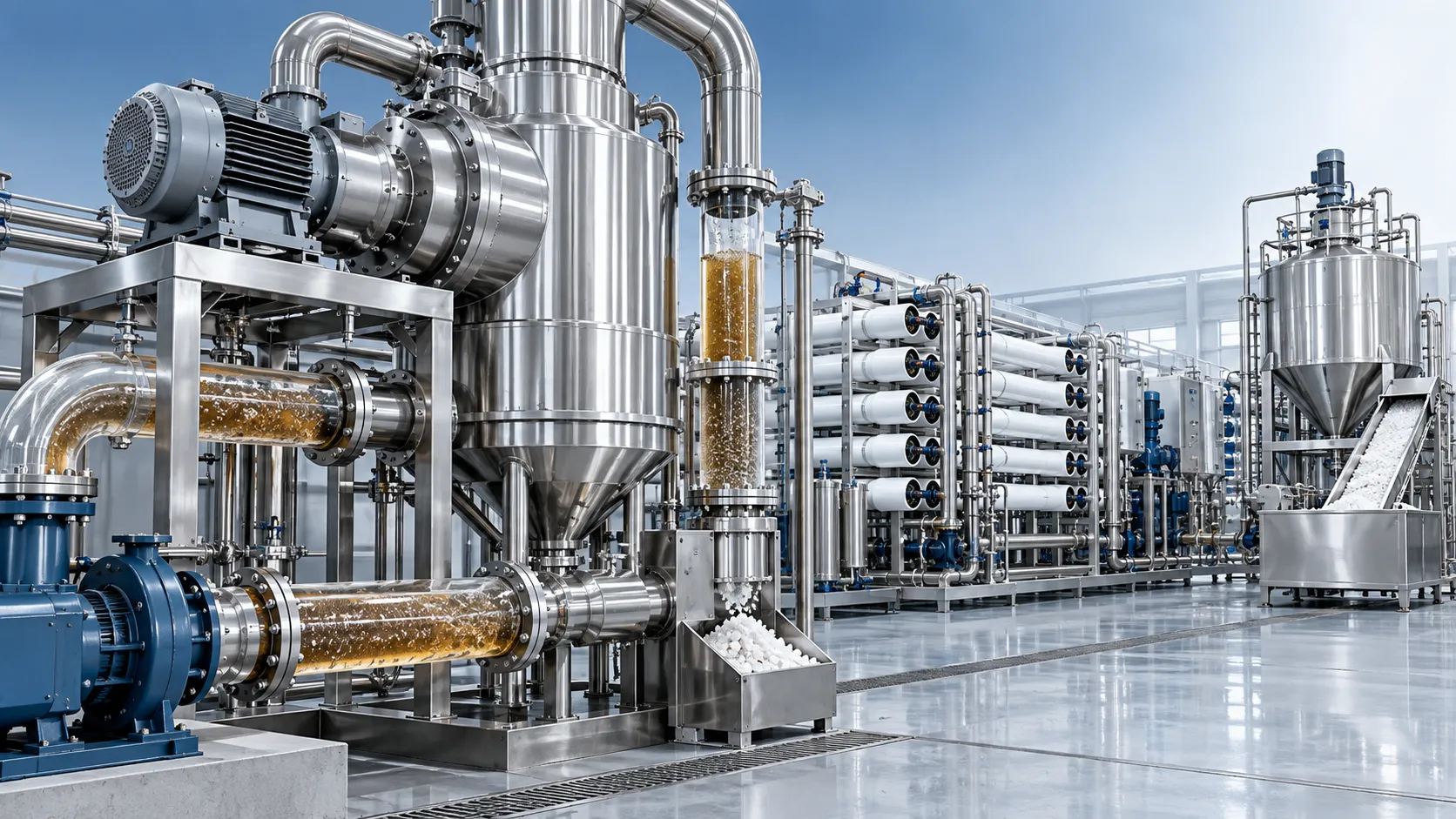
High recovery ZLD equipment can turn wastewater from a recurring compliance problem into a managed resource stream. It can also become one of the most capital-intensive items in an industrial water project. That tension explains why the right question is not whether zero liquid discharge is technically possible. In most serious engineering environments, it is. The real question is whether deeper recovery materially changes a site’s long-term exposure to water scarcity, discharge restrictions, brine disposal, production interruption, and regulatory uncertainty.
For a plant manager, the appeal is obvious: less wastewater leaves the boundary, more water is reused, and the final residue is easier to define and control. For a CFO or investment committee, however, the project must survive a less forgiving test. Higher recovery generally means more pretreatment, more membrane area or thermal concentration, more complex solids handling, greater power demand, and a narrower operating window. A system that looks compelling in a process diagram may not be the lowest-risk investment over its actual operating life.
The strongest business case for high recovery ZLD equipment appears when conventional discharge or off-site disposal is not merely expensive today, but structurally unreliable tomorrow.
Start with the cost of the alternative, not the price of the ZLD package
A common procurement mistake is to compare a high-recovery ZLD system against a basic wastewater treatment plant using only installed capital cost. That comparison almost always makes ZLD look excessive. The more useful comparison is against the full cost of maintaining the existing discharge pathway over the project horizon.
That pathway may include sewer tariffs, discharge permit conditions, third-party hauling, deep-well injection where allowed, evaporation ponds, wastewater treatment surcharges, sludge management, sampling obligations, and the cost of maintaining enough discharge capacity during peak production. Some of these are visible line items. Others appear only when a permit is challenged, a receiving water body becomes sensitive, or a disposal vendor revises its acceptance criteria.
High recovery becomes more defensible when the baseline option has a fragile dependency: one municipal connection, one permitted outfall, one disposal contractor, one local aquifer, or one regulator’s tolerance for a difficult effluent stream. In these situations, the financial value of ZLD is partly an avoided-cost calculation and partly a resilience calculation. The latter is harder to model, but it is often what matters when production cannot stop.
This is especially relevant for high-TDS wastewater, variable industrial brines, concentrate from membrane systems, and complex streams containing salts, organics, metals, or treatment chemicals. Conventional treatment may reduce pollutant loading without solving the final concentrate problem. A high recovery design addresses that last fraction—the small volume that carries a disproportionate share of disposal cost and regulatory attention.
The threshold is usually driven by four site conditions
There is no universal recovery percentage at which ZLD becomes economical. Feed chemistry, local energy prices, climate, water tariffs, discharge rules, and production criticality all matter. Still, procurement teams tend to find the investment case strengthening when four conditions occur together.
1. Freshwater is constrained, expensive, or strategically exposed
Water reuse is not automatically valuable just because a plant can recover it. It becomes valuable when recovered water can displace a reliable, measurable demand: cooling make-up, boiler feed after suitable polishing, wash water, process water, or feed to another treatment stage. If recovered water only replaces low-cost water during occasional shortages, the economics are weaker.
The critical detail is water quality matching. Sending highly polished permeate to a service that only needs utility-grade water can inflate both capital and operating costs. Conversely, using insufficiently treated reclaimed water in a sensitive process can create corrosion, scaling, microbiological, or product-quality problems. The best designs separate water grades instead of treating every recovered litre as though it needs the same purity.
2. Discharge is becoming a strategic liability
A site may have a legal discharge permit and still face a weak long-term position. Permit renewal, tighter local limits, seasonal restrictions, public scrutiny, industrial park capacity constraints, or changing receiving-water conditions can all alter the economics quickly. For expansion projects, the question is often not whether current discharge is acceptable, but whether it can support the next production phase.
This is where high recovery ZLD equipment can function as capacity protection. It may allow an operator to add throughput without waiting for a new discharge permit or a municipal infrastructure upgrade. That benefit should be assessed with operations and corporate planning, not left solely to the wastewater team. A treatment plant that removes an expansion bottleneck can have a value far beyond its avoided discharge fee.
3. The concentrate cannot be handled cheaply or predictably
Many projects arrive at ZLD because reverse osmosis concentrate, regenerant waste, scrubber blowdown, leachate, or another high-salinity stream has nowhere stable to go. When disposal depends on tankering, specialized treatment vendors, or limited injection capacity, costs can be volatile and acceptance criteria can change with little notice.
Yet ZLD does not make residuals disappear. It changes their form. The procurement decision must identify the expected solids, mother liquor, salt cake, sludge, or mixed residue and determine how each will be classified, stored, transported, and ultimately managed. This is not a detail to settle after mechanical completion. A project can meet its liquid discharge target while still creating a difficult solid-waste liability.
4. Plant downtime carries a high commercial penalty
In continuous-process industries, an upset in wastewater management can constrain production faster than an equipment buyer expects. If a discharge limit is approached, a storage pond is full, or a disposal route is interrupted, the operating team may have few attractive options. High recovery systems can reduce that dependence, provided they are designed for maintainability rather than theoretical peak performance.
That proviso matters. A complex ZLD installation with no redundancy in critical pumping, pretreatment, automation, or solids handling can simply move the operational bottleneck inside the fence. The premium is justified when the design includes realistic availability assumptions, bypass philosophy where permissible, adequate buffer storage, spare-parts strategy, and access for cleaning and maintenance.
Recovery rate alone is a poor buying metric
Suppliers may describe a system by its headline recovery rate, but decision-makers should be cautious about treating that figure as a complete measure of value. A higher recovery target generally pushes dissolved salts, silica, hardness, organics, and poorly characterized contaminants into progressively smaller volumes. Scaling tendency rises. Antiscalant programs may become more demanding. Membrane cleaning frequency, evaporator duty, crystallizer performance, and solids separation all become more consequential.
The practical question is not “Can the plant reach the stated recovery in a controlled test?” It is “Can it hold the intended recovery across the expected range of feed composition, temperature, production cycles, and operator conditions?” A design based on one composite sample may be inadequate if the real wastewater changes by shift, season, raw-material source, or cleaning regime.
Before choosing between high recovery and a less aggressive design, require a feed-water characterization plan that captures variability, not only average values. Review scaling indices and solubility limits with the proposed pretreatment chemistry. Ask what happens during a high-chloride, high-silica, or high-organic event. Ask which contaminants are expected to report to the reusable water, which to the concentrate, and which to the solid residue. These answers often reveal whether a quoted recovery target is robust or optimistic.
Build the investment case around lifecycle exposure
A defensible evaluation should use a lifecycle model rather than a single capital comparison. The model does not need false precision, but it should separate known costs from scenario-based risks. Capital expenditure includes civil works, equalization, pretreatment, membranes, thermal equipment where used, crystallization or dewatering, utilities, controls, commissioning, and integration with existing operations. It should also allow for owner-side engineering, site modifications, and contingency for difficult influent chemistry.
Operating expenditure requires equal care. Electricity and steam are visible, but cleaning chemicals, membrane replacement, operator capability, lab testing, consumables, solids transport, maintenance shutdowns, and waste classification can materially affect the result. A low-energy front-end membrane system may be attractive, but only if pretreatment protects it. A thermal finishing stage may look expensive, but it can be the most credible route when the remaining brine has to be reduced to a stable solid.
The financial model should test at least three futures: the current cost environment, a moderately stricter water-and-disposal environment, and a severe disruption case. The goal is not to predict regulations perfectly. It is to understand whether the project remains sensible if water availability tightens, disposal access narrows, or the plant needs to expand. In many board discussions, that sensitivity analysis is more persuasive than an overly precise payback estimate.
Do not confuse potential resource recovery with guaranteed revenue
High recovery systems are often discussed alongside salt recovery, mineral recovery, and circular-water strategies. Those opportunities can be real, particularly where a stream contains a relatively consistent and commercially relevant component. But recovered material is not automatically a product. Purity, trace contaminants, moisture content, packaging, local demand, transport distance, and buyer specifications determine whether a residue has value or remains a managed waste.
A prudent business case assigns revenue to recovered materials only after a credible route has been validated. Until then, treat it as upside rather than the foundation of the investment. This discipline is particularly important in mixed industrial wastewater, where the same chemistry that makes a brine difficult to discharge may limit the marketability of its final solids.
What procurement teams should demand before selecting a technology train
The technology train may combine clarification, filtration, softening, ion exchange, membrane concentration, evaporation, crystallization, or other steps. No single arrangement is universally best. The appropriate choice depends on feed chemistry, desired reuse quality, available utilities, footprint, discharge obligations, and how the final residue will be handled.
Procurement should insist on a transparent mass balance for water, dissolved solids, suspended solids, and key contaminants. It should distinguish guaranteed design conditions from expected operating conditions and define what happens outside the design envelope. Clarify performance-testing boundaries, utility assumptions, operator training, controls integration, cleaning procedures, and the supplier’s responsibility during commissioning.
It is also worth asking for the “uncomfortable” operating scenarios: loss of a membrane train, reduced steam availability, feed contamination, interrupted solids removal, or a prolonged startup period. Sophisticated equipment is not automatically resilient equipment. The best proposals show how the plant fails safely, recovers predictably, and gives operators enough visibility to act before a small deviation becomes a shutdown.
A strategic decision, not a default compliance upgrade
High recovery ZLD equipment justifies its higher capital cost when it replaces a fragile discharge model with a more controllable operating model—and when the site can genuinely use the recovered water or avoid a material future liability. It is most compelling where water is scarce, permits are tightening, concentrate disposal is uncertain, and production continuity matters enough to price the risk honestly.
It is not automatically the right answer for every industrial site. If discharge is secure, water is inexpensive, feed chemistry is unstable, and solids management has not been resolved, a lower-recovery system may deliver a better risk-adjusted outcome. The disciplined approach is to evaluate the complete water-and-residuals system, not chase the highest recovery number.
For organisations tracking large water treatment, desalination, resource recovery, and broader environmental infrastructure, this is the useful lens: extreme purification only earns its premium when it improves the reliability of the whole industrial ecosystem. The equipment decision should be built around that operating reality, not around a headline claim.
Recommended News
How high purity heavy metal recovery affects recovered metal value
High purity heavy metal recovery boosts recovered metal value by improving payability, reducing penalties, and unlocking stronger buyer opportunities. Explore smarter netback strategies.
When does environmental equipment intelligence reduce wastewater plant energy use?
Environmental equipment intelligence for wastewater plants cuts energy use through smarter aeration, pumping, and data-driven controls—without compromising compliance. Discover when it delivers measurable savings.
What Evidence Supports the Long-Term Safety Case for Geological Disposal?
Long-term safety of geological disposal: explore the evidence behind multi-barrier systems, site science, uncertainty testing, and auditable safety cases.
What Do Seawater Disinfection Systems Cost Over Their Full Operating Life?
What are the costs associated with seawater disinfection systems? Explore lifecycle expenses for equipment, energy, chemicals, maintenance, compliance, and risk.
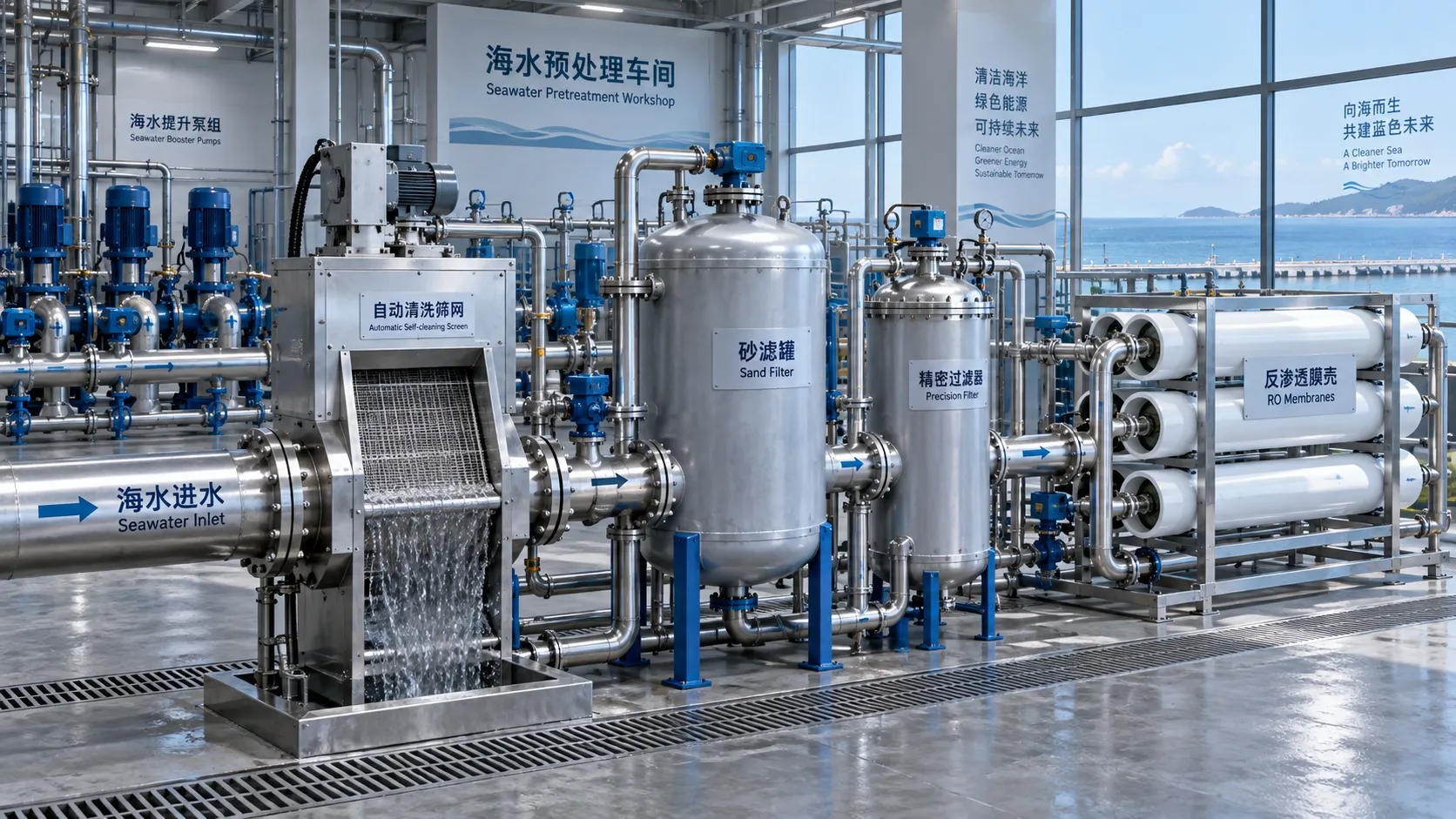
How to Improve Industrial Seawater Quality Before Cooling or Membrane Treatment
How can I improve the quality of seawater used for industrial processes? Explore proven pretreatment strategies for cooling systems and RO membranes.
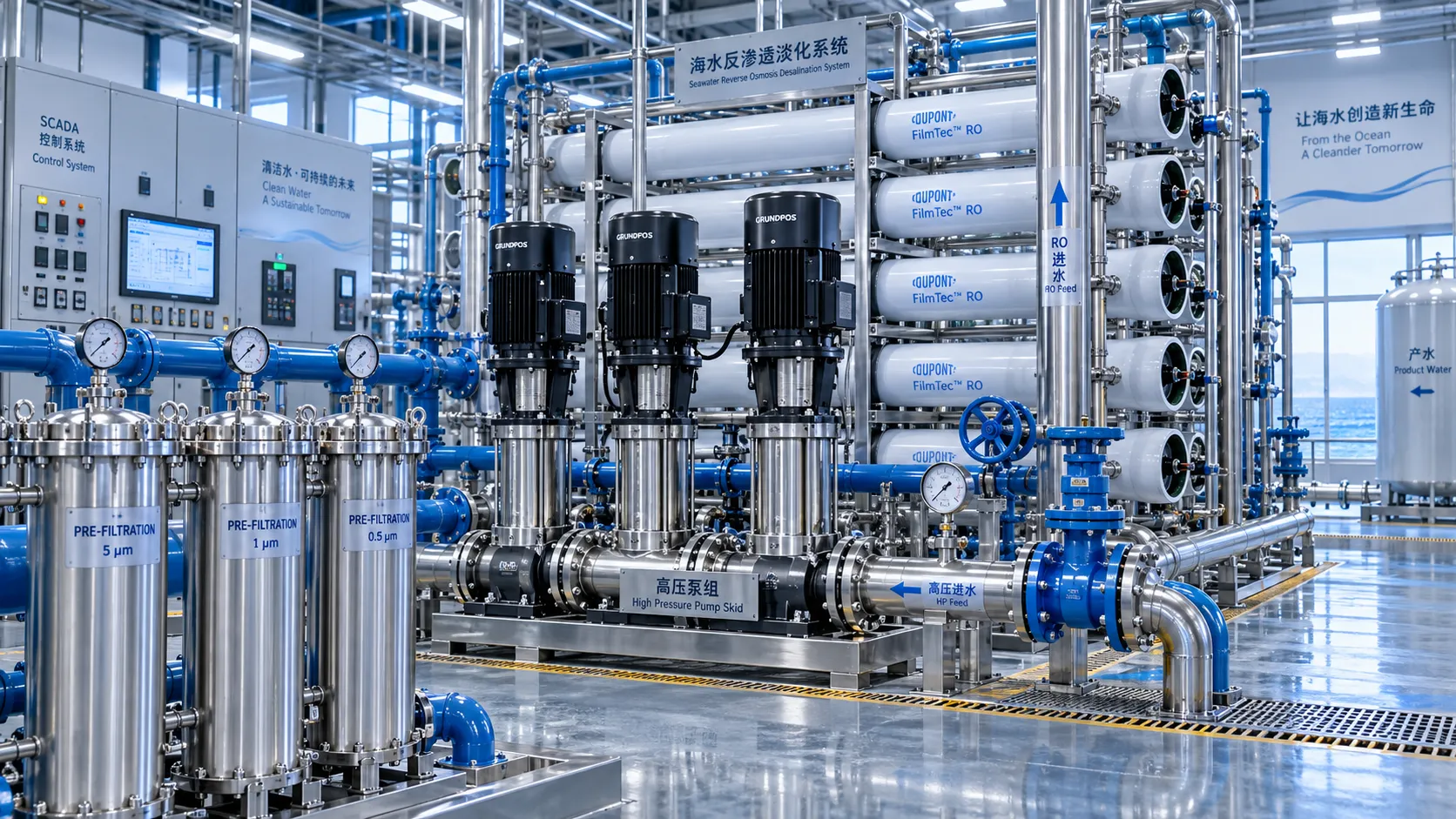
Desalination Plant Maintenance Priorities That Prevent Unplanned Downtime
Desalination plant maintenance priorities that reduce unplanned downtime: protect pretreatment, RO membranes, pumps, chemical dosing, and critical controls.
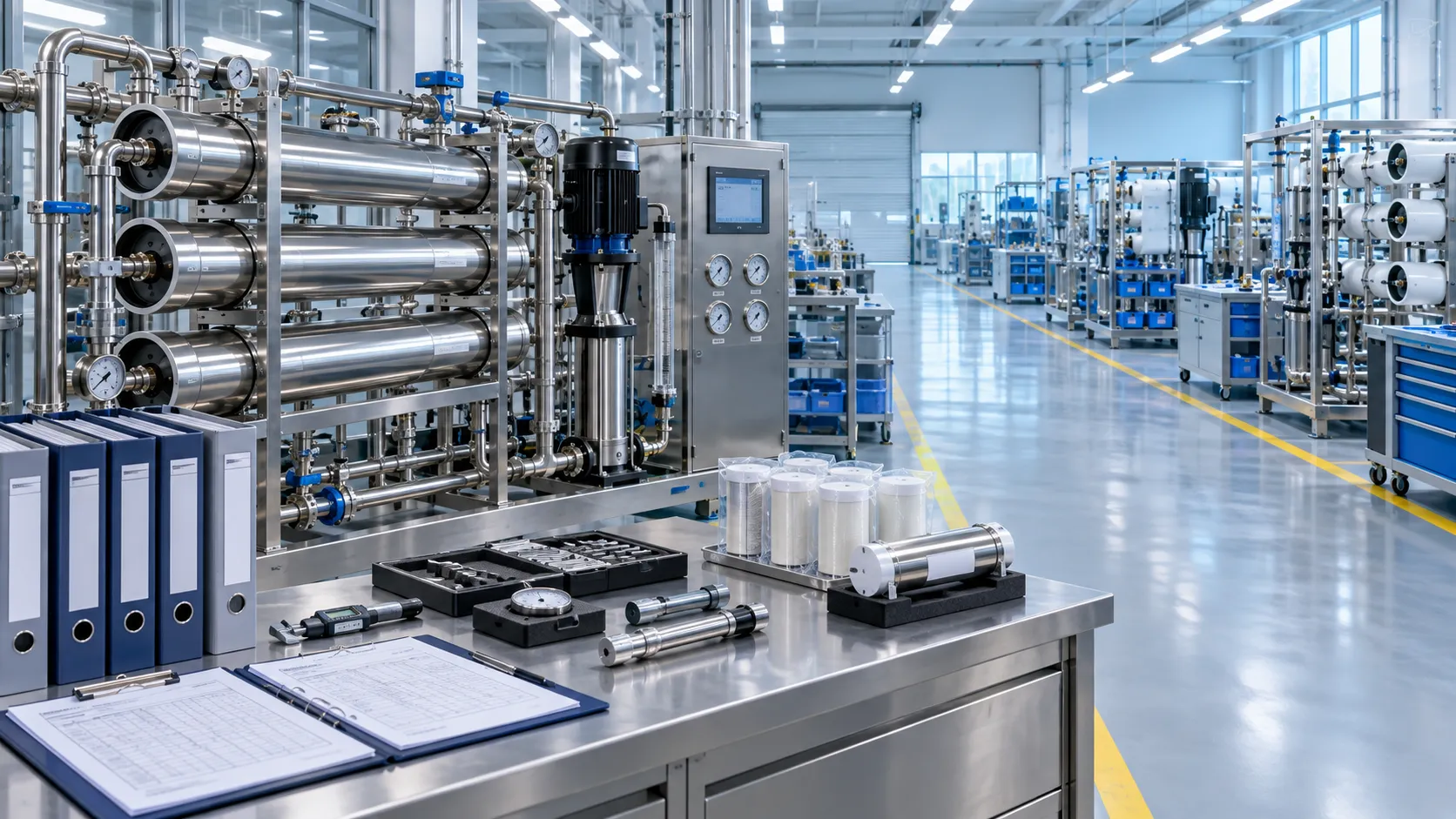
Which supplier evaluation support tools improve audit consistency?
Supplier evaluation support tools improve audit consistency with controlled checklists, evidence capture, risk scoring, CAPA workflows, and traceable approvals. Explore the essentials.
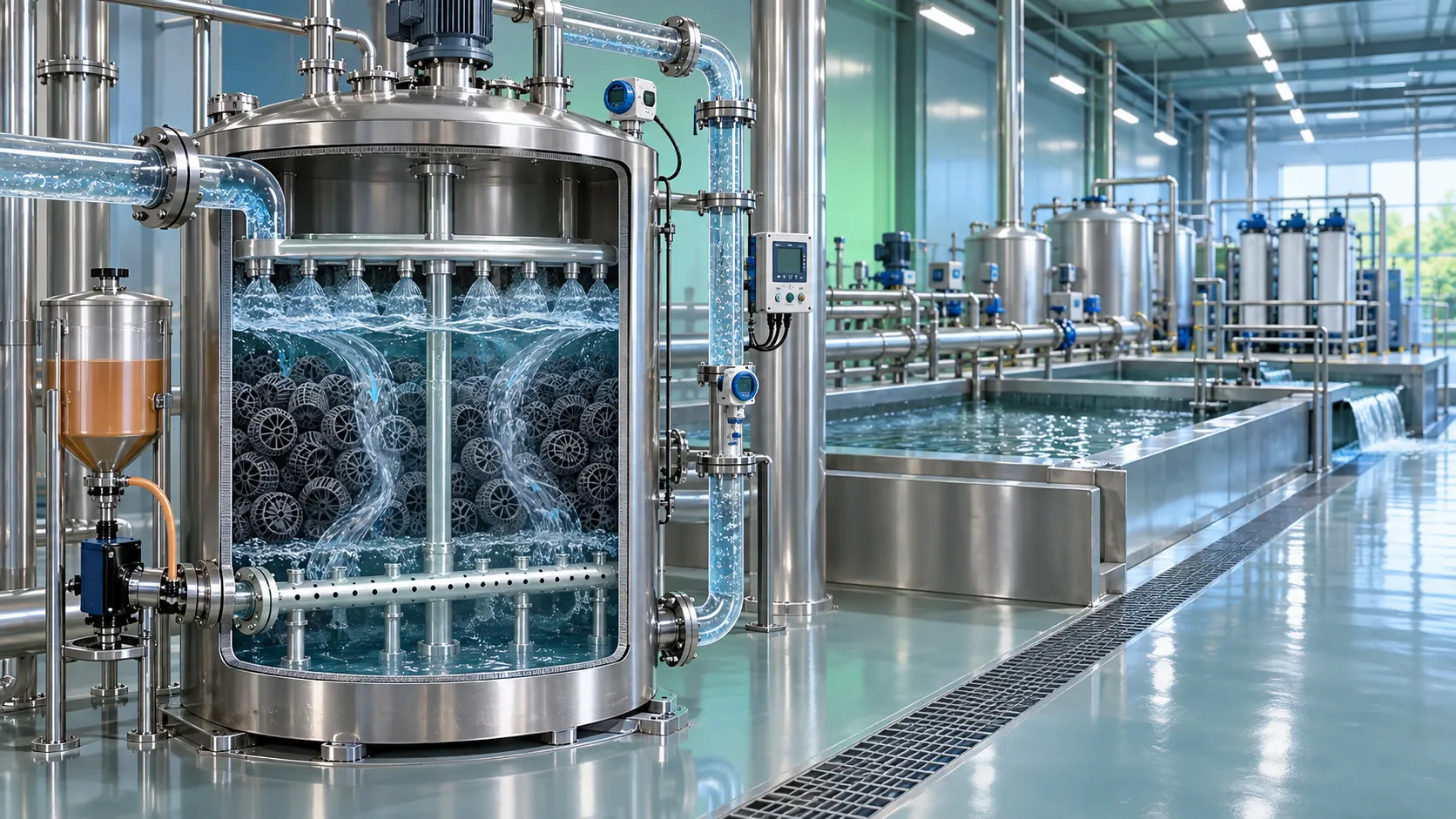
How reactor retention time affects denitrification equipment performance
Denitrification equipment reactor performance depends on retention time, carbon, mixing, and load control. Explore practical insights for reliable nitrogen removal.
How feed salinity affects energy use in ZLD system brine treatment
ZLD system brine treatment: discover how feed salinity drives energy use, scaling risk, and technology choices for efficient, reliable zero liquid discharge.