
Industry News
Curation by industry experts
Hot Articles
Popular Tags
What Evidence Supports the Long-Term Safety Case for Geological Disposal?
For quality and safety decisions, the long-term safety of geological disposal cannot rest on a promise that a repository will “contain waste forever.” The credible case is more demanding: it must show, with traceable evidence, that radioactive material will remain sufficiently isolated from people and the environment even as engineered components age, groundwater chemistry evolves, and the surrounding geology changes over very long periods.
This is why deep geological disposal is assessed as a safety case rather than as a single technology claim. The safety case brings together site investigations, waste-characterisation records, materials testing, natural analogues, engineering design, monitoring plans, and performance assessment models. Each source of evidence has limits. The strength lies in how independent lines of evidence support—or challenge—one another.
A safety case is evidence, argument, and uncertainty management
International guidance, including the International Atomic Energy Agency’s Safety Standards for disposal of radioactive waste, treats the safety case as a structured body of arguments and evidence demonstrating that a proposed disposal facility can meet its safety objectives. It is not simply a computational dose calculation. A model can be technically sophisticated and still be weak if its assumptions about groundwater flow, container failure, or rock fractures are poorly evidenced.
In practice, reviewers should ask three questions repeatedly. What is known from measurements or tested material behaviour? What is inferred from models? And what happens if the inference is wrong, conservative, or incomplete? A robust repository programme does not hide uncertainty behind long timescales. It identifies the uncertainty, tests its practical consequence, and shows whether safety remains acceptable across credible future conditions.
That distinction matters during quality review. A document may state that a canister has a long service life, for example, but the more useful question is whether the corrosion argument is tied to the actual groundwater composition, temperature history, microbial conditions, manufacturing controls, weld inspection records, and expected mechanical loads at the selected site.
The multi-barrier principle: no single component should carry the whole claim
Geological disposal relies on a deliberately layered system. Depending on the national programme and waste inventory, the engineered barriers may include a stable waste form, a metal container, buffer material such as compacted bentonite, backfill, seals, and plugs. These are placed within a suitable host rock formation at depth. The geological setting is not a passive backdrop; it is a central containment barrier.
The key safety logic is resilience rather than perfection. A waste package is expected to delay release. A buffer can limit water movement, reduce mechanical stress, and retard radionuclide transport. The host rock can slow groundwater circulation and provide chemical conditions that constrain mobility. If one component performs less well than expected, the others should still reduce release and transport.
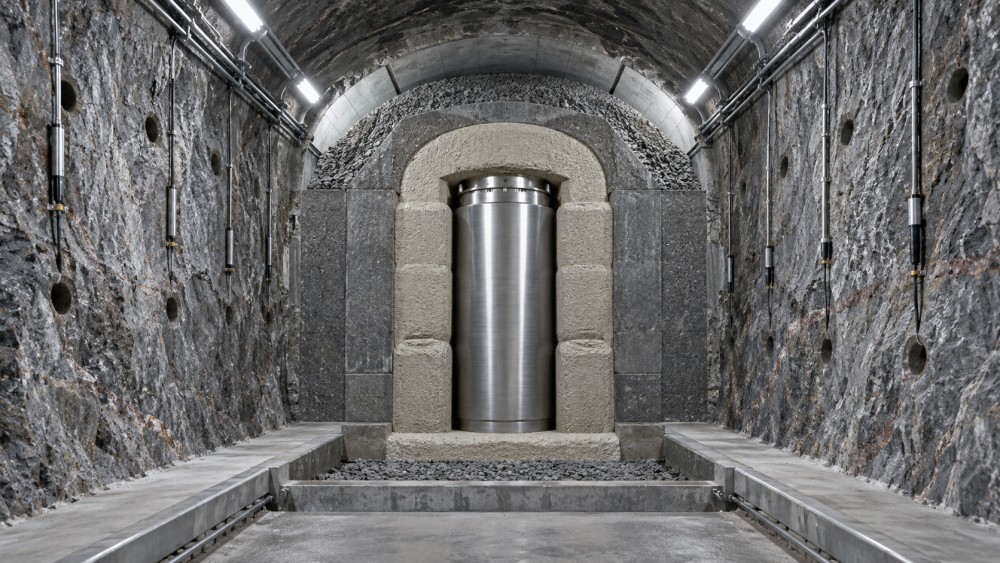
This is a useful point of discipline for audits. Claims such as “the copper canister is the barrier” or “the clay will prevent all migration” oversimplify the safety case. Materials may degrade, and site conditions may vary. The relevant question is how the barriers interact over time, including scenarios in which one barrier is impaired earlier than assumed.
Waste-form durability is more than a laboratory leach test
The starting point is the waste itself. Spent nuclear fuel, vitrified high-level waste, intermediate-level waste, and decommissioning materials do not behave identically. Their radionuclide inventory, heat output, chemical composition, gas-generation potential, and physical form determine the relevant containment questions.
For vitrified waste, evidence may include glass composition, homogeneity, phase stability, dissolution behaviour, and the potential formation of alteration layers in water. For spent fuel, relevant evidence includes fuel matrix dissolution, cladding condition, radionuclide release mechanisms, and the influence of reducing or oxidising conditions. These are not merely research topics. They determine source-term assumptions used in transport models.
A recurring quality issue is the gap between representative samples and production reality. A safety argument should be connected to waste acceptance criteria, package records, inspection requirements, non-conformance procedures, and retrievable traceability. If a repository’s safety assessment assumes a bounded heat load or a particular chemical inventory, operations must be able to verify that only compliant packages are emplaced.
Engineered barriers require evidence of manufacture as well as material science
Container corrosion studies, bentonite swelling tests, and seal-performance experiments are essential, but they do not complete the argument. Long-term safety also depends on whether the designed barrier can be manufactured, transported, emplaced, inspected, and closed without introducing defects that were absent from the laboratory specimen.
For a safety manager, this creates a practical chain of verification: material specification, supplier qualification, fabrication controls, welding or closure procedures, non-destructive examination, dimensional tolerances, handling limits, emplacement records, and disposition of deviations. The repository is unusual because some defects may not be repairable after closure. Quality assurance is therefore part of the containment system, not an administrative layer around it.
Thermal effects deserve particular attention. Heat from higher-activity waste can alter water movement, mineral behaviour, bentonite properties, and stress conditions around disposal tunnels. The acceptable thermal envelope is site- and design-specific. It should not be imported casually from another programme with a different host rock, package spacing, waste inventory, or groundwater chemistry.
Host-rock evidence must address transport pathways, not just rock strength
Granite, clay formations, salt, and other geological media may each be considered in disposal concepts, but their safety arguments differ. A low-permeability clay formation may provide very slow diffusive transport. Crystalline rock programmes may focus heavily on fracture characterization, groundwater pathways, and the location of stable, low-flow domains. Salt formations have different features again, including their capacity for creep closure under certain conditions.
The point is not to declare one host rock universally superior. The evidence must show that the chosen site and design work together. A mechanically strong formation may still demand careful hydrogeological analysis. A low-permeability formation may still require examination of excavation-disturbed zones, shafts, seals, and any features that could create preferential pathways.
Site characterization usually draws on boreholes, geophysical surveys, hydraulic testing, groundwater sampling, rock-core analysis, structural geology, and underground research where available. Individual datasets can be ambiguous. Confidence grows when different observations converge: chemistry supports reducing conditions, hydraulic tests indicate limited connectivity, geological mapping explains the fracture network, and long-term monitoring is consistent with the conceptual groundwater model.
Groundwater chemistry determines whether released radionuclides can move
Containment is only one part of the long-term safety of geological disposal. If radionuclides are eventually released from a package, their mobility depends on groundwater composition, pH, redox conditions, dissolved organic matter, colloids, mineral surfaces, and the chemical forms of specific radionuclides.
A credible assessment therefore considers retardation and solubility with care. Some radionuclides may sorb onto minerals under relevant conditions; others can be more mobile. It is risky to treat a laboratory sorption coefficient as a universal property. Mineralogy and water chemistry vary across a site, and conservative performance assessments should reflect that variation rather than selecting only favourable results.
Colloid-facilitated transport is another area that deserves explicit scrutiny where it is relevant to the host rock and waste system. The correct review question is not whether colloids exist in theory, but whether they can form, remain stable, bind relevant radionuclides, and move through the particular transport pathways assumed in the safety model.
Performance assessment tests the whole system under credible futures
Performance assessment integrates the evidence into calculations of how the disposal system may evolve. It considers expected evolution—such as container degradation, buffer saturation, and groundwater movement—as well as less likely but plausible disturbances. Depending on the programme, these may include climate change and glaciation, seismic activity, erosion, human intrusion, or changes caused by future land use.
A useful model is not the one that produces the most reassuring central estimate. It is the one whose assumptions can be inspected, whose uncertainty ranges are justified, and whose conclusions remain robust when important parameters are varied. Sensitivity analysis is particularly revealing. If a small change in one poorly constrained parameter overturns the result, that parameter should become a priority for further characterization, design adjustment, or operational control.
Scenario selection also needs judgment. Extremely speculative futures should not dominate the assessment, but neither should disruptive processes be dismissed simply because they complicate the model. Review teams should look for a transparent rationale explaining what was included, what was screened out, and how conservatism has been applied.
Natural analogues and international experience provide reality checks
Long timeframes exceed direct experimental observation, so safety cases draw additional confidence from natural analogues. These may include ancient mineral systems, naturally occurring radionuclides, archaeological metals, or geological environments where chemical processes have operated over extended periods. Such observations cannot replicate a repository exactly, but they can test whether a proposed process is physically plausible.
The well-known natural nuclear fission reactors at Oklo in Gabon are often discussed because they offer evidence about radionuclide behaviour in geological settings over geological timescales. Their value is not that they “prove” every repository design. Their value is that they provide a real-world constraint on models of retention, alteration, and migration.
International peer review has a similarly practical role. National programmes differ in waste inventory, geology, legal framework, and safety criteria, but shared review through regulators, technical support organisations, and scientific bodies can expose weak assumptions early. For an intelligence platform such as Global Eco-Shield Dynamics, the useful work is often in connecting this evidence across disciplines: materials behaviour, hydrogeology, waste acceptance, environmental compliance, and the execution controls that make a design credible in the field.
What a defensible review record should show
The strongest safety cases are auditable from claim to evidence. A reviewer should be able to trace a statement about corrosion resistance back to material data and environmental assumptions; a statement about groundwater travel time back to field observations and conceptual models; and a statement about package integrity back to manufacturing and inspection records.
Warning signs are usually less dramatic than they sound. They include assumptions inherited from an earlier design without revalidation, site data that do not match the model narrative, uncertain parameters treated as fixed values, or quality records that cannot demonstrate conformity of the waste actually destined for disposal. None of these automatically invalidates a project, but each needs a documented technical response.
The long-term safety case for geological disposal is persuasive when it does not depend on any one calculation, component, or optimistic forecast. It should show a system with multiple barriers, evidence from different disciplines, transparent uncertainty treatment, and operational controls that preserve the assumptions made during design. That is the standard worth testing—not whether the repository sounds safe in principle, but whether the evidence remains coherent when the difficult questions are asked.
Recommended News
How high purity heavy metal recovery affects recovered metal value
High purity heavy metal recovery boosts recovered metal value by improving payability, reducing penalties, and unlocking stronger buyer opportunities. Explore smarter netback strategies.
When does environmental equipment intelligence reduce wastewater plant energy use?
Environmental equipment intelligence for wastewater plants cuts energy use through smarter aeration, pumping, and data-driven controls—without compromising compliance. Discover when it delivers measurable savings.
What Do Seawater Disinfection Systems Cost Over Their Full Operating Life?
What are the costs associated with seawater disinfection systems? Explore lifecycle expenses for equipment, energy, chemicals, maintenance, compliance, and risk.
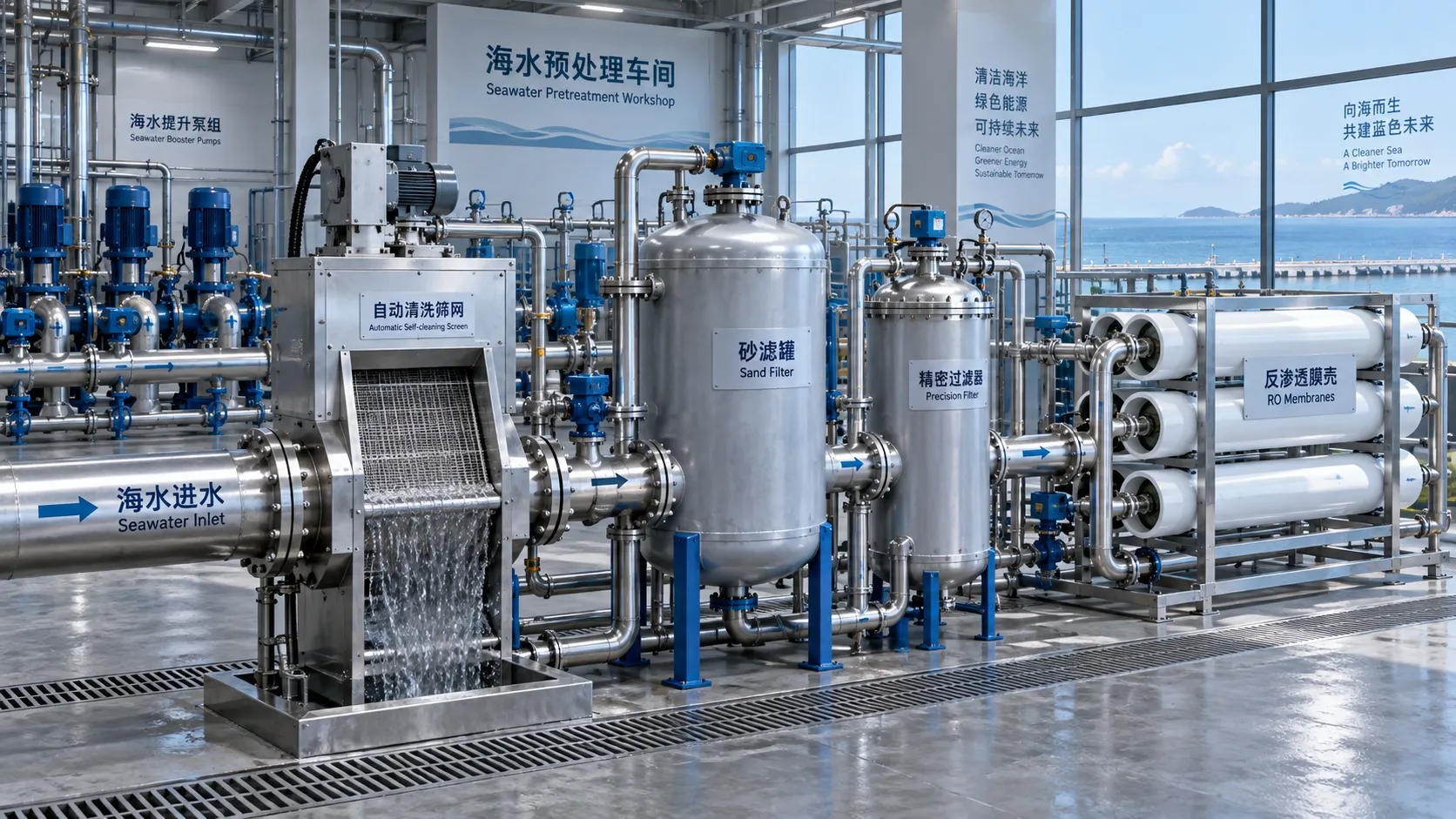
How to Improve Industrial Seawater Quality Before Cooling or Membrane Treatment
How can I improve the quality of seawater used for industrial processes? Explore proven pretreatment strategies for cooling systems and RO membranes.
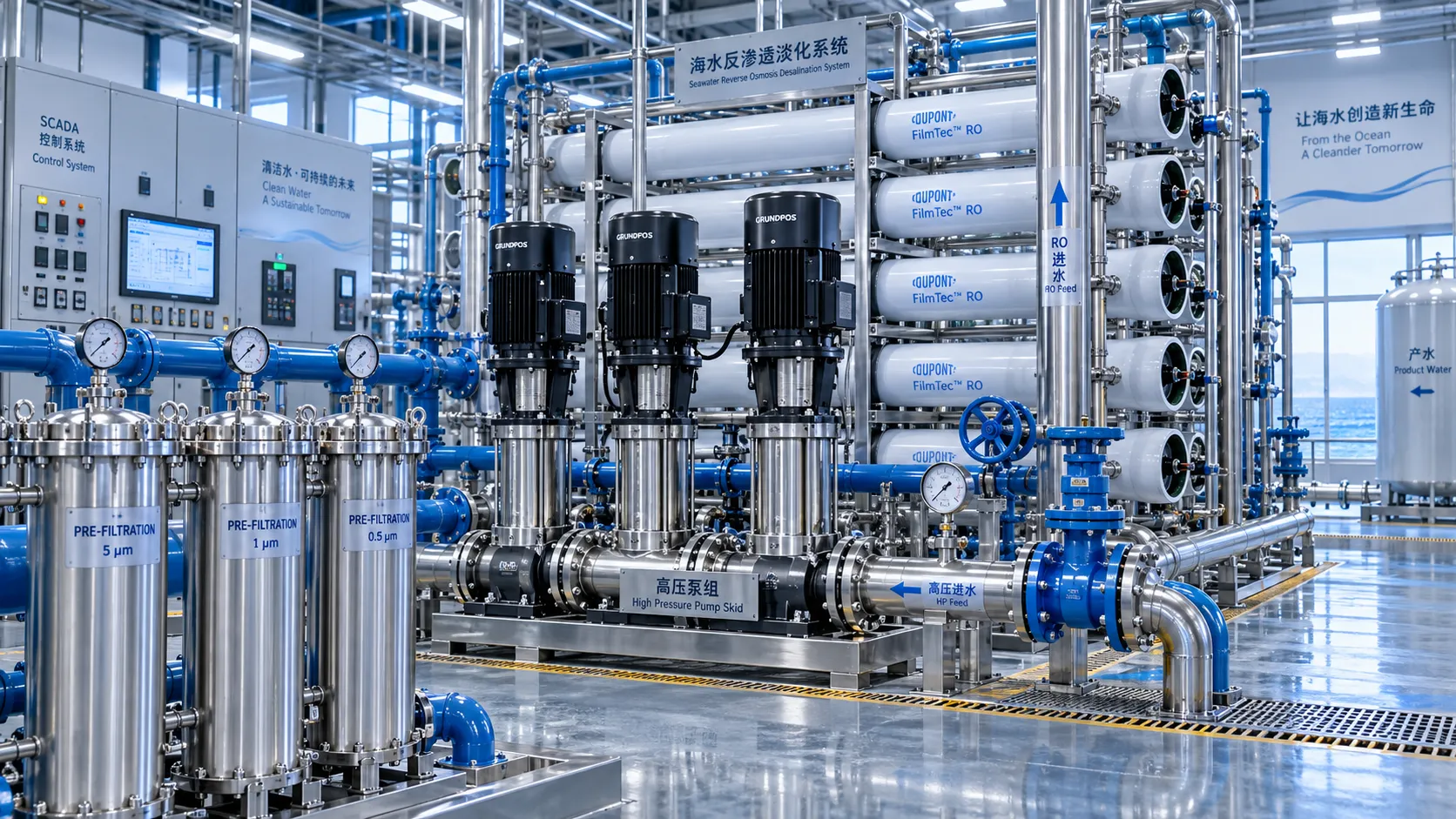
Desalination Plant Maintenance Priorities That Prevent Unplanned Downtime
Desalination plant maintenance priorities that reduce unplanned downtime: protect pretreatment, RO membranes, pumps, chemical dosing, and critical controls.

Which supplier evaluation support tools improve audit consistency?
Supplier evaluation support tools improve audit consistency with controlled checklists, evidence capture, risk scoring, CAPA workflows, and traceable approvals. Explore the essentials.
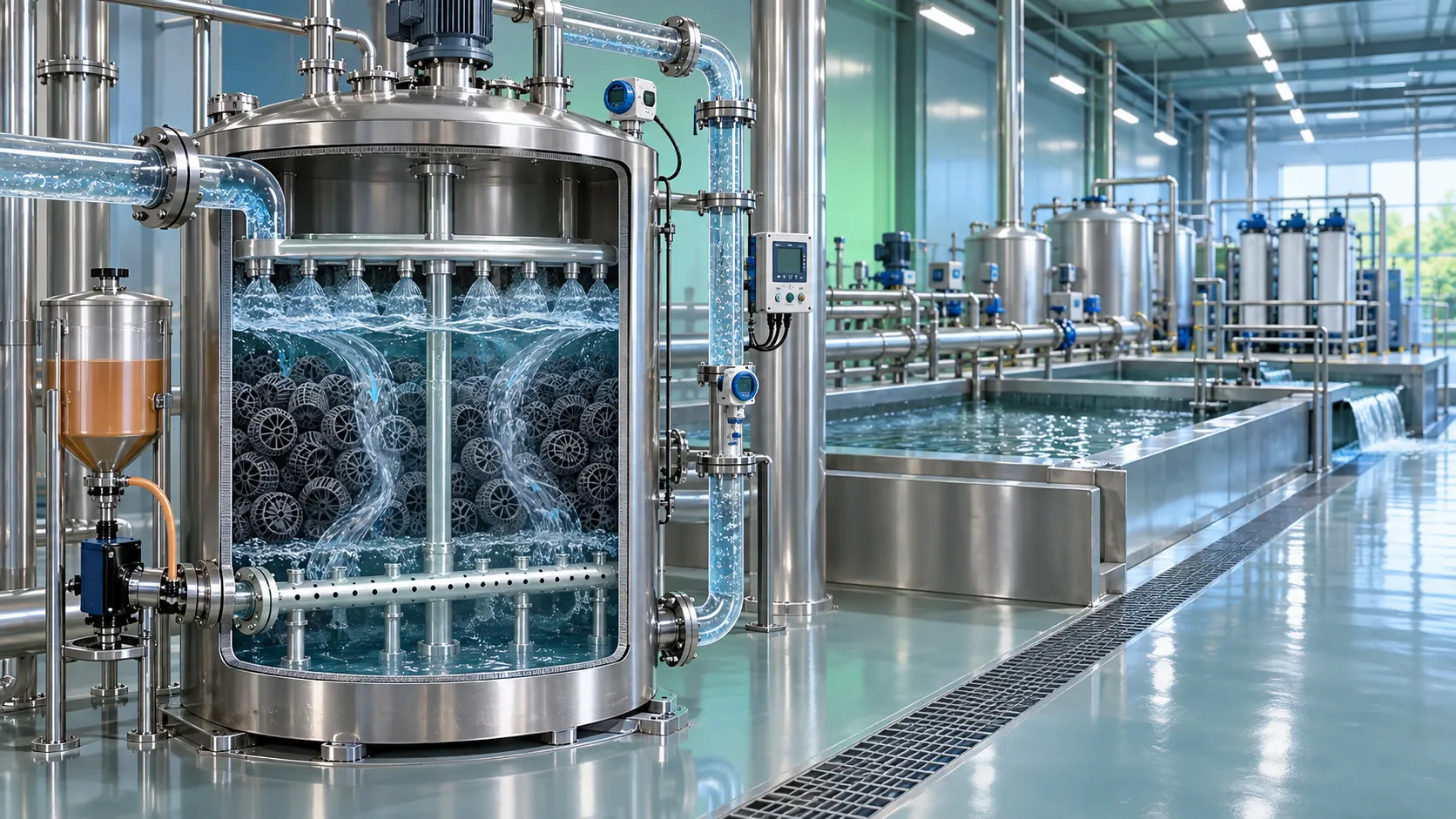
How reactor retention time affects denitrification equipment performance
Denitrification equipment reactor performance depends on retention time, carbon, mixing, and load control. Explore practical insights for reliable nitrogen removal.

How feed salinity affects energy use in ZLD system brine treatment
ZLD system brine treatment: discover how feed salinity drives energy use, scaling risk, and technology choices for efficient, reliable zero liquid discharge.

How coastal cities can select desalination solutions for peak demand
Seawater desalination solutions for coastal cities: compare firm peak capacity, intake risk, energy resilience, and lifecycle value to secure reliable water supply.