
Industry News
Curation by industry experts
Hot Articles
Popular Tags
How Closed-Loop Resource Recovery Systems in North America Cut Disposal Costs and Improve Material Yield
Meta Title: Closed-Loop Resource Recovery Systems North America: Lower Disposal Costs, Higher Material Yield
If disposal bills keep rising while recovered material value stays unpredictable, the problem usually is not the waste stream alone. It is the system around it. Closed-loop resource recovery systems North America buyers are typically trying to answer one hard question: can a new recovery line actually reduce total cost per ton while producing cleaner, more marketable output? In many cases, yes, but only when the system is matched to feedstock variability, downstream offtake realities, utility demand, and compliance obligations. That is where good procurement decisions separate useful capital projects from expensive sorting theater.
The practical appeal is straightforward. A closed-loop setup is designed to keep materials moving through capture, separation, purification, reuse, and residual minimization in one controlled workflow. That can reduce landfill or incineration dependence, improve recovered commodity quality, and shrink the volume of material that still needs expensive final disposal. For operators in North America, where tipping fees, labor costs, and environmental scrutiny differ sharply by state, province, and municipality, the procurement case depends less on slogans and more on system design discipline.
Why cost reduction happens in the right closed-loop system
Many buying teams begin with the most visible line item: disposal cost. That makes sense, but it is only part of the financial picture. A well-designed recovery system changes economics in three places at once.
First, it cuts the tonnage sent to landfill, hazardous treatment, wastewater discharge, or third-party processing. Second, it upgrades part of that same stream into reusable water, secondary raw material, fuel fraction, or saleable recyclate. Third, it gives the operator more control over contamination, which matters because contaminated output often gets downgraded, rejected, or repriced.
That last point is where many projects quietly fail. Buyers sometimes assume recovery rate is the key number. It is not. Material yield only creates value when the recovered fraction meets a specification someone will actually accept. A system that captures 70% by weight but produces inconsistent bales, unstable oil fractions, or off-spec process water may still underperform financially.
In plain terms: lower disposal cost is good, but lower disposal cost plus usable recovered output is what changes the business case.
A short answer for decision-makers: the strongest projects reduce residual volume, stabilize product quality, and limit manual rework. If one of those three is missing, expected savings often erode faster than the vendor model suggests.
What buyers in North America usually underestimate
There is a common mistake in procurement discussions. People compare equipment on nameplate throughput, then negotiate on capex, and only later discover that their real bottleneck is contamination control, moisture variation, or residue handling.
In North American operations, especially across municipal solid waste recovery, industrial byproduct treatment, plastics reclamation, metals fines capture, and high-strength wastewater reuse, incoming feed is rarely stable enough to justify a generic system architecture. Seasonal shifts, labor availability, regional disposal pricing, power tariffs, and transportation distance all change what “best value” looks like.
For example, a plant in a region with high landfill tipping fees may tolerate a more complex front-end separation train because every diverted ton has immediate value. A site with lower disposal costs but higher energy prices may need a simpler line with tighter utility efficiency. A manufacturer generating one relatively uniform byproduct stream can justify a more specialized recovery loop than an operator taking mixed inbound waste from multiple sources.
This is why the most credible vendors and advisors spend serious time on characterization data before recommending a configuration. They want to know particle size distribution, moisture range, contamination profile, chemistry, expected variability, and the actual destination for recovered outputs. That is not delay. That is the difference between a bankable project and a disappointing one.
Closed-Loop Resource Recovery Systems North America: where the ROI usually comes from
Procurement teams often ask for a clean ROI number too early. The better sequence is to identify value pools first, then build the financial model around them.
The usual value pools include:
- Reduced landfill, hazardous waste, or off-site treatment charges
- Lower hauling frequency and transportation spend
- Recovered material revenue or avoided virgin material purchases
- Water reuse savings where discharge and freshwater intake are both costly
- Lower compliance risk exposure from better containment and traceability
- Reduced labor tied to manual sorting, rehandling, and residue management
Not every project captures all of these. That is another place buyers get misled. Some systems are primarily cost-avoidance tools, not revenue engines. Others make sense because they protect operations from disposal market volatility. If a project only works on a highly optimistic commodity price assumption, that is a weak project.
A more durable investment case usually assumes conservative resale values, realistic downtime, and residue volumes that remain meaningful even after optimization. Decision-makers should ask vendors to show performance sensitivity under less favorable conditions, not just at ideal throughput and ideal pricing.
The specification that matters more than the brochure
When comparing proposals, look past the equipment list and focus on four questions.
What residual stream remains after recovery?
Some proposals make diversion look impressive while pushing an awkward or still-costly residual downstream. You need to know residual composition, disposal route, and expected cost per ton after the system is running.
How does the system handle feed variability?
A line that performs beautifully on pilot material but struggles when moisture spikes or contaminants shift will create a hidden operating tax.
What utility burden does it create?
Water polishing, thermal steps, air handling, dust control, and odor management can materially change operating cost.
Who owns performance risk?
This includes commissioning scope, acceptance testing, ramp-up assumptions, spare parts strategy, and what happens if yield or purity targets are missed.
Experienced buyers also ask for a mass balance, not just marketing claims. If the vendor cannot show clearly where every ton, every contaminant class, or every liquid fraction goes, the proposal is not mature enough.
Where these systems fit well, and where they do not
Closed-loop recovery is not automatically the right answer for every facility. It tends to fit best when waste volumes are large enough, disposal costs are painful enough, and the output can either be reused internally or sold into a reasonably dependable market.
Good-fit situations often include industrial sites with repeatable byproduct streams, municipalities under diversion pressure, processors dealing with high moisture or contaminated recyclables, and water-intensive operations trying to reduce discharge while recovering useful material from sludge or concentrate.
Poorer-fit situations include low-volume sites with highly erratic feedstock, facilities without room for preprocessing or storage buffers, or operations where recovered output has no realistic internal use and no local buyer network. In those cases, a simpler pretreatment or waste minimization strategy may outperform a full closed-loop installation.
This is one reason intelligence-led procurement matters. Platforms such as The Global Eco-Shield Dynamics (ESD), which track resource recovery equipment, water treatment, compliance direction, and circular economy technology trends, are most useful when buyers need context for comparing system logic, not just vendors. That kind of market and technical visibility helps narrow the field before expensive design work begins.
The compliance angle is real, but it should not be the only reason to buy
Environmental compliance is a strong driver across North America, especially where discharge, air emissions, residual handling, PFAS-related concerns, or hazardous classifications complicate waste management. Still, compliance-only buying often produces weak projects because the equipment gets treated as a permit response rather than an operating asset.
The stronger approach is to ask how compliance and cost control reinforce each other. Better separation can reduce contamination in outbound loads. Improved water recovery can lower discharge pressure. Better traceability can simplify reporting and reduce the chance of unpleasant surprises during audits or contract renewals with downstream processors.
That said, no buyer should rely on broad claims about regulatory advantage without checking local requirements. Federal, state, provincial, and municipal rules can differ sharply. Disposal classification, water discharge standards, air permitting, and recovered material handling obligations all need project-specific review.
What to ask before issuing an RFP
If you are still shaping the project, these are the questions that save the most money later:
- What is our actual current all-in disposal cost per ton, including hauling, storage, compliance handling, and rejected loads?
- How variable is our feedstock over a full operating year?
- Do we want internal reuse, external sale, or simply lower residual volume?
- Which output specifications matter commercially, and who will verify them?
- What utilities, footprint, staffing, and maintenance capability do we already have?
- What happens to the remaining residue after recovery?
Without those answers, buyers tend to overpay for flexibility they do not need or underbuy and inherit chronic performance issues.
One more procurement reminder: ask for site references that resemble your feedstock and operating model, not just your industry. A mixed industrial sludge recovery project does not validate a plastics sorting line, and a municipal MRF reference does not prove performance in high-salinity liquid waste reuse.
The better way to judge vendors
At this stage, the decision is less about who has the most impressive slide deck and more about who understands the consequences of system mismatch. Strong vendors are usually willing to discuss failure modes openly: screen blinding, fouling, odor control, variability in calorific value, reject stream escalation, membrane replacement intervals, bale contamination, water chemistry drift, and maintenance skill requirements.
If a proposal sounds frictionless, be careful. Real recovery systems are operational systems. They live or die on uptime discipline, residue management, operator training, and the economics of the recovered fraction after commissioning, not just on installation day.
For many North American facilities, the best purchase is not the most complex system. It is the one that can hold performance under real plant conditions with acceptable labor, utility, and maintenance demands.
That is the core procurement logic behind closed-loop resource recovery systems North America: they can absolutely cut disposal costs and improve material yield, but only when the buyer evaluates the full loop, including the part of the stream that still does not become product. The most successful projects are usually grounded in conservative economics, rigorous material characterization, and a clear route for every recovered output and every remaining residue.
FAQ
How quickly can a closed-loop recovery system pay back?
It depends on disposal cost, feed volume, output quality, and utility demand. Projects with high tipping fees or strong internal reuse value often justify faster than projects relying mainly on resale revenue.
Is higher recovery rate always better?
No. Recovery rate matters only if the recovered material meets a usable specification. Lower yield with cleaner output can be financially stronger than high yield with contamination problems.
Should buyers prioritize capex or operating cost?
They need both, but operating cost usually decides long-term project value. Utility consumption, maintenance burden, and residue handling can erase an attractive purchase price.
Are these systems mainly for large municipal facilities?
No. They also fit industrial plants, processors, and water-intensive operations, provided the waste stream is large enough and the recovery path is commercially real.
Internal Link Anchor Text Suggestions
- industrial water reuse system selection: guide or category page on water treatment procurement
- AI sorting and secondary recycling lines: technology explainer or solution page
- zero liquid discharge project economics: analysis page on ZLD cost drivers
- how to evaluate waste recovery equipment vendors: buyer’s guide or checklist page
- environmental compliance trends for resource recovery plants: regulatory insights page
External Authority Source Directions
- government environmental regulator pages covering waste, water discharge, and residual handling requirements
- industry association reports on recycling, materials recovery, and circular economy infrastructure
- official technical documentation from equipment manufacturers for performance parameters and operating requirements
- water treatment
- solid waste recovery
- circular economy
- resource recovery
- environmental compliance
- resource recovery systems
- closed-loop resource recovery
- waste recovery equipment
- closed-loop resource recovery systems
- zero liquid discharge
- water reuse
- closed-loop resource recovery systems North America
- water reuse system
- resource recovery systems North America
- resource recovery equipment
Recommended News
How SCR denitrification systems in Europe meet Industrial Emissions rules
SCR denitrification systems Europe: learn how permit-led design, ammonia-slip control, catalyst management and monitoring support Industrial Emissions compliance.
When does MBR equipment make sense for wastewater reuse?
Water treatment equipment for wastewater reuse: learn when MBR delivers compact, reliable low-solids effluent—and when alternative treatment trains offer better value.
How North America shapes global environmental governance standards
Global environmental governance North America: discover how regulation, finance, and procurement raise worldwide standards and reshape environmental projects.
How reactor capacity affects throughput in pyrolysis systems
Pyrolysis systems reactor capacity explained: learn how heat transfer, residence time, feed quality, and emissions controls determine reliable throughput.
When low-temperature reaction equipment is the right fit for heat-sensitive processes
Low-temperature reaction equipment helps protect heat-sensitive streams, improve energy integration, and maintain reliable conversion. Explore key selection factors today.
When do water reuse systems deliver a practical payback?
Water reuse systems deliver practical payback when they cut water, discharge, and downtime costs. Learn how to match treatment, recovery, and reuse quality for lasting ROI.
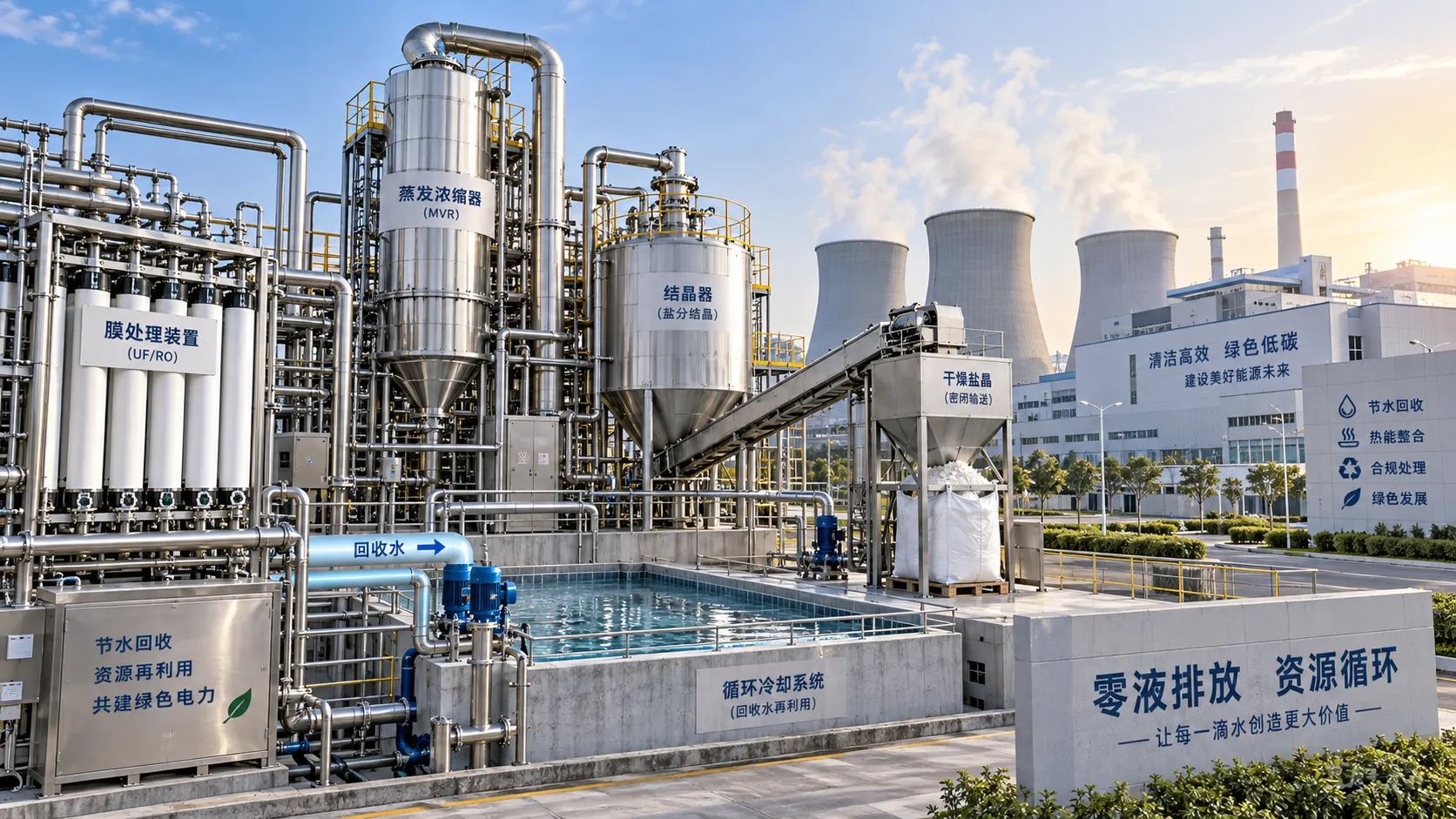
When do ZLD systems for power generation justify their energy use?
ZLD systems for power generation: learn when energy-intensive water recovery delivers stronger compliance, resilience, and long-term value.
Which decarbonization pathways are most viable in Southeast Asia?
Decarbonization Southeast Asia: discover practical pathways for clean power, efficiency, electrification, circular recovery, and resilient industrial growth.
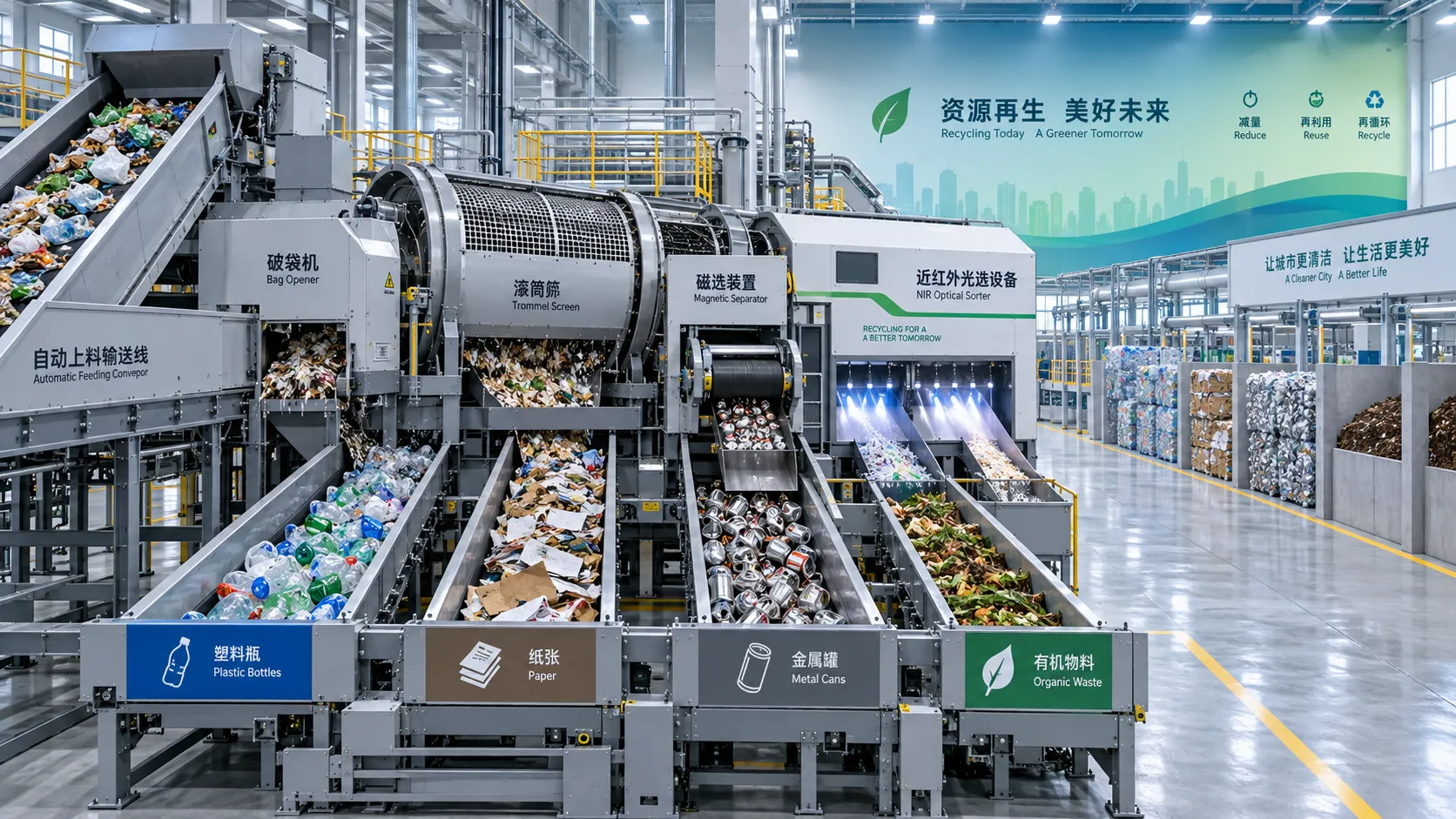
How to choose waste sorting equipment for mixed municipal waste
Waste sorting equipment selection guide for mixed municipal waste: compare technologies, improve recovery, reduce downtime, and build reliable output streams.