
Industry News
Curation by industry experts
Hot Articles
Popular Tags
How Industrial Environmental Intelligence Improves Emissions Control Decisions
Meta Title: How Industrial Environmental Intelligence Improves Emissions Control Decisions
If you are responsible for emissions control decisions, the hard part usually is not finding more data. It is knowing which signals actually matter before a compliance issue, operating upset, or unnecessary capital spend hits the business. Industrial environmental intelligence helps solve that problem. It connects plant performance, regulatory change, equipment behavior, and market context into a decision framework that is usable at management level, not just at the control room screen. Done well, it improves response time, lowers blind spots, and supports better choices on upgrades, maintenance, fuel shifts, and reporting strategy.
Many teams still make emissions decisions in fragments. Operations watches one dashboard, EHS tracks permits in another place, procurement focuses on equipment cost, and leadership only gets involved when limits are at risk or margins are under pressure. That gap is expensive. It leads to delayed interventions, overdesigned projects, and a habit of reacting to alarms instead of managing performance.
Where industrial environmental intelligence changes the quality of emissions decisions
At a practical level, industrial environmental intelligence is the organized use of environmental, operational, regulatory, and technical information to guide action. In emissions control, that means you are not looking only at stack readings or periodic compliance reports. You are also interpreting upstream process variability, reagent consumption, catalyst or media condition, maintenance history, weather influence where relevant, and upcoming policy pressure that may change the economics of your current setup.
A short answer is this: it improves emissions control decisions by turning isolated measurements into operating context. That helps decision-makers act earlier, spend more accurately, and avoid solving the wrong problem.
This matters most in facilities where emissions performance depends on many moving parts rather than one single end-of-pipe device. A flue gas treatment line may look compliant on paper, for example, while hidden inefficiencies are building in ammonia slip, sorbent overuse, fan energy load, or low-temperature catalyst performance. If leadership only sees the monthly compliance outcome, it misses the operating story that determines next quarter's cost and risk.
Better decisions start before the stack
One common mistake is treating emissions as a downstream issue only. In real plants, emissions behavior often reflects upstream instability: fuel quality swings, feedstock inconsistency, combustion imbalance, load changes, moisture variation, temperature drift, or poor coordination between process units and treatment equipment.
That is why stronger environmental decisions usually begin with cross-functional visibility. When an organization can see how process conditions affect pollutant formation and control efficiency, it stops asking narrow questions like “Do we need a bigger scrubber?” and starts asking better ones:
- Is the current equipment underperforming, or is the process generating a harder-to-treat gas stream than design assumptions allowed for?
- Are we paying for compliance through excessive reagent, energy, or maintenance instead of fixing root causes?
- Is the risk coming from emissions peaks, reporting quality, equipment reliability, or regulatory interpretation?
Those are management questions, and they are exactly where industrial environmental intelligence becomes useful. It creates a shared operating picture instead of separate departmental narratives.
What decision-makers usually get wrong
In actual project reviews, a few patterns come up again and again.
First, people overvalue real-time monitoring and undervalue interpretation. A plant can install more sensors, more analyzers, and more software, yet still make poor decisions if nobody connects those readings to equipment aging, operating windows, and permit obligations.
Second, compliance is often treated as a yes-or-no outcome. That is too simplistic. A system can remain technically compliant while becoming economically inefficient or operationally fragile. By the time violations appear, the business has usually been absorbing hidden losses for months.
Third, teams assume emissions control upgrades are mainly hardware decisions. They are often information decisions first. Before approving capital expenditure, leadership needs to know whether the real constraint is equipment capacity, process variability, poor maintenance discipline, bad setpoint logic, or a coming regulatory shift that changes the target entirely.
This is where a specialized intelligence approach earns its value. In sectors such as flue gas treatment, water treatment, waste recovery, desalination, and nuclear waste management, the technical details matter enough that generic market summaries are rarely sufficient. Platforms such as The Global Eco-Shield Dynamics (ESD) are more useful when they help decision-makers connect regulatory movement, technology evolution, and equipment behavior into choices that can be defended internally.
How industrial environmental intelligence supports real operating choices
Let’s make this less abstract. Here are the decisions it can improve.
1. Upgrade now or optimize first?
Many facilities jump too quickly toward retrofit spending. Intelligence-led review can show whether the current line still has recoverable performance through tuning, maintenance correction, process stabilization, or better operating logic. In some cases, a catalyst replacement schedule, absorber balancing adjustment, or feed handling improvement delivers more value than a new capital project.
2. Which emissions risk deserves priority?
Not every environmental issue has the same business impact. One site may be more exposed to tightening NOx rules, another to particulate consistency, another to carbon-related trade exposure such as CBAM-linked reporting pressure. Good intelligence helps rank risk by likelihood, cost consequence, and regulatory visibility rather than by whoever is shouting loudest internally.
3. Which vendor claims are technically relevant?
Decision-makers are often presented with strong claims around capture efficiency, energy savings, digital optimization, or low-temperature performance. Those claims may be directionally valid but still wrong for your gas composition, operating window, maintenance capability, or utility costs. Independent intelligence makes it easier to separate universally good technology from technology that is only good in a narrow set of conditions.
4. When is non-compliance most likely?
The key is rarely average performance. It is excursion risk. Startups, shutdowns, load swings, seasonal changes, reagent quality variation, and delayed maintenance often create the biggest exposures. A leadership team that understands these patterns can invest in prevention where it actually matters.
Why this matters more under regulatory and cost pressure
Environmental compliance used to be handled more comfortably as a technical support function. That is less true now. Reporting expectations are tighter. Public scrutiny is higher. Energy and reagent costs can materially affect project economics. Cross-border mechanisms and procurement standards are making environmental performance part of commercial competitiveness, not just legal hygiene.
That changes the decision standard. The question is no longer only “Are we meeting the limit?” It becomes:
- Are we meeting it consistently?
- At what operating cost?
- With how much margin for upset?
- Under which future regulatory assumptions does this asset still make sense?
Industrial environmental intelligence is useful because it keeps those questions on the same page. It helps management avoid one of the most expensive habits in heavy industry: solving today’s compliance issue with a choice that creates tomorrow’s economic problem.
What a usable intelligence setup looks like
Not every company needs a large digital transformation project. In fact, many do better by starting smaller and sharper. A usable setup usually includes four layers.
Operational layer: emissions data, process conditions, equipment performance, maintenance history, alarms, downtime patterns.
Compliance layer: permit conditions, reporting cycles, inspection history, local enforcement posture, pending regulatory changes that may alter thresholds or monitoring requirements.
Technology layer: equipment aging patterns, available retrofit paths, consumable behavior, benchmarking against current treatment approaches where reliable comparison is possible.
Business layer: cost of utilities and reagents, production priorities, expansion plans, customer requirements, financing constraints, and broader decarbonization commitments.
If one of those layers is missing, decisions tend to skew. Operations may chase short-term stability while ignoring future compliance exposure. Finance may delay investment without seeing the cost of underperformance. Engineering may recommend a technically elegant fix that the site cannot sustain operationally.
When outside intelligence is especially valuable
There are situations where internal data alone is not enough.
One is when regulation is moving faster than internal teams can track in detail. Another is when the technology landscape is changing, but the plant does not have time to evaluate every equipment trend, catalyst development, membrane improvement, or resource recovery model in-house. This is common in large environmental infrastructure sectors, where decisions in flue gas treatment, wastewater concentration, ZLD, or waste recovery sit at the intersection of chemistry, equipment reliability, and policy pressure.
That is also where ESD’s positioning makes sense: not as a hard-sell product layer, but as an intelligence source for teams that need a clearer view across water treatment, solid waste recovery, desalination, flue gas treatment, and nuclear waste management. The value is in reducing decision noise, especially for firms involved in EPC work, long-cycle environmental projects, or high-stakes public tenders.
Not every company needs the same approach
There is no universal model here. A single-site plant with stable operations and modest regulatory complexity may benefit most from tighter monitoring interpretation, a cleaner maintenance-feedback loop, and a quarterly external intelligence review.
A multi-site industrial group usually needs more: standardized environmental KPIs, exception-based management reporting, scenario planning for regulation and cost, and clearer rules for when local teams can optimize versus when group leadership should approve upgrades.
And there are cases where industrial environmental intelligence will not fix the core issue. If the underlying problem is chronic underinvestment, weak operating discipline, or missing environmental accountability, more dashboards will not help. Intelligence improves decisions only when somebody is prepared to act on what it shows.
What to check before making your next emissions control decision
Before approving a retrofit, changing an operating strategy, or committing to a reporting framework, verify a few things:
- Whether the problem is continuous underperformance or only excursion-driven risk
- Whether the current baseline data is reliable enough for investment decisions
- Whether upstream process instability is distorting downstream treatment results
- Whether regulatory pressure is current, emerging, or still uncertain and needs official confirmation
- Whether the proposed fix matches your site’s maintenance capability and cost structure
That last point is often ignored. A technically advanced solution is not automatically the right one if the site cannot maintain it consistently, source the consumables reliably, or keep the control logic tuned.
Industrial environmental intelligence is most useful when it makes decisions more precise, not more complicated. It should help leadership decide where to optimize, where to invest, where to wait, and where the real risk sits. In emissions control, that shift from reactive compliance to informed management is where better performance usually starts.
And that is the practical reason industrial environmental intelligence keeps gaining relevance: it gives decision-makers a way to connect compliance, cost, equipment reality, and strategy before those issues collide in the wrong quarter.
FAQ
Is industrial environmental intelligence only useful for large heavy-industry sites?
No. Large sites usually see the biggest return because complexity is higher, but mid-sized facilities can also benefit when they face permit pressure, volatile operating conditions, or expensive treatment systems.
Does it replace environmental consultants or plant engineers?
No. It works best as decision support. Engineers and consultants still interpret site-specific constraints, but they do it with better context.
Can it help reduce emissions control cost, not just compliance risk?
Yes, if the main losses come from poor optimization, consumable overuse, unnecessary maintenance, or mistimed capital decisions. It will not create savings if the system is fundamentally undersized or neglected.
What is the first practical step?
Start with one emissions line or one site. Map operational data, permit triggers, recurring upset conditions, and treatment cost together. Most gaps become obvious once those pieces are reviewed in one decision frame.
Internal Link Anchor Text Suggestions
- Flue gas treatment technology trends: link to sector analysis or equipment insights page
- How CBAM affects environmental equipment investment: link to regulatory intelligence page
- ZLD system selection for industrial wastewater: link to water treatment solutions page
- SCR catalyst performance in low-temperature conditions: link to technical trends page
- Environmental intelligence for EPC project bidding: link to commercial insights page
External Authority Source Suggestions
- Government environmental regulator pages for emissions standards, permitting, and reporting rules
- Industry association reports on air pollution control systems and industrial compliance practices
- Official technical documentation from established environmental equipment manufacturers
Recommended News

How coastal cities can select desalination solutions for peak demand
Seawater desalination solutions for coastal cities: compare firm peak capacity, intake risk, energy resilience, and lifecycle value to secure reliable water supply.
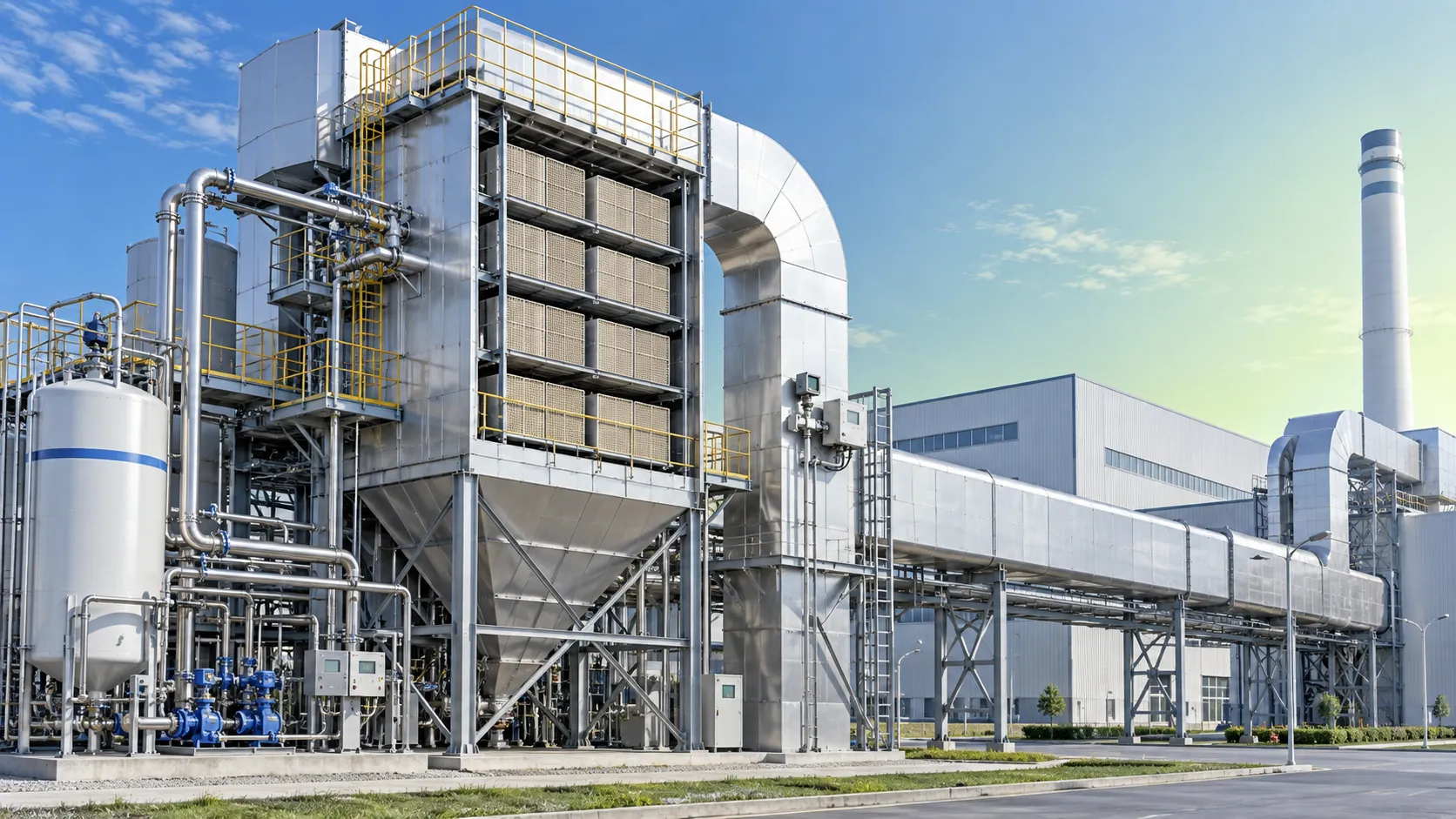
How SCR denitrification systems in Europe meet Industrial Emissions rules
SCR denitrification systems Europe: learn how permit-led design, ammonia-slip control, catalyst management and monitoring support Industrial Emissions compliance.
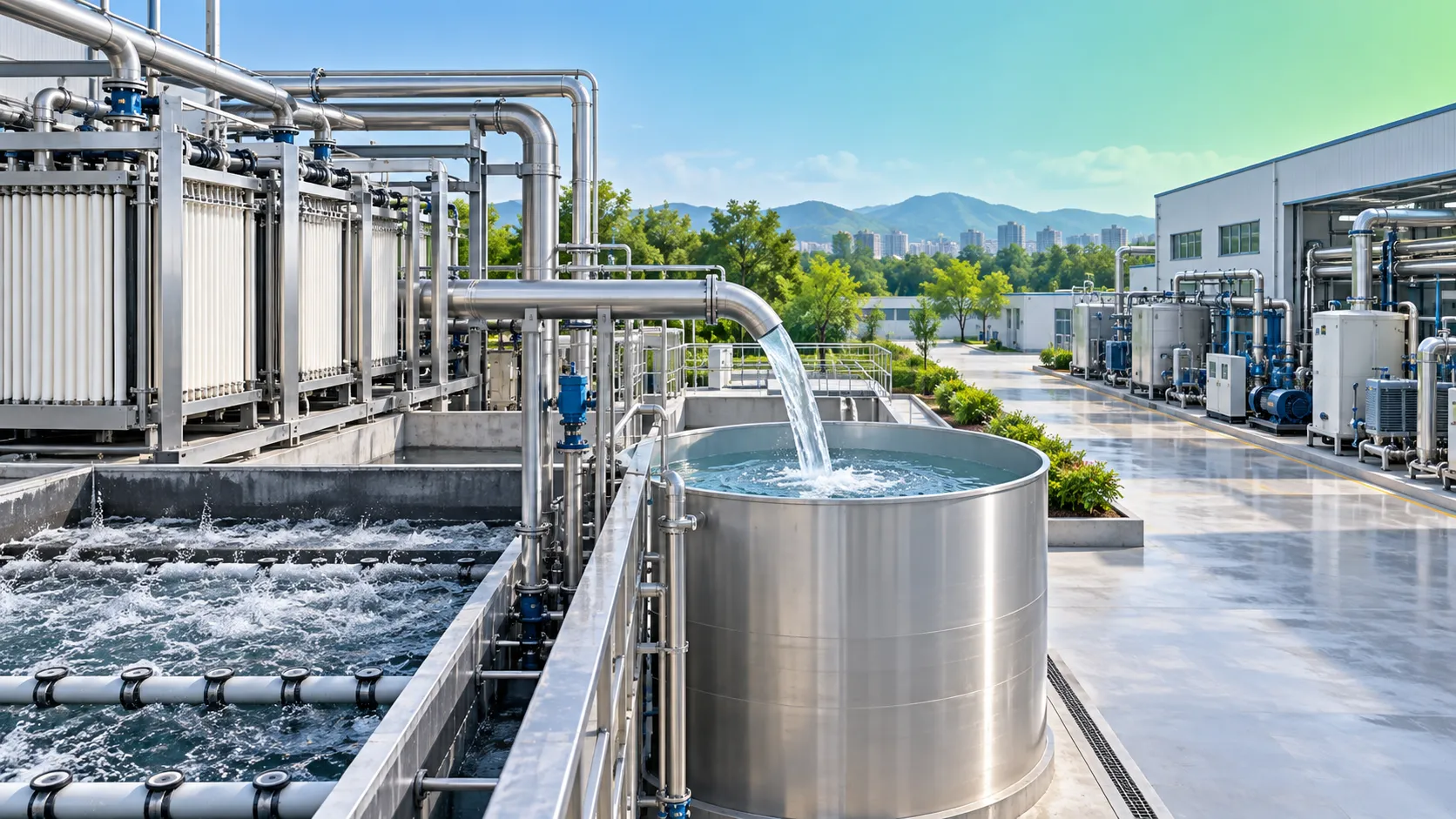
When does MBR equipment make sense for wastewater reuse?
Water treatment equipment for wastewater reuse: learn when MBR delivers compact, reliable low-solids effluent—and when alternative treatment trains offer better value.
How North America shapes global environmental governance standards
Global environmental governance North America: discover how regulation, finance, and procurement raise worldwide standards and reshape environmental projects.

How reactor capacity affects throughput in pyrolysis systems
Pyrolysis systems reactor capacity explained: learn how heat transfer, residence time, feed quality, and emissions controls determine reliable throughput.
When low-temperature reaction equipment is the right fit for heat-sensitive processes
Low-temperature reaction equipment helps protect heat-sensitive streams, improve energy integration, and maintain reliable conversion. Explore key selection factors today.
When do water reuse systems deliver a practical payback?
Water reuse systems deliver practical payback when they cut water, discharge, and downtime costs. Learn how to match treatment, recovery, and reuse quality for lasting ROI.
When do ZLD systems for power generation justify their energy use?
ZLD systems for power generation: learn when energy-intensive water recovery delivers stronger compliance, resilience, and long-term value.
Which decarbonization pathways are most viable in Southeast Asia?
Decarbonization Southeast Asia: discover practical pathways for clean power, efficiency, electrification, circular recovery, and resilient industrial growth.