
Industry News
Curation by industry experts
Hot Articles
Popular Tags
When do water reuse systems deliver a practical payback?
Water reuse systems produce a practical payback when the cost of doing nothing is visible in the operating account. High purchased-water tariffs, expensive wastewater discharge, restricted freshwater allocations, recurring haulage of concentrate, production losses during supply interruptions, and exposure to permit non-compliance can all create that pressure. Where only one of these costs exists at a low level, a reuse project may remain technically attractive but financially weak. Where several occur together, recovering water for a defined internal use can become a defensible capital investment.
The useful starting point is a site-specific water balance rather than a percentage recovery claim. A plant must identify where water enters, where it becomes contaminated, where it leaves, and which demand points can accept recovered water without creating quality, safety, or process problems. Reuse is most economical when a relatively large, stable wastewater stream can replace a relatively large, stable demand for non-potable or lower-specification water. Cooling-tower makeup, washdown, scrubber supply, utility water, dust control, and certain process rinses are often more realistic destinations than applications requiring high-purity water.
The economic threshold is created by avoided costs
A reuse system has several cost lines: intake water, sewer or discharge charges, treatment chemicals, energy, membrane replacement or media renewal, sludge handling, labor, laboratory testing, maintenance, and capital recovery. The financial case improves when the project avoids more than one existing expense. Recovering a cubic meter of water has limited value if it merely offsets low-cost freshwater while creating a high-cost concentrate stream. The same recovered volume has much greater value when it displaces purchased water, reduces discharge volume, and avoids the need to expand a constrained wastewater connection.
Discharge constraints often matter more than the water bill. A facility approaching its hydraulic discharge limit may face delayed expansion, added pretreatment obligations, or intermittent production restrictions. In that setting, reuse capacity can preserve operational headroom. The value is not simply the tariff difference between incoming and recovered water; it includes the cost and uncertainty of finding another discharge route or altering production schedules.
Water scarcity changes the calculation in a different way. A site with dependable, inexpensive supply may treat reuse as a resilience measure with a longer financial return. A site exposed to allocation cuts, seasonal restrictions, tanker dependence, or variable raw-water quality has a more immediate operating exposure. The relevant comparison is then against the marginal source that would be used during a shortage, not against the annual average municipal rate.
Recovery rate alone can mislead a capital decision
A high recovery rate sounds efficient, yet it is not automatically the lowest-cost design. As recovery rises, dissolved salts, silica, hardness, organics, and poorly rejected contaminants become more concentrated. This can increase scaling risk, osmotic pressure, cleaning frequency, pretreatment demand, or the difficulty of managing reject. For reverse osmosis systems, a design pushed for maximum recovery may require more robust antiscalant control, additional staging, softening, ion exchange, or a downstream concentrate-management step. Those additions can outweigh the value of the last increment of recovered water.
The correct target is the recovery rate that minimizes total cost while meeting the required reuse volume and quality. That target differs sharply between a low-salinity rinse stream and wastewater containing chlorides, sulfate, oil residues, surfactants, metals, high chemical oxygen demand, or biological solids. Two streams with the same total dissolved solids can behave very differently in treatment because the scale-forming ions, pH, temperature, and organic fouling potential are different.
Match water quality to the receiving use
Overtreatment is one of the most persistent reasons a promising project fails to meet its financial expectation. The recovered-water specification should be set by the receiving equipment and its failure modes, not by an abstract desire for the cleanest possible water. Cooling systems may be sensitive to hardness, alkalinity, chlorides, suspended solids, microbial growth, and cycles of concentration. Boiler applications can demand much tighter control. Washwater may tolerate a broader range, provided color, odor, suspended matter, surfactants, or trace contaminants do not affect products, surfaces, or worker safety.
A quality envelope is usually more useful than a single target value. It should identify normal and maximum limits for conductivity, turbidity, hardness, silica, total organic carbon or an appropriate organic indicator, pH, microbiological condition where relevant, and contaminants specific to the site. It should also state what happens when water falls outside that envelope. A buffer tank, diversion valve, or automatic rejection to the wastewater system may be necessary to prevent a brief treatment upset from reaching a sensitive reuse point.
Separating reuse grades often improves economics. A plant does not need one central system that produces the same water for every use. A moderately treated stream may supply washdown or cooling makeup, while a smaller polishing train serves a process with stricter requirements. This arrangement reduces the volume exposed to high-pressure membranes, advanced oxidation, ion exchange, or ultraviolet disinfection. It also makes later expansion easier because each water grade has a clear purpose.
Feed variability determines the hidden equipment scope
Laboratory samples collected during normal operation are insufficient when a wastewater stream changes with production campaigns, cleaning cycles, raw-material substitutions, shift patterns, or stormwater intrusion. The design basis needs peak and minimum flow, concentration ranges, temperature, pH excursions, oxidants, oil carryover, and cleaning chemicals. A membrane selected on a clean sample can suffer rapid fouling when exposed to periodic surfactant releases or oxidizing biocides. Likewise, biological treatment may be unstable when a batch discharge changes salinity or introduces inhibitory compounds.
Equalization is sometimes viewed as nonproductive civil work, but it can be the element that protects the entire treatment train. Adequate volume smooths hydraulic peaks, allows pH adjustment, and gives controls time to respond. Without it, equipment is often oversized for short spikes yet still exposed to abrupt chemical shocks. The apparent saving from a smaller tank can reappear as higher membrane cleaning, more frequent filter backwash, inconsistent permeate quality, and excess operator intervention.
Pretreatment must be evaluated as a system. Screens remove coarse solids but do little for emulsified oil. Multimedia filters reduce suspended solids but do not remove dissolved hardness. Activated carbon may reduce some organic compounds and residual oxidants, but its performance depends on contact time, loading, and replacement practice. Ultrafiltration provides a reliable barrier for fine solids and many microorganisms, yet it requires disciplined backwash and chemical cleaning. Selecting each barrier by its intended contaminant avoids expensive overlap and untreated failure modes.
Build the financial model around lifecycle behavior
Capital cost should include more than the packaged treatment skid. Civil works, feed and product storage, building modifications, pumps, pipe racks, electrical distribution, automation integration, sampling points, drainage, secondary containment, commissioning, and temporary bypass arrangements are frequently material portions of installed cost. Retrofitting an operating facility may also require night work, shutdown windows, lifting access, and isolation changes that do not appear in an early equipment quotation.
Operating cost requires the same discipline. Energy should be tied to actual pressure, flow, and run hours rather than a single motor rating. Chemical consumption must reflect feedwater variability and cleaning frequency. Membranes, resins, filter media, cartridges, and ultraviolet lamps should be modeled as replacement items with a service-life range, not as permanent assets. Sludge and concentrate need explicit handling assumptions. A system that reduces liquid discharge volume while producing a smaller but costly hazardous residual may have a weaker payback than its water recovery figure suggests.
Availability also has monetary value. A reuse plant that operates only when conditions are ideal cannot reliably offset intake water. The evaluation should distinguish design capacity from annual useful production after backwash, cleaning, maintenance, feed interruptions, and quality diversions. Redundant pumps, duty-standby instruments, parallel filtration, or stored recovered water may increase initial cost but prevent the receiving process from reverting to freshwater during routine maintenance.
Concentrate management can decide the project
For membrane-based reuse, the concentrate route deserves early engineering attention. Sending reject to an existing wastewater plant may be feasible where hydraulic and salt loads remain within its operating and permit limits. It becomes problematic where the biological system is sensitive to salinity, where discharge limits are already tight, or where evaporation and crystallization would be required. A reuse proposal should therefore show mass balance for dissolved solids and key contaminants, not only the clean-water output.
Zero liquid discharge is sometimes considered when discharge is unavailable or extremely restricted, but it should not be treated as a default extension of reverse osmosis. Thermal concentration, crystallization, solids handling, corrosion-resistant materials, steam or electrical demand, and maintenance requirements create a distinct cost profile. It can be justified by severe disposal constraints or high-value recovery opportunities, but it is rarely the first answer for a stream that could be managed through lower-recovery reuse, source segregation, or a permitted discharge route.
Procurement quality is visible in the design basis
Comparable proposals require a shared set of assumptions. Each supplier should receive the same feedwater data, flow profile, reuse specification, ambient conditions, operating schedule, site utility limits, footprint restrictions, and required availability. Without that discipline, one proposal may include equalization, online analyzers, cleaning facilities, spare pumps, and corrosion-resistant piping while another excludes them. The lower initial figure then describes a different scope rather than a lower-cost solution.
Performance guarantees should be linked to defined feed conditions and a clear test method. Ask how the system responds when feed conductivity, turbidity, temperature, or organic loading moves beyond the design envelope. The answer should identify alarms, automatic diversions, cleaning triggers, consumables, and the boundary between routine operation and a process upset. Broad assurances of output quality have little commercial value without those conditions.
Materials selection deserves attention where chloride, oxidants, acidic cleaning solutions, or abrasive solids are present. Stainless steel grade, duplex alloys, lined carbon steel, high-density polyethylene, polypropylene, fiberglass-reinforced plastic, elastomers, and membrane housings must be compatible with both normal feedwater and cleaning chemistry. Replacing corroded valves, pipe sections, or instrument wetted parts after installation is far more disruptive than validating compatibility before release for fabrication.
A practical payback emerges when recovered water has a reliable internal destination, avoided costs are calculated on marginal operating exposure, treatment complexity matches the real feedwater, and residual streams have a credible route. The strongest projects are not those that claim the highest recovery; they are the ones designed around stable useful output and the full cost of keeping that output available.
Recommended News
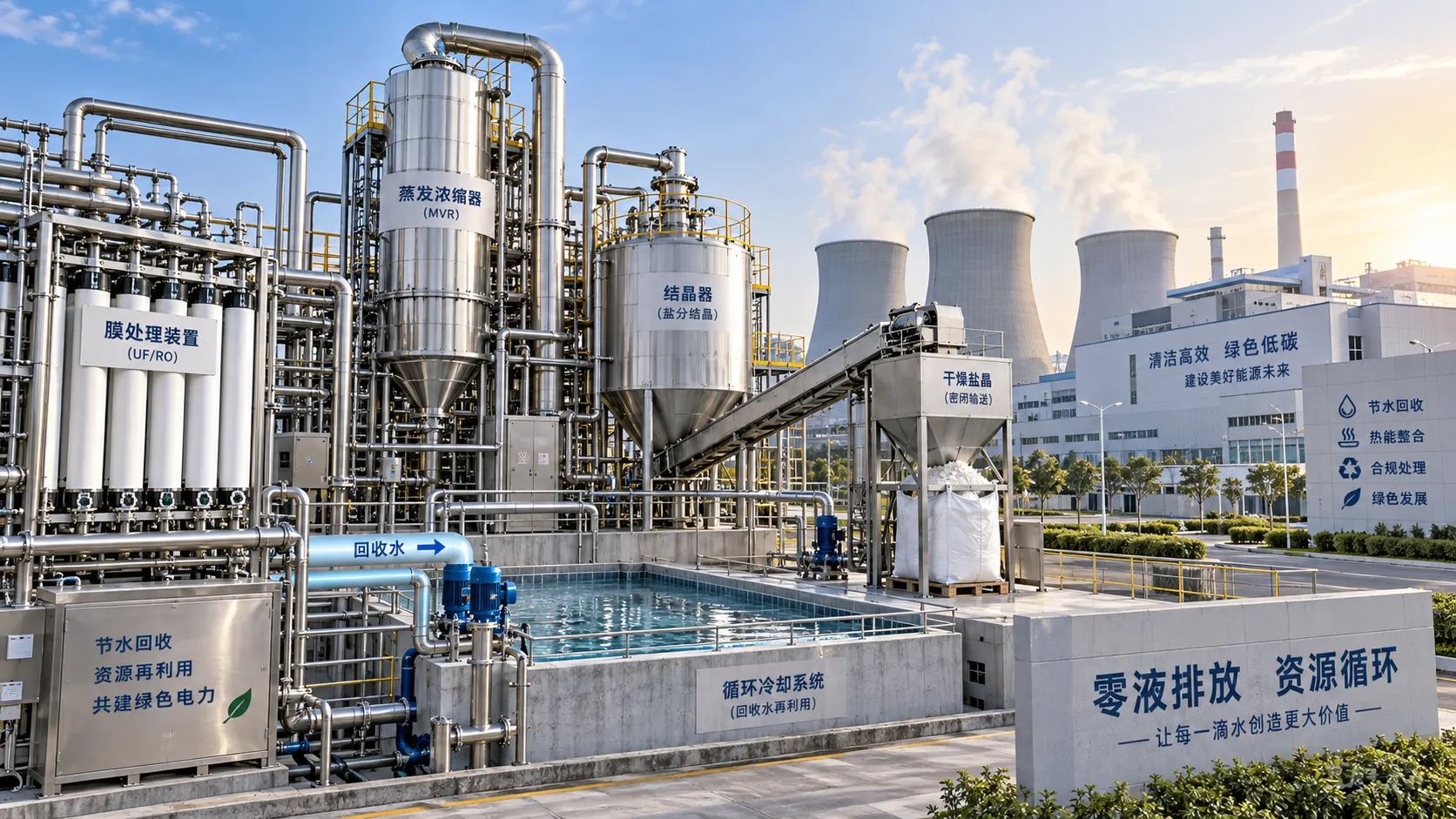
When do ZLD systems for power generation justify their energy use?
ZLD systems for power generation: learn when energy-intensive water recovery delivers stronger compliance, resilience, and long-term value.
Which decarbonization pathways are most viable in Southeast Asia?
Decarbonization Southeast Asia: discover practical pathways for clean power, efficiency, electrification, circular recovery, and resilient industrial growth.
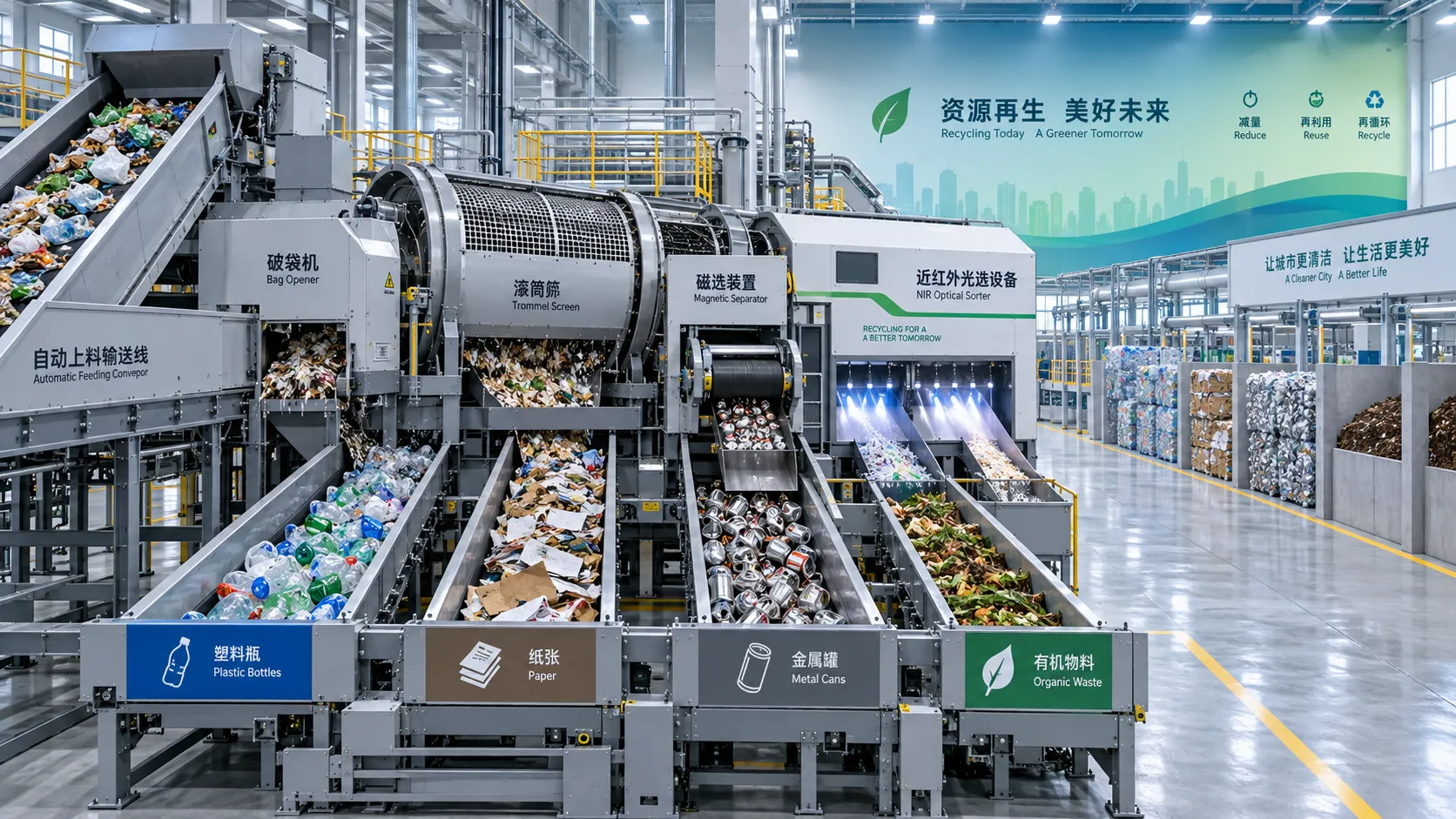
How to choose waste sorting equipment for mixed municipal waste
Waste sorting equipment selection guide for mixed municipal waste: compare technologies, improve recovery, reduce downtime, and build reliable output streams.
How to verify standards in an environmental equipment directory
environmental equipment directory standards reference: learn to verify certifications, performance evidence, scope, and project fit for confident, compliant equipment selection.
When high flux membrane water treatment justifies a larger footprint
High flux membrane water treatment can justify a larger footprint when variable feedwater, fouling risk, and uptime demands require resilient, lower-flux operation.
RO vs MED desalination: which is more energy-efficient at scale?
Desalination technology comparison: RO vs MED at scale. See how energy use, waste heat, feedwater, carbon, and flexibility determine the best choice.
Which ISO standards apply to flue gas treatment systems?
Flue gas treatment systems ISO standards: explore key requirements for emissions testing, CEMS, safety, fabrication, corrosion control, and compliant project evaluation.

When corrosion resistant purification systems are needed for brine treatment
Corrosion resistant purification systems for brine treatment: assess chloride, heat, scaling, materials, and lifecycle reliability for demanding water projects.

How preventive maintenance reduces seawater desalination equipment downtime
Seawater desalination equipment maintenance reduces downtime through proactive monitoring, pretreatment protection, and planned repairs. Explore practical strategies for reliable RO performance.