
Industry News
Curation by industry experts
Hot Articles
Popular Tags
How reactor capacity affects throughput in pyrolysis systems
How Reactor Capacity Affects Throughput in Pyrolysis Systems
Reactor capacity is a decisive variable in determining throughput, energy efficiency, and operating stability in pyrolysis systems. For technical evaluators comparing waste-to-resource solutions, the issue is not simply how much material a reactor can hold. The practical question is whether the reactor, heating system, feed preparation line, vapor handling train, and emissions controls can maintain the required thermal and residence-time conditions at the intended feed rate.
A large vessel can still deliver disappointing output if it is poorly heated, fed inconsistently, or connected to undersized condensation and gas-treatment equipment. Conversely, a smaller reactor with disciplined feedstock preparation and stable process control may achieve a more reliable annual processing result. This is why pyrolysis systems reactor capacity should be evaluated as part of an integrated processing envelope rather than as a standalone nameplate figure.
For solid-waste recovery projects, capacity decisions also affect permitting strategy, material logistics, maintenance planning, product quality, and the ability to operate under increasingly strict environmental compliance requirements. At Global Eco-Shield Dynamics (ESD), pyrolysis is viewed within a wider ecological infrastructure context: a recovery unit is only credible when its material loop, energy balance, air-pollution controls, residue management, and reporting boundaries can work together.
Capacity Is Not the Same as Throughput
Reactor capacity commonly refers to a physical or nominal operating capability. Depending on the supplier and reactor type, it may be expressed as reactor volume, batch charge mass, tonnes of feed per day, or an hourly feed-rate range. These descriptions are useful, but they are not interchangeable. A reactor volume says little by itself about how quickly heat can enter the material, how uniformly the feed moves through the reactor, or how much moisture must be evaporated before meaningful pyrolysis begins.
Throughput is the mass of feed actually processed over time under specified operating conditions. A simple conceptual relationship is:
Throughput = effective working inventory ÷ average solids residence time
The word “effective” matters. The full geometric volume of a reactor is rarely available for solids. Freeboard may be needed for vapor disengagement; internal screws, paddles, seals, or heat-transfer surfaces occupy space; and safe filling limits prevent carryover or blockage. For continuous systems, material flow behavior may further reduce the useful inventory. A nominally larger reactor is therefore not automatically a higher-throughput reactor.
Residence time must also be defined carefully. Solids residence time, vapor residence time, and thermal exposure time may differ considerably. In a plastic-pyrolysis line, a material may remain in the reactor for a period determined by conveying and heat transfer, while evolved vapors move through the vapor zone and downstream piping much faster. Both times can influence the final distribution of gases, condensable hydrocarbons, waxes, char, and heavy fractions.
Why Scaling Up Changes the Heat-Transfer Problem
The core constraint in most thermal conversion systems is not empty volume; it is heat transfer. Pyrolysis requires feedstock to reach and sustain a defined temperature range in an oxygen-limited environment. As reactor dimensions increase, the mass of material can grow faster than the available heated surface area. If heat does not penetrate the solids bed at the required rate, operators often compensate by slowing feed, increasing residence time, raising wall temperature, or accepting a wider distribution of product quality.
This effect is especially relevant with low-conductivity, irregular, or contaminated feeds. Shredded mixed plastics, rubber-rich material, biomass residues, sewage-sludge-derived solids, and refuse-derived feedstocks do not behave like uniform laboratory samples. Particle size distribution, bulk density, melt behavior, ash content, and fines all influence the contact between material and heated surfaces. A capacity estimate based on clean, dry, homogeneous feedstock may not transfer safely to commercial mixed-waste operation.
Reactor configuration determines how the system addresses that limitation. Rotary kilns rely on rotation and internal movement to expose solids; auger reactors use mechanical conveyance; stirred reactors seek more active mixing; fluidized systems depend on controlled gas-solid contact; and batch vessels accept a different cycle-time profile. Each design has a distinct relationship between reactor size, heat-transfer area, mechanical complexity, and material handling. Technical assessment should compare equivalent operating conditions, not just advertised reactor dimensions.
The hidden influence of moisture and sensible heat
Water is often the first capacity penalty. Moist feed must be heated, and its water content must be vaporized before the reactor’s thermal duty can focus on pyrolysis chemistry. This can lower practical feed throughput even when the solids-handling equipment is mechanically capable of a higher rate. Moisture also changes downstream vapor loading and may complicate condensation, aqueous-phase handling, corrosion control, and wastewater treatment.
For this reason, a capacity review should distinguish between wet feed rate, dry solids rate, and organic dry matter rate where relevant. A project receiving variable municipal or industrial waste should not rely on a single headline tonnage without defining the accepted feed envelope. Upstream drying may stabilize reactor performance, but it shifts energy demand and adds equipment that must be included in the overall balance.
The Throughput Bottleneck May Sit Outside the Reactor
In real installations, the reactor is one bottleneck among several. A well-sized thermal vessel cannot compensate for poor receiving, sorting, shredding, metal removal, drying, feeding, vapor recovery, gas cleaning, or residue discharge. When project teams focus narrowly on reactor capacity, they risk creating a line where one downstream restriction forces the entire plant to derate.
The most useful supplier documentation therefore does more than list a rated reactor feed rate. It shows the design basis for the full line, the assumed feed specification, expected operating window, mass and energy balance methodology, and the conditions under which the stated rate is achievable. If this information is absent, the number should be treated as preliminary rather than as a firm performance commitment.
Residence Time, Product Objectives, and Process Control
Increasing feed rate without changing reactor volume generally reduces average residence time. That may be acceptable when the feed is uniform and the system has sufficient heat-transfer capability. It becomes risky when the material requires longer thermal exposure for conversion or when internal mixing is uneven. Under-processing can leave unconverted material, increase heavy residues, and make product streams less predictable. Excessive thermal exposure, on the other hand, can promote secondary cracking or alter the composition of condensable products.
There is no universally correct residence time because pyrolysis outcomes depend on feedstock and intended products. A project seeking a stable solid carbonaceous product will not necessarily optimize the same way as one seeking condensable oils or process gas. The evaluation should start with a process objective, then examine whether reactor capacity and temperature control can consistently support it.
Control architecture is central to this question. Temperature readings at the reactor wall do not prove that the solids bed is at the intended condition. Evaluators should ask where temperatures are measured, how feed-rate changes are linked to heat input, how pressure is controlled, and what happens when feed quality shifts. Stable operation depends on the relationship among feed rate, reactor torque or drive load where applicable, heating-zone response, vapor pressure, and downstream condensation capacity.
Batch, Continuous, and Modular Capacity Choices
Batch systems are sometimes described using charge mass, but their true output must include loading, heating, reaction, cooling, unloading, inspection, and cleaning time. A large batch charge may look attractive on paper while delivering modest daily throughput if the cycle is long or turnaround is labor-intensive. Batch operation can nevertheless be suitable where feed volumes are intermittent, materials vary substantially, or a project needs segregated campaigns.
Continuous systems can provide steadier thermal conditions and more regular downstream loading, provided the feed mechanism can tolerate the material. Their rated throughput should be examined across normal, maximum, and reduced operating states. A continuous reactor that operates well only at one narrow loading point may be difficult to integrate with seasonal waste availability or variable collection patterns.
Modular design introduces another option: several smaller trains rather than one large reactor. This can improve redundancy and allow maintenance on one line while others remain available. It can also reduce the operational consequence of a single upset. Yet modularity is not automatically simpler. Multiple trains require duplicated instrumentation, feeding interfaces, maintenance resources, and a properly designed shared utility and treatment infrastructure. The right choice depends on site footprint, waste-supply reliability, maintenance capability, and the project’s tolerance for outages.
Capacity Must Be Tested Against Compliance Conditions
Thermal recovery projects are often assessed primarily on conversion potential, but compliance readiness can determine the real operating envelope. The relevant requirements vary by jurisdiction and by the legal classification of the feed, products, residues, and emissions. Depending on the project, authorities may examine air emissions, odor, noise, waste storage, wastewater, hazardous constituents, fire protection, occupational safety, and residue disposal or beneficial-use claims.
Capacity affects these issues directly. Higher throughput generally means higher instantaneous vapor, gas, particulate, and solids-discharge loads. During start-up, shutdown, blockage clearance, or feed interruption, operating conditions may differ materially from steady-state design assumptions. Gas-treatment equipment, flare or thermal oxidation provisions where used, containment systems, and monitoring plans should be evaluated at credible upset conditions as well as normal load.
This wider view aligns with the work of ESD’s Strategic Intelligence Center, which connects recovery equipment decisions with environmental-control logic, closed-loop resource planning, and evolving compliance expectations. In practice, a pyrolysis line may need interfaces with flue-gas treatment, water management, solid-residue handling, and digital operating records. Reactor capacity is one node in that system, not the whole system.
A More Defensible Evaluation Approach
When comparing equipment proposals, technical teams should request a capacity basis that can be audited. It should identify the feedstock composition assumed by the supplier, including moisture, particle size, contaminants, bulk density, and expected variability. It should state whether throughput is instantaneous, average hourly, daily, or annual, and whether planned maintenance, warm-up, shutdowns, and feed interruptions have been considered.
It is also prudent to separate reactor nameplate capacity from guaranteed line throughput and from expected site availability. These are different numbers. The first concerns equipment design; the second concerns performance under agreed feed conditions; the third reflects how much time the plant can realistically operate. Mixing them can distort both waste-diversion forecasts and financial models.
A sound review normally asks for process flow diagrams, mass and energy balances, utility demand, control philosophy, feed acceptance limits, maintenance access, and a clear description of all downstream treatment stages. Where product quality or residue classification matters, sampling and testing plans should be defined early rather than after equipment selection. Local permitting authorities and applicable technical standards must ultimately guide the compliance pathway.
The best reactor capacity is not the largest available vessel or the highest nominal feed rate. It is the capacity that matches the real feedstock, reaches the required thermal conditions without chronic instability, stays within the limits of the vapor and emissions-control systems, and remains serviceable over the operating life of the plant. For evaluators, that disciplined distinction turns a headline capacity claim into a credible throughput decision.
Recommended News
When low-temperature reaction equipment is the right fit for heat-sensitive processes
Low-temperature reaction equipment helps protect heat-sensitive streams, improve energy integration, and maintain reliable conversion. Explore key selection factors today.
When do water reuse systems deliver a practical payback?
Water reuse systems deliver practical payback when they cut water, discharge, and downtime costs. Learn how to match treatment, recovery, and reuse quality for lasting ROI.
When do ZLD systems for power generation justify their energy use?
ZLD systems for power generation: learn when energy-intensive water recovery delivers stronger compliance, resilience, and long-term value.
Which decarbonization pathways are most viable in Southeast Asia?
Decarbonization Southeast Asia: discover practical pathways for clean power, efficiency, electrification, circular recovery, and resilient industrial growth.
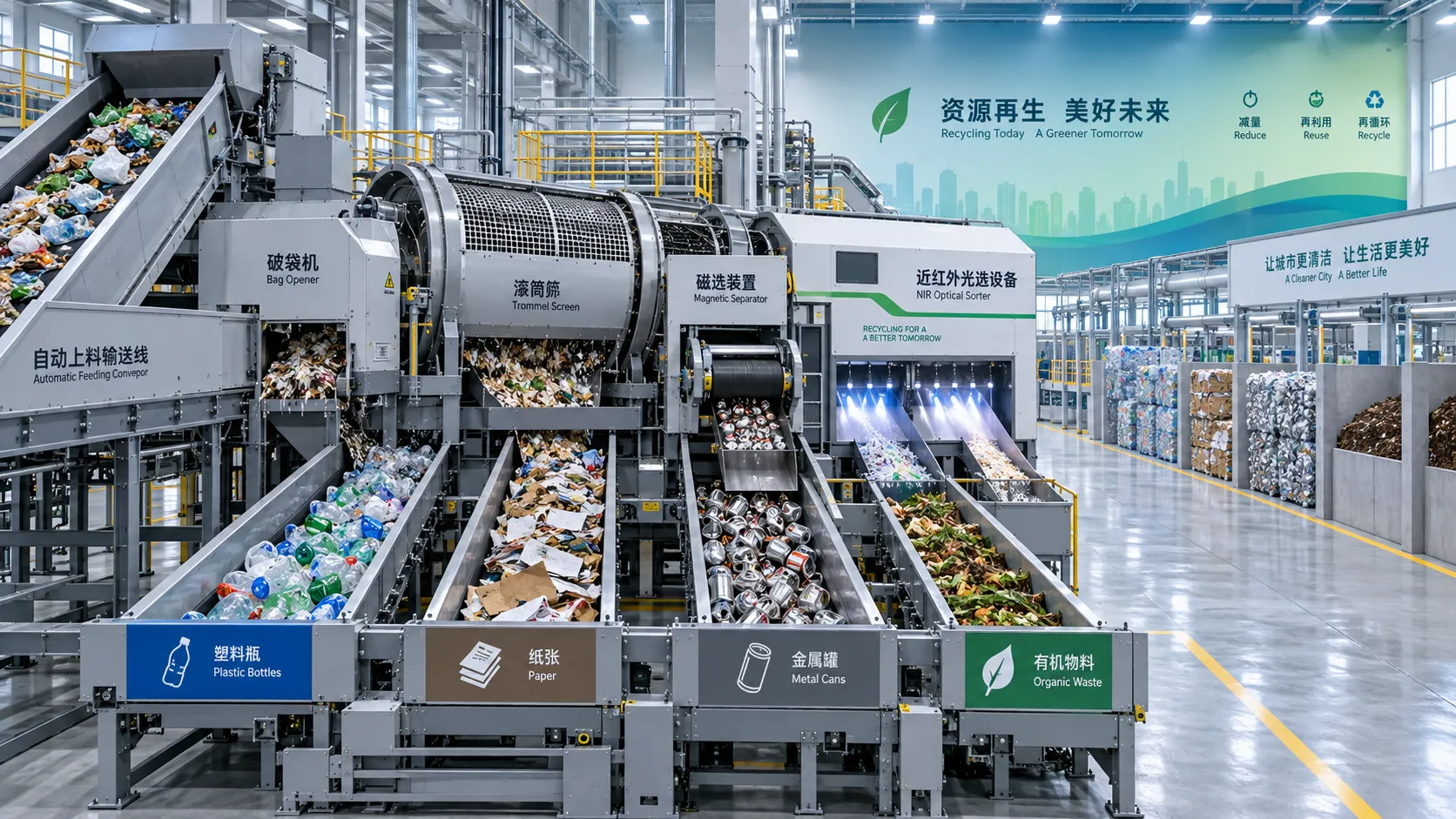
How to choose waste sorting equipment for mixed municipal waste
Waste sorting equipment selection guide for mixed municipal waste: compare technologies, improve recovery, reduce downtime, and build reliable output streams.
How to verify standards in an environmental equipment directory
environmental equipment directory standards reference: learn to verify certifications, performance evidence, scope, and project fit for confident, compliant equipment selection.
When high flux membrane water treatment justifies a larger footprint
High flux membrane water treatment can justify a larger footprint when variable feedwater, fouling risk, and uptime demands require resilient, lower-flux operation.
RO vs MED desalination: which is more energy-efficient at scale?
Desalination technology comparison: RO vs MED at scale. See how energy use, waste heat, feedwater, carbon, and flexibility determine the best choice.
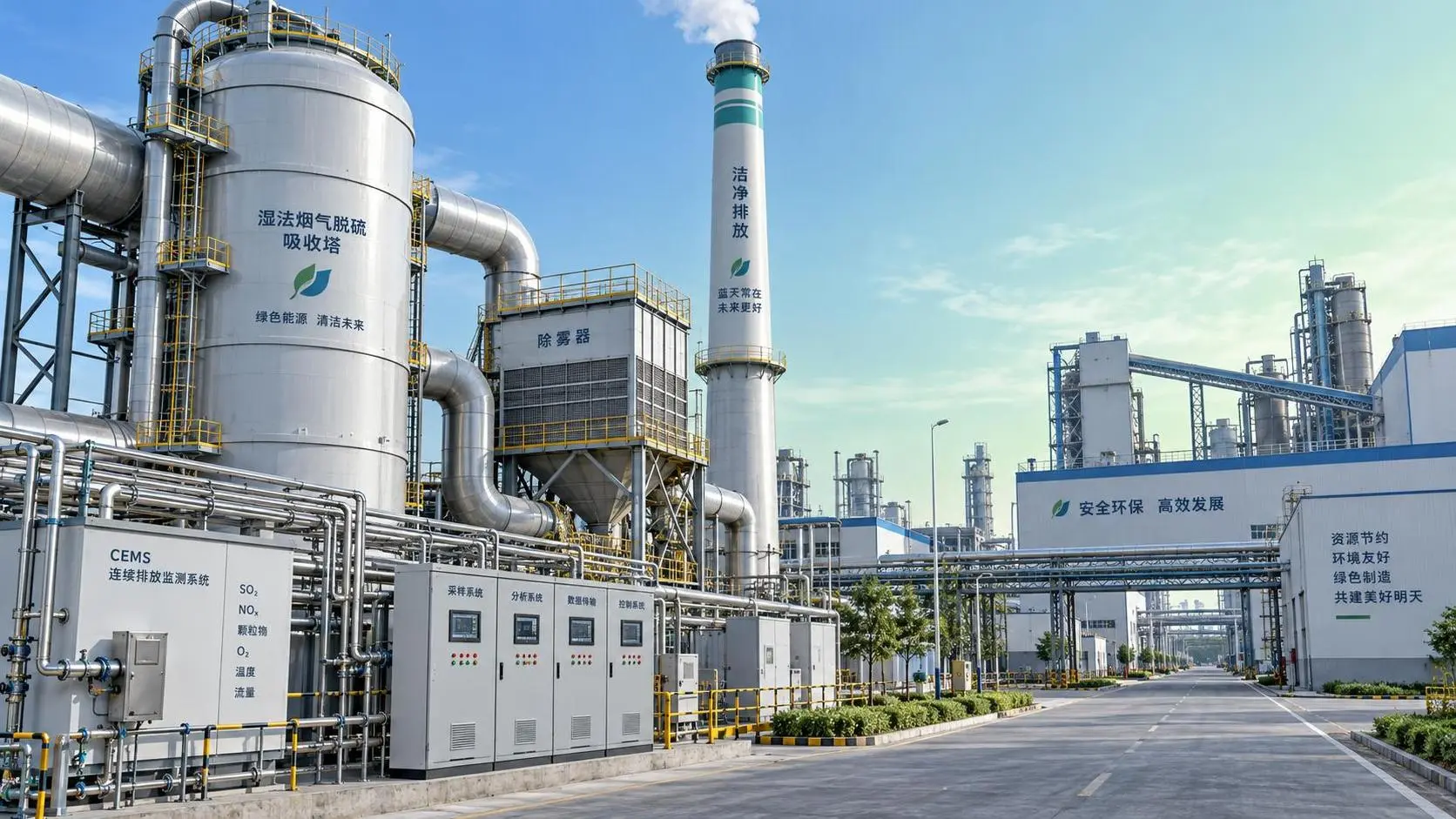
Which ISO standards apply to flue gas treatment systems?
Flue gas treatment systems ISO standards: explore key requirements for emissions testing, CEMS, safety, fabrication, corrosion control, and compliant project evaluation.