
Industry News
Curation by industry experts
Hot Articles
Popular Tags
How to choose waste sorting equipment for mixed municipal waste
Mixed municipal waste is difficult to sort because it is not a uniform feedstock. It may contain food waste, films, rigid plastics, paper, textiles, metals, glass, bulky items, fines, moisture, and materials that have already been damaged by compaction. The right waste sorting equipment is therefore not the line with the most machines or the highest advertised recovery rate. It is the system that can process the local waste stream steadily, create saleable output fractions, and remain maintainable under daily operating conditions.
For a new facility or a major retrofit, begin with three questions: What arrives at the tipping floor? Which materials must be recovered or removed? Where will each separated fraction go? Equipment selection becomes much clearer once those answers are based on operating data rather than assumptions.
Start with the incoming waste, not the equipment catalogue
Two municipalities can report a similar annual waste volume and still require very different sorting systems. Collection method, climate, commercial waste content, public participation in source separation, and seasonal changes all alter the material mix.
A useful characterization exercise should examine representative loads across different days and seasons. The purpose is not merely to calculate percentages by material category. The project team needs to understand physical behavior:
- How much material is smaller than the screen cut size?
- How wet and adhesive is the organic fraction?
- Are plastic bags intact, torn, or heavily wrapped around other materials?
- How much cardboard, film, textile, wire, or flexible material can wrap shafts and belts?
- Are glass and rigid containers likely to break before optical sorting?
- Does the feed include bulky waste, construction debris, batteries, pressurized containers, or other disruptive items?
These details determine whether a proposed process is workable. For example, optical sorting can be highly useful for relatively clean, well-presented dry recyclables. It is less effective when a material is hidden inside bags, coated with organics, or delivered in an inconsistent layer. In that situation, spending more on sensor sorting before improving opening, screening, and material presentation often produces disappointing results.
Design for the realistic upper range of difficult feed conditions, not only for an average composition report. A line that works well during a dry period but repeatedly blocks during wet seasons does not deliver dependable capacity.
Define the output strategy before choosing separation technologies
“Recover more” is not a complete design target. Each recovered stream needs a defined quality requirement and a practical destination. A material recovery facility may be expected to produce recyclable metals, plastic fractions, paper grades, a combustible fraction for energy recovery, organics for treatment, or simply reduce disposal volume. Those goals lead to different process priorities.
The downstream processor should influence the acceptance specification. A buyer of PET, for instance, may have different tolerance for film, labels, other polymers, moisture, or residual food contamination than another buyer. The same applies to refuse-derived fuel users, composting facilities, anaerobic digestion plants, and metal recyclers. A fraction that cannot meet its outlet specification is not recovered value; it becomes a handling and disposal problem at a later stage.
Build the process around material behavior
Most mixed-waste facilities use a sequence of mechanical and sensor-based separations. Each stage should solve a specific problem for the next one.
Opening and metering create the conditions for every later step
Feed control is often treated as routine conveying, but it has a major effect on sorting performance. Waste arriving in dense clumps or sealed bags cannot be accurately classified by downstream equipment. A bag opener is generally preferable when the aim is to release contents while avoiding unnecessary size reduction. A shredder may be needed for a fuel-oriented process or difficult bulky material, but early shredding can mix contaminants into valuable fractions and make later recovery harder.
After opening, the line needs steady metering. Overfeeding screens or optical sorters creates thick material layers, unstable residence time, and frequent carryover. The practical question is not simply whether a machine can accept a peak feed rate for a short period. It is whether the entire line can sustain that rate while preserving separation quality.
Use screens to divide by size, but choose the screen for the waste condition
Trommel screens, disc screens, star screens, and other screening systems all classify material by size, yet their behavior differs significantly with wet organics, films, fibrous material, and irregular shapes. Screen selection should consider blinding risk, cleaning access, wear components, and how the selected cut size supports later recovery.
Fines are frequently organic-rich, but they are rarely pure organics. They may also contain glass fragments, grit, small plastics, and other contaminants. Sending all fines directly to biological treatment can create avoidable problems unless the downstream process is designed for that contamination level. Conversely, selecting too large a fine cut can leave wet material attached to paper and packaging, lowering the quality of dry recyclable streams.
Choose separation stages by fraction, not by fashion
Magnetic separators are a robust choice for ferrous metals and are commonly placed where the material burden is appropriate. Eddy current separators are used for non-ferrous metals, but they need suitable particle size and material presentation to work effectively. Air separation can help divide lighter films and paper from heavier containers and inerts, though it must be designed around moisture, dust control, and the actual density range of the feed.
Ballistic separators can split materials by shape and behavior, often creating two-dimensional and three-dimensional fractions while allowing fines to pass through. Their value depends on what follows. If optical units must identify bottles and rigid containers, a well-prepared three-dimensional stream may justify the additional stage. If the intended outputs do not benefit from that distinction, the equipment can add complexity without proportionate value.
Near-infrared optical sorters are most useful when they receive a controlled, singulated layer and a clearly defined target fraction. They can identify many polymer and fiber types, while other sensors may support color recognition or metal detection. They should not be specified as a universal answer to mixed waste. Heavily soiled black materials, overlapping items, dark or wet surfaces, and bagged waste all reduce the conditions needed for accurate identification.
Automation should solve a documented operating problem
Automated waste sorting equipment can reduce dependence on manual picking and improve consistency for selected fractions. It also introduces requirements for compressed air, electrical quality, controls integration, cleaning, calibration, spare parts, and trained operators. The decision should be tied to a measurable bottleneck: a material grade that is not clean enough, a labor-intensive quality-control point, an unstable recovery stream, or a safety issue.
Manual sorting still has a role in many facilities, especially for quality control, removal of unusual items, and low-volume fractions. It is most effective when the upstream process has already narrowed the material stream. Asking pickers to make high-value decisions from an overloaded mixed belt is neither a reliable quality strategy nor a sound labor plan.
A hybrid design is often appropriate: mechanical separation for the bulk flow, sensor sorting where material identification adds value, and staffed quality-control locations where human judgment handles exceptions. The right balance depends on labor availability, expected feed variability, and the commercial value of cleaner outputs.
Evaluate the whole plant, including the parts outside the sorting line
A process diagram can look efficient while the physical layout remains unworkable. Site constraints influence equipment selection as much as recovery targets. Confirm the required footprint for receiving, storage, conveyors, maintenance clearances, bale storage, residue handling, traffic circulation, fire separation, and future expansion.
Maintenance access deserves particular attention. Screens, bag openers, shredders, and conveyors operate in abrasive, contaminated conditions. Equipment placed tightly together may save building area on paper but make routine service slow and unsafe. Access to wear parts, lifting points, lockout locations, and cleaning zones should be reviewed during layout development, not after procurement.
Dust, odor, noise, drainage, fire risk, and battery detection also need to be addressed at plant level. They cannot be solved merely by selecting a better sorter. A facility processing mixed municipal waste needs coherent receiving procedures, housekeeping standards, fire protection, ventilation or extraction where necessary, and a defined route for hazardous or incompatible items.
Compare suppliers on operating assumptions, not headline claims
When reviewing proposals, ask each supplier to state the same assumptions: feed composition, moisture condition, hourly throughput, operating hours, planned availability, target output specifications, and residue route. A proposal based on clean, dry material should not be compared directly with one designed for highly variable residual waste.
Look beyond the main machine list. A complete comparison should cover:
- Process guarantees and how performance is measured at the facility boundary.
- Expected wear items, replacement intervals, and local spare-parts availability.
- Electrical load, compressed-air demand, dust extraction, and other utilities.
- Control-system interfaces, data collection, alarms, and remote support arrangements.
- Operator training, commissioning scope, and performance testing under representative feed.
- What happens to rejects, bypass material, and maintenance downtime.
Capital cost should be evaluated together with operating cost and commercial output quality. A lower-cost line can become expensive if it produces contaminated bales, suffers repeated stoppages, or requires excessive manual re-sorting. A highly automated line can also be a poor investment if local feed conditions prevent it from reaching the anticipated level of material recognition.
A practical selection sequence
Before issuing a request for proposal, establish a short, controlled decision package. It should include waste characterization, expected daily and peak loads, collection and delivery patterns, target outputs, downstream acceptance requirements, site constraints, utility limits, and the operating model. This package gives suppliers enough context to propose a process rather than simply quote standalone machines.
Next, test the proposed line against difficult conditions: wet loads, high film content, oversized items, unexpected contamination, and temporary outages of a downstream outlet. Review mass balance logically. Every tonne entering the facility must emerge as a defined recyclable fraction, organic-rich fraction, fuel fraction, residue, or loss such as moisture. Unexplained recovery claims are a warning sign.
Finally, retain flexibility where future conditions are uncertain. Space for an additional optical sorter, bypass conveyors, modular control architecture, or adaptable bunkers may be more valuable than installing every possible separation stage from day one. The Global Eco-Shield Dynamics perspective on solid waste recovery is useful here: sorting lines should be treated as part of a broader resource-recovery system, where technical performance, downstream material use, and environmental compliance must remain aligned.
The soundest choice is usually a line that is deliberately matched to the waste stream and outlet market, with enough resilience for real operating variation. Start with evidence from the incoming material, specify outputs that have a destination, and select each machine because it improves the next processing decision. That approach produces a sorting facility that can be operated, maintained, and expanded with far less uncertainty.
Recommended News
How to verify standards in an environmental equipment directory
environmental equipment directory standards reference: learn to verify certifications, performance evidence, scope, and project fit for confident, compliant equipment selection.
When high flux membrane water treatment justifies a larger footprint
High flux membrane water treatment can justify a larger footprint when variable feedwater, fouling risk, and uptime demands require resilient, lower-flux operation.
RO vs MED desalination: which is more energy-efficient at scale?
Desalination technology comparison: RO vs MED at scale. See how energy use, waste heat, feedwater, carbon, and flexibility determine the best choice.
Which ISO standards apply to flue gas treatment systems?
Flue gas treatment systems ISO standards: explore key requirements for emissions testing, CEMS, safety, fabrication, corrosion control, and compliant project evaluation.

When corrosion resistant purification systems are needed for brine treatment
Corrosion resistant purification systems for brine treatment: assess chloride, heat, scaling, materials, and lifecycle reliability for demanding water projects.

How preventive maintenance reduces seawater desalination equipment downtime
Seawater desalination equipment maintenance reduces downtime through proactive monitoring, pretreatment protection, and planned repairs. Explore practical strategies for reliable RO performance.
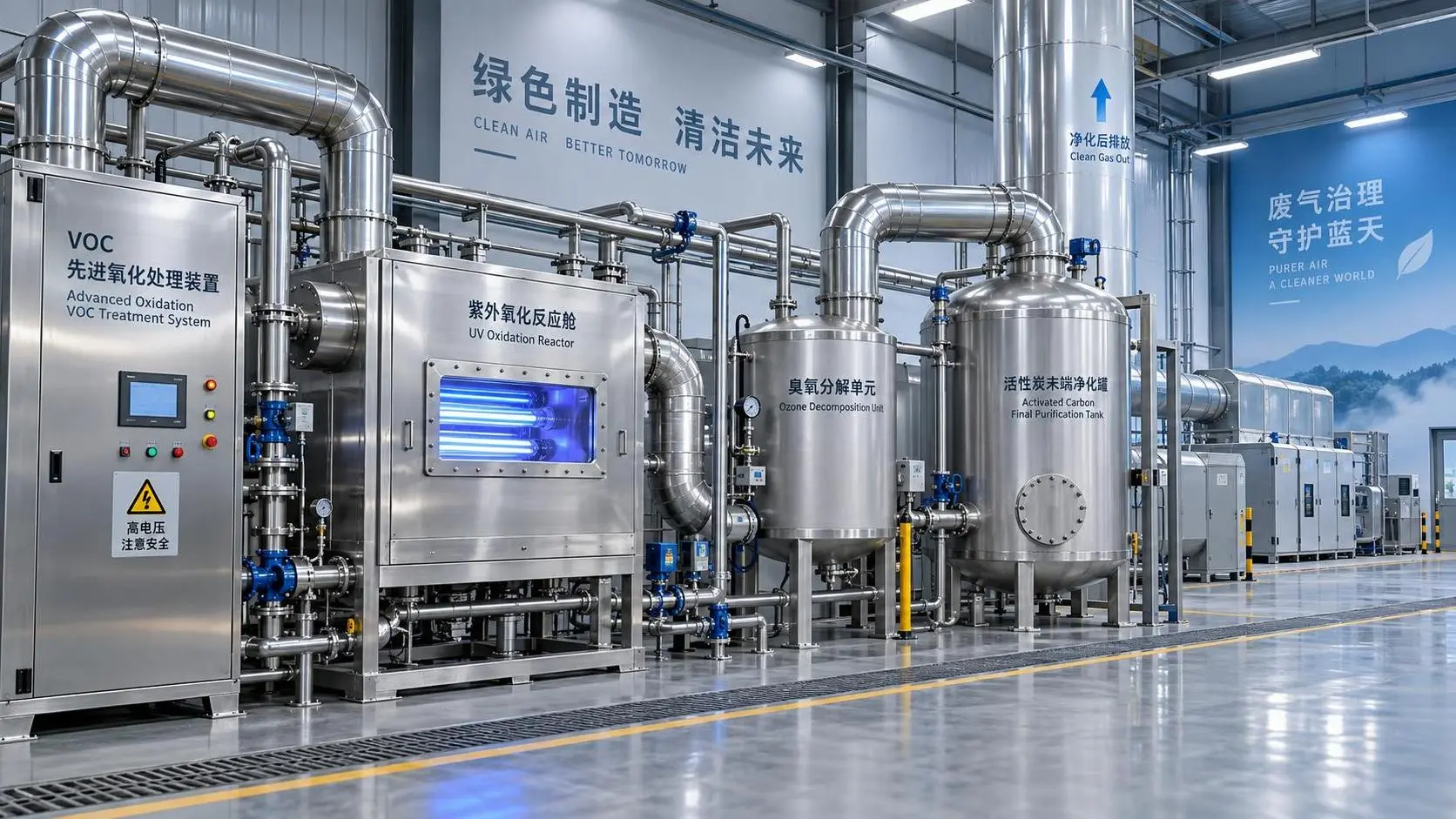
When are advanced oxidation processes the right choice for VOC control?
Advanced oxidation processes for VOC control: learn when AOPs outperform conventional options, manage by-products, and achieve reliable compliance.
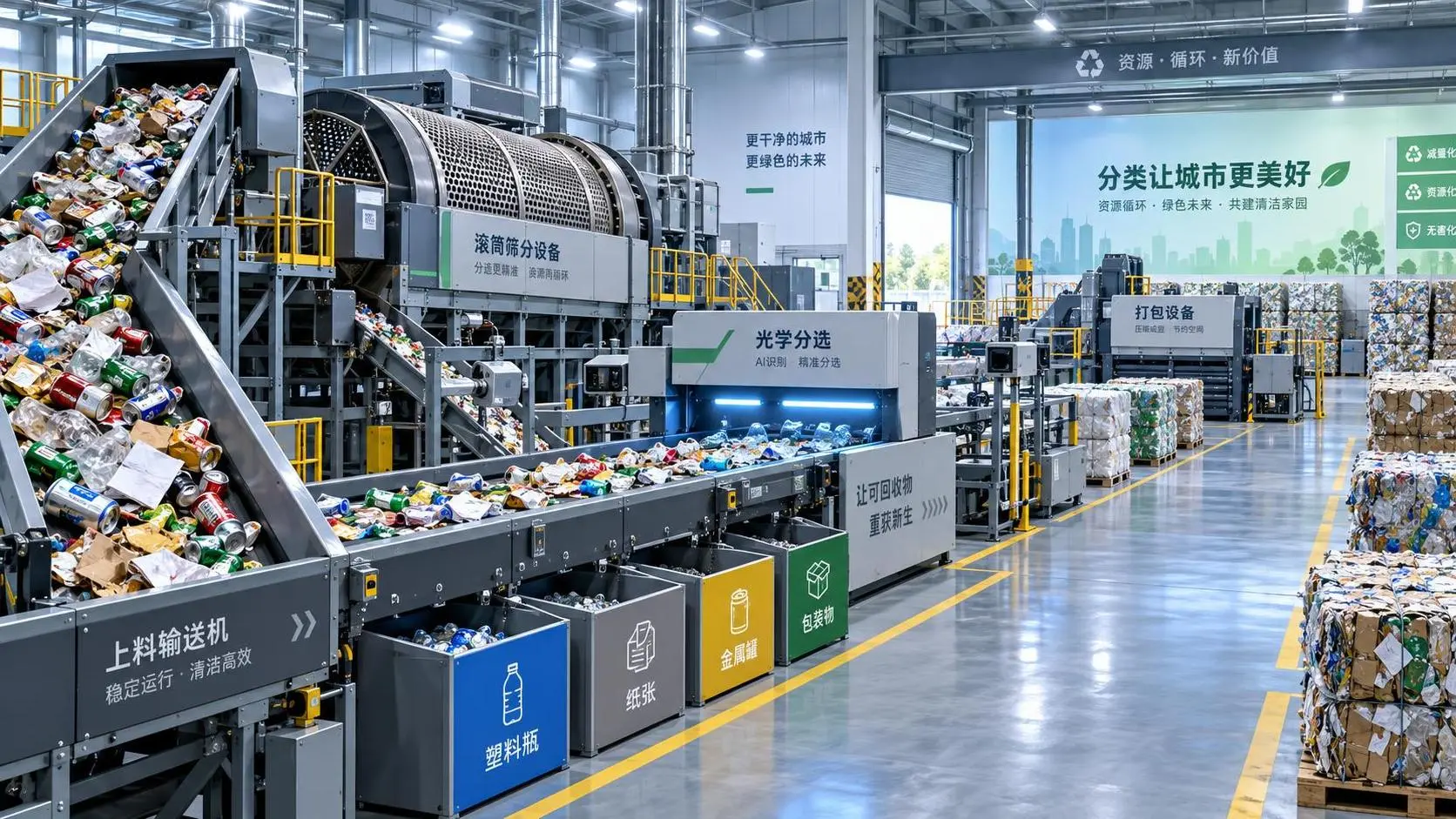
What throughput should municipal waste sorting equipment deliver?
Waste sorting equipment for municipal waste: learn how to set reliable throughput based on peak loads, material quality, uptime, and recovery targets.
What carbon neutrality means for corporate investment decisions
Carbon neutrality is transforming corporate investment decisions. Explore how lifecycle economics, efficiency, compliance, and resilience can drive measurable returns and lasting advantage.