
Industry News
Curation by industry experts
Hot Articles
Popular Tags
When do ZLD systems for power generation justify their energy use?
When Do ZLD Systems for Power Generation Justify Their Energy Use?
Zero liquid discharge is easy to support in principle and much harder to approve in a capital review meeting. A ZLD train can prevent the release of high-salinity wastewater, reduce dependence on a constrained receiving water body, and create a clearer compliance pathway where discharge permits are becoming difficult to retain. It also consumes substantial thermal and electrical energy, requires careful chemical control, and produces solids that still need a lawful and practical destination.
For power generators, the question is therefore not whether ZLD is “green.” The better question is whether the environmental and operating risks avoided by ZLD are greater than the energy, carbon, capital, and maintenance burden it introduces over the life of the plant. In some locations, the answer is plainly yes. In others, a well-designed partial-recovery system, a brine concentrator with managed discharge, or an alternative water source may produce a better overall result.
ZLD systems for power generation tend to make sense when they solve a real constraint rather than simply satisfy a broad corporate ambition. That distinction matters. A power station with dependable access to a permitted outfall is not in the same position as an inland plant relying on stressed groundwater, a facility near a sensitive watershed, or a station operating under a discharge permit that can be tightened at renewal.
The energy penalty is real, but it is not the whole environmental calculation
Most ZLD arrangements for power plants combine pretreatment, membrane concentration where water chemistry allows, and a thermal stage to deal with the final high-salinity stream. Depending on the feedwater, that last step may involve a brine concentrator, crystallizer, evaporation pond interface, or a related solids-handling package. Thermal evaporation is usually where decision-makers begin to worry about energy use—and rightly so.
Yet it is misleading to evaluate the energy requirement in isolation. A coal, gas, biomass, geothermal, nuclear, or industrial cogeneration site may have different opportunities to use low-grade steam, waste heat, or existing auxiliary infrastructure. The practical question is not simply how many units of energy the ZLD system requires. It is whether that energy must come from incremental fuel combustion, whether it displaces useful generation, and whether the plant can integrate the load without compromising availability.
A design that looks acceptable on a process-flow diagram can become unattractive if it consumes high-value steam during peak dispatch periods. Conversely, an integrated design may be reasonable where there is recoverable heat that would otherwise be rejected. This is why a generic energy benchmark is rarely enough for an investment decision. The heat balance, seasonal operating profile, dispatch strategy, and fuel or power cost structure all belong in the same model.
Carbon also has to be evaluated honestly. Eliminating liquid discharge does not automatically mean lowering total environmental impact if the additional energy is supplied by a carbon-intensive source. The strongest ZLD business cases are often those that address both sides: they minimize discharge risk while reducing the specific energy demand through better pretreatment, staged concentration, heat integration, and sensible recovery targets.
The situations where a full ZLD case becomes compelling
There are several recurring conditions in which a full zero liquid discharge strategy deserves serious consideration. None should be treated as an automatic mandate, but each changes the risk calculation materially.
The first case—no viable discharge route—is often the clearest. If a new plant or major retrofit cannot secure an acceptable discharge path, the comparison is not between low-cost conventional treatment and expensive ZLD. It is between ZLD and the cost of lost development options, water import, wastewater transport, or an unreliable operating permit. That is a very different financial decision.
Water-stressed regions create another strong case, particularly where a facility’s ability to run depends on securing freshwater during dry periods. Recovered water from a ZLD train is not universally suitable for every reuse application without further conditioning, but it can reduce demand for higher-quality makeup water. The value is often resilience rather than a simple reduction in the water bill. That value should be modeled as avoided exposure to restrictions, curtailment, emergency supply arrangements, and conflict with municipal or agricultural users.
Do not confuse high recovery with good system design
Power plant wastewater is rarely a single stream with stable chemistry. Cooling tower blowdown, flue gas desulfurization wastewater, boiler blowdown, regeneration waste, landfill runoff, and stormwater may have very different contaminant profiles and flow patterns. Mixing them indiscriminately can create a larger and more difficult ZLD problem than necessary.
This is where early stream segregation earns its keep. Some relatively clean streams may be reused or treated by lower-energy methods. Some highly variable streams may need equalization before they reach membranes or evaporators. Certain constituents may need targeted removal upstream because they would otherwise drive scaling, fouling, corrosion, or poor crystal quality in the thermal stage.
A project team that starts with “we need 100% recovery” can unintentionally select the most energy-intensive answer before understanding what the plant actually needs. In many real decisions, the better target is not maximum water recovery at any cost. It is the lowest whole-life burden that meets discharge, reuse, and reliability requirements. The last increment of water recovery is often the most expensive increment. It should be justified by a specific operational or regulatory need.
Feedwater characterization must also go beyond average values. Designers need to understand peaks, seasonal temperature changes, cleaning events, startup and shutdown conditions, and the chemistry of rare but consequential upsets. A system sized around an average total dissolved solids value may be technically correct on paper but operationally fragile when the wastewater profile changes.
The hidden decision: what happens to the solids?
“Zero liquid discharge” does not mean zero residuals. It transfers contaminants from a liquid stream into concentrated brine, filter cake, mixed salts, or crystalline solids. That is often the right environmental trade-off, but it only works if the final materials have a permitted, affordable, and dependable handling route.
This point is routinely underestimated in early project discussions. A crystallizer can produce solids, but the commercial outcome depends on composition and local infrastructure. Mixed salts contaminated with metals or other regulated constituents may have limited beneficial-use options. A theoretical resource-recovery opportunity is not the same as a marketable product. Before assigning value to recovered salts, project teams should test purity requirements, product consistency, logistics, storage needs, and off-take conditions. In many cases, responsible disposal—not sales revenue—is the sound base assumption.
The same discipline applies to chemical consumption. Pretreatment reagents, antiscalants, pH adjustment chemicals, and cleaning requirements affect operating cost, safety procedures, and downstream solids chemistry. The lowest equipment bid can become expensive if it relies on a narrow operating window or creates difficult residuals.
How to compare ZLD against the alternatives
A useful evaluation compares complete system outcomes rather than unit-process costs. Conventional wastewater treatment with permitted discharge may remain the sensible choice where the receiving environment has capacity, compliance margins are robust, and the discharge route is secure. In other settings, membrane-based concentration followed by controlled brine disposal may be sufficient. Some sites can improve water security through cooling-system changes, alternative water sourcing, or reuse partnerships without committing to full ZLD.
The comparison should include at least five cost and risk categories: capital expenditure; power and steam use; chemicals and labor; maintenance and outage exposure; and the cost of residuals management. It should also capture items that are easy to omit from a conventional financial model: permit renewal uncertainty, future discharge-limit scenarios, water supply interruptions, pipeline or trucking dependence, and reputational exposure in sensitive basins.
For an existing plant, tie-in complexity deserves special attention. ZLD equipment can be technically proven while the retrofit is still difficult because of space constraints, pipe routing, electrical integration, steam availability, construction access, and the limited outage windows common at generating assets. A modular approach may reduce site disruption, but it does not remove the need for an accurate interface study. In retrofit work, the interfaces often determine the schedule more than the core treatment equipment does.
Questions that should be answered before approving a ZLD project
- Which wastewater streams genuinely require zero discharge, and which can be prevented, segregated, reused, or treated separately?
- What are the full feedwater ranges, including abnormal operations rather than only average conditions?
- How will evaporation or crystallization be supplied with heat, and what does that mean for net generation and carbon intensity?
- What water quality is required for each internal reuse point, and how much of the recovered water can the site consistently absorb?
- What solid residual will be produced, how will it be classified, and is there a secure local route for transport and final management?
- What happens during cleaning, membrane replacement, equipment downtime, or a wastewater chemistry upset?
- Which future permit, water-supply, and carbon assumptions have the greatest influence on the investment case?
These questions are not merely engineering details. They reveal whether ZLD is a resilience investment, a compliance necessity, or an unnecessarily expensive response to a problem that could be managed upstream. The distinction can save years of operating difficulty.
A decision framework built around system boundaries
The most credible ZLD decisions use a broad system boundary. They consider water withdrawal, wastewater generation, recovery potential, energy source, air emissions implications, and solids management together. This perspective is increasingly relevant as environmental compliance moves away from isolated end-of-pipe thinking and toward whole-facility accountability.
That broader view is central to the work tracked by Global Eco-Shield Dynamics: environmental equipment should not be assessed as a collection of disconnected machines. A desalination membrane, an FGD wastewater treatment train, a brine crystallizer, and a solids-recovery route form part of the same industrial ecological boundary. For EPC teams and plant owners, intelligence on treatment chemistry, regulation, thermal integration, and downstream recovery is more valuable when it is connected rather than reported in separate silos.
ZLD systems for power generation justify their energy use when the alternative carries greater long-term environmental, regulatory, water-security, or operational risk—and when the design has been disciplined enough to avoid treating every gallon as though it requires the most intensive process available. The right project is not the one with the highest recovery claim. It is the one that can keep the plant operating, meet its real obligations, manage its solids responsibly, and do so without creating a larger problem somewhere else in the system.
Recommended News
Which decarbonization pathways are most viable in Southeast Asia?
Decarbonization Southeast Asia: discover practical pathways for clean power, efficiency, electrification, circular recovery, and resilient industrial growth.
How to choose waste sorting equipment for mixed municipal waste
Waste sorting equipment selection guide for mixed municipal waste: compare technologies, improve recovery, reduce downtime, and build reliable output streams.
How to verify standards in an environmental equipment directory
environmental equipment directory standards reference: learn to verify certifications, performance evidence, scope, and project fit for confident, compliant equipment selection.
When high flux membrane water treatment justifies a larger footprint
High flux membrane water treatment can justify a larger footprint when variable feedwater, fouling risk, and uptime demands require resilient, lower-flux operation.
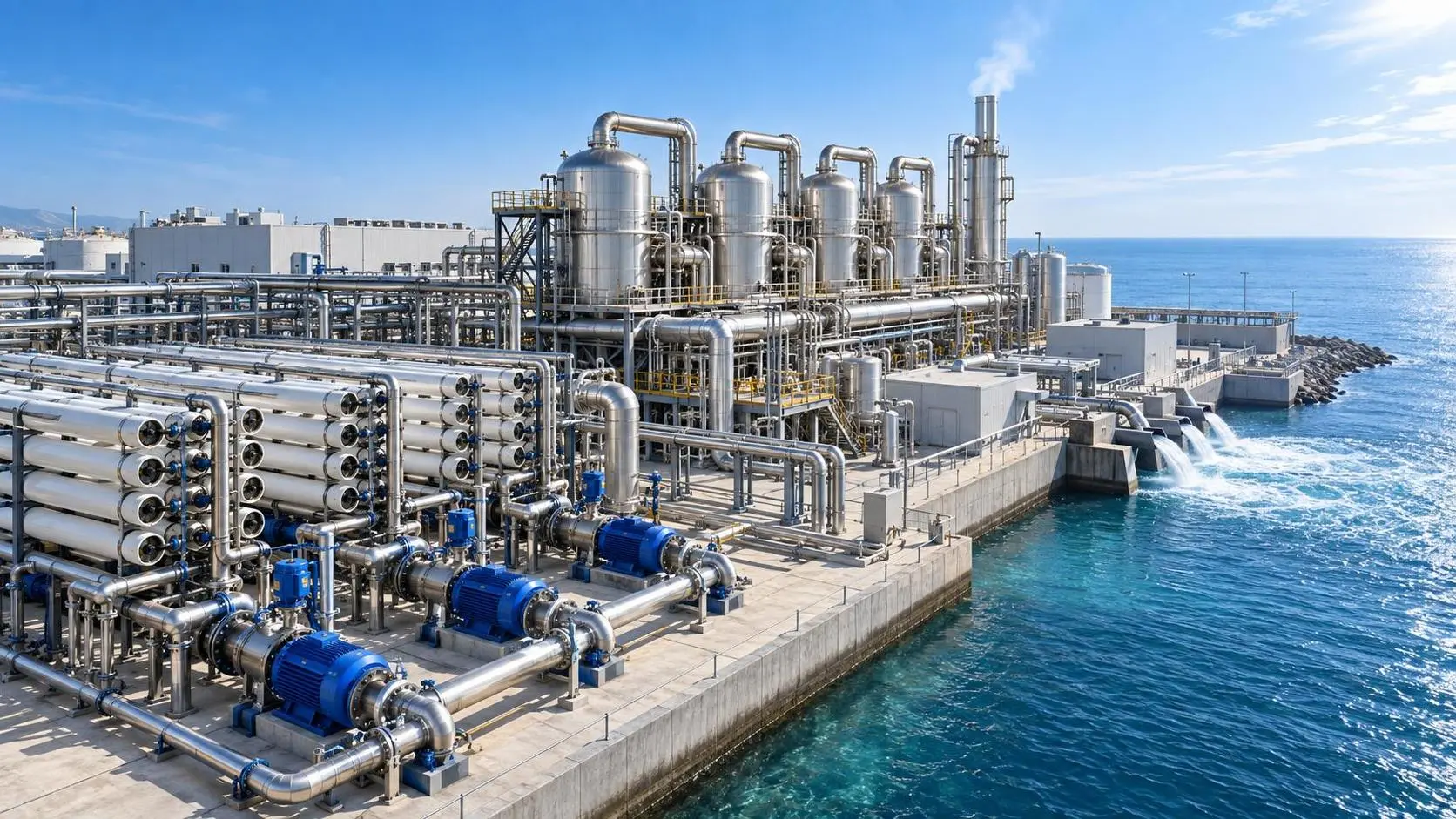
RO vs MED desalination: which is more energy-efficient at scale?
Desalination technology comparison: RO vs MED at scale. See how energy use, waste heat, feedwater, carbon, and flexibility determine the best choice.
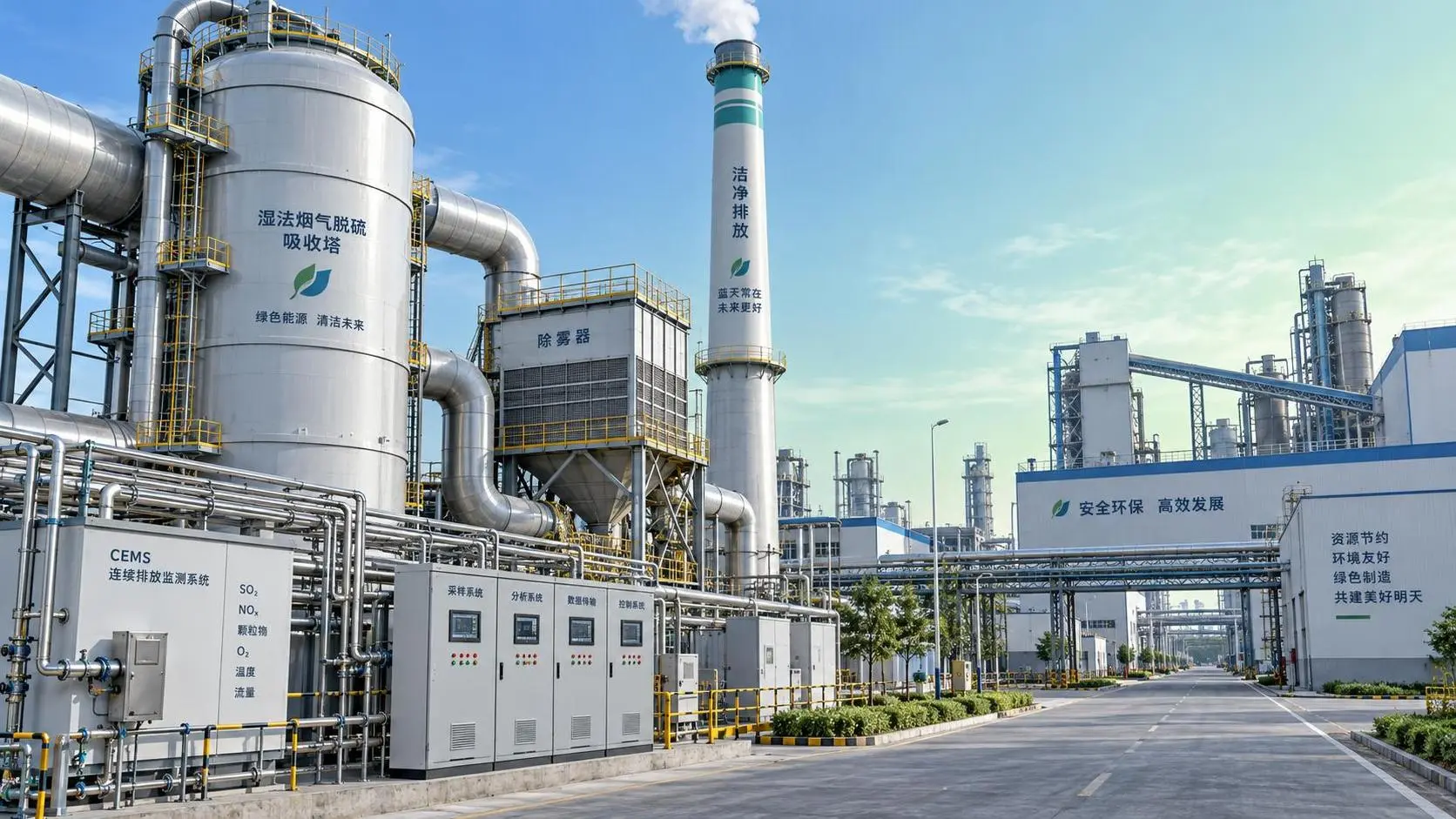
Which ISO standards apply to flue gas treatment systems?
Flue gas treatment systems ISO standards: explore key requirements for emissions testing, CEMS, safety, fabrication, corrosion control, and compliant project evaluation.

When corrosion resistant purification systems are needed for brine treatment
Corrosion resistant purification systems for brine treatment: assess chloride, heat, scaling, materials, and lifecycle reliability for demanding water projects.

How preventive maintenance reduces seawater desalination equipment downtime
Seawater desalination equipment maintenance reduces downtime through proactive monitoring, pretreatment protection, and planned repairs. Explore practical strategies for reliable RO performance.
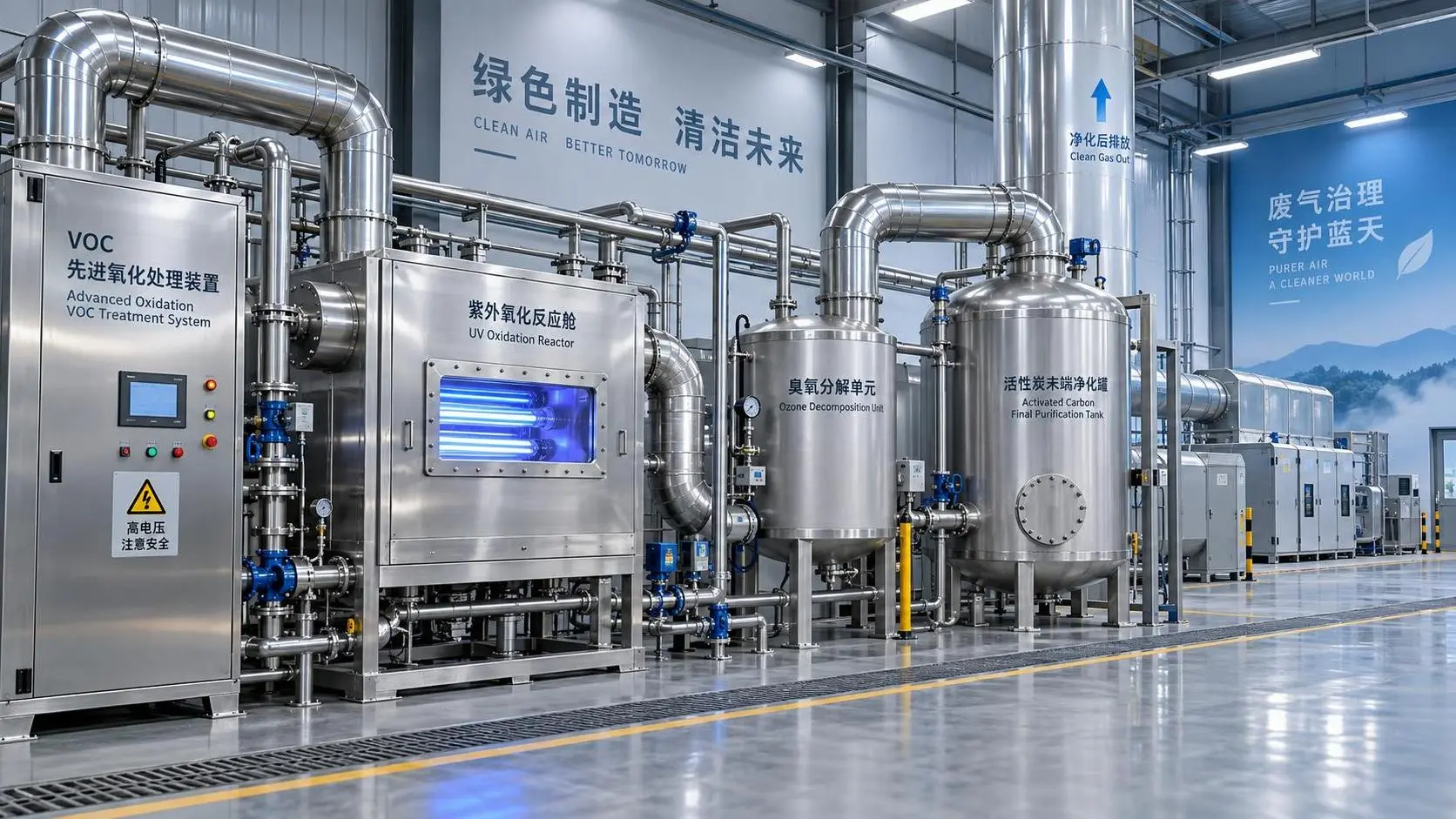
When are advanced oxidation processes the right choice for VOC control?
Advanced oxidation processes for VOC control: learn when AOPs outperform conventional options, manage by-products, and achieve reliable compliance.