
Industry News
Curation by industry experts
Hot Articles
Popular Tags
Water Treatment Systems for Schools: How to Choose the Right Capacity and Filtration Setup
Water Treatment Systems for Schools: Choosing Capacity Without Guesswork
Choosing the right water treatment systems for schools is rarely just a plumbing decision. Technical evaluators have to look at occupancy patterns, fixture loads, raw water variability, and how the system will be maintained when the person doing the maintenance is already busy with half a dozen other building issues. If the capacity is too small, the school ends up with pressure drops, slow refill rates, or water quality that degrades during peak use. If it is oversized, the system may cycle inefficiently, cost more to run, and be harder to keep stable.
That is why selection should start from actual demand and water quality, not from a brochure rating. Schools are different from offices or small commercial buildings: they have synchronized peaks between class changes, cafeterias, gyms, dormitories, and cleaning routines. A system that looks adequate on paper can still fail under real operating conditions if the storage, pretreatment, or filtration train is not matched to the site.
Start with the demand pattern, not the building size
The first question is not “How many students are enrolled?” but “When does water get used, and for what?” A K-12 campus with drinking fountains and custodial use has a very different demand profile from a boarding school with showers, laundry, kitchens, and laboratories. Even within the same campus, peaks can be sharp and short. That matters because treatment equipment is usually selected on both average daily demand and maximum hour demand.
A practical sizing review should include the number of fixtures, expected simultaneous use, storage volume upstream or downstream, and whether the school can tolerate short interruptions. If the system feeds drinking water only, the capacity target may be modest but the quality requirement is strict. If it supports kitchens or science facilities, the setup may need a wider treatment train and a more careful look at compatibility with downstream equipment.
This is where many projects go wrong: designers size only for nominal flow, then discover that backwash cycles, filter changeouts, or pump cutover periods create weak points during the school day. For technical evaluators, the real issue is continuity. The system should be able to ride through peak periods without forcing users to wait or staff to improvise.
Raw water quality decides the filtration setup
No filtration setup should be chosen in isolation from source water. Municipal supply, groundwater, and blended sources all present different risks. Chlorine residual, turbidity swings, iron and manganese, hardness, taste and odor concerns, and seasonal contamination events can change the treatment logic considerably. If the source is already stable and compliant, a school may only need polishing and point-of-entry protection. If the supply fluctuates, pretreatment becomes much more important than simply “adding a finer filter.”
For many schools, a layered approach is more reliable than a single high-spec unit. Sediment filtration can protect downstream equipment from particulate loading. Activated carbon is often used where chlorine taste, odor, or organic compounds are a concern. In some cases, softening may be needed to reduce scaling on heaters and dishwashers. If microbiological risk or regulatory requirements are tighter, disinfection or membrane-based treatment may be part of the package, but that always needs to be justified by the source water and the intended use.
The key is to avoid overprocessing. Schools do not automatically need the most aggressive treatment train. They need a setup that addresses the actual contaminants and stays maintainable. A system that is technically impressive but difficult to monitor will eventually become a maintenance liability.
Capacity and filtration have to be designed together
Capacity is not just pump flow. It is the combined result of filter area, media loading, pressure loss, backwash demand, and storage strategy. A small campus may get by with a compact skid, but once peak flow rises, the pressure drop across the filters can become the bottleneck. In larger schools, it is often smarter to split the load across parallel units so the system can keep working during maintenance or a filter train outage.
Backwash is especially easy to overlook. If the filtration setup requires periodic cleaning, the evaluator needs to confirm whether the school has enough water and drainage capacity to support it. This is a detail that sounds minor until the first time a backwash cycle interrupts service or overburdens a small utility room. In older buildings, electrical supply, floor drains, and access clearances can be just as limiting as the treatment technology itself.
Another point: schools often expand. A system sized only to today’s enrollment may become inadequate after a classroom wing, dormitory block, or cafeteria upgrade. It is usually better to allow some design margin, but not to the point of major oversizing. The margin should reflect realistic growth and seasonal variation, not wishful planning.
What technical evaluators should verify before approval
A solid review usually checks more than the treatment stages themselves. Maintenance access, cartridge or media replacement intervals, instrument calibration needs, and alarm visibility all affect whether the system will remain dependable after handover. In school environments, this matters because operational staff turnover is common and specialized water treatment knowledge may be limited.
For some projects, online turbidity, differential pressure, or conductivity monitoring may be useful. For others, simple and visible indicators are enough. The point is not to add instrumentation for its own sake, but to make sure the school can actually operate the system between service visits. In practice, the best design is the one the site can manage consistently.
Compliance is local, and that changes the answer
Water treatment systems for schools are often evaluated against local drinking water rules, public health requirements, and building codes. Those requirements vary widely by country and municipality, and sometimes by whether the water is used for drinking, food preparation, laboratory work, or general services. Technical evaluators should not assume that one standard setup will satisfy every campus.
That is also where portals like The Global Eco-Shield Dynamics (ESD) can be useful as an intelligence layer rather than a sales layer. ESD’s broader focus on large water treatment plants, desalination, recovery systems, and environmental compliance reflects a useful habit: read the system through its operating parameters, not just through equipment labels. For school projects, the same logic applies. You are stitching together water quality, facility limits, maintenance logic, and compliance targets into one workable decision.
In other words, the right school system is usually not the most complex one. It is the one that meets the standard, survives daily use, and can still be supported three years later when the staff changes and the first round of filters has long been replaced.
A practical way to narrow the options
If you are comparing options, begin with three filters of your own: demand, water quality, and operability. Demand tells you the flow and storage balance. Water quality tells you how much pretreatment is justified. Operability tells you whether the school can maintain the system without constant outside intervention. If a proposal looks good only when one of those three is ignored, it is probably not the right fit.
For technical evaluators, the most useful next step is usually a site-specific review of source water data, peak-use assumptions, and maintenance responsibilities. Once those are clear, the capacity range and filtration setup become much easier to defend—and much less likely to fail after handover.
Recommended News
How feed salinity affects energy use in ZLD system brine treatment
ZLD system brine treatment: discover how feed salinity drives energy use, scaling risk, and technology choices for efficient, reliable zero liquid discharge.
How coastal cities can select desalination solutions for peak demand
Seawater desalination solutions for coastal cities: compare firm peak capacity, intake risk, energy resilience, and lifecycle value to secure reliable water supply.
How SCR denitrification systems in Europe meet Industrial Emissions rules
SCR denitrification systems Europe: learn how permit-led design, ammonia-slip control, catalyst management and monitoring support Industrial Emissions compliance.
When does MBR equipment make sense for wastewater reuse?
Water treatment equipment for wastewater reuse: learn when MBR delivers compact, reliable low-solids effluent—and when alternative treatment trains offer better value.
How North America shapes global environmental governance standards
Global environmental governance North America: discover how regulation, finance, and procurement raise worldwide standards and reshape environmental projects.
How reactor capacity affects throughput in pyrolysis systems
Pyrolysis systems reactor capacity explained: learn how heat transfer, residence time, feed quality, and emissions controls determine reliable throughput.
When low-temperature reaction equipment is the right fit for heat-sensitive processes
Low-temperature reaction equipment helps protect heat-sensitive streams, improve energy integration, and maintain reliable conversion. Explore key selection factors today.
When do water reuse systems deliver a practical payback?
Water reuse systems deliver practical payback when they cut water, discharge, and downtime costs. Learn how to match treatment, recovery, and reuse quality for lasting ROI.
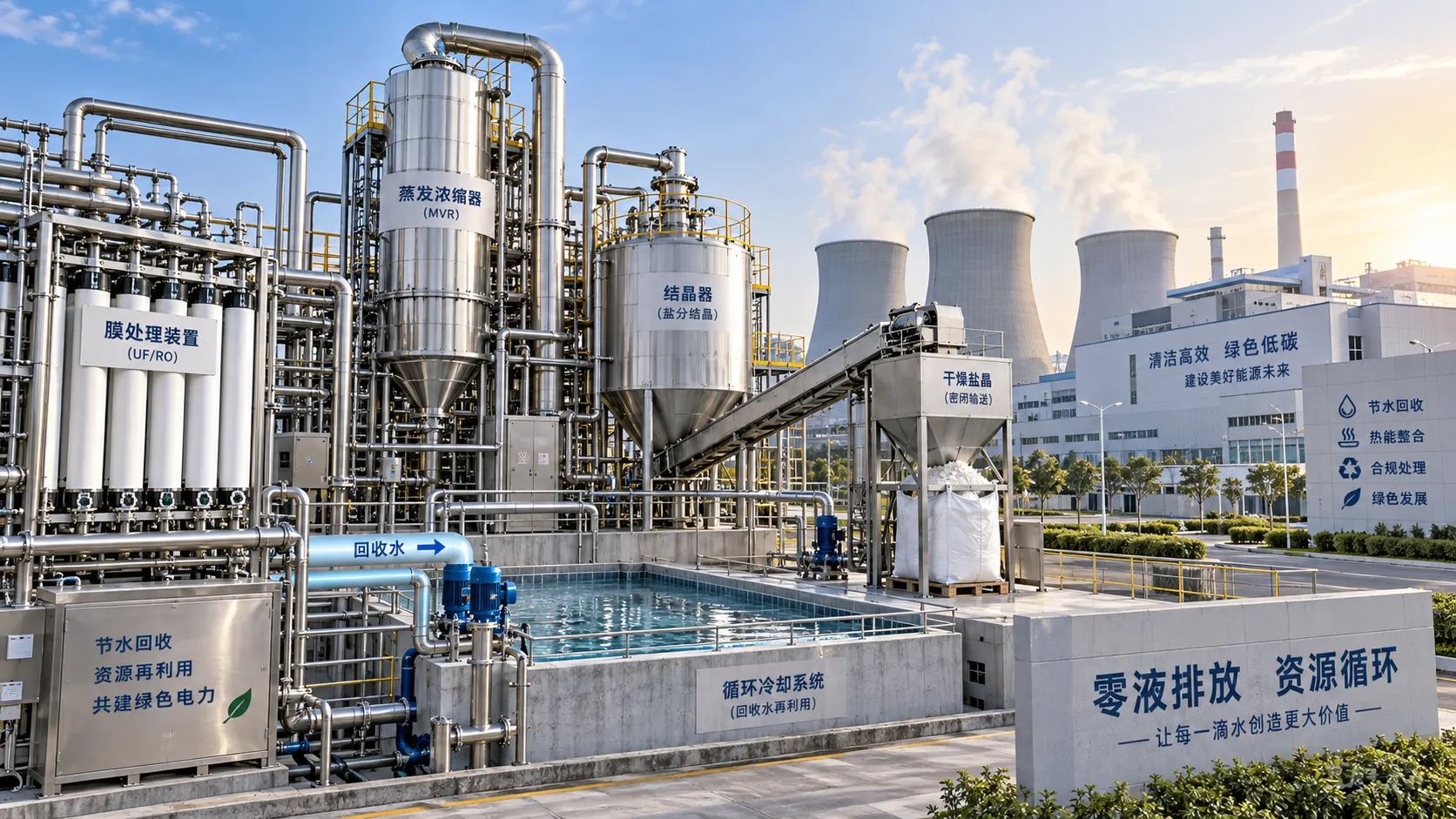
When do ZLD systems for power generation justify their energy use?
ZLD systems for power generation: learn when energy-intensive water recovery delivers stronger compliance, resilience, and long-term value.