
Industry News
Curation by industry experts
Hot Articles
Popular Tags
What Buyers Miss in Power Plant Decarbonization Costs
Many buyers underestimate how quickly power plant decarbonization costs expand beyond equipment quotes into financing, compliance, downtime, retrofit complexity, and long-term operating risk. For financial approvers evaluating decarbonization solutions for power plants, the real question is not only capex, but which option protects cash flow, regulatory resilience, and asset value over time. This article highlights the hidden cost drivers that often distort investment decisions.
For CFOs, investment committees, and technical finance teams, this issue is no longer theoretical. A decarbonization package that looks competitive at bid stage can become 20% to 40% more expensive once auxiliary systems, outage windows, emissions monitoring, and financing conditions are fully priced in.
That risk is especially relevant in sectors connected to industrial water treatment, flue gas control, resource recovery, and environmental compliance. As regulatory pressure tightens across carbon, wastewater, and air emissions, buyers need a broader cost lens when comparing decarbonization solutions for power plants.
Why Equipment Price Rarely Reflects the Real Cost
In most procurement reviews, the first screening metric is quoted equipment cost. That is understandable, but it is incomplete. For power assets with 15 to 30 years of remaining life, the financial outcome depends more on integration cost, utilization profile, and compliance exposure than on the sticker price alone.
A carbon capture skid, biomass co-firing retrofit, hydrogen blending package, or advanced flue gas treatment upgrade may appear affordable in isolation. Yet once ductwork, civil work, control system rewiring, steam extraction losses, and operator retraining are included, the business case often changes materially.
The first blind spot: balance-of-plant additions
Financial approvers often receive vendor quotes focused on core process equipment. What gets missed are the balance-of-plant elements: pumps, blowers, storage tanks, reagent systems, water polishing units, cooling modifications, and electrical upgrades. In many retrofit projects, these items account for 25% to 50% of installed cost.
This is particularly important where decarbonization solutions for power plants intersect with water-intensive processes. Carbon capture, FGD optimization, and certain low-emission combustion upgrades can increase raw water demand, wastewater loading, or ZLD complexity. That means a plant may need extra treatment trains, higher chemical consumption, or brine management capacity.
Typical hidden adders in retrofit budgets
- Grid interconnection and transformer upgrades
- Additional water treatment, demineralization, or reuse loops
- Stack, duct, and fan modifications for pressure drop changes
- Temporary bypass systems during tie-ins
- Continuous emissions monitoring system updates
- Fire protection, hazardous area compliance, and civil reinforcement
The table below shows why the lowest vendor quote can still produce the highest approved project value after installation and support systems are included.
The key takeaway is simple: a finance-grade comparison of decarbonization solutions for power plants must separate quoted equipment from installed project economics. If those layers are not modeled independently, approvals tend to favor the wrong bid structure.
Hidden Cost Drivers That Distort Financial Approval
The most expensive mistakes usually come from cost drivers that sit outside the vendor’s main technical scope. These are not minor line items. They shape debt sizing, covenant headroom, and the speed at which a project begins to produce measurable carbon and compliance value.
Financing cost is not neutral across technologies
Two projects with the same capex can carry very different financing burdens. Lenders and investment committees typically assign different risk premiums to mature upgrades versus first-of-a-kind integrations. A 150 to 300 basis point difference in financing cost over 10 to 15 years can materially shift total project value.
For example, a modular flue gas efficiency upgrade with known maintenance profiles may be easier to finance than a large carbon capture retrofit dependent on water supply expansion, solvent management, and uncertain load factor. Financial approvers should ask whether the technology improves bankability or merely increases carbon ambition on paper.
Downtime is often undervalued
Planned outages can look manageable in engineering presentations, but lost generation revenue, replacement power purchases, and restart inefficiencies often go undercounted. A retrofit that requires a 21-day shutdown may be far more expensive than one installed in 7 to 10 days, even if the second option has a higher equipment quote.
This is where procurement teams should align technical and commercial schedules. If the project overlaps with seasonal demand peaks, fuel contract triggers, or water stress periods, the effective cost can rise sharply. In regions with high reserve margin pressure, every additional outage day matters.
Compliance cost extends beyond carbon
Many decarbonization solutions for power plants affect more than CO2. They can also alter NOx, SOx, particulate, wastewater, brine, sludge, and solvent disposal profiles. A financially sound decision therefore requires a multi-permit perspective rather than a carbon-only lens.
This matters for buyers operating in markets shaped by carbon border mechanisms, tighter water discharge rules, and stricter monitoring requirements. A solution that lowers direct carbon emissions but increases wastewater treatment burden by 10% to 25% may create hidden operating liabilities if treatment capacity is already constrained.
Four approval questions financial teams should ask
- How much of total project cost sits outside the vendor’s quoted scope?
- What outage duration is required for tie-in, commissioning, and performance testing?
- Will the project increase water, waste, reagent, or monitoring costs over a 5 to 15 year period?
- How sensitive is project IRR to reduced load factor, delayed permitting, or energy penalty?
Comparing Major Decarbonization Pathways Through a Finance Lens
Not all decarbonization pathways expose buyers to the same cost structure. Some are capex-heavy but predictable. Others appear flexible early on, then generate unstable opex, water demand, or compliance complexity. Financial approvers need a side-by-side framework that goes beyond simple abatement narratives.
How common pathways differ in hidden risk
The table below compares several widely discussed decarbonization solutions for power plants using decision factors relevant to approval committees rather than engineering teams alone.
In many existing fleets, lower-complexity upgrades deliver stronger early cash protection than headline-grabbing deep retrofits. That does not mean advanced pathways should be avoided. It means approval should be staged, with technical and financial gates tied to real site constraints.
When a cheaper pathway becomes more expensive
A low upfront option can turn expensive if fuel variability increases maintenance events from 2 planned interventions per year to 5 or 6. Likewise, a system with a modest capex can create major losses if it cuts net plant efficiency by 3% to 8% during peak dispatch periods.
For asset owners in water-stressed regions, the cost of additional make-up water, wastewater polishing, or concentrate management can also outweigh initial savings. This is one reason intelligence-led reviews that connect carbon, water, and emissions data are becoming more valuable in project screening.
A Better Approval Framework for Financial Decision-Makers
A practical approval model should combine 4 layers: total installed cost, operating burden, compliance resilience, and asset strategy fit. Looking at only one layer creates approval bias, especially when vendors frame proposals around capex or carbon reduction alone.
Use a five-part decision screen
- Total installed cost including utilities, water systems, controls, and civil work
- Outage duration and commissioning risk under realistic site conditions
- Five-year and ten-year opex sensitivity, including energy and consumables
- Cross-media compliance impact covering air, water, solid residues, and monitoring
- Residual asset value under future carbon and environmental policy scenarios
Recommended diligence timeline
For mid-sized retrofits, many buyers benefit from a 3-stage review over 6 to 12 weeks. Stage 1 screens technology fit and major exclusions. Stage 2 validates integration, outage, and utility requirements. Stage 3 stress-tests financial returns under low-load, high-price, and delayed-permit scenarios.
This staged approach is useful for organizations balancing decarbonization solutions for power plants with broader environmental infrastructure priorities such as flue gas cleanup, industrial water reuse, desalination support systems, or waste recovery upgrades.
Questions to push back on during vendor evaluation
Financial approvers should insist on scope transparency. Ask vendors to break out guaranteed performance, excluded tie-ins, expected annual maintenance hours, reagent assumptions, and water quality requirements. If these inputs are missing, the bid should be treated as an incomplete financial instrument rather than a bankable project basis.
It is also wise to request downside cases. What happens if the unit runs at 60% load instead of 85%? What if permitting stretches by 90 days? What if wastewater handling cost rises due to stricter discharge thresholds? These scenarios often reveal more than headline payback calculations.
What Smart Buyers Should Prioritize Next
The strongest decarbonization decision is rarely the one with the lowest quoted capex. It is the one that preserves dispatch economics, reduces multi-regulation exposure, and fits the plant’s real operating envelope. For finance teams, that means evaluating decarbonization solutions for power plants as integrated environmental assets, not standalone equipment packages.
That integrated view is increasingly important where power generation intersects with water scarcity, flue gas compliance, residue management, and cross-border carbon pressure. Buyers who connect those variables early are better positioned to avoid stranded retrofits and unstable operating costs.
ESD supports this kind of decision-making by linking technology intelligence with the broader environmental infrastructure context around water treatment, flue gas systems, recovery networks, desalination, and high-compliance industrial operations. If you are reviewing investment options, now is the right time to compare full-life cost exposure before approval assumptions harden.
Contact us to explore deeper market intelligence, request a tailored evaluation framework, or learn more solutions for financially resilient power plant decarbonization planning.
Recommended News
How feed salinity affects energy use in ZLD system brine treatment
ZLD system brine treatment: discover how feed salinity drives energy use, scaling risk, and technology choices for efficient, reliable zero liquid discharge.
How coastal cities can select desalination solutions for peak demand
Seawater desalination solutions for coastal cities: compare firm peak capacity, intake risk, energy resilience, and lifecycle value to secure reliable water supply.
How SCR denitrification systems in Europe meet Industrial Emissions rules
SCR denitrification systems Europe: learn how permit-led design, ammonia-slip control, catalyst management and monitoring support Industrial Emissions compliance.
When does MBR equipment make sense for wastewater reuse?
Water treatment equipment for wastewater reuse: learn when MBR delivers compact, reliable low-solids effluent—and when alternative treatment trains offer better value.
How North America shapes global environmental governance standards
Global environmental governance North America: discover how regulation, finance, and procurement raise worldwide standards and reshape environmental projects.
How reactor capacity affects throughput in pyrolysis systems
Pyrolysis systems reactor capacity explained: learn how heat transfer, residence time, feed quality, and emissions controls determine reliable throughput.
When low-temperature reaction equipment is the right fit for heat-sensitive processes
Low-temperature reaction equipment helps protect heat-sensitive streams, improve energy integration, and maintain reliable conversion. Explore key selection factors today.
When do water reuse systems deliver a practical payback?
Water reuse systems deliver practical payback when they cut water, discharge, and downtime costs. Learn how to match treatment, recovery, and reuse quality for lasting ROI.
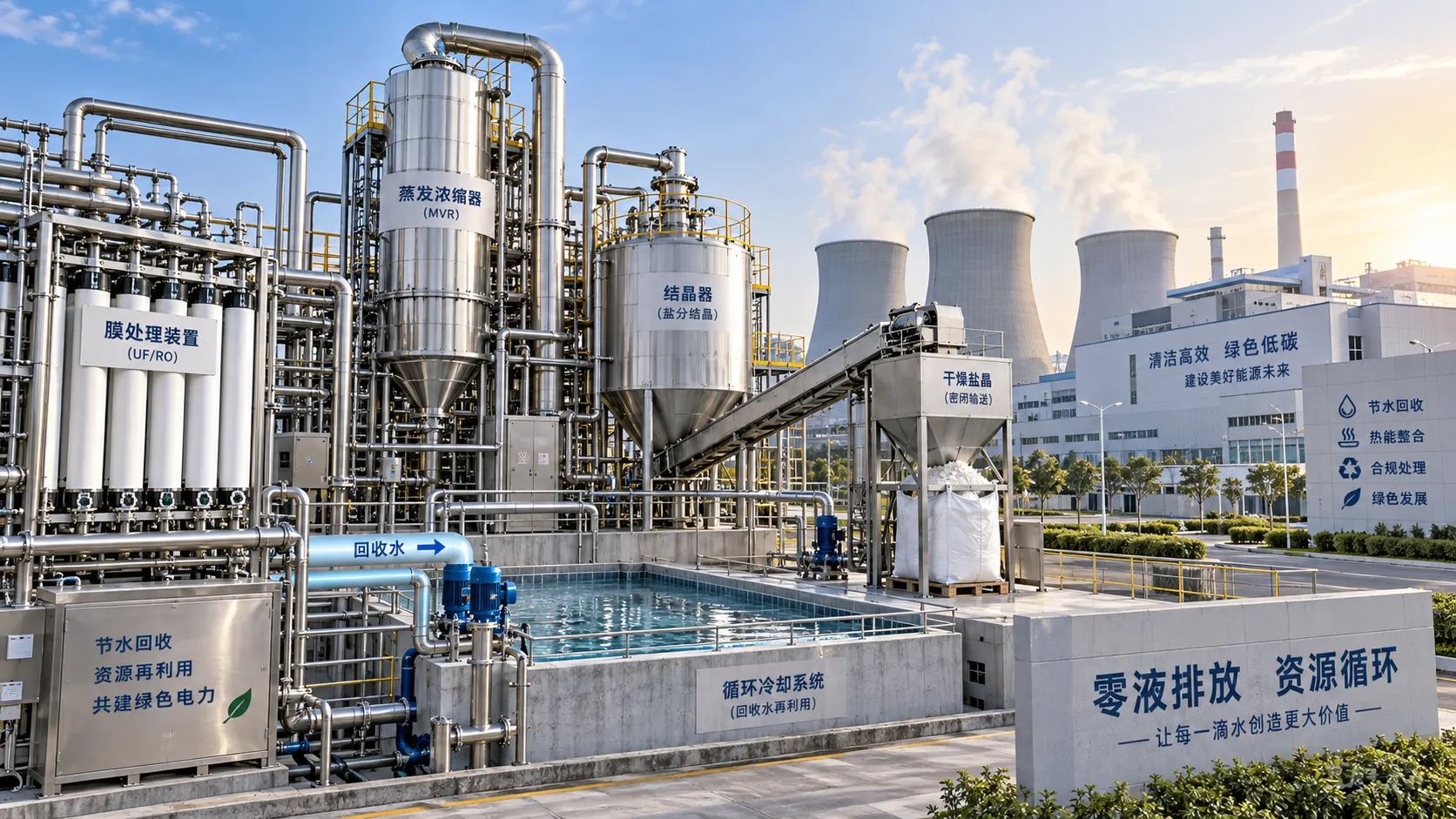
When do ZLD systems for power generation justify their energy use?
ZLD systems for power generation: learn when energy-intensive water recovery delivers stronger compliance, resilience, and long-term value.