
Industry News
Curation by industry experts
Hot Articles
Popular Tags
How reactor retention time affects denitrification equipment performance
How Reactor Retention Time Affects Denitrification Equipment Performance
Reactor retention time is a decisive operating variable in denitrification equipment performance. It influences nitrate removal, external carbon demand, biomass stability, effluent consistency, reactor volume, and the treatment capacity available during peak loading. For a technical evaluator, the central question is not simply whether a denitrification system provides enough nominal hydraulic retention time (HRT). The real issue is whether its effective contact time, biological inventory, mixing regime, carbon supply, and control strategy remain adequate under the site’s actual hydraulic and nitrogen load profile.
This distinction matters in municipal plants with wet-weather flows, industrial wastewater facilities with batch discharges, tertiary polishing systems facing low influent carbon, and reuse or zero liquid discharge schemes where nitrogen compliance can constrain the whole treatment train. A denitrification equipment reactor that performs well at design flow may become unstable when flow surges, temperature falls, dissolved oxygen enters with the recycle stream, or a change in upstream operation alters the carbon-to-nitrogen balance.
Retention Time Is More Than a Tank-Volume Calculation
Hydraulic retention time is commonly expressed as reactor volume divided by influent flow. It is useful, but it does not by itself describe the biological time available for denitrification. In a real reactor, short-circuiting, dead zones, internal recycle flows, non-uniform mixing, and changing liquid levels can make the effective retention time substantially different from the theoretical value.
Denitrification converts nitrate and nitrite to nitrogen gas through an anoxic biological pathway. The microorganisms need access to nitrate, biodegradable carbon, suitable temperature and pH conditions, and sufficiently low dissolved oxygen. They also need time. If water passes through the reactor too quickly, nitrate may leave before the reaction approaches completion. If residence time is very long but carbon is limited, the extra volume may not deliver proportionate nitrogen removal; it may instead increase civil cost, mixing energy, and the risk of poorly mixed zones.
Technical reviews should therefore separate three related but different concepts:
- Hydraulic retention time (HRT): the average time liquid is expected to remain in the reactor.
- Solids retention time (SRT): the average time active biomass remains within the process. In suspended-growth systems, SRT often has a stronger effect on microbial stability than HRT alone.
- Effective contact time: the usable period during which nitrate, carbon source, and active biomass are properly mixed under anoxic conditions.
A specification that asks only for reactor volume or nominal HRT can miss the conditions that determine performance. This is especially true where the anoxic zone is fed by a large internal mixed-liquor recycle from an aerobic nitrification stage. The recycle flow may be many times the incoming wastewater flow, increasing hydraulic mixing and reducing the time available for each pass through the anoxic zone.
What Happens When Retention Time Is Too Short
Insufficient retention time usually appears first as variable nitrate removal rather than an immediate total process failure. At steady loading, a reactor may meet an effluent target. During morning peaks, storm inflow, process washdowns, or elevated nitrate recycle, the same reactor can lose removal efficiency because the biological reaction rate cannot keep pace with the mass load.
The operational symptoms are familiar: nitrate persists at the reactor outlet, downstream total nitrogen rises, external carbon consumption becomes difficult to control, and operators may increase chemical dosing in response. That response can be necessary, but it does not correct a hydraulic limitation. If contact time or active biomass is inadequate, additional carbon can pass through unused, contribute to residual COD, or cause unstable downstream oxygen demand.
Short HRT also magnifies the consequence of incomplete mixing. A poorly designed inlet can send a high-nitrate recycle stream directly toward the outlet. A mixer may maintain visible movement while still leaving concentration gradients across the tank. Under these conditions, the calculated HRT may look acceptable on paper, yet tracer testing or spatial sampling may reveal that a meaningful fraction of the flow receives little effective treatment.
For compact systems, the evaluation should go beyond “small footprint” claims. High-rate denitrification can be credible when the configuration supports high biomass concentration, reliable media performance, controlled carbon delivery, and robust hydraulic distribution. It is less credible when capacity is based mainly on idealized detention time without a clear account of peak flow, temperature, influent composition, and process recirculation.
Why More Retention Time Does Not Automatically Mean Better Removal
Oversizing is not a universal safeguard. Once denitrification becomes limited by carbon availability, low temperature, dissolved oxygen intrusion, or poor biomass activity, additional liquid volume may have limited value. A long HRT can even conceal poor process control during commissioning: the reactor appears stable under average conditions, but carbon dosing, recycle regulation, and online measurement remain inadequately tuned.
Very low loading can create its own difficulties. Biomass may be underfed, endogenous respiration can become more significant, and the expected relationship between retention time and nitrate removal becomes less direct. In attached-growth reactors, excessively low hydraulic loading may also affect media scouring, solids release, and flow distribution. The appropriate design point is therefore not “the longest practical retention time.” It is a condition that provides operational margin without creating unnecessary volume or preventing efficient control.
This is one reason performance guarantees should define their operating envelope. A credible assessment identifies influent nitrate or oxidized nitrogen, biodegradable COD or supplemental carbon source, flow pattern, temperature range, dissolved oxygen entering the anoxic reactor, target effluent limit, and expected peak conditions. Without these boundaries, quoted removal performance has little engineering meaning.
Carbon Availability Changes the Meaning of HRT
Denitrification is often described as a nitrate-removal problem, but many installations are actually carbon-management problems. The process needs an electron donor. In conventional activated sludge systems, readily biodegradable influent organics may provide it. In tertiary treatment, low-COD industrial effluent, membrane bioreactor permeate polishing, or sidestream applications, an external carbon source may be needed.
When carbon is plentiful, a reactor may achieve strong nitrate removal within a relatively short contact period if the biomass is active and mixing is sound. When carbon is scarce or slowly biodegradable, longer HRT cannot fully compensate. The carbon must either become biologically available within the reactor or be supplemented through a controlled dosing strategy. Methanol, ethanol, acetate-based products, and other donor options each require careful process assessment; they are not interchangeable from a kinetics, safety, storage, or control perspective.
The timing of dosing matters as much as the dose itself. A single injection point can create localized high-carbon zones while leaving part of a large reactor carbon-limited. Staged dosing may be worth considering where nitrate is distributed across multiple zones or where the influent load changes sharply. Online nitrate, oxidation-reduction potential, dissolved oxygen, and flow signals can help guide control, but instruments do not replace a sound hydraulic and biological design basis.
Reactor Configuration Determines How Retention Time Behaves
The same nominal HRT can produce different outcomes in different denitrification equipment reactor configurations. A fully mixed suspended-growth basin provides operational flexibility but may allow some water to exit before it experiences the average detention period. A plug-flow or staged arrangement can preserve a stronger concentration gradient and make carbon dosing more targeted. Fixed-bed and moving-bed biological systems retain biomass independently of much of the liquid flow, so hydraulic time and biological residence are partly decoupled. Membrane-supported biomass systems introduce another set of constraints involving membrane operation, solids management, and flux.
No reactor type eliminates the need to understand retention time. It changes the question. In attached-growth systems, the evaluator should ask whether the equipment can maintain active biofilm and distribute nitrate and carbon uniformly through the media. In suspended-growth systems, the focus may be the interaction of HRT, SRT, recirculation, mixing power, and clarifier performance.
Temperature, Oxygen Carryover, and Influent Variability
Retention-time calculations are often made at a single design temperature, although biological reaction rates generally slow in colder conditions. A reactor with little margin may comply during warm periods and struggle in winter. That does not mean a fixed HRT target can be applied universally; wastewater characteristics and process configuration still govern. It does mean seasonal temperature must be treated as a design and acceptance condition, not merely an operating note.
Dissolved oxygen carried into the anoxic zone is another frequent source of lost capacity. Oxygen is energetically preferred by heterotrophic organisms. If the internal recycle from aeration contains excessive dissolved oxygen, part of the available carbon is consumed before nitrate reduction can proceed. The apparent answer may be a longer retention time, but reducing oxygen carryover, optimizing recycle control, or improving zone separation can be more effective.
Industrial sites add variability that should not be averaged away. Batch releases may change pH, salinity, COD composition, inhibitory compounds, or nitrogen form over a short period. A design based only on daily average flow and average nitrate concentration can underestimate the instantaneous mass load faced by the reactor. Equalization upstream may be as relevant to denitrification reliability as adding anoxic volume downstream.
A Practical Evaluation Framework
When reviewing a denitrification system, it is useful to request a mass-balance and process narrative rather than relying on a single retention-time figure. The documentation should show how design flow, peak flow, nitrate load, recycle streams, carbon availability, temperature, and target effluent quality relate to the proposed reactor capacity.
The following questions usually expose whether retention time has been treated as a real performance variable:
- Is HRT stated at average, maximum, and relevant peak recycle conditions?
- What fraction of the total flow includes internal recycle, return sludge, backwash return, or sidestream contributions?
- What is the expected carbon source, and how is its availability verified under low-COD periods?
- How are low-temperature operation and short-term load surges addressed?
- What mixing or hydraulic evidence supports the assumption that the full reactor volume is effective?
- Which online measurements are used for carbon dosing and nitrate control, and what happens when an instrument is unavailable?
- Are acceptance criteria tied to a defined influent envelope and the applicable discharge or reuse requirements?
For projects governed by local permits, municipal specifications, industrial discharge limits, or reuse standards, the applicable nitrogen limit and sampling basis should be confirmed early. A daily composite result, a maximum concentration, and a seasonal compliance requirement can lead to very different needs for buffer volume and process control. Standards and permit conditions must be checked against the specific jurisdiction and project documents rather than assumed from a generic design guide.
From Retention Time to Resilient Nitrogen Control
The strongest design decisions do not treat reactor retention time as an isolated number. They connect it to kinetic assumptions, hydraulic behavior, biomass retention, carbon utilization, upstream variability, and downstream compliance risk. A compact reactor can be appropriate when supported by verified loading assumptions and reliable control. A larger basin can be justified where temperature swings, intermittent loads, or strict total nitrogen requirements demand more operating margin.
At The Global Eco-Shield Dynamics, denitrification is viewed within the wider ecological infrastructure of large water treatment, industrial reuse, and resource-sensitive treatment systems. The practical value of technical intelligence lies in linking reactor-level parameters to the wider project logic: energy consumption, chemical dependence, resilience under changing regulation, and the ability to maintain performance over the equipment lifecycle.
Before approving equipment, compare the proposed retention time against the actual hydraulic profile, not just the average design flow. Then test the assumptions behind it: carbon quality, oxygen carryover, temperature, mixing, recirculation, and influent peaks. That review is usually more revealing than a nominal reactor volume—and it is where dependable denitrification performance is decided.
Recommended News
How feed salinity affects energy use in ZLD system brine treatment
ZLD system brine treatment: discover how feed salinity drives energy use, scaling risk, and technology choices for efficient, reliable zero liquid discharge.
How coastal cities can select desalination solutions for peak demand
Seawater desalination solutions for coastal cities: compare firm peak capacity, intake risk, energy resilience, and lifecycle value to secure reliable water supply.
How SCR denitrification systems in Europe meet Industrial Emissions rules
SCR denitrification systems Europe: learn how permit-led design, ammonia-slip control, catalyst management and monitoring support Industrial Emissions compliance.
When does MBR equipment make sense for wastewater reuse?
Water treatment equipment for wastewater reuse: learn when MBR delivers compact, reliable low-solids effluent—and when alternative treatment trains offer better value.
How North America shapes global environmental governance standards
Global environmental governance North America: discover how regulation, finance, and procurement raise worldwide standards and reshape environmental projects.
How reactor capacity affects throughput in pyrolysis systems
Pyrolysis systems reactor capacity explained: learn how heat transfer, residence time, feed quality, and emissions controls determine reliable throughput.
When low-temperature reaction equipment is the right fit for heat-sensitive processes
Low-temperature reaction equipment helps protect heat-sensitive streams, improve energy integration, and maintain reliable conversion. Explore key selection factors today.
When do water reuse systems deliver a practical payback?
Water reuse systems deliver practical payback when they cut water, discharge, and downtime costs. Learn how to match treatment, recovery, and reuse quality for lasting ROI.
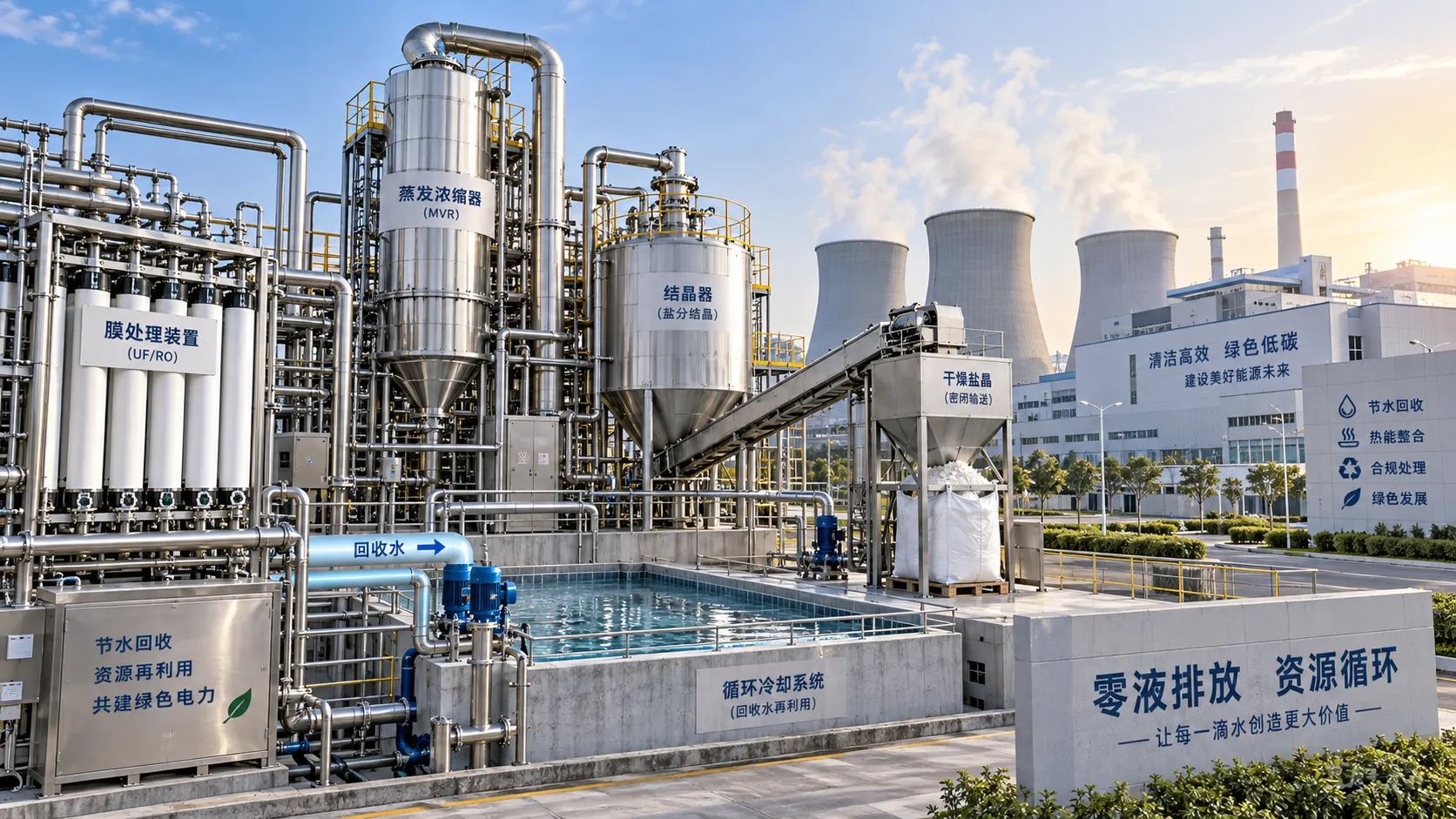
When do ZLD systems for power generation justify their energy use?
ZLD systems for power generation: learn when energy-intensive water recovery delivers stronger compliance, resilience, and long-term value.