
Industry News
Curation by industry experts
Hot Articles
Popular Tags
SCR Catalysts Deactivation Signs and Practical Recovery Options
Why do early SCR catalysts deactivation signs matter so much?
SCR catalysts rarely fail overnight. In most plants, performance weakens in small steps before a clear compliance event appears.
That gradual decline is exactly why the issue deserves attention. A minor NOx increase today can become ammonia slip, shutdown risk, or permit trouble later.
In flue gas treatment, SCR catalysts sit at the intersection of emissions control, operating stability, and safety discipline. They affect boiler behavior, reagent use, dust handling, and stack reliability.
Within broader ecological engineering, this matters beyond one reactor. ESD often tracks how purification performance, resource efficiency, and regulatory pressure now move together across industrial systems.
A plant may focus on water reuse, waste recovery, or desalination elsewhere. Yet when the flue gas line loses control, environmental performance across the whole site becomes harder to defend.
The practical question is not whether SCR catalysts age. They always do. The real question is how early the site detects deactivation, and how wisely it responds.
What does deactivation actually look like in day-to-day operation?
The first clue is usually unstable emissions behavior, not a dramatic alarm. Operators may notice that the same ammonia injection no longer produces the same NOx reduction.
Another common sign is higher ammonia slip during load changes. This often means active sites on the SCR catalysts are no longer reacting as efficiently as before.
Pressure drop changes also matter. A rising differential pressure may point to plugging, ash deposition, or ammonium bisulfate formation rather than pure chemical aging.
Sometimes the signal is less direct. Stack data may stay within limits, but only after noticeably higher reagent consumption. That usually indicates hidden loss of catalyst activity.
Low-temperature systems deserve extra attention. ESD has highlighted this area because SCR catalysts in colder windows tend to face narrower reaction margins and faster fouling risks.
A useful field rule is simple: when emissions drift, slip rises, and control tuning becomes harder at the same time, deactivation should move high on the investigation list.
A quick judgment table for common warning signals
The table below helps separate likely catalyst aging from process-side disturbances. In practice, several causes may overlap.
Which root causes damage SCR catalysts most often?
Not every deactivation mechanism is the same, and recovery options depend on that distinction. Mechanical blockage, chemical poisoning, and thermal damage behave very differently.
Fouling is one of the most common causes. Fly ash, fine particulates, and sticky deposits can cover active surfaces and reduce contact between gas and catalyst.
Poisoning is more severe. Alkali metals, arsenic, phosphorus, calcium, and some heavy metals can permanently reduce active sites on SCR catalysts.
Thermal sintering is another concern. If temperature excursions exceed the design window, the catalyst structure may change and lose activity that simple cleaning cannot restore.
There is also erosion. High dust velocity and poor flow distribution can physically wear catalyst channels, especially in demanding industrial service.
In actual plants, mixed causes are more common than single causes. A unit may suffer from low-temperature sulfate deposition first, then develop masking and uneven flow after that.
That is why diagnosis should combine lab analysis, operating history, and field inspection. Looking at stack data alone often leads to the wrong recovery decision.
Can SCR catalysts be recovered, or is replacement the only realistic path?
Recovery is often possible, but only when the damage mode supports it. The practical mistake is sending every deactivated layer to replacement without confirming recoverability.
Offline cleaning is the first option when plugging or surface masking dominates. Air cleaning, water washing, or controlled chemical cleaning may restore accessible active area.
Regeneration goes further than cleaning. It can include deposit removal, re-impregnation of active components, and performance verification under test conditions.
However, recovery has limits. If SCR catalysts have severe poisoning or thermal collapse, regeneration may deliver only partial life extension.
Layer management is another practical route. Instead of replacing the whole reactor, some sites rotate, replace, or regenerate selected layers according to exposure severity.
That approach can reduce outage time and capital pressure. It also fits facilities that manage environmental equipment as part of a wider reliability strategy.
The key is evidence. Before choosing recovery, confirm residual activity, mechanical integrity, channel condition, and expected life after treatment.
When is each recovery path more sensible?
- Choose cleaning when pressure drop rises and deposits appear, but substrate integrity remains sound.
- Choose regeneration when activity loss is measurable and a qualified vendor can verify restored performance.
- Choose partial replacement when one layer is clearly worse than the others or outage time is tight.
- Choose full replacement when poisoning is deep, structure is damaged, or compliance margin is already too small.
What mistakes make deactivated SCR catalysts harder to recover?
One frequent mistake is treating every emissions change as a control issue. Repeated tuning can hide catalyst decline for months while total operating risk grows.
Another mistake is waiting for a formal exceedance before inspection. By then, deposits may be thicker, slip may affect downstream equipment, and recovery choices may narrow.
Sampling errors also matter. If ash chemistry, gas temperature, or velocity profiles are not measured correctly, the root cause analysis becomes weak.
Some sites focus only on catalyst age in years. That can be misleading. SCR catalysts age according to fuel quality, sulfur load, dust burden, and thermal cycling, not calendar time alone.
There is also a procurement trap. A low-cost recovery offer may look attractive, but without validated post-treatment testing, predicted performance can be unreliable.
For environmentally critical assets, ESD’s broader view is useful here: reliability depends on data discipline, not just component substitution.
How should plants decide the next step without overreacting?
A practical decision starts with structured evidence, not assumptions. Confirm whether the problem is activity loss, flow distribution, deposit buildup, or a combined mechanism.
Then compare the remaining compliance margin. If the unit can still operate safely, there is time to test recovery scenarios rather than rushing into full replacement.
It also helps to map three time horizons: immediate risk, next outage window, and life-cycle cost over the next operating campaign.
A short decision checklist can keep that review grounded:
- Verify NOx, ammonia slip, temperature, and pressure drop trends together.
- Inspect upstream fuel, ash, sulfur, and particulate changes.
- Request activity testing before committing to regeneration or replacement.
- Review whether AIG tuning or gas maldistribution is distorting apparent catalyst performance.
- Estimate downtime impact, not only catalyst cost.
When SCR catalysts start showing deactivation signs, the best response is usually measured and technical. Early recognition creates more options, lower cost, and better compliance resilience.
The sensible next move is to build a simple decision file: operating trends, inspection findings, likely cause, recovery feasibility, and outage timing. That turns a vague catalyst issue into a controlled action plan.
Recommended News
How SCR denitrification systems in Europe meet Industrial Emissions rules
SCR denitrification systems Europe: learn how permit-led design, ammonia-slip control, catalyst management and monitoring support Industrial Emissions compliance.
When does MBR equipment make sense for wastewater reuse?
Water treatment equipment for wastewater reuse: learn when MBR delivers compact, reliable low-solids effluent—and when alternative treatment trains offer better value.
How North America shapes global environmental governance standards
Global environmental governance North America: discover how regulation, finance, and procurement raise worldwide standards and reshape environmental projects.
How reactor capacity affects throughput in pyrolysis systems
Pyrolysis systems reactor capacity explained: learn how heat transfer, residence time, feed quality, and emissions controls determine reliable throughput.
When low-temperature reaction equipment is the right fit for heat-sensitive processes
Low-temperature reaction equipment helps protect heat-sensitive streams, improve energy integration, and maintain reliable conversion. Explore key selection factors today.
When do water reuse systems deliver a practical payback?
Water reuse systems deliver practical payback when they cut water, discharge, and downtime costs. Learn how to match treatment, recovery, and reuse quality for lasting ROI.
When do ZLD systems for power generation justify their energy use?
ZLD systems for power generation: learn when energy-intensive water recovery delivers stronger compliance, resilience, and long-term value.
Which decarbonization pathways are most viable in Southeast Asia?
Decarbonization Southeast Asia: discover practical pathways for clean power, efficiency, electrification, circular recovery, and resilient industrial growth.
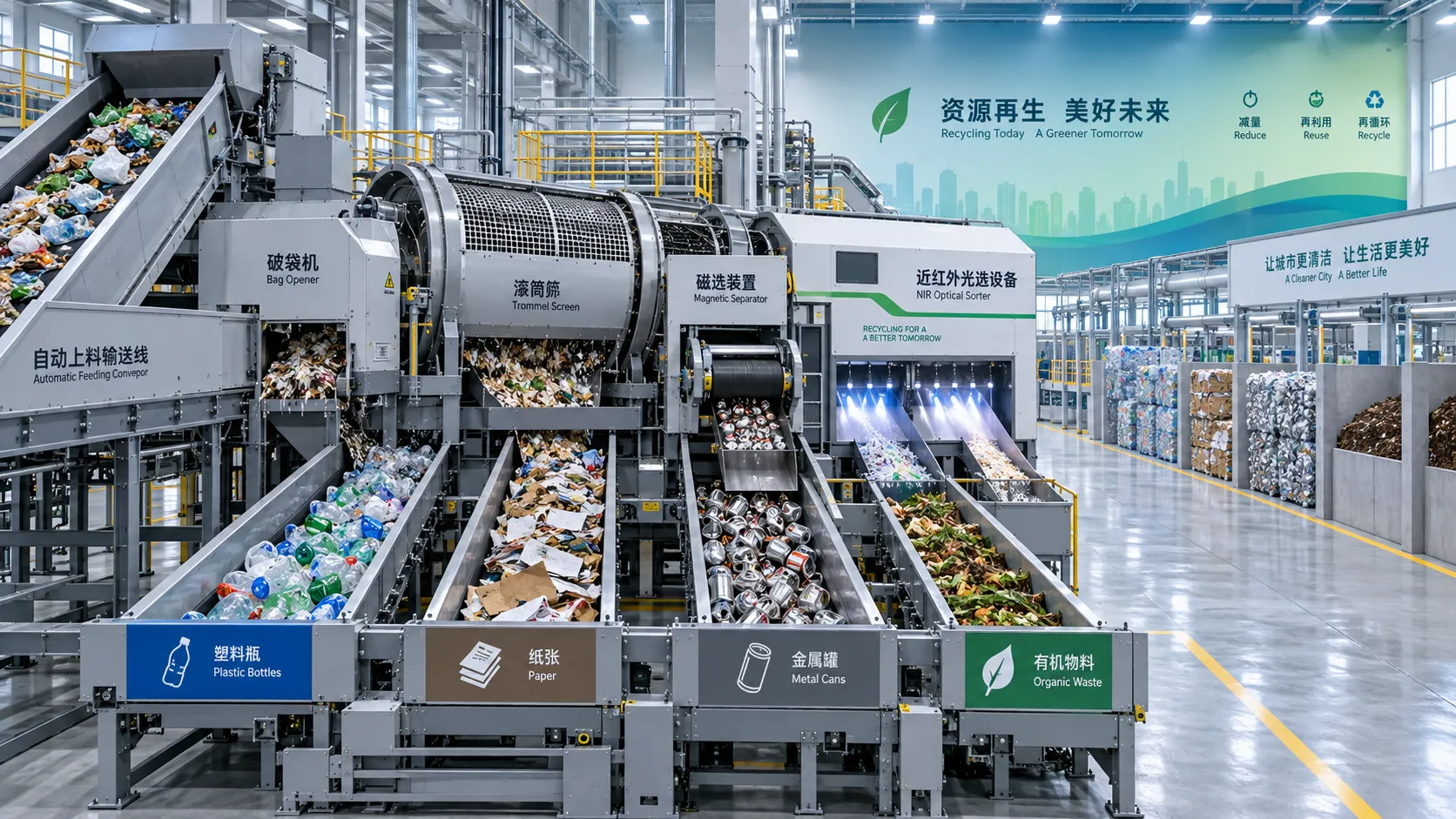
How to choose waste sorting equipment for mixed municipal waste
Waste sorting equipment selection guide for mixed municipal waste: compare technologies, improve recovery, reduce downtime, and build reliable output streams.