
Industry News
Curation by industry experts
Hot Articles
Popular Tags
Membrane Filtration Technology in High-Fouling Water: What Improves Runtime?
Why runtime becomes the real performance metric
In difficult feed streams, membrane filtration technology is judged less by nameplate flux and more by how long stable production can continue.
That matters across the environmental systems tracked by ESD, from industrial ZLD lines to desalination pretreatment and selective recovery loops.
The weak point is rarely the membrane alone.
Runtime usually collapses when scaling, organics, colloids, oil, or biological instability outrun the process design.
So the practical question is straightforward: which combination of pretreatment, operating window, and membrane selection keeps fouling under control long enough to protect output and cleaning intervals?
Actual operating conditions change the answer
High-fouling water is not one category.
A landfill leachate concentrate behaves differently from refinery wastewater, and both differ from seawater intake during algal events.
Even within one plant, membrane filtration technology may face seasonal shifts in hardness, COD, suspended solids, and temperature.
That is why runtime improvement starts with source-specific diagnosis, not generic membrane upgrades.
In practice, three variables decide most outcomes.
- What kind of foulant dominates: inorganic scale, organic matter, biofouling, oil, or mixed colloids.
- How unstable the feed is across shifts, seasons, or upstream process interruptions.
- Whether cleaning restores original permeability or only delays progressive decline.
When these are understood, membrane filtration technology becomes easier to tune for real runtime rather than laboratory performance.
Industrial wastewater with high organics needs a different logic
Chemical, pharmaceutical, food, and textile streams often foul membranes through sticky organics, surfactants, and fine colloids.
In these cases, higher crossflow alone rarely solves the problem.
The better route is to reduce the adhesive load before it reaches the membrane surface.
Coagulation, flotation, biologically stabilized pretreatment, or activated carbon often extend runtime more effectively than switching membrane grade.
For organic-heavy service, membrane filtration technology performs best when flux is conservative and cleaning chemistry is matched to the foulant profile.
A common mistake is selecting membranes for high initial throughput, then forcing operation near the fouling threshold.
That shortens cycles, increases CIP frequency, and raises chemical exposure on the membrane itself.
What usually improves runtime here
- Lower design flux with tighter flux stepping during commissioning.
- Pretreatment that removes emulsified organics before ultrafiltration or nanofiltration.
- Periodic backwash or relaxation cycles tuned to actual fouling rate.
- Cleaning recipes based on organic solubility, not standard plant habit.
Scaling-dominant streams reward chemistry more than force
Brine concentration, mine water, FGD wastewater, and many reuse systems fail because scale forms faster than operators can keep surfaces clean.
In these settings, membrane filtration technology gains runtime when saturation control is treated as a daily operating discipline.
Antiscalant choice matters, but feed pH, recovery target, and concentrate residence time often matter more.
Plants pushing high recovery for water balance reasons frequently create their own fouling penalty.
This is especially visible in ZLD-linked systems, where every additional recovery point can sharply narrow the safe operating window.
The more reliable approach is to model scaling against worst-case chemistry, then operate below that limit instead of chasing nominal maximum recovery.
Seawater and surface water challenge stability, not just fouling load
For desalination and large municipal intakes, the problem is often feed variability.
Storms, algal blooms, temperature changes, and intake disturbances can shift SDI and biological activity within hours.
Here, membrane filtration technology depends on buffering those shocks before they reach RO or NF stages.
Well-designed UF pretreatment, dissolved air flotation, and careful intake management usually improve runtime more than downstream membrane substitution.
A useful judgment point is whether the pretreatment train can hold stable filtrate quality during upset periods, not only during normal weather.
That resilience is central in ESD-covered seawater projects, where uptime and energy intensity are inseparable from pretreatment reliability.
Different scenarios do not ask the same question
A short comparison makes the runtime logic clearer.
Pretreatment usually decides whether membrane filtration technology can breathe
Operators often focus on membrane material first because it is visible and easy to compare.
Yet in high-fouling duty, pretreatment often contributes the largest runtime gain.
The right pretreatment is not the most complex train.
It is the step that removes the dominant foulant at the lowest operational penalty.
For one site, that may be fine screening and equalization.
For another, it may be oxidation control, softening, or oil separation before the membrane system.
Membrane filtration technology runs longer when pretreatment reduces variability as well as average pollutant load.
Useful checks before selecting the train
- Measure foulant composition over time, not from a single grab sample.
- Test recovery and cleaning with realistic concentrate buildup.
- Confirm whether upset conditions change particle size or organic character.
- Compare chemical cost against membrane life and downtime cost together.
Where runtime predictions often go wrong
Several misjudgments appear repeatedly across water, waste recovery, and desalination projects.
One is treating similar feedwaters as identical because TDS or COD looks comparable.
Another is trusting short pilot runs that never expose the membrane to real fouling accumulation.
A third is optimizing purchase price while ignoring cleaning downtime, replacement frequency, and operator intervention.
In advanced compliance settings, another oversight appears: runtime is evaluated without considering discharge limits, concentrate handling, or carbon intensity.
That broader system view is increasingly important as environmental projects face tighter regulation and stronger lifecycle scrutiny.
A practical route to longer cycles
The best way to improve membrane filtration technology runtime is usually incremental and evidence-based.
Start by ranking foulants, verifying feed variability, and identifying the point where permeability decay accelerates.
Then compare options in sequence: pretreatment adjustment, flux reduction, recovery reset, membrane chemistry change, and cleaning redesign.
This order works because runtime losses in high-fouling water are usually process-driven before they are membrane-limited.
For projects reviewed through an ESD-style intelligence lens, the stronger decision is the one that links membrane behavior with compliance pressure, energy cost, and long-cycle reliability.
Before the next design revision or retrofit, map the exact water scenario, compare upset and normal conditions, and build a runtime standard around site-specific fouling behavior.
That is where membrane filtration technology stops being a catalog choice and becomes a durable operating strategy.
Recommended News
How SCR denitrification systems in Europe meet Industrial Emissions rules
SCR denitrification systems Europe: learn how permit-led design, ammonia-slip control, catalyst management and monitoring support Industrial Emissions compliance.
When does MBR equipment make sense for wastewater reuse?
Water treatment equipment for wastewater reuse: learn when MBR delivers compact, reliable low-solids effluent—and when alternative treatment trains offer better value.
How North America shapes global environmental governance standards
Global environmental governance North America: discover how regulation, finance, and procurement raise worldwide standards and reshape environmental projects.
How reactor capacity affects throughput in pyrolysis systems
Pyrolysis systems reactor capacity explained: learn how heat transfer, residence time, feed quality, and emissions controls determine reliable throughput.
When low-temperature reaction equipment is the right fit for heat-sensitive processes
Low-temperature reaction equipment helps protect heat-sensitive streams, improve energy integration, and maintain reliable conversion. Explore key selection factors today.
When do water reuse systems deliver a practical payback?
Water reuse systems deliver practical payback when they cut water, discharge, and downtime costs. Learn how to match treatment, recovery, and reuse quality for lasting ROI.
When do ZLD systems for power generation justify their energy use?
ZLD systems for power generation: learn when energy-intensive water recovery delivers stronger compliance, resilience, and long-term value.
Which decarbonization pathways are most viable in Southeast Asia?
Decarbonization Southeast Asia: discover practical pathways for clean power, efficiency, electrification, circular recovery, and resilient industrial growth.
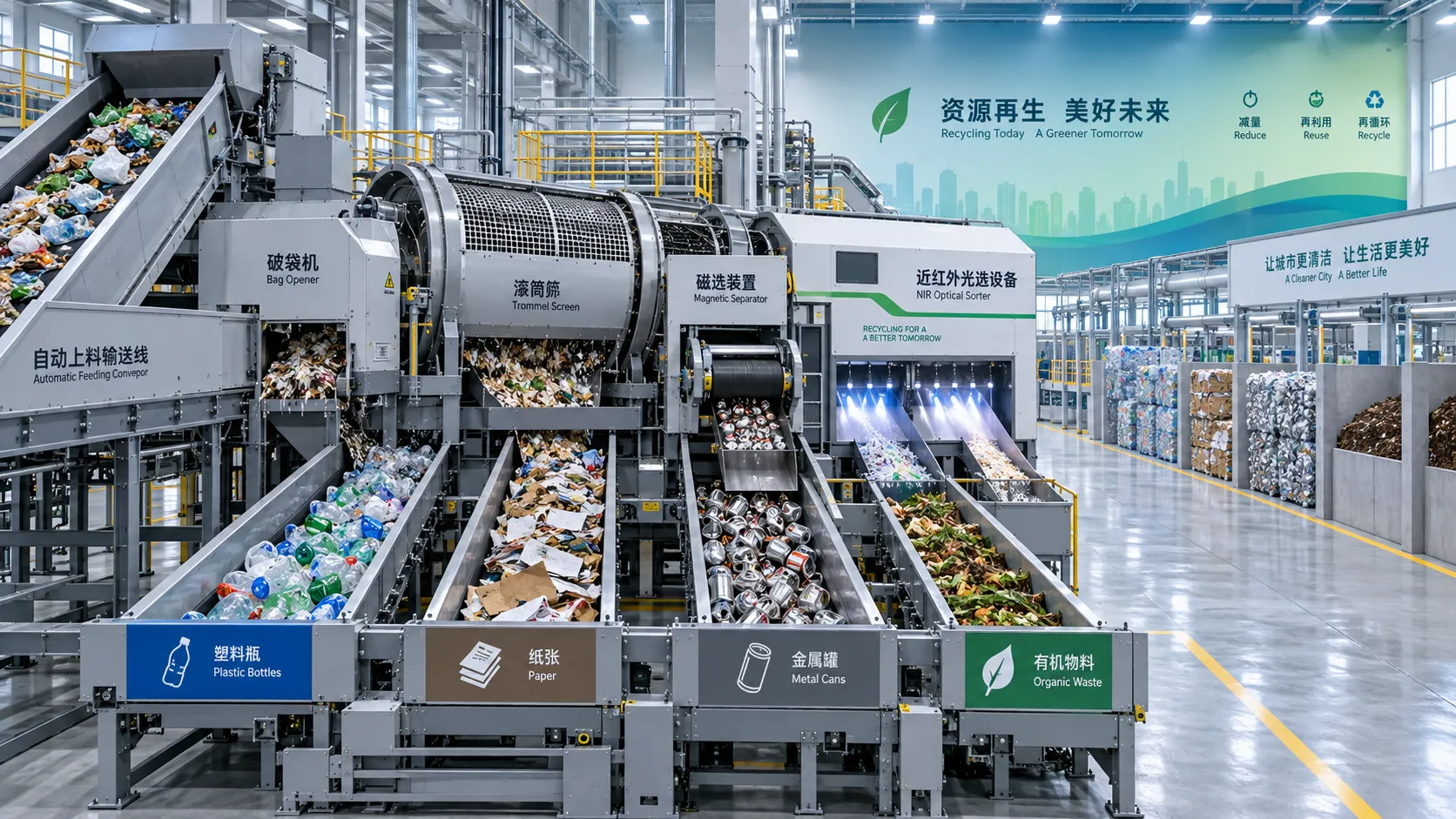
How to choose waste sorting equipment for mixed municipal waste
Waste sorting equipment selection guide for mixed municipal waste: compare technologies, improve recovery, reduce downtime, and build reliable output streams.