
Industry News
Curation by industry experts
Hot Articles
Popular Tags
How to Evaluate Radioactive Waste Handling Options by Waste Form and Compliance Risk
Start with the waste form, not the equipment list
When people get radioactive waste handling wrong, the mistake usually happens early: they compare pumps, containers, filters, transfer systems, or packaging routes before they have pinned down what the waste actually is. For a technical evaluator, the useful sequence runs the other way. Define the waste form first, then test which handling pathway keeps the material stable, traceable, containable, and licensable over its full movement from generation point to interim storage, treatment, conditioning, and final disposition.
That sounds obvious, but in practice “radioactive waste handling” can mean very different things depending on whether you are looking at wet ion-exchange media, contaminated sludge, activated metal, evaporator concentrate, spent resins, combustible solids, or already immobilized glass logs. Each one fails in a different way. Some create dispersion risk. Some generate dose hotspots. Some attack packaging materials. Some are operationally manageable but hard to justify under a compliance review because the characterization basis is too weak.
A workable evaluation checklist has to connect waste behavior with regulatory exposure. If it does not, you end up selecting a handling option that looks efficient on paper and becomes expensive the moment it reaches licensing, transport review, storage inspection, or waste acceptance screening.
Characterize the stream before you rank any option
Do not accept broad labels such as “solid low-level waste” or “liquid radioactive residue” as a decision basis. They are administrative shortcuts, not engineering inputs. Before comparing handling routes, check whether the waste profile includes these minimum decision fields:
- Physical form: free liquid, slurry, powder, granular resin, compactable solid, debris, encapsulated item, vitrified form.
- Radiological profile: dominant radionuclides, expected dose rate range, contamination mode, decay heat relevance, and whether shielding or remote handling is required.
- Chemical behavior: corrosivity, organic content, chloride or nitrate burden, oxidizing or reducing character, gas generation potential, incompatibility with liners, sorbents, binders, or container metals.
- Mechanical stability: tendency to settle, segregate, bridge, dry out, crack, aerosolize, or leach.
- Package destination: on-site treatment, off-site transfer, interim storage, conditioning line, disposal package, or long-term immobilization route.
If even one of those fields is weak, pause the selection exercise. The usual bad outcome is overdesign in one area and blind risk in another. A common example is choosing a transfer and dewatering setup for sludge without understanding whether the solids fraction changes enough over time to affect pumpability, package filling limits, or later cementation performance.
Check whether the waste stays in its current form or needs conditioning first
Not every waste stream should be “handled” in the form in which it is generated. Some should be stabilized before they move at all. This is one of the main decision points because it changes both operational risk and compliance risk.
Ask a plain question: is the current form stable enough for transfer, storage, and acceptance testing, or is treatment needed to create that stability? Liquids with suspended activity often need concentration, sorption, or solidification before downstream handling becomes defensible. Fine dry solids may need containment upgrades or immobilization because the dispersion risk drives the entire safety case. Vitrified waste is the opposite case: the main evaluation is usually no longer about stabilization, but about canister integrity, thermal management, handling interfaces, and long-term package control.
This is also where teams confuse treatment convenience with lifecycle suitability. A process that quickly reduces volume may still create a harder waste form for storage, transport, or disposal acceptance. Volume reduction alone is a weak selection criterion unless the resulting waste form remains chemically and mechanically stable.
Use different evaluation logic for solid, liquid, and vitrified streams
That table is useful because it keeps you from applying one decision model to every stream. The wrong model leads to the wrong questions.
Map the compliance path before you commit to a handling route
A handling option is only viable if it fits the compliance path of the waste package and the facility that touches it. Technical teams sometimes leave this until late because the hardware discussion feels more concrete. That usually backfires.
Check the actual document chain that will govern the waste at each step: site license conditions, internal waste acceptance criteria, transport package approvals where movement is involved, storage facility package constraints, treatment system operating envelope, and disposal or return-route acceptance specifications. The important point is not to cite regulations in the abstract, but to identify which document controls which decision. For example, free-liquid limits, fissile content controls, surface dose thresholds, contamination limits, package mass restrictions, and prohibited chemical constituents are often determined by different documents owned by different functions.
If your selected route relies on assumptions that are not captured in those records, you do not have a stable option yet. You have a concept waiting to fail at interface review.
Look hard at secondary waste and off-normal states
This is where many evaluations are too optimistic. A handling method can look clean until you account for what it creates around itself: spent filters, contaminated wash water, PPE burden, failed liners, rejected packages, tank heel residues, ventilation media, and maintenance waste from shielded equipment. Secondary waste is not a side note. It changes storage demand, package count, labor exposure, and recordkeeping complexity.
Then check the off-normal states. What happens if a slurry settles during hold time? What if a drum arrives with internal pressure, a canister interface is out of tolerance, or a resin transfer line plugs? Good evaluators do not just ask whether the route works in normal operation. They ask whether the route fails into a manageable condition. If recovery requires ad hoc cutting, repackaging, manual intervention in high-dose areas, or uncertain recharacterization, the option carries hidden compliance and exposure risk.
Judge containment performance at the package and handling-system level
Containment is not just a container specification. It is the combined performance of waste form, closure method, transfer interfaces, ventilation control, decontamination approach, and inspection routine. A decent package can still be part of a weak handling system if couplings are exposed, fill quality is inconsistent, or contamination surveys cannot be performed reliably after closure.
For solids, inspect how the route controls fragments, dust, and void management. For liquids, check seals, overfill prevention, compatible wetted materials, and the ability to sample without turning the sampling point into a contamination source. For vitrified forms, focus on lifting points, impact protection, identification persistence, and storage geometry. In each case, ask whether the system supports routine verification. If you cannot inspect, survey, or reconcile the package history without excessive workaround, the route is operationally fragile.
Do not separate worker dose from option scoring
Dose impact often gets treated as a health physics annex instead of a selection driver. That is a mistake. A handling route that reduces package count but adds repeated manual interventions may be worse than a bulkier route with clean remote interfaces. Dose risk is tied to hold points, survey frequency, maintenance access, repackaging likelihood, and how predictable the waste geometry is.
One practical test helps here: write down every human touchpoint from waste generation to the next stable storage condition. If the option depends on frequent lid removal, hose changes, decon cycles, internal inspections, or manual corrections to package fill, it needs a much stronger justification than a route with fewer interventions. Technical evaluators know this, but it is easy to underweight when a process diagram looks efficient.
Check whether the data package is strong enough to defend the choice
Selection is not just about physical suitability. It is about whether the option can be defended with auditable evidence. Before closing the evaluation, confirm that the chosen route has a usable data package behind it:
- Waste characterization records linked to the actual stream, not generic legacy profiles.
- Container and material compatibility basis.
- Defined operating envelope for fill level, solids content, chemistry, and temperature where relevant.
- Inspection, survey, and traceability steps that can be executed consistently.
- Decision records showing why rejected alternatives were rejected.
That last point matters more than people expect. When an option is questioned later, the weakness is often not the selected path itself but the lack of a clear record explaining why other routes were less suitable under the same waste and compliance conditions.
A practical way to rank options
If you need a short decision frame, score each candidate handling route against five things: waste form stability, containment robustness, compliance fit, recoverability from upset conditions, and operational burden. Keep lifecycle compatibility in view the whole time. A route that performs well only inside one building is not a strong option if it creates downstream acceptance problems.
The cleanest working order is usually this: characterize the stream, identify whether pre-conditioning is required, map the controlling acceptance documents, screen out routes that fail containment or upset recovery, then compare the remaining options on dose and operating burden. By the time you reach cost and throughput, the weak candidates should already be gone.
That sequence keeps the evaluation grounded in how radioactive waste handling actually succeeds or fails: not in the equipment brochure, but in the interaction between waste form, package behavior, and compliance exposure over time.
Recommended News
Which decarbonization pathways are most viable in Southeast Asia?
Decarbonization Southeast Asia: discover practical pathways for clean power, efficiency, electrification, circular recovery, and resilient industrial growth.
How to choose waste sorting equipment for mixed municipal waste
Waste sorting equipment selection guide for mixed municipal waste: compare technologies, improve recovery, reduce downtime, and build reliable output streams.
How to verify standards in an environmental equipment directory
environmental equipment directory standards reference: learn to verify certifications, performance evidence, scope, and project fit for confident, compliant equipment selection.
When high flux membrane water treatment justifies a larger footprint
High flux membrane water treatment can justify a larger footprint when variable feedwater, fouling risk, and uptime demands require resilient, lower-flux operation.
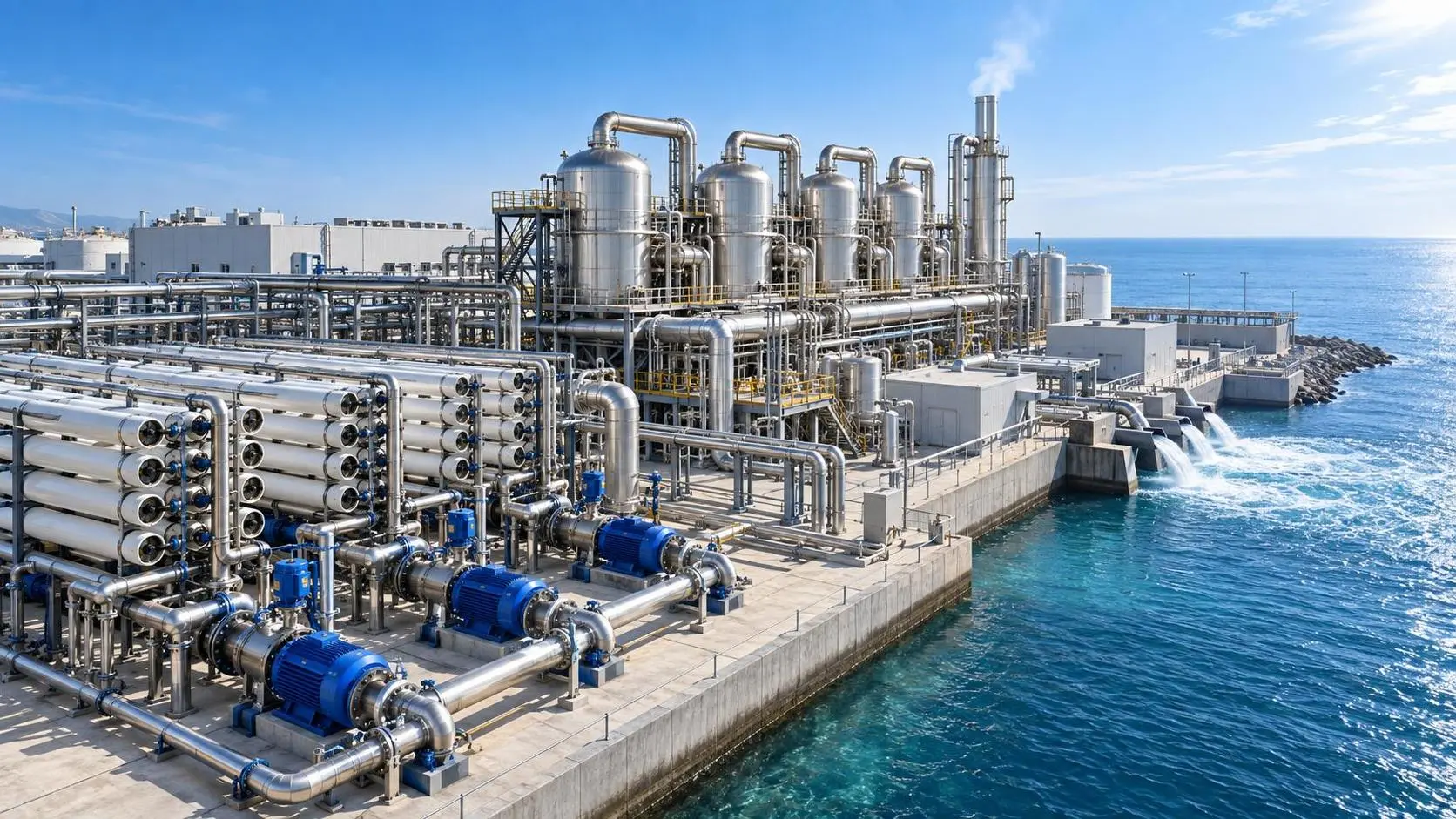
RO vs MED desalination: which is more energy-efficient at scale?
Desalination technology comparison: RO vs MED at scale. See how energy use, waste heat, feedwater, carbon, and flexibility determine the best choice.
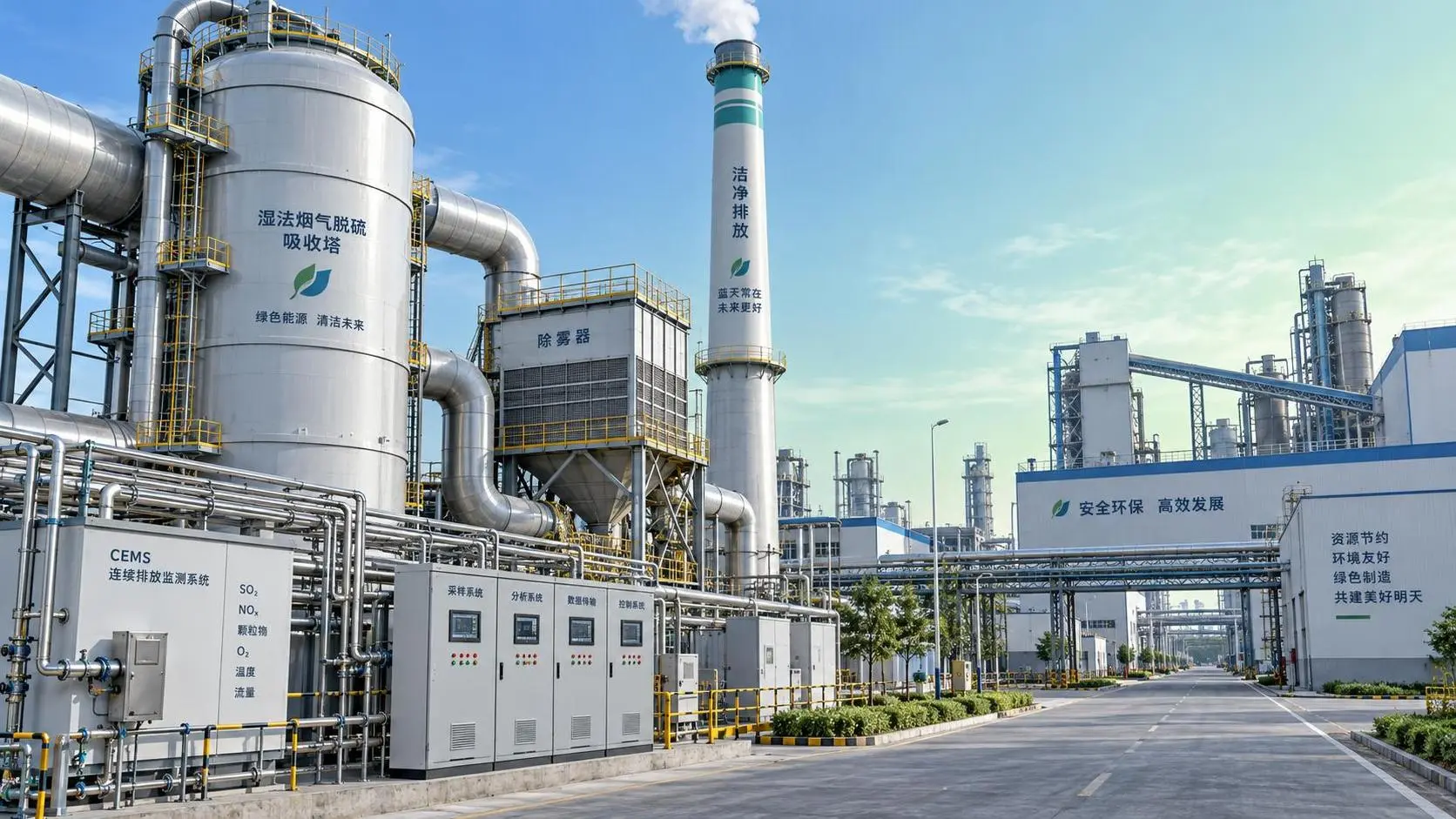
Which ISO standards apply to flue gas treatment systems?
Flue gas treatment systems ISO standards: explore key requirements for emissions testing, CEMS, safety, fabrication, corrosion control, and compliant project evaluation.

When corrosion resistant purification systems are needed for brine treatment
Corrosion resistant purification systems for brine treatment: assess chloride, heat, scaling, materials, and lifecycle reliability for demanding water projects.

How preventive maintenance reduces seawater desalination equipment downtime
Seawater desalination equipment maintenance reduces downtime through proactive monitoring, pretreatment protection, and planned repairs. Explore practical strategies for reliable RO performance.
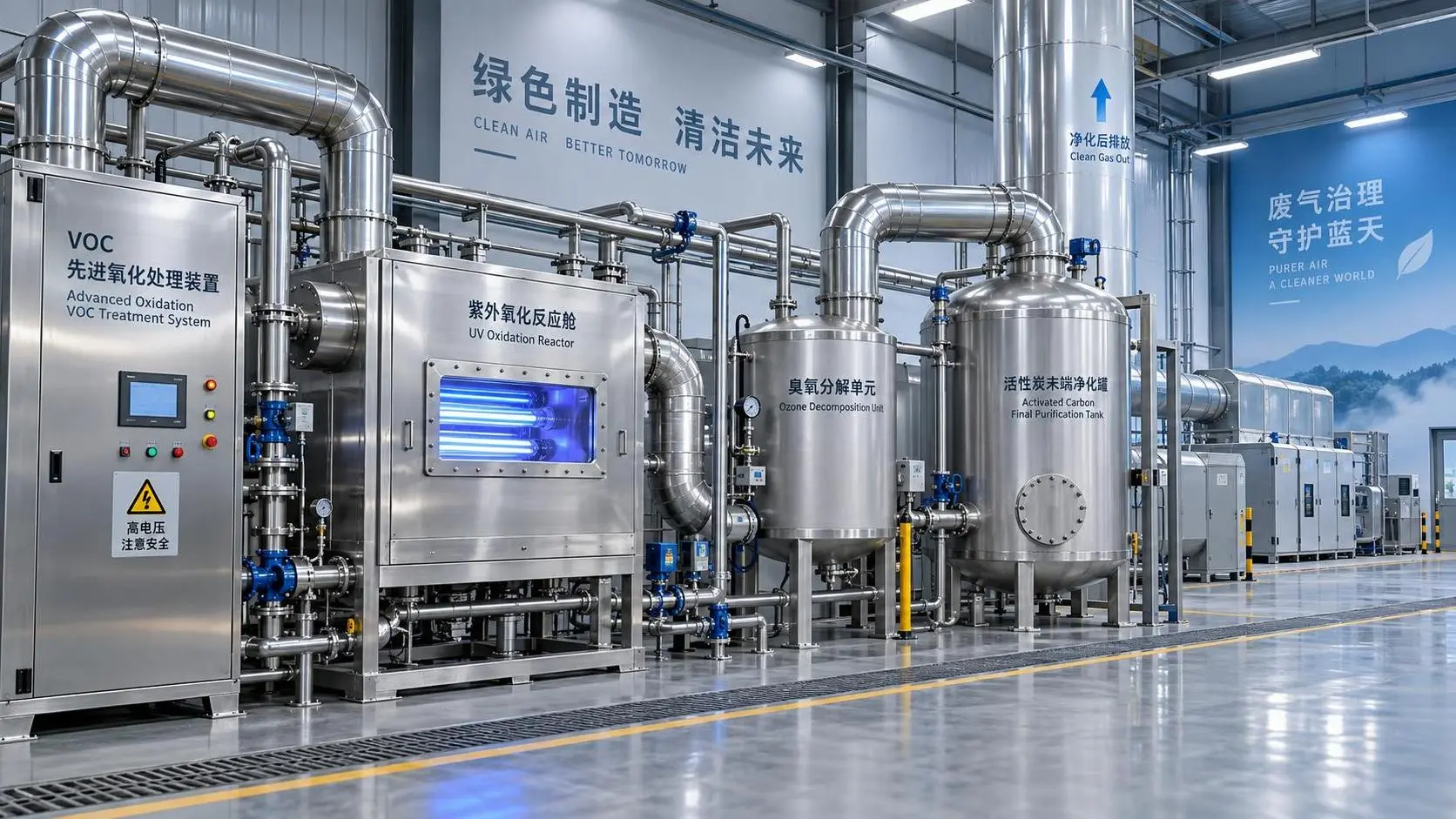
When are advanced oxidation processes the right choice for VOC control?
Advanced oxidation processes for VOC control: learn when AOPs outperform conventional options, manage by-products, and achieve reliable compliance.