
Industry News
Curation by industry experts
Hot Articles
Popular Tags
Flue Gas Treatment Options for Stable Emissions Control
Flue Gas Treatment Options Start With Real Operating Conditions
Flue gas treatment is rarely a single-device decision. It is an operating strategy shaped by fuel chemistry, load swings, emission limits, water balance, and maintenance tolerance.
In heavy industry, the same stack can carry dust, SO2, NOx, HCl, HF, trace metals, and condensable aerosols. That is why flue gas treatment options must be judged as a system.
The practical question is not which technology looks strongest on paper. The better question is which flue gas treatment path stays stable during upset conditions and still meets future compliance.
This is also where the ESD perspective matters. Across water treatment, solid waste recovery, desalination, and nuclear waste management, reliable environmental control depends on linking process limits with compliance logic.
For flue gas treatment, that means comparing capture efficiency, reagent demand, parasitic energy use, residue handling, and long-term operability rather than chasing one headline parameter.
Why Similar Plants Still Need Different Flue Gas Treatment Choices
Two facilities can burn similar fuels and still need different flue gas treatment options. The difference often comes from moisture level, sulfur variability, temperature window, and daily cycling behavior.
A base-load process line usually values continuous efficiency and predictable reagent consumption. A line with frequent start-stop operation cares more about catalyst activity at low temperature and corrosion during transients.
Site constraints also change the answer. Water-scarce locations may avoid wet scrubbing unless wastewater integration is already mature. Tight footprints often favor compact reactors, but only if pressure drop stays manageable.
Regulatory direction matters too. Many projects now evaluate flue gas treatment against not only current stack limits, but also reporting transparency, carbon intensity, and residue traceability under stricter global trade rules.
Where Particulate Control Sets the Tone for the Whole System
In dust-heavy applications, particulate removal is not just a front-end step. It often determines whether downstream desulfurization and DeNOx units remain stable, efficient, and easy to maintain.
Electrostatic precipitators fit large gas volumes with relatively low pressure loss. They perform well when ash resistivity stays within a workable range and process conditions are reasonably stable.
Bag filters usually offer stronger fine-particle capture and help with acid gas polishing when sorbents are injected upstream. They become attractive when ultra-low particulate emissions are required.
The real judgment point is often not collection efficiency alone. It is whether sticky dust, high moisture, sparks, or temperature excursions will shorten bag life or disturb collection reliability.
In waste-derived or mixed-fuel streams, particulate characteristics can shift quickly. Under those conditions, flue gas treatment should be designed around variability, not around an idealized average dust loading.
When Desulfurization Needs to Balance Compliance and Water Reality
Wet limestone FGD remains a common flue gas treatment option where sulfur loads are high and removal targets are strict. It is proven, scalable, and well understood in continuous heavy-duty service.
Still, wet FGD is not automatically the right choice. It introduces slurry management, oxidation control, gypsum quality issues, wastewater handling, and corrosion risks that some sites underestimate.
Semi-dry scrubbers often make more sense where water use must stay lower and sulfur loads are moderate. They can also simplify residue handling, though sorbent utilization may be less efficient.
Dry sorbent injection works best as a targeted flue gas treatment tool for lower pollutant loads, peak shaving, or retrofit conditions with limited space. It is fast to install, but operating cost can rise quickly.
At sites already managing ZLD or complex industrial wastewater, wet flue gas treatment may be easier to integrate. Where water recovery is difficult, dry or semi-dry routes often hold a clearer lifecycle advantage.
NOx Control Changes Once Temperature Windows Become Tight
NOx removal decisions usually turn on temperature. Selective catalytic reduction delivers high removal efficiency, but catalyst performance depends on a stable operating window and acceptable dust conditions.
For hotter and cleaner positions, high-dust SCR can work well with the right sootblowing and catalyst management. In dirtier services, erosion, plugging, and poisoning can erode expected performance.
Low-temperature SCR is increasingly relevant in retrofit flue gas treatment projects. It helps when reheating is undesirable, yet sulfur species, ammonium salt deposition, and catalyst deactivation need closer control.
SNCR is simpler and less capital intensive, but it is more sensitive to reaction window control and often less predictable at deep removal levels. It suits some kilns and furnaces better than others.
A common mistake is comparing SCR and SNCR only by headline efficiency. The more realistic comparison includes ammonia slip, tuning difficulty, maintenance burden, and the value of consistent compliance margins.
Mixed Pollutant Streams Need Combination Flue Gas Treatment
Some of the most demanding flue gas treatment cases appear in waste-to-energy, hazardous residue handling, non-ferrous metallurgy, and variable feed thermal processes.
These streams rarely contain one dominant pollutant. They often combine acid gases, fine particulates, heavy metals, dioxin precursors, and unstable temperature profiles.
In that setting, layered systems are usually safer than single-technology bets. A typical arrangement may combine sorbent injection, fabric filtration, activated carbon dosing, and a tailored NOx control step.
The key is sequence. If quenching, reagent contact time, or dust conditioning are poorly arranged, each unit will burden the next one and total removal efficiency will become fragile.
This is where intelligence-led assessment adds value. ESD often treats flue gas treatment as part of a wider environmental chain, where residue reuse, wastewater loops, and compliance reporting interact.
Different operating contexts change the selection logic
What Often Gets Misjudged Before a Retrofit or New Build
Many flue gas treatment projects are misjudged because design teams rely on average gas data. Peaks, startup conditions, upset chemistry, and seasonal ambient changes are often more decisive.
Another weak point is evaluating capital cost without residue, water, energy, and spare-part implications. A low-entry system can become expensive once reagent use and downtime are fully counted.
Retrofit work also suffers when duct layout, available pressure head, and outage windows are treated as minor details. In practice, these constraints can rule out otherwise attractive flue gas treatment options.
- Do not assume similar fuels produce identical ash behavior.
- Do not size DeNOx only for normal load if deep turndown is frequent.
- Do not separate stack compliance from wastewater or solid residue planning.
- Do not ignore catalyst poisoning risks from trace contaminants.
A Practical Way to Compare Flue Gas Treatment Options
A useful comparison begins with pollutant map, gas temperature profile, and variability range. Then the shortlist should be tested against water availability, reagent supply, maintenance interval, and disposal routes.
Where future regulation is tightening, flue gas treatment should include margin for lower particulate, lower NOx, and better trace pollutant control rather than only passing today's limit.
The better path is usually the one that remains controllable across real operating windows. Stable flue gas treatment protects emissions performance, but it also protects uptime, reporting credibility, and total environmental balance.
Before final selection, it is worth building a site-specific matrix covering pollutant load, transient behavior, utility constraints, by-product handling, outage limits, and expected compliance horizon.
That approach fits the broader ESD view: environmental equipment performs best when process intelligence, regulatory foresight, and lifecycle discipline are treated as one decision framework.
Recommended News
Which decarbonization pathways are most viable in Southeast Asia?
Decarbonization Southeast Asia: discover practical pathways for clean power, efficiency, electrification, circular recovery, and resilient industrial growth.
How to choose waste sorting equipment for mixed municipal waste
Waste sorting equipment selection guide for mixed municipal waste: compare technologies, improve recovery, reduce downtime, and build reliable output streams.
How to verify standards in an environmental equipment directory
environmental equipment directory standards reference: learn to verify certifications, performance evidence, scope, and project fit for confident, compliant equipment selection.
When high flux membrane water treatment justifies a larger footprint
High flux membrane water treatment can justify a larger footprint when variable feedwater, fouling risk, and uptime demands require resilient, lower-flux operation.
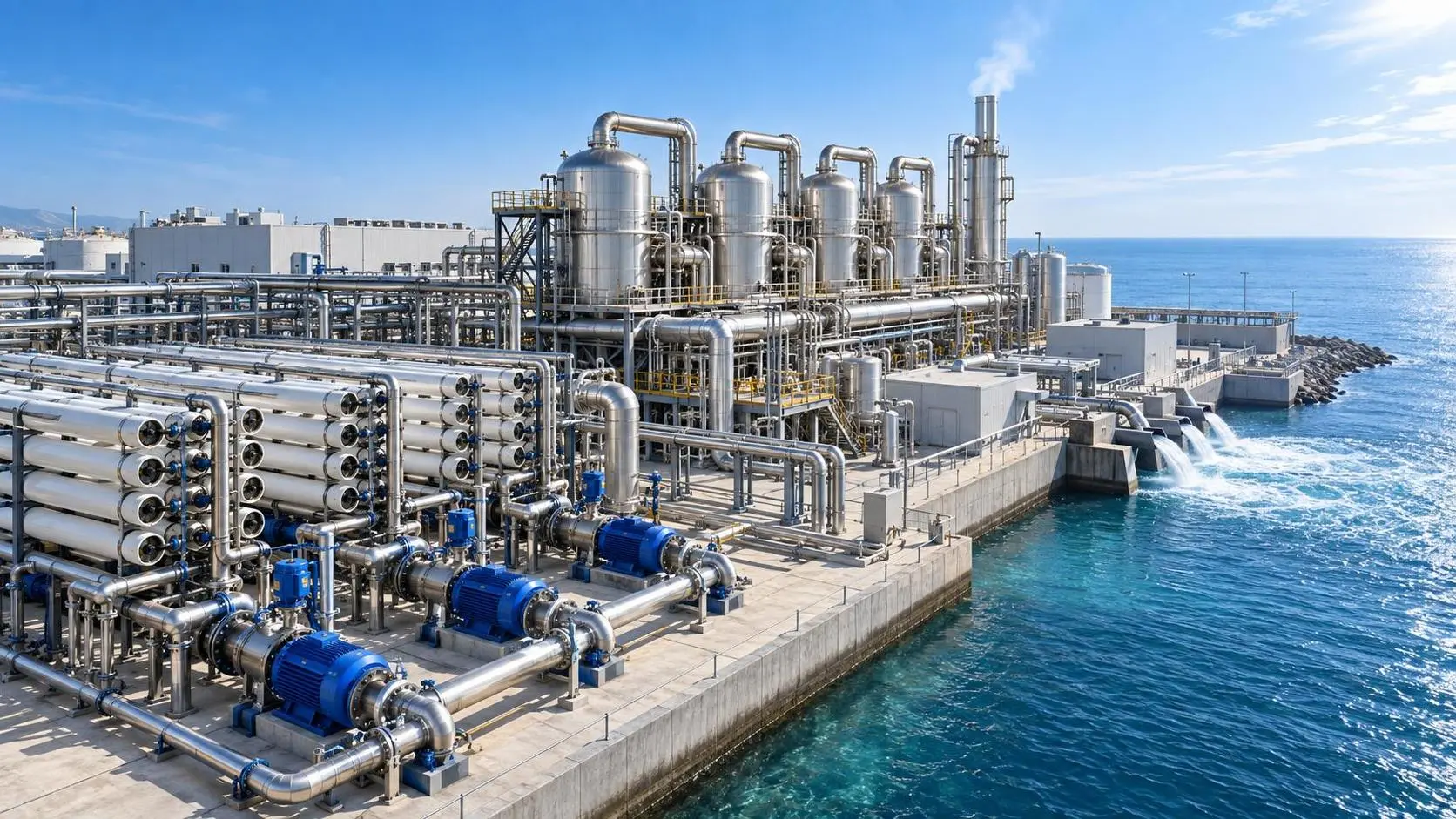
RO vs MED desalination: which is more energy-efficient at scale?
Desalination technology comparison: RO vs MED at scale. See how energy use, waste heat, feedwater, carbon, and flexibility determine the best choice.
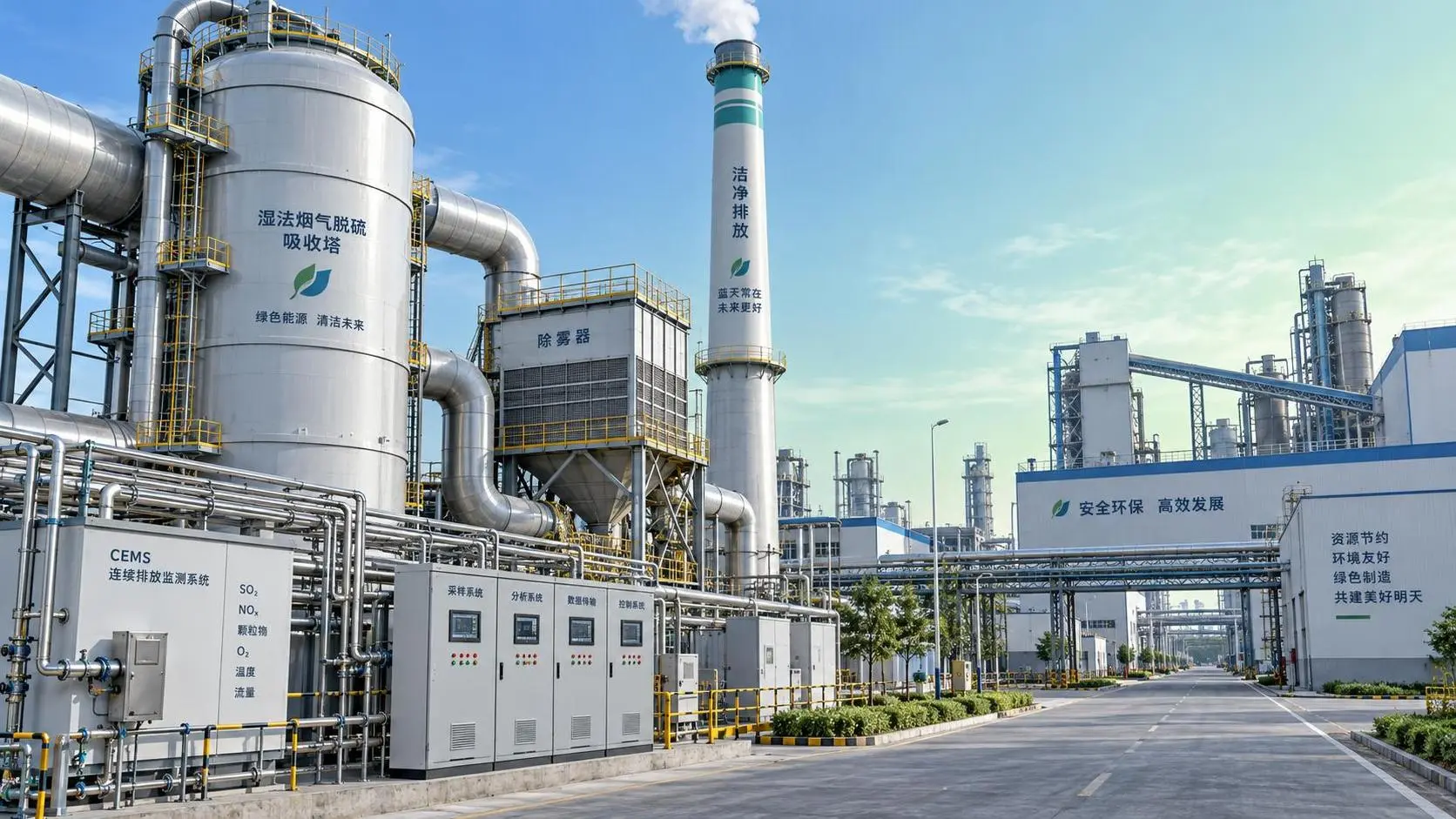
Which ISO standards apply to flue gas treatment systems?
Flue gas treatment systems ISO standards: explore key requirements for emissions testing, CEMS, safety, fabrication, corrosion control, and compliant project evaluation.

When corrosion resistant purification systems are needed for brine treatment
Corrosion resistant purification systems for brine treatment: assess chloride, heat, scaling, materials, and lifecycle reliability for demanding water projects.

How preventive maintenance reduces seawater desalination equipment downtime
Seawater desalination equipment maintenance reduces downtime through proactive monitoring, pretreatment protection, and planned repairs. Explore practical strategies for reliable RO performance.
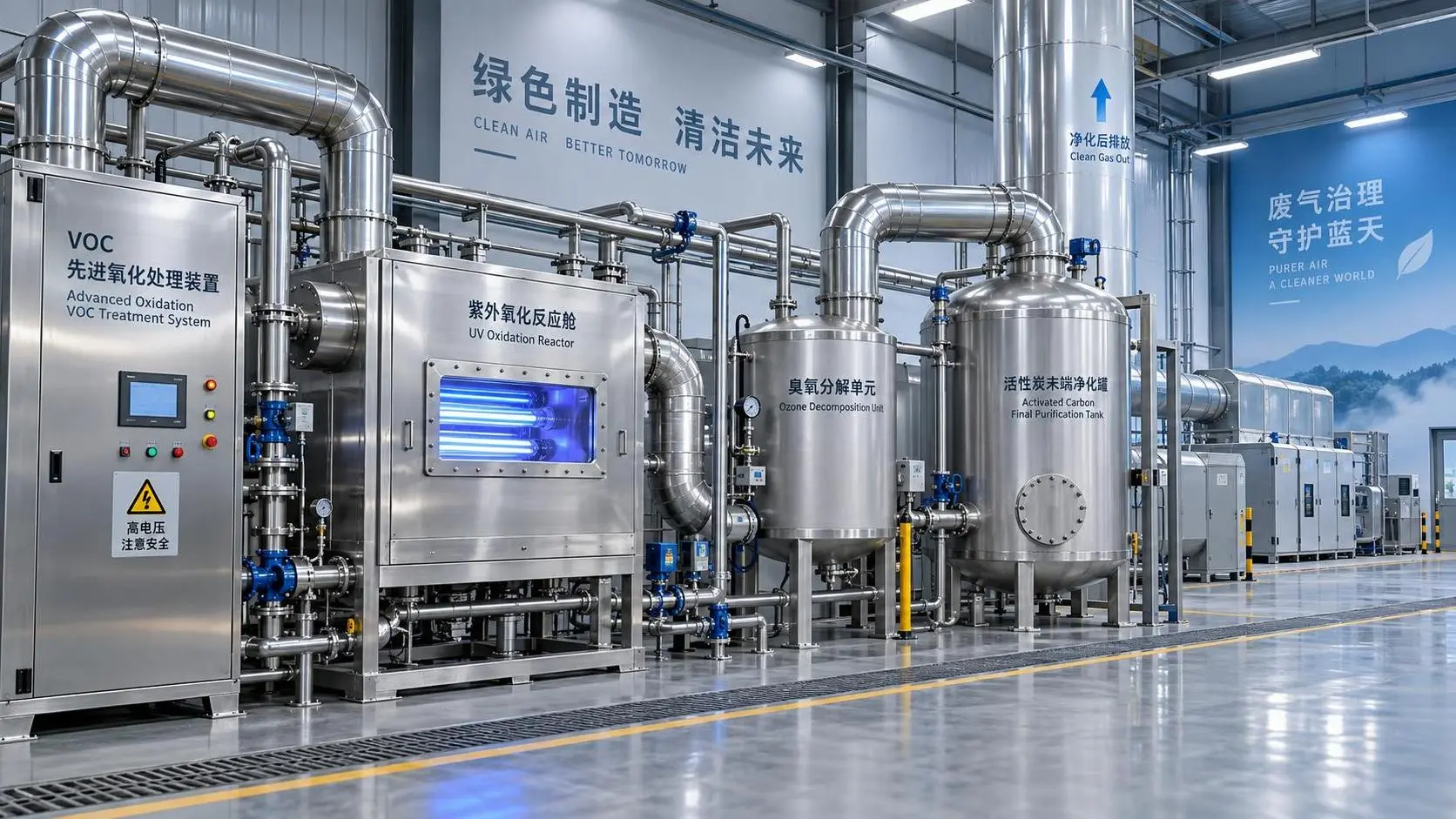
When are advanced oxidation processes the right choice for VOC control?
Advanced oxidation processes for VOC control: learn when AOPs outperform conventional options, manage by-products, and achieve reliable compliance.