
Industry News
Curation by industry experts
Hot Articles
Popular Tags
Water Purification Standards, Risks, and System Selection
Why does water purification now sit at the center of risk control?
Water purification used to be reviewed as a utility issue. That view is now too narrow for complex industrial and municipal systems.
A single gap in water quality can disturb product consistency, damage membranes, trigger corrosion, upset discharge limits, or create worker safety concerns.
That is why water purification standards matter beyond permits. They shape operational reliability, environmental reporting, and the credibility of internal control systems.
In practice, the pressure comes from several directions at once. Feedwater quality is less predictable, regulations move faster, and treatment trains are more integrated.
This is especially visible in the wider eco-engineering landscape tracked by ESD, where large water treatment, desalination, waste recovery, and high-risk compliance all intersect.
The practical question is no longer whether a system can purify water. It is whether that system can do so consistently under changing loads and tighter standards.
Which water purification standards actually guide system decisions?
Many teams ask for “compliant water purification,” but that phrase hides an important detail: compliance depends on the intended use of the water.
For drinking water, the benchmark may be WHO guidance or national potable standards. For industrial reuse, conductivity, silica, TOC, hardness, and microbial counts often matter more.
For wastewater discharge, the focus shifts again. Heavy metals, COD, BOD, nitrogen species, phosphorus, salinity, and persistent organics can become decisive.
This is where mistakes usually happen. Teams compare systems before defining the controlling standard, the monitoring method, and the required stability window.
A more reliable approach is to map standards into three layers:
- Source-water variability, including seasonal shifts and shock loads.
- Process-water targets, such as hardness control, microbial limits, or ultra-low conductivity.
- Final discharge or reuse obligations, including local permits and sector-specific requirements.
Where advanced sectors are involved, water purification standards may also align with broader environmental frameworks, carbon reporting, and closed-loop recovery strategies.
That broader lens is increasingly relevant in desalination, ZLD projects, and high-consequence treatment environments where ESD places strong analytical attention.
A quick standards-to-decision table
Before comparing technologies, it helps to pin each water purification goal to a measurable decision point.
What contamination risks are most often underestimated?
The obvious risks are usually well known. Suspended solids, scale, and bacteria are rarely ignored. The hidden risks are more disruptive.
One example is variable feed chemistry. A treatment train designed for stable inlet water may struggle when salinity, temperature, or organic load shifts rapidly.
Another common blind spot is partial contamination control. A system may remove turbidity effectively while leaving dissolved organics or trace metals high enough to create downstream problems.
Biofouling is also underestimated because early signs are subtle. Pressure drop, cleaning frequency, and differential performance often change before lab alarms appear.
In higher-risk environments, poor concentrate management creates a second layer of exposure. This is a major issue in desalination and ZLD-oriented water purification schemes.
Need-to-watch contaminants increasingly include:
- Trace organics that interfere with reuse quality.
- Silica and hardness combinations that drive scale.
- Corrosive ions that accelerate asset degradation.
- Residual disinfectants that damage membrane systems.
- Sludge or brine handling risks shifted outside the core unit.
A useful rule is simple: if water purification solves one parameter by pushing risk into another stream, the control plan is incomplete.
How should a water purification system be selected without oversizing or underprotecting?
Good system selection starts with contaminant behavior, not brand preference or isolated removal claims.
For example, suspended solids may be handled by clarification, media filtration, or ultrafiltration. Dissolved salts may point toward RO, EDI, or thermal treatment.
If the challenge is high COD with reuse pressure, biological treatment alone may not be enough. Advanced oxidation, activated carbon, membranes, or hybrid designs may be required.
The more common selection mistake is treating each unit as independent. In reality, water purification performance depends on the full train and its weakest interface.
When comparing options, these checkpoints usually reveal more than headline efficiency:
- How often feedwater quality falls outside the design envelope.
- Whether pretreatment truly protects membrane or polishing stages.
- How the system handles shutdowns, restarts, and shock loads.
- What cleaning chemicals, spare parts, and operator skills are required.
- How reject streams, sludge, or brine are managed after separation.
In large-scale projects, especially desalination and industrial reuse, ESD’s strategic perspective is relevant because it links equipment choice to resource loops, compliance exposure, and long-term resilience.
A practical comparison mindset
Instead of asking which technology is best, ask which sequence best controls the dominant risk at the lowest lifecycle burden.
That shift usually leads to better water purification decisions than comparing capital cost alone.
Where do implementation failures usually begin?
Implementation problems rarely start at commissioning day. They begin much earlier, often in sampling, assumptions, or incomplete handover criteria.
One recurring issue is weak baseline data. If seasonal inlet variation is not captured, the final water purification design may perform well only during normal conditions.
Another issue is acceptance testing that is too short. A system can look stable during a brief trial while hiding fouling, chemical imbalance, or automation gaps.
Instrumentation is equally important. Without trusted online conductivity, pH, turbidity, flow, pressure, and key analyzers, water purification becomes reactive instead of controlled.
The table below helps translate common concerns into implementation checks.
What should be reviewed before approving a final water purification route?
A final review should test whether the proposed water purification route is durable, auditable, and realistic to operate.
That means looking beyond nominal removal rates. The stronger review asks whether the system remains compliant during upset conditions, maintenance cycles, and raw-water drift.
It also helps to review the project through a wider ecological lens. Water use, energy demand, concentrate handling, and recovery value are increasingly connected.
This systems view is one reason intelligence platforms such as ESD focus not only on equipment, but also on how purification, reuse, desalination, and compliance evolve together.
Before sign-off, confirm these points:
- The water purification target matches real end use, not a generic benchmark.
- Critical contaminants are ranked by operational and regulatory impact.
- Pilot data or equivalent evidence supports the design envelope.
- Monitoring points, alarms, and corrective actions are clearly defined.
- Waste streams created by purification have a lawful and practical outlet.
- Lifecycle cost includes chemicals, cleaning, downtime, and replacement cycles.
When those checks are in place, water purification becomes easier to defend technically and easier to manage under audit pressure.
So what is the smartest next step?
The smartest next step is usually not buying a new unit. It is clarifying the decision basis behind water purification performance.
Start with a current-state review of source water, treatment bottlenecks, monitoring gaps, and end-use expectations. Then compare those findings against the standards that actually apply.
If the system supports reuse, desalination, or high-consequence discharge, include concentrate management and reliability under upset conditions in the review scope.
From there, build a short decision matrix for technology fit, lifecycle burden, compliance resilience, and verification needs.
Water purification works best when standards, risks, and system design are evaluated together. That is the point where safer outcomes and stronger long-term control usually begin.
Recommended News
Which decarbonization pathways are most viable in Southeast Asia?
Decarbonization Southeast Asia: discover practical pathways for clean power, efficiency, electrification, circular recovery, and resilient industrial growth.
How to choose waste sorting equipment for mixed municipal waste
Waste sorting equipment selection guide for mixed municipal waste: compare technologies, improve recovery, reduce downtime, and build reliable output streams.
How to verify standards in an environmental equipment directory
environmental equipment directory standards reference: learn to verify certifications, performance evidence, scope, and project fit for confident, compliant equipment selection.
When high flux membrane water treatment justifies a larger footprint
High flux membrane water treatment can justify a larger footprint when variable feedwater, fouling risk, and uptime demands require resilient, lower-flux operation.
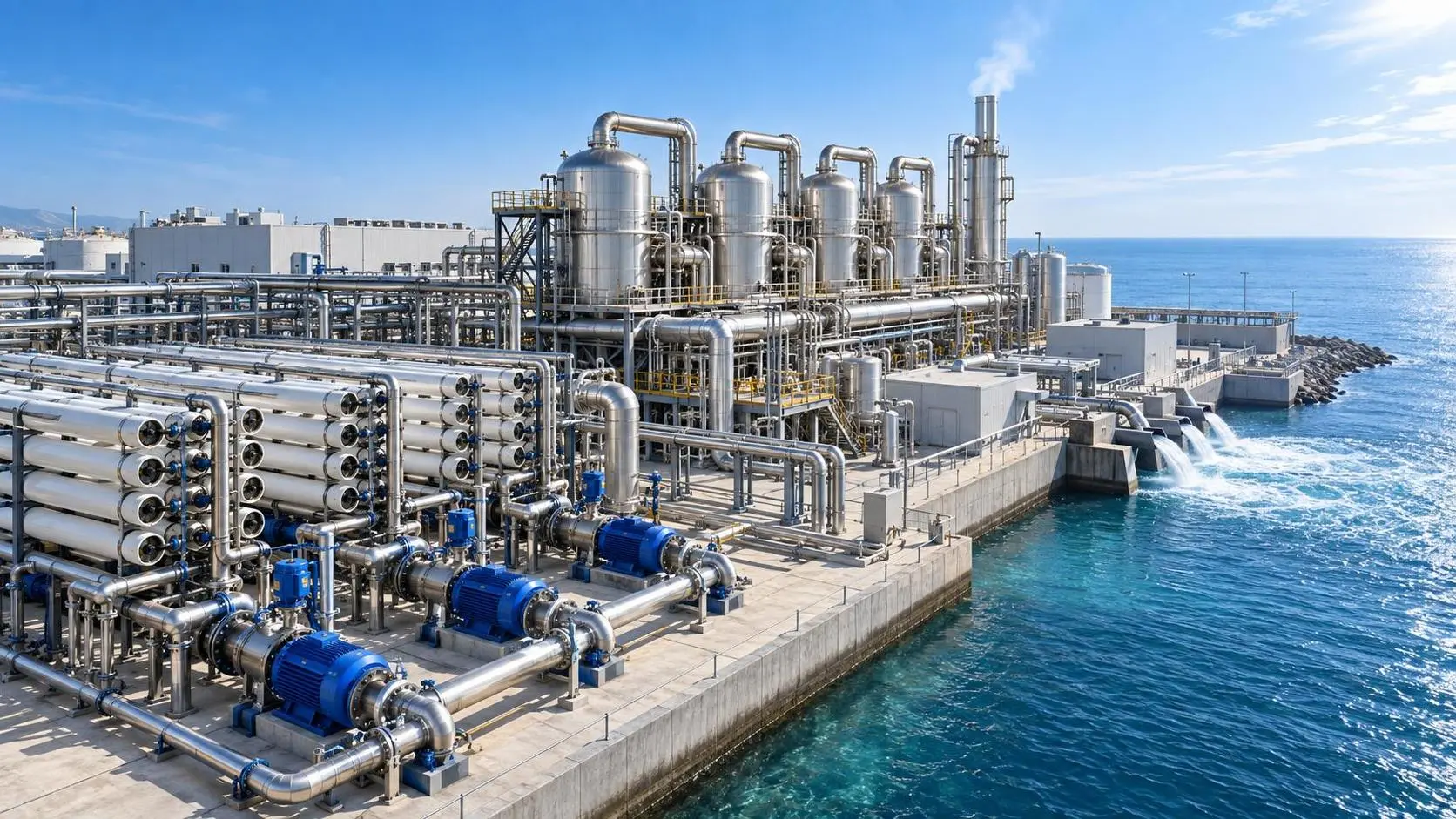
RO vs MED desalination: which is more energy-efficient at scale?
Desalination technology comparison: RO vs MED at scale. See how energy use, waste heat, feedwater, carbon, and flexibility determine the best choice.
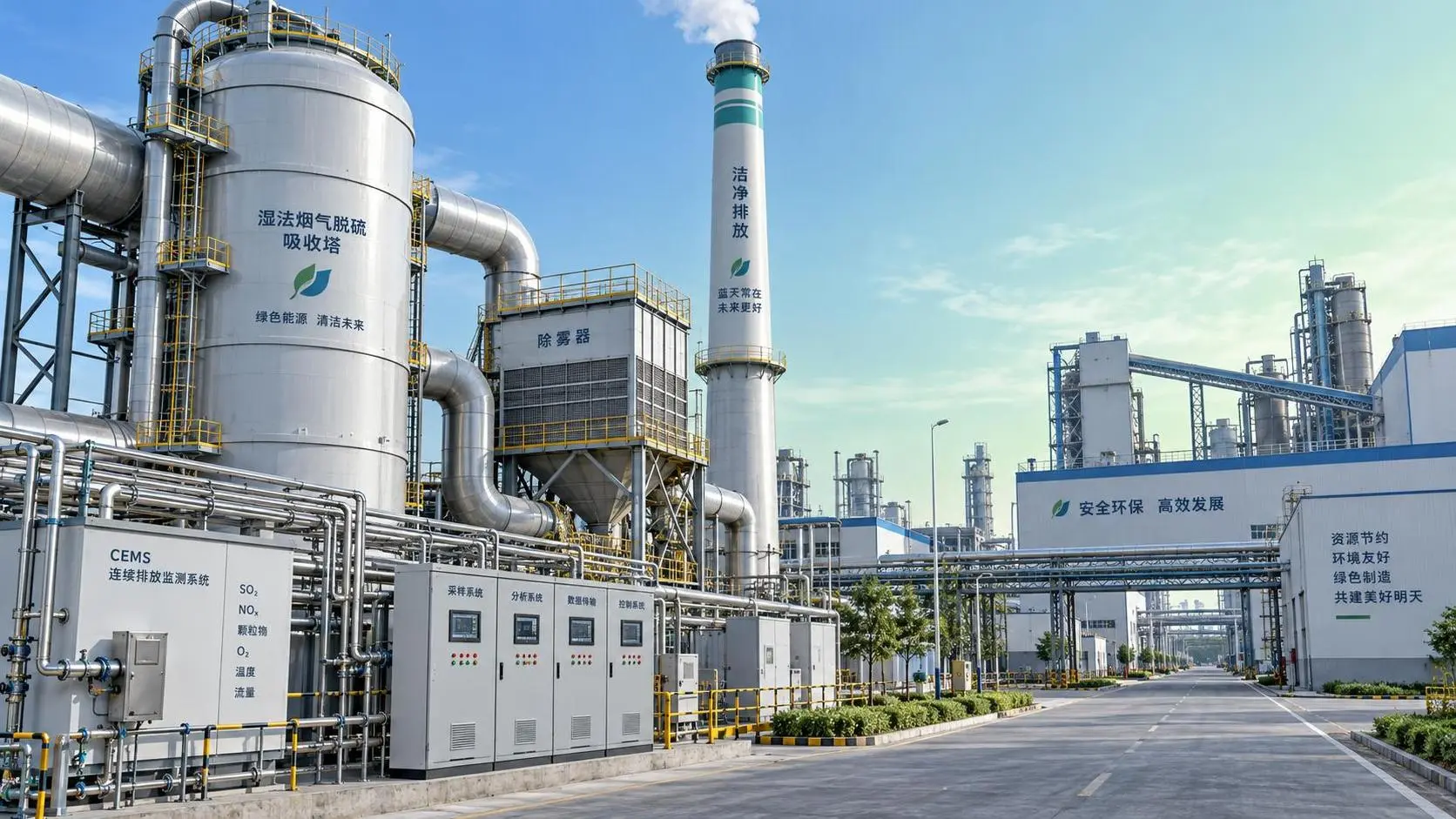
Which ISO standards apply to flue gas treatment systems?
Flue gas treatment systems ISO standards: explore key requirements for emissions testing, CEMS, safety, fabrication, corrosion control, and compliant project evaluation.

When corrosion resistant purification systems are needed for brine treatment
Corrosion resistant purification systems for brine treatment: assess chloride, heat, scaling, materials, and lifecycle reliability for demanding water projects.

How preventive maintenance reduces seawater desalination equipment downtime
Seawater desalination equipment maintenance reduces downtime through proactive monitoring, pretreatment protection, and planned repairs. Explore practical strategies for reliable RO performance.
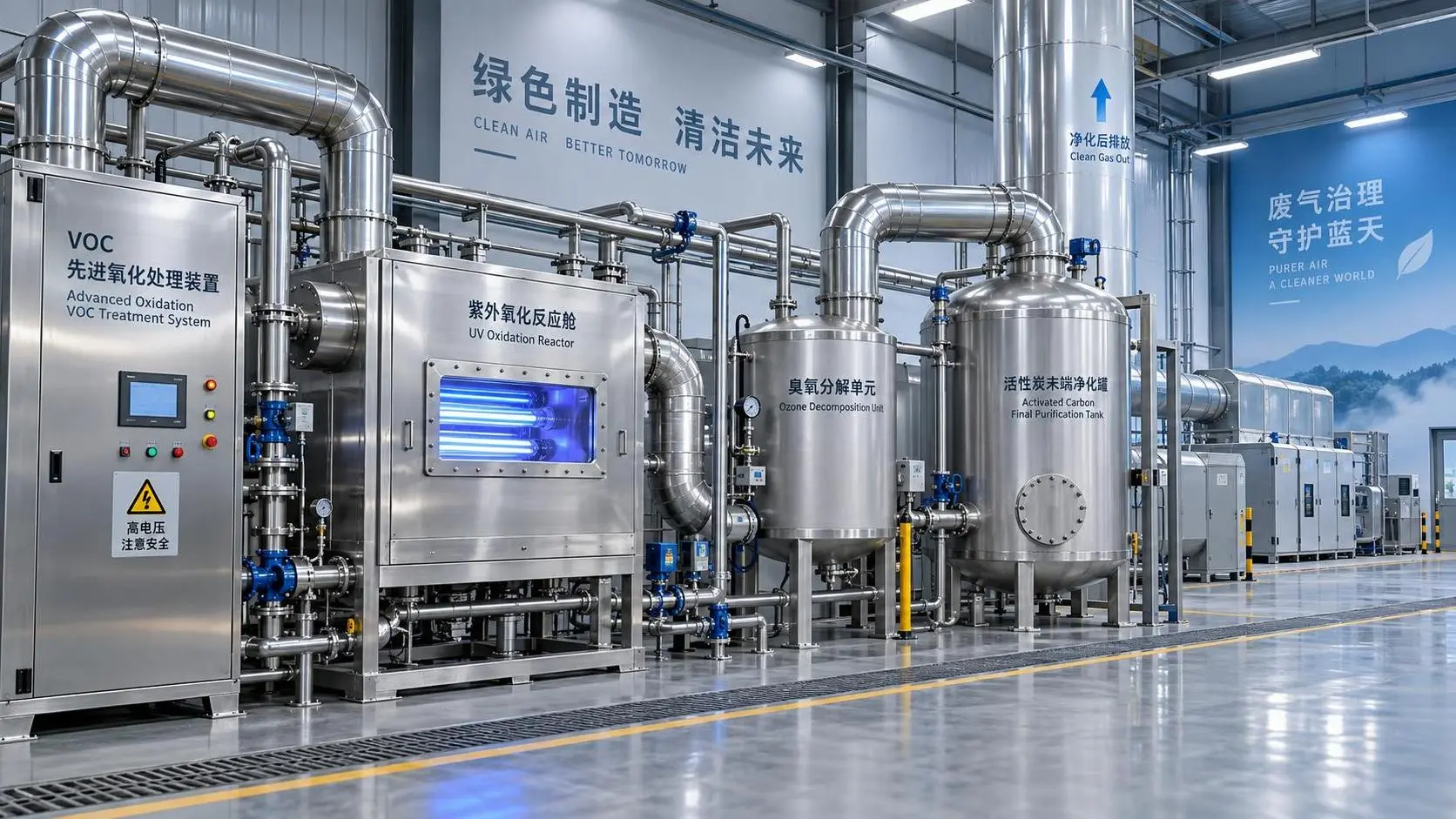
When are advanced oxidation processes the right choice for VOC control?
Advanced oxidation processes for VOC control: learn when AOPs outperform conventional options, manage by-products, and achieve reliable compliance.