
Industry News
Curation by industry experts
Hot Articles
Popular Tags
What Drives AI Waste Sorting Price: System Size, Accuracy, and ROI
Why can AI waste sorting price vary so much between suppliers?
Because buyers are rarely comparing the same system. One quote may cover a compact optical sorting unit for a narrow material stream, while another includes feeding, separation, conveyors, sensors, control software, dust handling, and data reporting for a full recycling line. That is why AI waste sorting price can look inconsistent even when two suppliers use similar language.
In procurement, the useful question is not “Which machine is cheaper?” but “What processing task is this price actually built for?” Start by checking four variables in every proposal: target materials, throughput, sorting accuracy, and line boundary. If one vendor prices only the recognition-and-ejection section and another prices the complete line integration, the comparison is already distorted.
A practical rule: if the quote does not clearly state feed composition assumptions, belt width, hourly capacity, accepted particle size range, and the number of sorted fractions, it is too early to compare numbers.
How does system size change the total investment?
System size affects price in a very direct way, but not only because bigger equipment costs more. Once throughput rises, the project usually needs wider belts, stronger conveying, more stable feeding, larger air systems, more sorting positions, and a control architecture that can handle continuous operation without bottlenecks.
This is where buyers often underestimate cost. A line designed for pilot or low-volume operation may perform well in demonstrations yet become unsuitable for municipal or industrial recovery facilities that need long operating hours and consistent output quality.
- Higher throughput usually means more than a larger sorter. It can require upstream bag breaking, screening, metering, and downstream quality control.
- A broader system footprint increases installation, steel structure, cabling, and commissioning scope.
- When redundancy is required, such as parallel sorting units to avoid downtime, price rises faster than simple capacity scaling suggests.
For procurement teams, the key is to ask whether the quoted system is sized for average load, peak load, or future expansion. Those are three different investment decisions.
Does better accuracy always mean a higher AI waste sorting price?
Usually yes, but the real issue is what kind of accuracy the supplier is talking about. In AI sorting, accuracy may refer to recognition accuracy, purity of the recovered fraction, capture rate, or line-level performance after contamination and material overlap are considered. These are not interchangeable.
Higher performance often requires better sensing hardware, more computing power, more mature training models, and tighter mechanical control of the material layer on the belt. If feed presentation is poor, even advanced AI cannot fully compensate. So a low quote with aggressive accuracy claims should be examined carefully.
When evaluating accuracy-related price differences, ask for the test method. Was performance measured on clean, pre-classified material, or on mixed waste under realistic plant conditions? Was the result based on a short demo run or a sustained operating window? Without that context, “high accuracy” is not a procurement-grade specification.
What should buyers look for in the scope of supply?
This is where hidden cost tends to sit. Two suppliers can appear close on equipment price, then separate sharply once engineering scope is clarified.
Ask vendors to split the proposal into equipment, controls, software, installation support, startup, and optional items. That makes comparison possible and exposes where one supplier is pushing cost outside the headline price.
How much does the waste stream itself influence price?
A lot. AI waste sorting price is heavily shaped by the complexity of the input stream. Dry, relatively consistent recyclables are one thing. Mixed municipal waste, demolition waste, or streams with variable moisture, fines, film, and organics are another. The harder the material is to present and distinguish, the more the system needs in sensing, mechanical stabilization, and line design.
Procurement teams should document at least these feed conditions before requesting final quotes:
- Main material categories and likely contaminants
- Particle size distribution
- Moisture and seasonal variability
- Target output fractions and required purity
- Current manual sorting or pre-treatment steps
If this information is missing, vendors will either price conservatively or price optimistically and leave risk with the buyer.
Where does ROI usually come from in an AI sorting project?
ROI is not only about labor reduction. In many projects, the bigger financial impact comes from improved recovery value, lower residue disposal cost, more stable bale quality, and better compliance with downstream buyer requirements or local operating rules.
That matters because some procurement reviews still frame AI sorting as a labor replacement tool. In reality, the strongest business case often combines several gains at once:
- More saleable recovered material
- Lower contamination penalties or rejection risk
- Reduced manual picking in difficult or unsafe positions
- Better data for process control and contract reporting
- Less value loss from inconsistent shift-to-shift performance
A quote that looks expensive on capex can still be the better buy if it materially improves recovered fraction quality and keeps that quality stable over time.
What is the right way to evaluate ROI before issuing a purchase decision?
Use your own plant economics, not generic payback claims. Build the model around actual site conditions and force each vendor to align to the same assumptions. Otherwise, one supplier will assume best-case recovery value and another will assume a much tougher waste stream, and the ROI comparison will become meaningless.
A workable ROI review usually includes capex, installation, power, compressed air if relevant, maintenance parts, software fees, labor impact, expected uptime, and the value of extra recovered material. Then test the model under three cases: conservative, expected, and high-performance.
One more point: check ramp-up time. A system that reaches design performance slowly can hurt first-year returns even if long-term economics are sound.
What mistakes most often lead to buying the wrong system?
The most common mistake is buying to a demonstration, not to an operating condition. Demo material is often cleaner, more controlled, and easier to sort than day-to-day plant feed. If the procurement package does not define real feed variability, the purchased system may be technically impressive and commercially disappointing.
Another frequent error is focusing on recognition capability while ignoring material presentation. AI needs a stable process envelope. If waste is piled too deep on the belt, overlapped, or inconsistent in size, the sorter cannot deliver its claimed value.
There is also a contractual mistake: accepting vague performance language. Procurement should require clear definitions for throughput, target fractions, acceptance testing conditions, and what counts as successful commissioning.
Which documents and data points should procurement request from suppliers?
Ask for documents that let you judge fit, not just brochures. At minimum, request a technical proposal with system boundaries, utility requirements, layout assumptions, maintenance scope, operator requirements, and the basis used for any performance statement.
- Process description with identified upstream and downstream interfaces
- General arrangement or layout drawing
- Utility list covering power, air, ventilation, and environmental constraints
- Recommended spare parts list and service plan
- Draft acceptance test method tied to your material stream
- Commercial breakdown showing base scope, exclusions, and options
If a supplier cannot connect price to scope and operating assumptions in a transparent way, that is a procurement signal in itself.
When is a higher-priced AI sorting system justified?
When the extra cost buys performance that matters commercially. That may mean better yield on valuable fractions, stronger stability on a difficult waste stream, less dependence on manual re-sorting, or better integration with a larger recovery line. A premium price is not justified by technical sophistication alone. It has to improve plant economics or operational reliability in a measurable way.
For buyers, the cleanest decision method is simple: compare suppliers on the same feed assumptions, the same scope boundary, and the same acceptance criteria. Then judge AI waste sorting price against total delivered value, not the equipment number in isolation.
Before signing, make sure the purchase file answers three questions clearly: what material the system will sort, what performance level it must sustain in real operating conditions, and how that performance turns into cash flow or cost avoidance on your site. If those three points are solid, pricing discussions become much easier to control.
Recommended News
RO vs MED desalination: which is more energy-efficient at scale?
Desalination technology comparison: RO vs MED at scale. See how energy use, waste heat, feedwater, carbon, and flexibility determine the best choice.
Which ISO standards apply to flue gas treatment systems?
Flue gas treatment systems ISO standards: explore key requirements for emissions testing, CEMS, safety, fabrication, corrosion control, and compliant project evaluation.

When corrosion resistant purification systems are needed for brine treatment
Corrosion resistant purification systems for brine treatment: assess chloride, heat, scaling, materials, and lifecycle reliability for demanding water projects.

How preventive maintenance reduces seawater desalination equipment downtime
Seawater desalination equipment maintenance reduces downtime through proactive monitoring, pretreatment protection, and planned repairs. Explore practical strategies for reliable RO performance.
When are advanced oxidation processes the right choice for VOC control?
Advanced oxidation processes for VOC control: learn when AOPs outperform conventional options, manage by-products, and achieve reliable compliance.
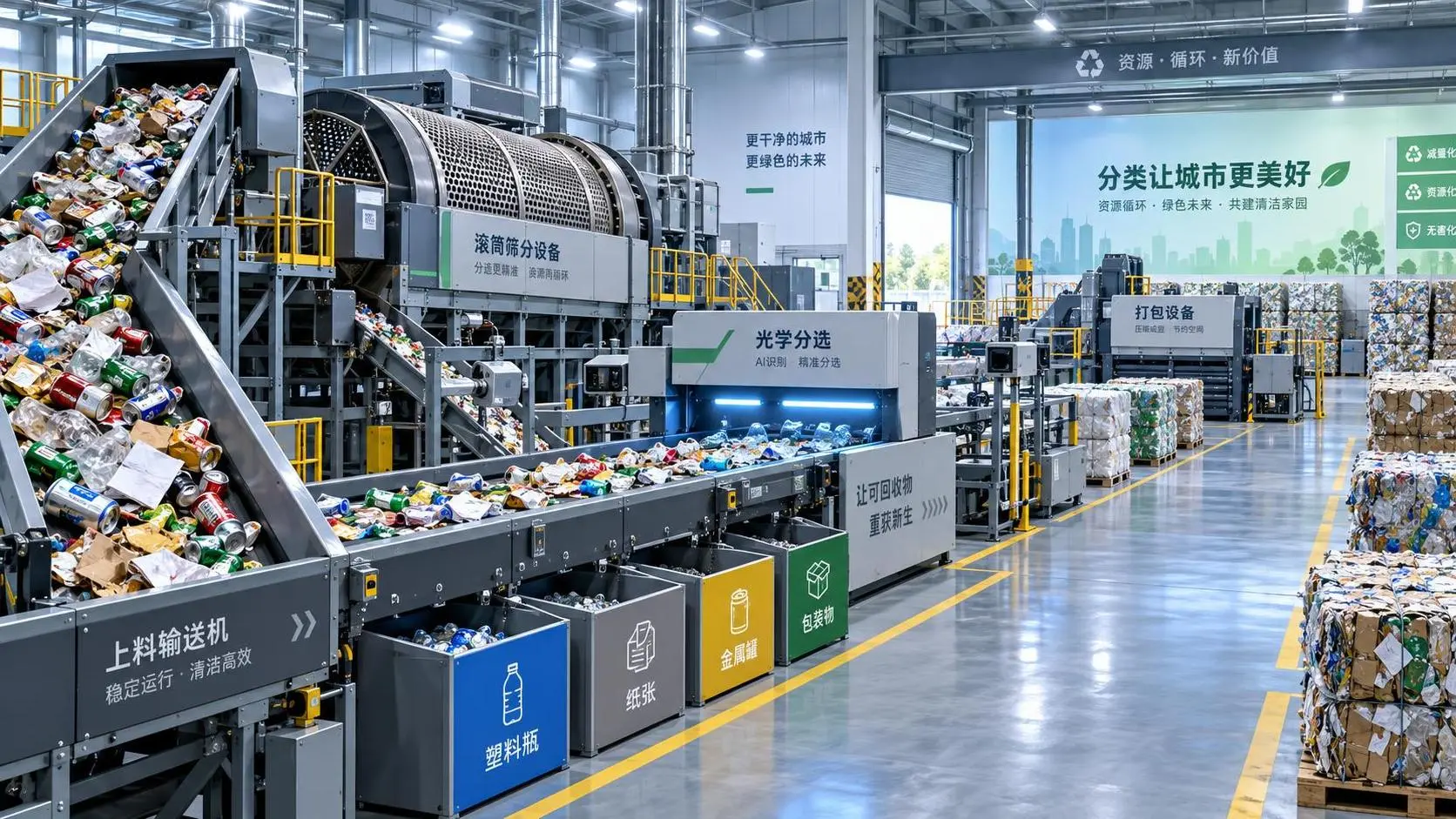
What throughput should municipal waste sorting equipment deliver?
Waste sorting equipment for municipal waste: learn how to set reliable throughput based on peak loads, material quality, uptime, and recovery targets.

What carbon neutrality means for corporate investment decisions
Carbon neutrality is transforming corporate investment decisions. Explore how lifecycle economics, efficiency, compliance, and resilience can drive measurable returns and lasting advantage.
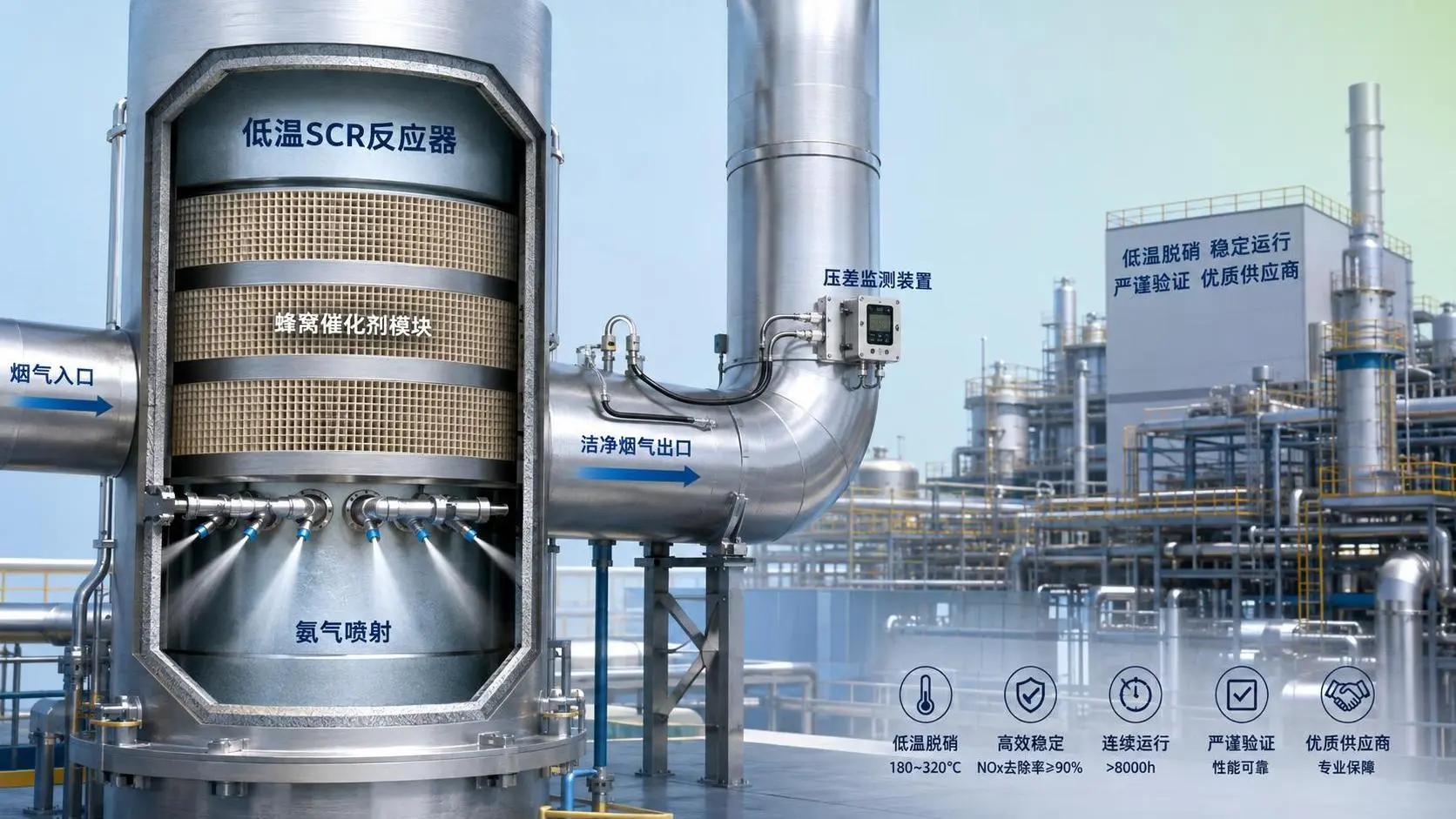
What to verify before choosing a low temperature SCR supplier
Low temperature SCR supplier checklist: verify catalyst temperature range, sulfur resistance, ammonia slip, pressure drop, lifecycle cost, and support before award.
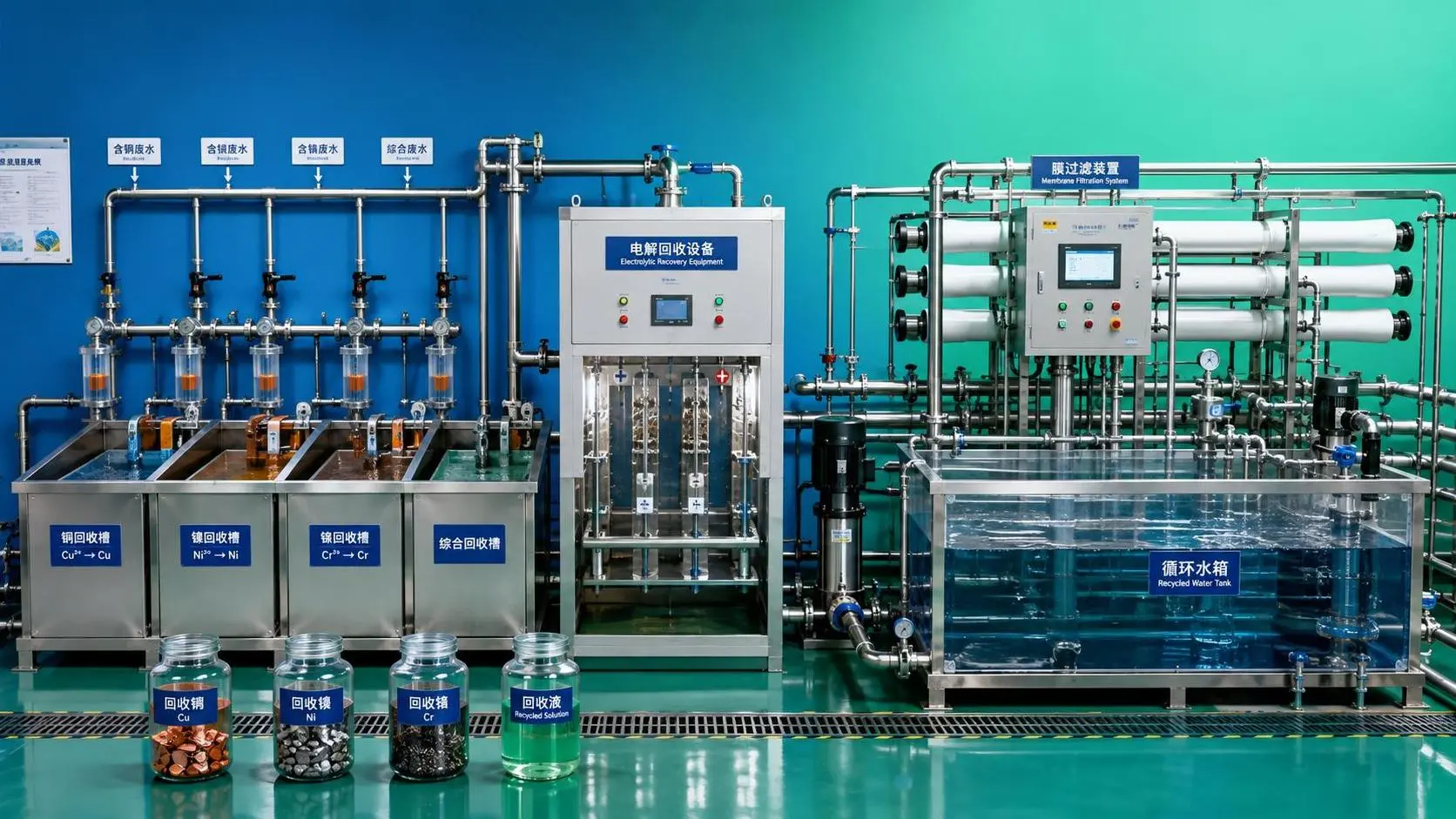
How closed-loop resource recovery for electroplating cuts metal waste
Closed-loop resource recovery for electroplating reduces metal waste, sludge, and water use through smarter stream segregation, recovery, and reuse strategies.