
Industry News
Curation by industry experts
Hot Articles
Popular Tags
How Ecological Engineering Systems Improve Wastewater Treatment Resilience
How Ecological Engineering Systems Improve Wastewater Treatment Resilience
As climate stress, regulatory pressure, and influent variability intensify, ecological engineering systems are becoming essential to more resilient wastewater treatment. By combining natural processes, adaptive design, and resource recovery logic, these systems help facilities maintain performance under disruption while lowering environmental risk. For information researchers, they also offer a practical lens for understanding how treatment infrastructure can evolve toward greater stability, compliance, and long-term operational value.
If you are evaluating ecological engineering systems for a wastewater project, skip the broad claims and go straight to the operating questions. The real issue is not whether a system looks green on paper. It is whether it keeps effluent quality stable when flow spikes, power reliability worsens, influent composition shifts, or discharge permits tighten without much warning. That is where these systems either prove their value or become an expensive side note.
The checklist below is written from that angle. It is meant for people doing research, early screening, solution comparison, or internal briefing, especially when a project sits between engineering ambition and operational reality.
Start with the disturbance profile, not the technology brochure
Before comparing wetlands, algal systems, polishing ponds, hybrid bioreactors, or soil-plant-microbe treatment trains, define what kind of instability the facility is actually facing.
- Is the main problem hydraulic shock after storms?
- Is it seasonal salinity drift?
- Industrial co-discharge upsetting biological treatment?
- Stricter nutrient limits?
- Energy price volatility that makes conventional aeration harder to sustain?
Different resilience problems point to different ecological engineering systems. A treatment wetland used as a polishing and buffering step can be useful when flow and residual nutrient loads fluctuate. It is a poor answer if the plant is regularly hit by toxic industrial compounds that wipe out upstream biology. In that case, pretreatment control and equalization usually matter more than adding a nature-based layer at the end.
A common mistake in early research is treating resilience as a vague benefit. It is more practical to define it as continued permit performance under known stress conditions. Once that is clear, solution screening gets sharper very quickly.
Check whether the ecological layer is doing real treatment work or just polishing
This sounds basic, but it changes everything about footprint, instrumentation, staffing, and risk tolerance.
Some ecological engineering systems are designed as core process elements. Others are clearly tertiary polishing, hydraulic buffering, or emergency load dampers. Neither is wrong. Trouble starts when stakeholders think they are buying one and are actually getting the other.
Ask for a plain process map that identifies where the ecological system sits relative to screening, equalization, primary clarification, biological nutrient removal, advanced oxidation, membranes, or disinfection. If that process role is blurry, the resilience claim is usually blurry too.
For information researchers, this is one of the fastest filters available. A solution positioned as “resilient” should show exactly which failure mode it absorbs: load variation, toxic peaks, solids carryover, nutrient excursions, or sludge stress. If it cannot, treat the claim cautiously.
Look hard at influent variability and equalization strategy
Most wastewater systems do not fail under average conditions. They fail on bad days. Ecological treatment components generally benefit from steadier loading, even when they are more adaptive than purely mechanical systems in other respects.
So when you assess a proposed configuration, check whether upstream equalization is part of the concept or quietly omitted. This matters in municipal systems with infiltration and inflow issues, and even more in industrial parks where batch discharges distort pH, COD, ammonia, temperature, or conductivity.
If no one can tell you how the system handles shock loads over hours and days, the resilience story is incomplete. A well-designed ecological engineering system often works best as part of a train that includes flow balancing, staged treatment, and operational bypass logic. Resilience is usually built in layers.
Do not separate resilience from land, climate, and water balance
This is where desktop studies often become misleading. Ecological systems are strongly shaped by site conditions. Available land, evaporation rate, rainfall pattern, freeze-thaw cycles, flood exposure, and groundwater sensitivity all affect whether a concept is robust or fragile.
For example, a passive treatment stage that performs well in one climate may behave very differently in prolonged cold conditions or in arid zones where water loss changes concentration profiles. That does not make the concept unsound; it means transferability should never be assumed. If a proposal relies heavily on biological uptake, retention time, or evapotranspiration, local operating conditions need careful verification.
Where published site data are limited, mark climate-dependent performance claims as 【待核实】 and push for local design assumptions.
Use compliance pathways as a screening tool
A resilient wastewater solution is only resilient if it can stay inside the regulatory envelope with reasonable operating control. That means researchers should map the target discharge regime early: municipal surface water discharge, industrial indirect discharge, water reuse, coastal outfall, or high-recovery internal recycling.
Do not assume one ecological configuration travels cleanly across these use cases. Water reuse projects, for instance, often require a tighter and more verifiable barrier strategy than polishing-for-discharge systems. In some jurisdictions, nutrient removal expectations, pathogen control, and monitoring frequency can materially change technology suitability. Exact permit thresholds and reuse criteria are location-specific, so they must be checked against current local rules rather than generalized here.
A practical question to ask is simple: if effluent quality drifts for a week, what catches it before it becomes a violation? Storage, recirculation, online monitoring, backup treatment, or nothing? That answer tells you more than a brochure headline.
Pay attention to monitoring burden, not just energy savings
Ecological engineering systems are often discussed as lower-energy or lower-chemical alternatives, which can be true in the right setting. But lower operating intensity does not always mean lower management intensity.
Ask what has to be measured routinely to keep the system reliable. That may include dissolved oxygen, oxidation-reduction conditions, nutrient fractions, hydraulic retention behavior, vegetation condition, solids accumulation, or seasonal biomass changes. If the concept depends on natural process stability, then observing those processes becomes part of the operating discipline.
This is especially relevant for facilities with lean staffing. An elegant hybrid system can underperform if no one owns the monitoring logic. In practice, many failures blamed on ecological treatment are really failures of sampling frequency, maintenance timing, or weak feedback control.
Check sludge, biomass, and residual handling early
This is one of the least glamorous parts of the discussion, and one of the most revealing. Every resilient treatment concept still has to deal with what it captures, converts, or grows.
If the system removes nutrients through biomass growth, what happens next? If it relies on sedimentation zones or planted cells, how is accumulated material managed without shutting down performance? If the influent includes metals, persistent organics, or industrial contaminants, residuals may face disposal restrictions that undermine the simplicity narrative.
For industrial wastewater, this point deserves extra caution. Resource recovery language is attractive, but actual recovery feasibility depends on concentration, contamination, separation cost, downstream markets, and regulatory acceptance. Unless project documents show a credible residuals pathway, assume this area still needs work.
Hybrid designs usually outperform pure-play concepts in difficult conditions
In real plants, the strongest use of ecological engineering systems is often not full replacement of conventional treatment. It is strategic integration.
Examples include ecological polishing after membrane bioreactors, wetland or lagoon stages supporting nutrient attenuation after secondary treatment, nature-based storm buffering around wastewater assets, or side-stream biological recovery concepts linked to resource loops. These combinations can absorb disturbances better than single-technology systems because each layer handles a different type of stress.
That matters for researchers comparing solution pathways. If a proposal frames the decision as conventional versus ecological, it may be oversimplifying the project. Some of the most durable designs sit in the middle.
Use this quick evaluation table when screening options
Be careful with imported case studies
Case studies are useful, but only when the comparison is honest. Similar-looking wastewater projects can differ materially in hydraulic regime, pretreatment discipline, climate exposure, available operator skill, and permit pressure. A successful ecological installation in one region does not automatically validate another project with different boundary conditions.
If a vendor or report cites performance examples, check what is actually disclosed: influent characteristics, loading ranges, treatment sequence, operational age, and compliance context. Many published summaries are too thin to support design-level conclusions. Use them as directional evidence, not final proof.
For researchers, the best final question is operational
When you strip away the language, resilient wastewater treatment comes down to this: when the system is stressed, does it fail abruptly, degrade gradually, or adapt without permit breach?
The strongest ecological engineering systems tend to degrade more gracefully because they distribute treatment across living processes, hydraulic buffers, and staged removal mechanisms. But that strength only shows up when design assumptions, site conditions, and operating practices line up.
So the practical checklist is straightforward. Define the disturbance. Verify the role of the ecological system in the treatment train. Test it against local compliance and climate conditions. Review monitoring discipline and residuals handling. Be skeptical of generic claims, especially when data are thin. That approach will tell you much more about wastewater resilience than any green label on its own.
Recommended News
How to size ingredient mixing equipment for viscous formulations
Size mixing ingredient processing equipment for viscous formulations with expert guidance on rheology, torque, and heat removal. Learn how to select a system that delivers reliable batch performance.
How moisture affects material separation in solid waste recovery
Improve solid waste recovery material separation by understanding moisture effects on screening and sorting. Discover practical ways to boost recovery, purity, and throughput.
How to set recovery rates in seawater reverse osmosis system design
Explore seawater desalination systems engineering: learn to set SWRO recovery rates that balance energy, scaling risks, and water quality for reliable, cost-effective operation.
When is compaction suitable for solid nuclear waste treatment?
Is compaction right for solid nuclear waste treatment? Discover suitable waste streams, key safety checks, and disposal requirements to reduce package volume and optimize costs.
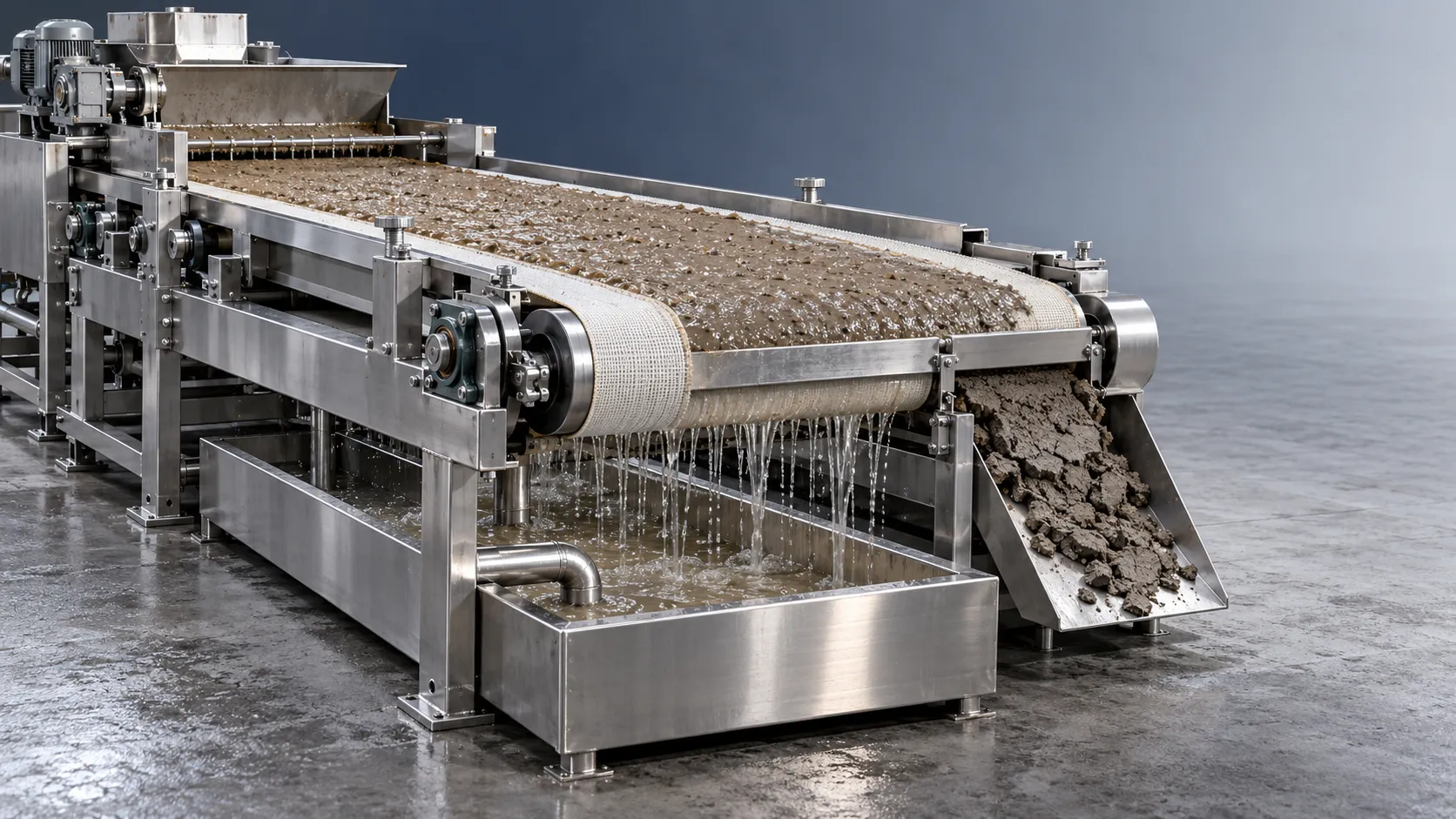
How solids concentration affects dewatering in waste recovery systems
Optimize waste recovery systems dewatering with insights on solids concentration. Learn to balance throughput, cake dryness, and solids capture while avoiding costly equipment overloads.
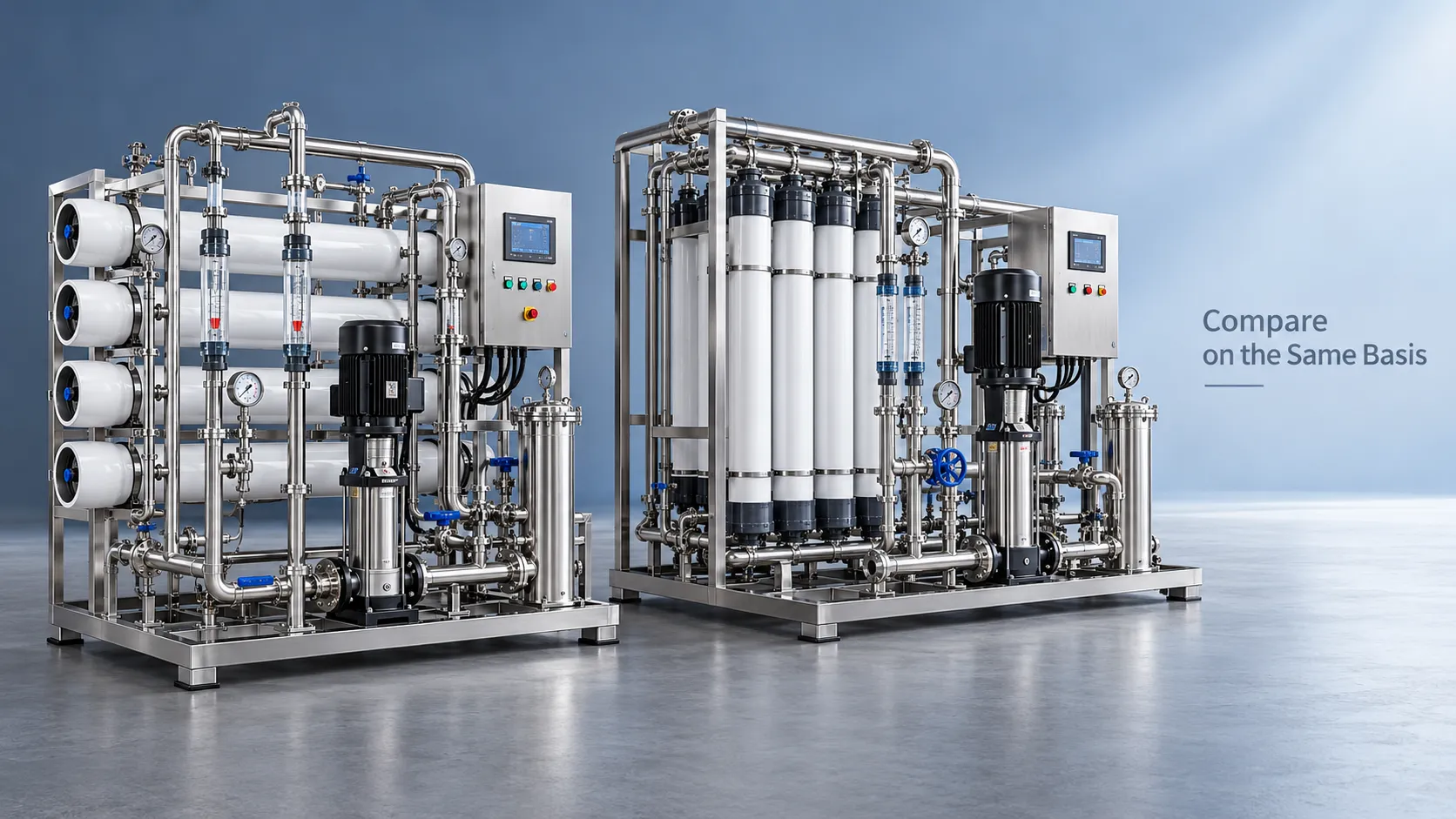
How to compare technical specs in an environmental equipment directory
Use this environmental equipment directory technical guide to compare capacity, energy use, compliance, and supplier evidence. Build a defensible shortlist and choose with confidence.
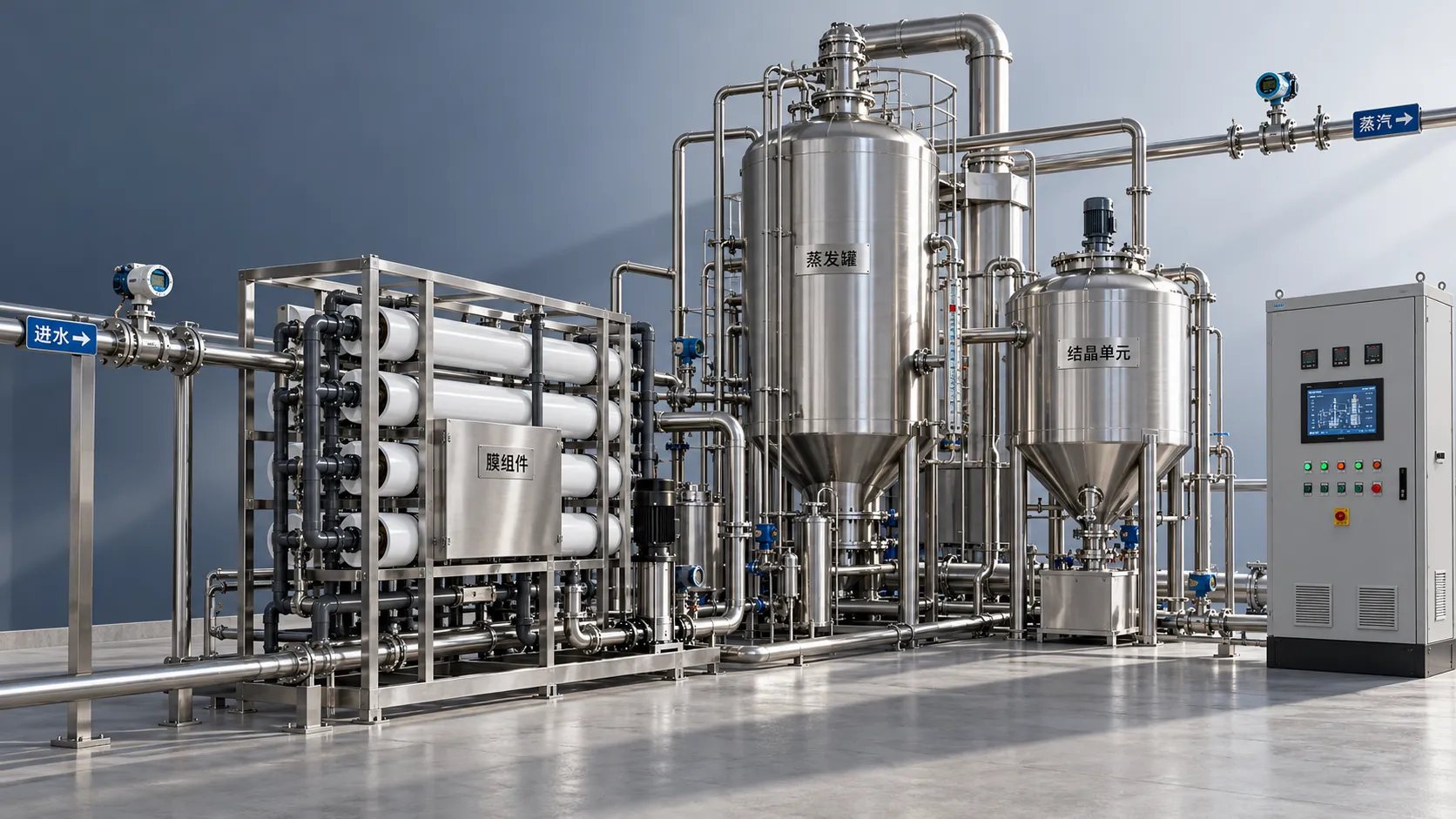
How to assess a zero liquid discharge equipment supplier’s energy claims
Assess a zero liquid discharge equipment supplier’s energy claims. Learn how to verify system boundaries, compare real costs, and demand testable guarantees before you buy.
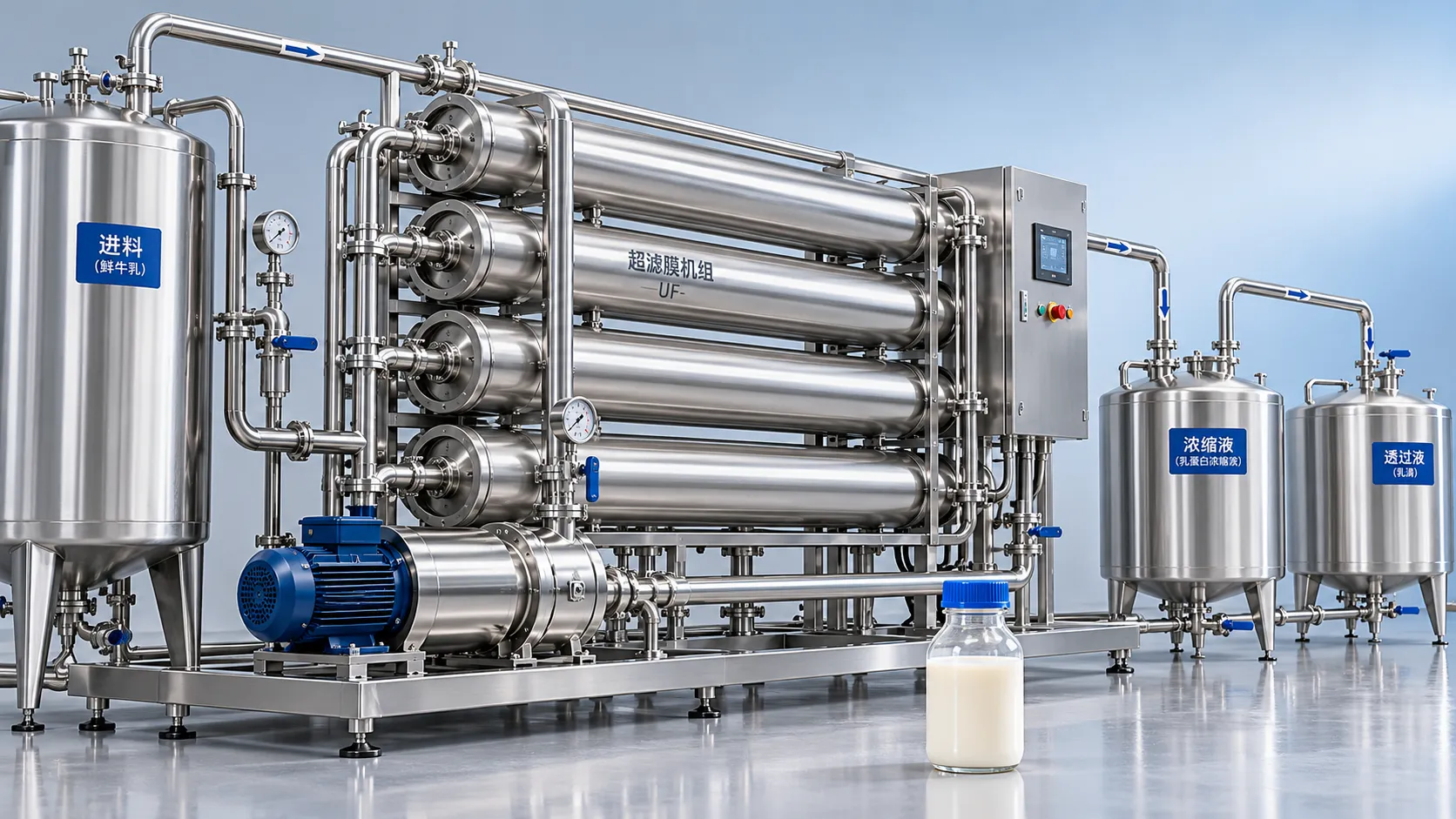
Which membrane filtration process suits dairy protein concentration?
Explore membrane filtration for dairy: compare UF, MF, and RO to select the right process for protein concentration, lactose reduction, and better recovery. Find your best fit.
When is an MBR suitable for wastewater purification for bioprocessing?
For wastewater purification for bioprocessing, discover when an MBR fits your needs. Compare water quality, fouling risks, and lifecycle costs before investing.