
Industry News
Curation by industry experts
Hot Articles
Popular Tags
How liquid-to-gas ratio affects wet flue gas scrubbing design
How liquid-to-gas ratio affects wet flue gas scrubbing design
In wet flue gas scrubbing design, the liquid-to-gas (L/G) ratio links pollutant removal performance with operating cost. Increasing liquid circulation can improve gas–liquid contact and absorption, but it also raises pumping demand and may increase entrainment or hydraulic constraints. Selecting an appropriate ratio therefore requires more than comparing removal efficiencies: gas-flow reference conditions, reagent chemistry, absorber configuration, and load variability all matter.
The useful question is not “Which proposal has the highest L/G?” It is “What circulation rate will maintain the required outlet concentration across the operating envelope, and what equipment and utility demands follow?” That distinction separates a defensible design basis from a favorable-looking performance table.
Start by making the ratio comparable
For a recirculating wet absorber, L/G generally means the volumetric flow of circulating absorbent divided by the volumetric flow of treated gas. It may be expressed as liters per cubic meter or other consistent units. The definition must identify which liquid streams and gas conditions are included.
L/G = circulating liquid volumetric flow ÷ gas volumetric flow
This is not the same as fresh-water consumption, reagent feed rate, or wastewater discharge. A limestone slurry can circulate repeatedly through the absorber while only a smaller stream leaves for solids separation and purge. Treating circulation as water consumption can distort both utility estimates and environmental comparisons.
Gas-flow reference conditions are equally important. A ratio based on actual, wet gas volume at the absorber is not directly comparable with one based on dry gas at normal conditions. Temperature, absolute pressure, and moisture affect the conversion. Even “normal” or “standard” volume needs an explicit reference temperature and pressure.
Require proposals to state the gas measurement location, reference conditions, liquid flow measurement basis, and active spray levels. Otherwise, a lower quoted L/G may reflect different reporting conventions rather than a more efficient absorber.
Why more liquid helps—and why the benefit eventually weakens
In a spray absorber, additional liquid can increase the available interfacial area and deliver more alkalinity into the contacting zone. This helps maintain the chemical driving force for absorption. For sulfur dioxide removal, adequate circulation can also reduce localized depletion of reactive capacity as droplets travel through the gas.
But liquid volume alone does not define effective contact. Droplet size distribution, spray coverage, gas velocity, residence time, and gas bypass all influence the result. A poorly distributed spray field may consume substantial pumping power while leaving parts of the gas stream undertreated. Adding flow does not necessarily correct that distribution problem.
The response also becomes less favorable as other limitations dominate. More circulation may deliver little improvement when reagent dissolution is inadequate, liquid chemistry suppresses absorption, or gas–liquid contact is already sufficient for the available driving force. Near demanding removal targets, small changes in chemistry or gas distribution can matter more than another increment of flow.
For evaluation, request performance curves showing outlet pollutant concentration against L/G under stated chemistry and inlet conditions. A single guaranteed point cannot reveal whether the proposed operating point lies on a responsive part of the curve or beyond the point of diminishing benefit.
Chemistry determines what the circulating liquid can accomplish
There is no universally appropriate wet scrubber L/G ratio. Limestone, lime, sodium-based reagents, and seawater provide different absorption and regeneration conditions. Their circulation requirements cannot be transferred between projects without checking the underlying chemistry.
In limestone forced-oxidation flue gas desulfurization, the design must coordinate absorption with limestone dissolution, sulfite oxidation, and gypsum crystallization. Relevant variables include limestone reactivity and particle size, slurry pH, solids concentration, chloride accumulation, and residence time. Raising circulation cannot replace insufficient reagent preparation or inadequate oxidation capacity.
Higher pH can support SO₂ absorption, but it is not a free substitute for circulation. Changing the operating pH can affect limestone utilization, dissolved species, and scaling behavior. The acceptable range depends on the process chemistry and by-product requirements, not merely the desired removal percentage.
Pollutant identity also matters. Conditions suitable for SO₂ removal do not automatically guarantee equivalent control of acid mist, fine particles, or poorly soluble gases. Conventional wet alkaline scrubbing should not be assumed to provide substantial removal of nitric oxide simply because the L/G ratio is high. Each guaranteed pollutant needs its own technical basis.
The absorber configuration changes the hydraulic consequences
The same L/G value can mean different things in different contactors. In open spray towers, nozzle arrangement and droplet behavior are central. In packed absorbers, liquid distribution and packing wetting become critical, while increased liquid loading can move the system toward flooding. Slurry service also requires careful assessment of packing fouling and plugging risks.
Venturi scrubbers require a different interpretation again. Their particle collection performance depends strongly on gas velocity, liquid atomization, and pressure drop. An L/G comparison detached from those conditions says little about collection performance or energy demand.
Even within one spray tower, increasing circulation by starting another spray level is not equivalent to forcing more flow through existing nozzles. The latter changes nozzle pressure and potentially the droplet distribution. The former changes the spatial pattern of contact. Both require hydraulic checks rather than an assumption that total flow is the only relevant variable.
Mist elimination deserves separate attention. More circulation can increase droplet loading on the demister, depending on gas velocity and spray behavior. Confirm carryover limits, demister operating range, wash-water requirements, drainage, and fouling allowance. Good gas-phase absorption does not establish acceptable outlet droplet emissions.
Convert the proposed L/G into operating cost and maintenance exposure
Circulation pumping is the most direct energy consequence. A useful relationship is:
Pump electrical power ≈ ρgQH ÷ overall efficiency
Here, ρ is liquid density, Q is liquid volumetric flow, and H is total dynamic head. Overall efficiency includes the relevant pump and drive losses. At unchanged head and efficiency, power rises approximately with flow. Actual system behavior also reflects pipe friction, nozzle pressure, pump selection, and the number of operating circuits.
A comparison based only on installed motor ratings is therefore weak. Request absorbed power at the guaranteed duty points, including slurry properties and expected operating configurations. Fan power should be evaluated separately because changes in contactor hydraulics, internals, and mist elimination can alter gas-side pressure drop.
Maintenance effects can be just as consequential. Higher slurry velocities or altered nozzle duties may increase erosion exposure, depending on solids characteristics and materials. Additional pumps and spray circuits create more equipment to maintain, but may also provide useful operating flexibility. The trade-off is project-specific; minimum equipment count is not necessarily minimum lifecycle cost.
Check the operating envelope, not only full-load performance
A fixed circulation flow produces a higher L/G when gas throughput falls. That does not mean low-load operation is automatically optimized. Nozzles still need suitable pressure, liquid distribution must remain effective, and pumps must operate within acceptable limits. Reducing flow too far can undermine spray quality even while the calculated ratio looks adequate.
High-load and high-sulfur conditions create a different challenge. Pollutant mass loading can rise without a proportional increase in gas volume, so L/G alone does not describe the duty. Review gas flow and inlet pollutant concentration independently, together with reagent demand and oxidation requirements.
A practical operating matrix should cover:
- Minimum stable load, including the spray circuits that remain active.
- Maximum gas flow and the limiting gas velocity through the absorber and demister.
- Maximum credible pollutant loading and the associated reagent and oxidation duties.
- Agreed equipment-outage conditions, identifying whether emissions compliance remains guaranteed.
- Load transitions, including measurement delays and circulation or reagent-control response.
This review helps expose hidden dependencies. A design may meet its normal duty comfortably but lose its compliance margin when one circulation pump is unavailable. Whether that is acceptable must be decided explicitly, not discovered during operation.
Build the guarantee around measurable conditions
Environmental requirements generally establish emission obligations rather than one universally mandated L/G setting. The applicable permit, jurisdiction, and contractual test protocol determine the compliance basis. Outlet concentration may require dry-gas reporting, reference-oxygen correction, and a defined averaging period; these conditions must match the guarantee.
Removal efficiency alone is insufficient. The same percentage removal can produce different outlet concentrations when inlet loading changes. Specify both the required outlet result and the inlet envelope, then connect them to liquid flow, chemistry, utility consumption, and equipment availability.
Acceptance testing should define how slurry flow, gas flow, inlet and outlet concentrations, pH, and auxiliary power are measured. Measurement uncertainty matters, particularly where slurry flow readings are sensitive to installation conditions or gas flow is difficult to characterize. Any correction of test results to reference conditions should be agreed before testing.
For Global Eco-Shield Dynamics (ESD), this connection between equipment duty, process chemistry, and environmental obligations is central to useful engineering intelligence. Scrubber decisions also reach beyond the stack: purge management, wastewater treatment, solids recovery, and possible zero-liquid-discharge requirements belong in the same assessment, even though circulation rate is not itself a wastewater-flow estimate.
Before accepting a proposed L/G, reconcile its definition, obtain performance across the load envelope, and verify the resulting pump, hydraulic, and chemistry requirements. A defensible ratio is one supported by a complete operating basis—not simply the lowest circulation figure or the highest claimed removal efficiency.
Recommended News
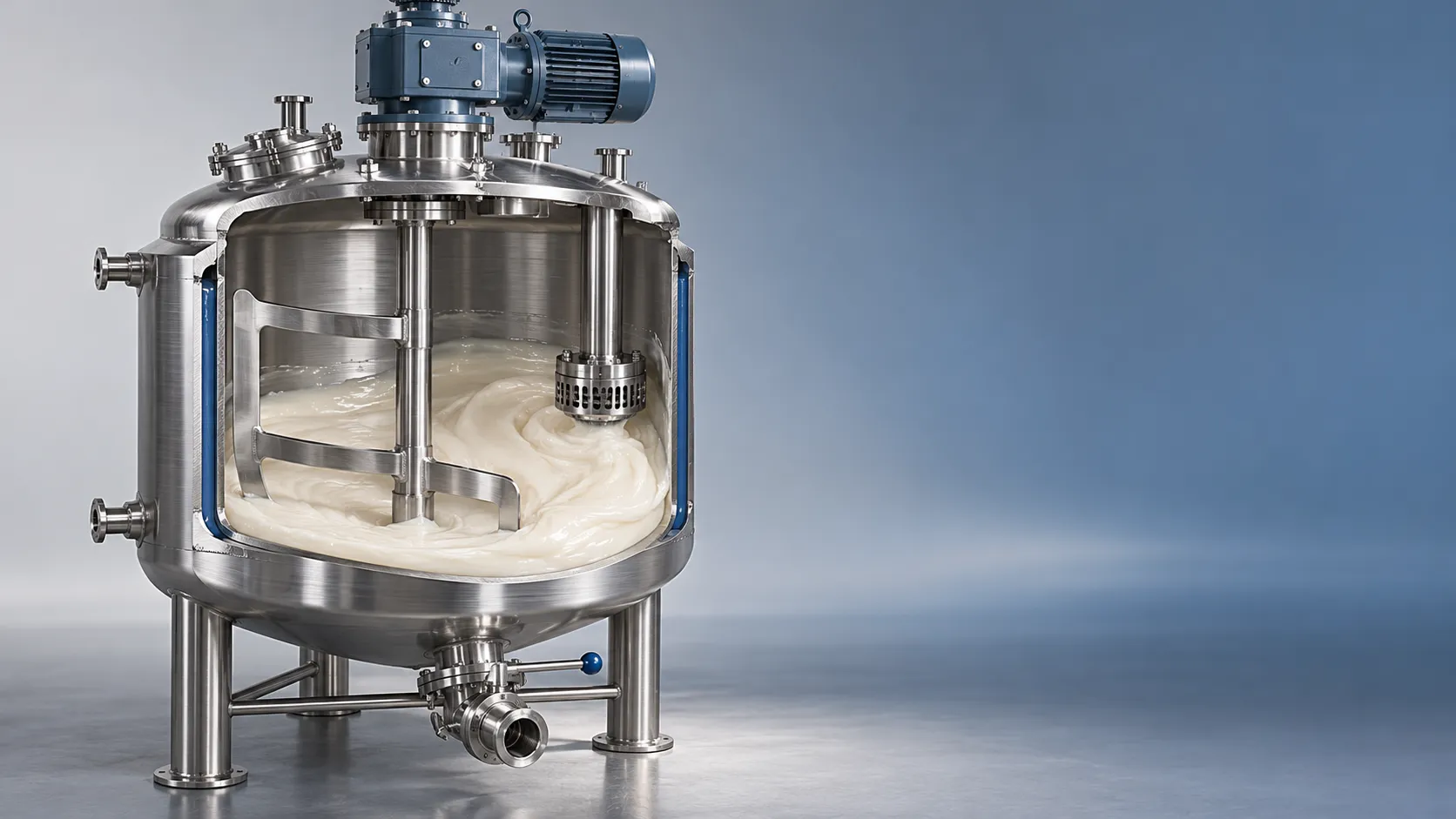
How to size ingredient mixing equipment for viscous formulations
Size mixing ingredient processing equipment for viscous formulations with expert guidance on rheology, torque, and heat removal. Learn how to select a system that delivers reliable batch performance.

How moisture affects material separation in solid waste recovery
Improve solid waste recovery material separation by understanding moisture effects on screening and sorting. Discover practical ways to boost recovery, purity, and throughput.
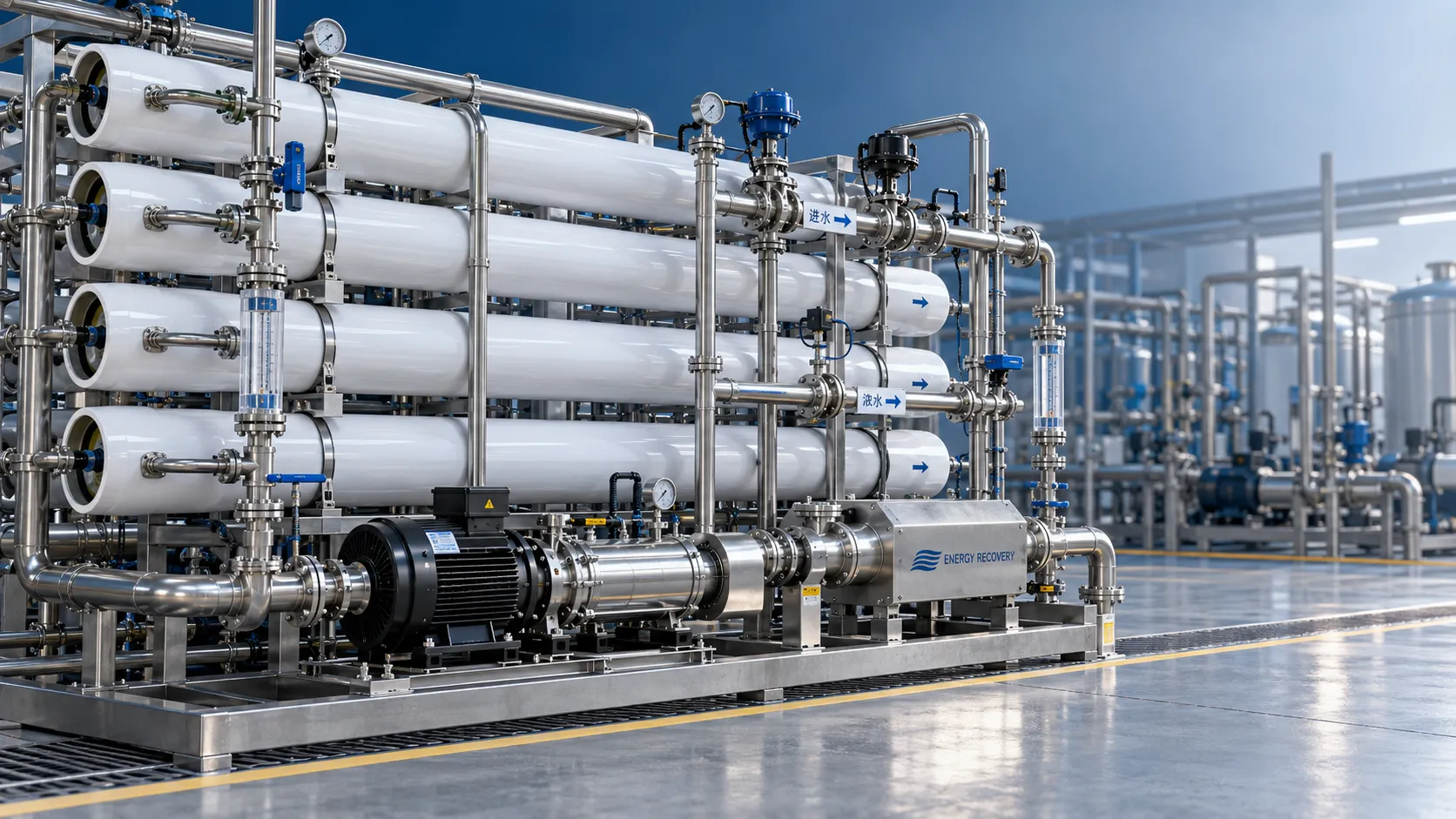
How to set recovery rates in seawater reverse osmosis system design
Explore seawater desalination systems engineering: learn to set SWRO recovery rates that balance energy, scaling risks, and water quality for reliable, cost-effective operation.
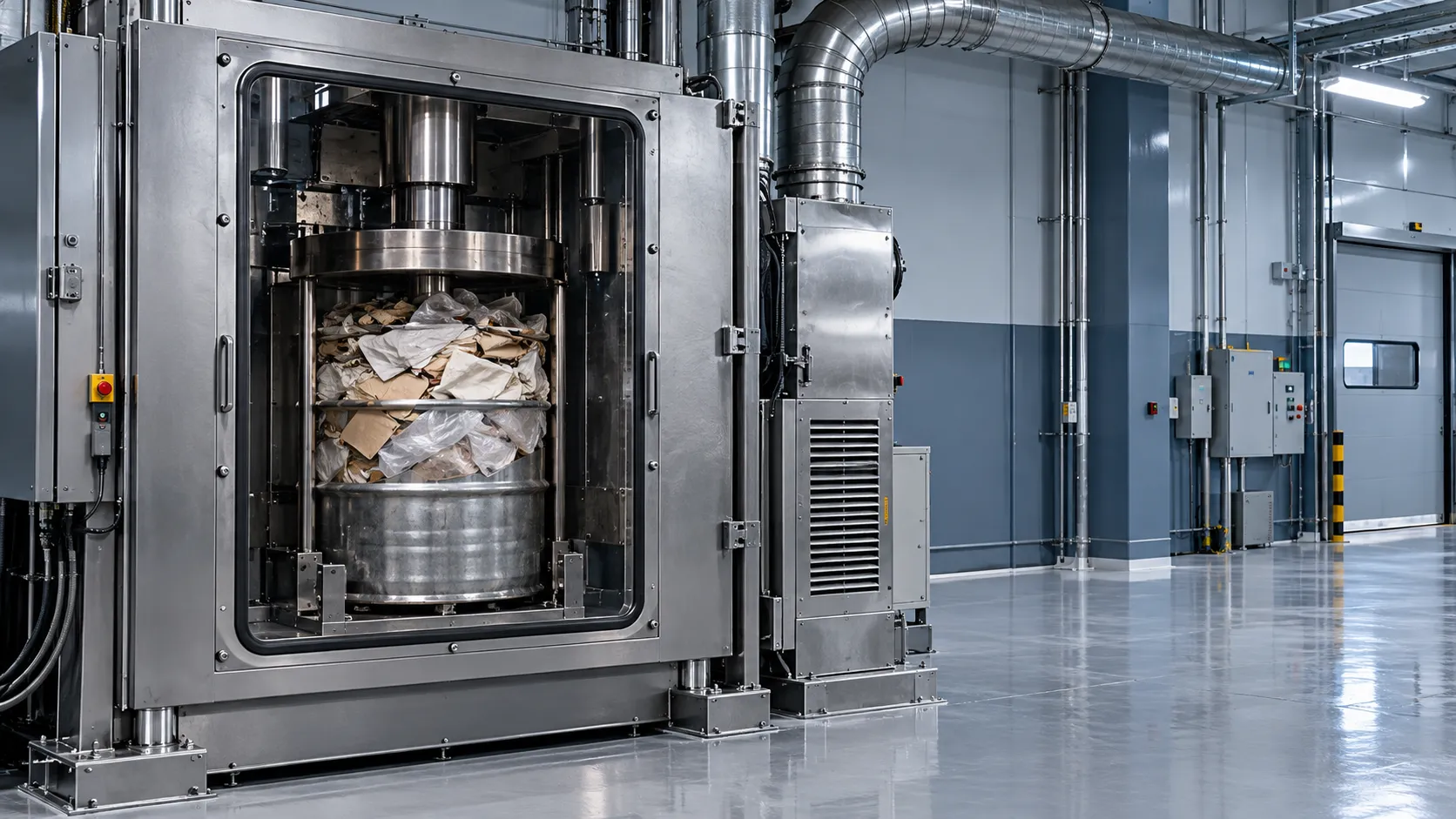
When is compaction suitable for solid nuclear waste treatment?
Is compaction right for solid nuclear waste treatment? Discover suitable waste streams, key safety checks, and disposal requirements to reduce package volume and optimize costs.
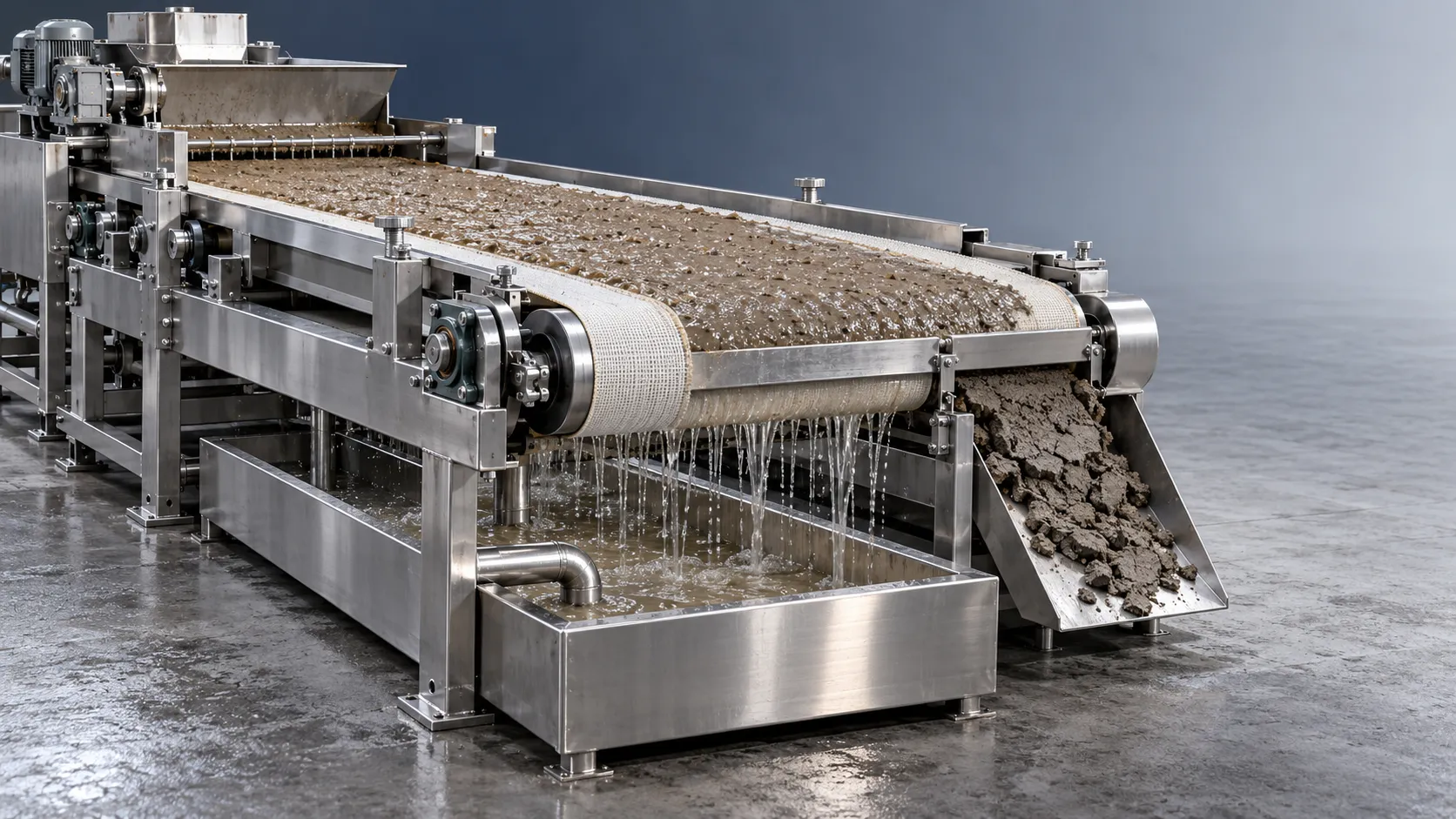
How solids concentration affects dewatering in waste recovery systems
Optimize waste recovery systems dewatering with insights on solids concentration. Learn to balance throughput, cake dryness, and solids capture while avoiding costly equipment overloads.
How to compare technical specs in an environmental equipment directory
Use this environmental equipment directory technical guide to compare capacity, energy use, compliance, and supplier evidence. Build a defensible shortlist and choose with confidence.
How to assess a zero liquid discharge equipment supplier’s energy claims
Assess a zero liquid discharge equipment supplier’s energy claims. Learn how to verify system boundaries, compare real costs, and demand testable guarantees before you buy.
Which membrane filtration process suits dairy protein concentration?
Explore membrane filtration for dairy: compare UF, MF, and RO to select the right process for protein concentration, lactose reduction, and better recovery. Find your best fit.
When is an MBR suitable for wastewater purification for bioprocessing?
For wastewater purification for bioprocessing, discover when an MBR fits your needs. Compare water quality, fouling risks, and lifecycle costs before investing.