
Industry News
Curation by industry experts
Hot Articles
Popular Tags
Seawater Desalination Costs in 2026: What Drives CAPEX and Energy Use
Seawater desalination in 2026: why cost questions are getting sharper
Seawater desalination is no longer judged by installed capacity alone.
In 2026, approval decisions depend on how CAPEX, energy use, compliance exposure, and operating resilience interact over the full asset life.
That is why seawater desalination reviews now go deeper into intake design, SWRO membrane selection, pre-treatment stability, and energy recovery performance.
The headline budget still matters, but it rarely tells the whole story.
A lower bid can hide higher power demand, faster fouling, brine discharge constraints, or expensive retrofit risk.
Within ESD’s broader ecological engineering lens, seawater desalination sits beside large water treatment, recovery systems, and compliance-intensive infrastructure.
So the better question is not “What does the plant cost?”
It is “Which design choices lock in capital intensity, power consumption, and long-term financial certainty?”
What actually makes seawater desalination CAPEX rise or fall?
Most seawater desalination CAPEX is shaped before procurement reaches final equipment pricing.
Site conditions, permitting demands, marine works, and reliability targets usually move the budget more than small component discounts.
In practical terms, four cost blocks dominate early decisions.
- Seawater intake and outfall works, especially open-ocean structures, tunneling, or difficult coastal geology.
- Pre-treatment configuration, including dissolved air flotation, ultrafiltration, and chemical dosing redundancy.
- High-pressure SWRO trains, pumps, pressure vessels, and energy recovery devices.
- Post-treatment, storage, grid connection, civil works, and environmental monitoring systems.
The intake choice is often underestimated.
An open intake may look cheaper at concept stage, yet marine fouling, storm exposure, and seasonal solids can increase both CAPEX buffers and operating uncertainty.
A subsurface intake can improve raw water quality, but civil complexity may push initial investment much higher.
Another major driver is redundancy philosophy.
Projects designed for strategic municipal supply, industrial clusters, or drought security usually require more standby capacity.
That means more pumps, spare trains, electrical backup, and automation layers.
These additions raise seawater desalination CAPEX, but they also reduce outage risk and unplanned replacement spending.
Why does energy use still decide project quality, not just operating cost?
For seawater desalination, electricity is more than an OPEX line.
It influences tariff stability, carbon exposure, lender confidence, and the project’s ability to remain competitive under tighter environmental rules.
The biggest energy variable remains the high-pressure reverse osmosis section.
Feed salinity, recovery rate, membrane permeability, fouling behavior, and pump efficiency all affect specific energy consumption.
Energy recovery devices are equally important.
A strong device selection can materially reduce power demand over the plant life.
A weak selection may save little upfront and cost far more later.
Pre-treatment also affects energy, although less directly.
Unstable pre-treatment causes membrane fouling, higher differential pressure, more frequent cleaning, and earlier membrane replacement.
That is why the lowest-energy seawater desalination plant on paper is not always the lowest-energy plant in operation.
A useful review point is whether performance guarantees are tied to realistic feedwater conditions.
If guarantees assume ideal seawater quality, projected energy use may be too optimistic for approval purposes.
A quick judgment table for cost and power signals
Before comparing bids, it helps to separate low initial price from durable project economics.
Which hidden costs are most often missed in seawater desalination reviews?
The most common miss is treating seawater desalination like a membrane package instead of a marine utility system.
That framing leaves several cost layers underexamined.
Brine management is one of them.
Discharge dispersion studies, diffuser design, monitoring obligations, and future tightening of coastal standards can all affect lifecycle economics.
Chemical logistics are another frequent blind spot.
Antiscalants, coagulants, cleaning chemicals, neutralization systems, and storage safety requirements add both cost and compliance complexity.
Then there is membrane replacement timing.
If the base case assumes long membrane life without reflecting real fouling events, the project may understate mid-cycle cash needs.
Grid risk also matters more in 2026.
Where power pricing is volatile, even a technically efficient seawater desalination plant may face unstable delivered water cost.
This is where broader intelligence becomes useful.
ESD’s cross-sector view of water treatment, decarbonization pressure, and compliance trends helps reveal whether cost assumptions are structurally sound, not merely technically acceptable.
How should competing seawater desalination options be compared fairly?
A fair comparison starts with normalized assumptions.
If one bidder uses average salinity and another uses peak salinity, the CAPEX and energy comparison becomes misleading.
The same issue appears with recovery rate, plant availability, membrane replacement cycles, and operator staffing models.
A practical approach is to compare seawater desalination options across five shared dimensions.
- Delivered water cost under the same feedwater and power-price assumptions.
- CAPEX sensitivity to civil works, marine construction, and redundancy requirements.
- Energy performance under normal and stressed operating conditions.
- Compliance readiness for discharge, chemicals, and monitoring obligations.
- Maintainability, spare parts strategy, and outage recovery time.
What usually separates strong proposals is not only a lower expected cost curve.
It is the quality of evidence behind that curve.
Projects with clear pilot data, realistic fouling assumptions, and transparent energy guarantees are easier to approve with confidence.
What risks can undermine returns even after a seawater desalination project is approved?
Approval is not the end of financial risk.
Several issues tend to surface only after construction or during ramp-up.
One is underdesigned pre-treatment.
If raw seawater shifts faster than expected, membrane fouling can erode both throughput and energy efficiency.
Another is mismatch between plant design and local regulation.
A seawater desalination plant may meet current standards yet face costly modification when coastal ecology monitoring becomes stricter.
There is also the risk of overvaluing nameplate capacity.
If utilization stays below plan because of seasonal demand, power tariffs, or industrial offtake changes, unit water cost rises sharply.
The more resilient investments usually show three traits.
- They model sensitivity, not only base-case returns.
- They price compliance and maintenance realistically from the beginning.
- They treat energy strategy as part of asset design, not a downstream utility issue.
So what should be checked before moving to final approval?
A disciplined final review of seawater desalination should connect technical detail with bankable assumptions.
That means checking whether the proposed plant is robust under real marine conditions, realistic power pricing, and foreseeable regulatory tightening.
It also means asking whether lower CAPEX today simply shifts cost into energy, membranes, chemicals, or future retrofit.
A concise final checklist can keep the discussion focused.
- Confirm the seawater basis, salinity range, and seasonal water quality data.
- Test energy consumption against realistic operating scenarios.
- Separate one-time marine works from repeat operating liabilities.
- Review membrane life, cleaning frequency, and spare parts assumptions.
- Check whether discharge and environmental monitoring costs are fully included.
In 2026, strong seawater desalination decisions are rarely driven by price alone.
They come from seeing how CAPEX, energy use, compliance exposure, and reliability shape lifecycle value together.
The next sensible step is to build a side-by-side evaluation model, then stress-test it against site data, energy assumptions, and regulatory scenarios before final commitment.
Recommended News
Which decarbonization pathways are most viable in Southeast Asia?
Decarbonization Southeast Asia: discover practical pathways for clean power, efficiency, electrification, circular recovery, and resilient industrial growth.

How to choose waste sorting equipment for mixed municipal waste
Waste sorting equipment selection guide for mixed municipal waste: compare technologies, improve recovery, reduce downtime, and build reliable output streams.
How to verify standards in an environmental equipment directory
environmental equipment directory standards reference: learn to verify certifications, performance evidence, scope, and project fit for confident, compliant equipment selection.
When high flux membrane water treatment justifies a larger footprint
High flux membrane water treatment can justify a larger footprint when variable feedwater, fouling risk, and uptime demands require resilient, lower-flux operation.
RO vs MED desalination: which is more energy-efficient at scale?
Desalination technology comparison: RO vs MED at scale. See how energy use, waste heat, feedwater, carbon, and flexibility determine the best choice.
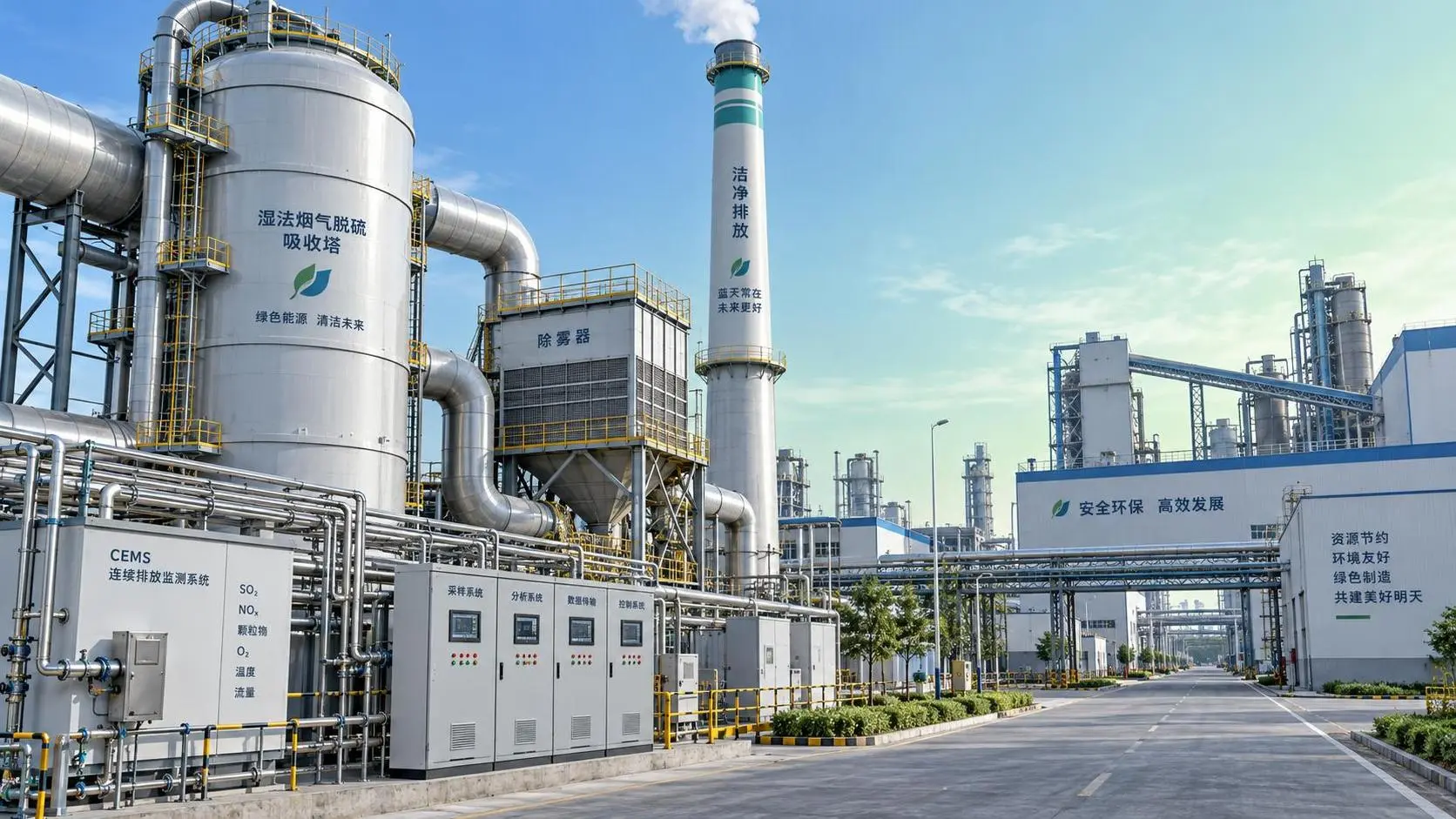
Which ISO standards apply to flue gas treatment systems?
Flue gas treatment systems ISO standards: explore key requirements for emissions testing, CEMS, safety, fabrication, corrosion control, and compliant project evaluation.

When corrosion resistant purification systems are needed for brine treatment
Corrosion resistant purification systems for brine treatment: assess chloride, heat, scaling, materials, and lifecycle reliability for demanding water projects.

How preventive maintenance reduces seawater desalination equipment downtime
Seawater desalination equipment maintenance reduces downtime through proactive monitoring, pretreatment protection, and planned repairs. Explore practical strategies for reliable RO performance.
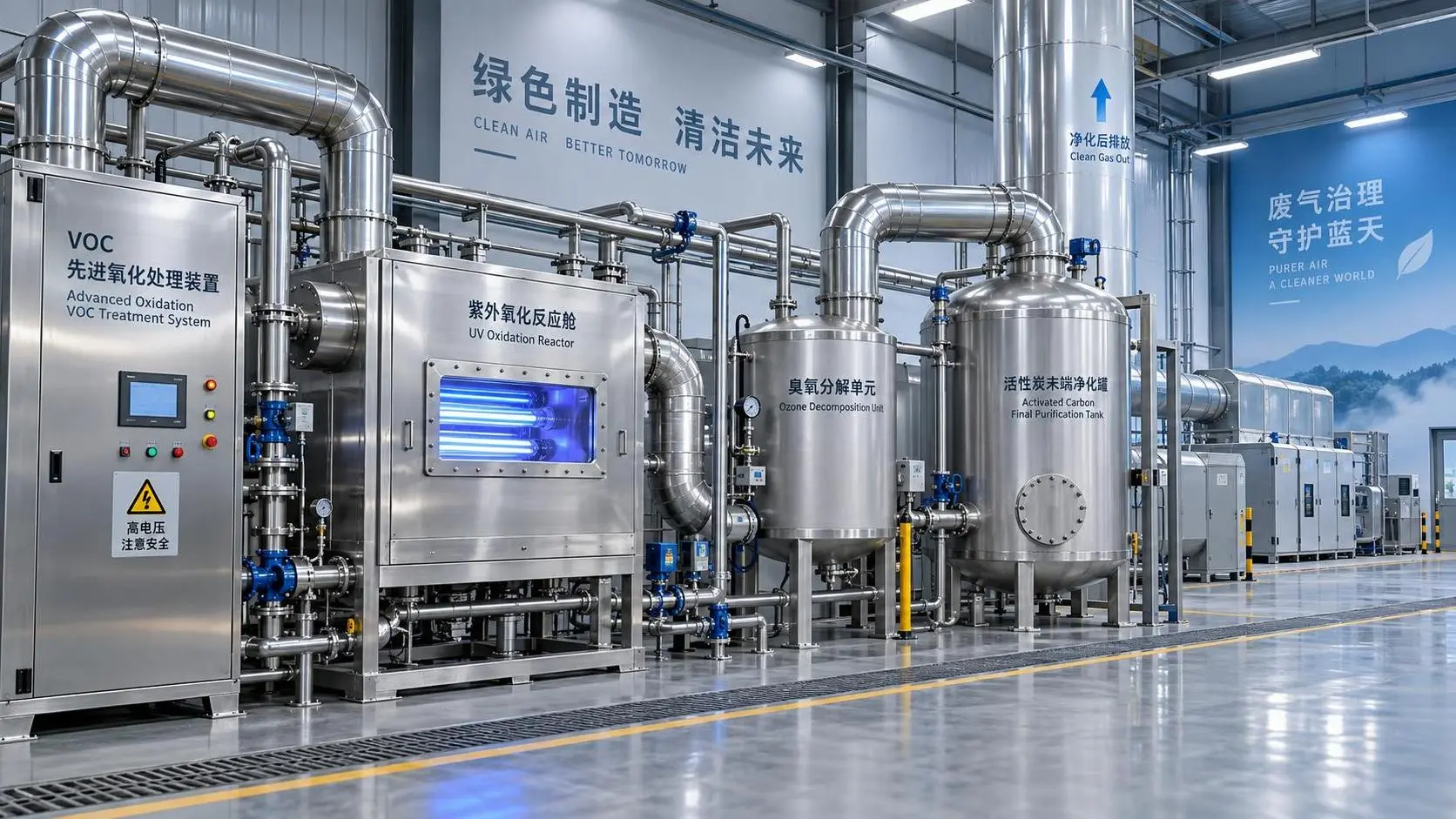
When are advanced oxidation processes the right choice for VOC control?
Advanced oxidation processes for VOC control: learn when AOPs outperform conventional options, manage by-products, and achieve reliable compliance.