
Industry News
Curation by industry experts
Hot Articles
Popular Tags
Environmental Regulations Compliance Guide: Key Audit Risks to Fix First
Environmental Regulations Compliance Guide: Key Audit Risks to Fix First
For business leaders navigating tighter global oversight, this environmental regulations compliance guide highlights the audit risks that demand immediate attention.
The biggest exposure often starts with emissions data gaps, wastewater reporting errors, hazardous waste tracking failures, and cross-border compliance blind spots.
In practice, most penalties do not begin with dramatic pollution events.
They start with weak records, inconsistent monitoring, delayed escalation, and poor accountability between operations, EHS, legal, procurement, and plant leadership.
That is why a strong environmental regulations compliance guide should focus on the risks most likely to fail during an audit, inspection, or permit review.
For industrial operators, infrastructure owners, and environmental equipment stakeholders, fixing the right issues early protects cash flow, licenses, contracts, and reputation.
Why audit risk is rising faster than many teams expect
Regulators now connect environmental performance with operational reliability, climate accountability, and supply chain integrity.
More importantly, enforcement is becoming more data-driven.
Digital reporting, continuous monitoring, satellite observation, and public disclosure rules make inconsistencies easier to detect.
This also means small control failures can quickly become major findings.
An environmental regulations compliance guide is no longer just a checklist for EHS teams.
It is a decision tool for prioritizing investments in monitoring, treatment systems, documentation, training, and governance.
ESD’s market view shows the pattern clearly.
Facilities managing wastewater, flue gas, solid waste, desalination byproducts, or nuclear-related materials face increasingly detailed scrutiny on both process performance and traceability.
Risk one: emissions data gaps and monitoring inconsistency
This is often the first item auditors test.
If emissions data is incomplete, inconsistent, or poorly documented, regulators may question the entire compliance system.
Common triggers include missing calibration logs, unexplained spikes, manual overrides, and conflicting reports between plant systems and official filings.
This issue is especially critical in flue gas treatment, combustion processes, thermal recovery lines, and high-load industrial operations.
What to fix first
- Verify that monitoring methods match permit conditions and reporting rules.
- Check calibration, maintenance, and downtime records for CEMS and related instruments.
- Review exception handling for substituted data, alarms, and out-of-range readings.
- Assign one owner for data integrity from source capture to final submission.
A practical environmental regulations compliance guide should treat emissions data as board-level risk information, not just technical output.
Risk two: wastewater reporting errors and permit drift
Wastewater compliance failures are frequently caused by permit misunderstanding rather than treatment failure alone.
Sampling points move, production changes, influent chemistry shifts, and reporting templates stay unchanged.
That gap creates risk.
For sites handling industrial wastewater, municipal sewage, ZLD systems, or desalination reject streams, auditors usually compare actual operations against permit assumptions.
If the process changed but the compliance program did not, findings follow quickly.
High-priority checks
- Confirm that discharge limits, frequency, and sampling methods reflect the latest permit version.
- Match laboratory reports with filed values and retained raw records.
- Review bypass events, overflow logs, and upset conditions for disclosure obligations.
- Reassess treatment design assumptions after production expansions or feedwater changes.
This environmental regulations compliance guide becomes far more effective when engineering and compliance teams review permits together, line by line.
Risk three: hazardous waste tracking that breaks the chain of custody
Hazardous waste findings often come from logistics, labeling, and storage failures.
The waste itself may be handled safely, yet records fail to prove it.
Auditors typically look for consistency across generation logs, container labels, storage timelines, transporter documents, and disposal certificates.
Any break in the chain raises questions about illegal storage, misclassification, or improper transfer.
This matters even more for recovery systems, residues from flue gas treatment, concentrated brines, contaminated sludges, and specialized industrial byproducts.
Priority actions
- Map waste streams from generation point to final treatment or recovery route.
- Recheck waste codes, compatibility rules, and container labeling practices.
- Audit storage time limits and temporary accumulation areas.
- Validate vendor permits, downstream facilities, and manifest completion quality.
A reliable environmental regulations compliance guide should make waste traceability visible in one place, not scattered across departments.
Risk four: cross-border compliance exposure and supply chain blind spots
Many companies still treat environmental compliance as a site-level issue.
That approach is now too narrow.
Export controls, product stewardship rules, imported material restrictions, waste shipment regulations, and CBAM-related obligations create cross-border exposure that internal audits often miss.
This is especially relevant for equipment manufacturers, EPC firms, and operators with globally sourced treatment systems or disposal networks.
Where leaders should focus
- Identify environmental declarations required for exports, imports, and major bids.
- Check whether supplier data supports carbon, material, and chemical compliance claims.
- Review cross-border movement rules for waste, residues, and recoverable materials.
- Align legal, procurement, and sustainability teams on one reporting logic.
A modern environmental regulations compliance guide should include supply chain evidence quality, not just onsite operational controls.
Risk five: control systems that look complete but fail under audit
Many organizations have policies, procedures, and dashboards.
Yet audits still uncover weak execution.
The problem is usually not missing paperwork.
It is the absence of operational proof.
Examples include training records that do not match job reality, emergency plans that were never tested, and corrective actions that closed on paper but not in the field.
In an environmental regulations compliance guide, this is the area where leadership discipline matters most.
Ask these audit questions
- Can site teams explain critical permit conditions without checking a binder?
- Are corrective actions verified in the field, with dates and accountable owners?
- Do incident reviews address root cause, not just immediate cleanup?
- Are contractors held to the same environmental control standards?
A simple prioritization model for fixing audit risks first
Not every gap deserves the same urgency.
The best environmental regulations compliance guide uses a practical ranking model.
Score each issue against legal severity, operational disruption, repeatability, detectability, and reputational impact.
This approach helps leadership move from scattered compliance activity to focused risk reduction.
How to turn this environmental regulations compliance guide into action
Start with a 30-day review of the four most exposed areas: air, water, waste, and cross-border reporting.
Then test whether your records tell one consistent story from field activity to executive reporting.
Where they do not, fix ownership first.
Technology helps, but only when accountability is clear.
In sectors tracked closely by ESD, the strongest performers combine engineering discipline, compliance visibility, and strategic intelligence on regulatory change.
That combination reduces surprises and improves investment timing for treatment upgrades, monitoring systems, recovery infrastructure, and governance controls.
A useful environmental regulations compliance guide does not try to solve everything at once.
It helps you fix the risks most likely to trigger legal, financial, and operational pain first.
If the goal is stronger environmental performance with fewer audit surprises, begin where evidence quality is weakest and consequences are highest.
Recommended News

How North America shapes global environmental governance standards
Global environmental governance North America: discover how regulation, finance, and procurement raise worldwide standards and reshape environmental projects.

How reactor capacity affects throughput in pyrolysis systems
Pyrolysis systems reactor capacity explained: learn how heat transfer, residence time, feed quality, and emissions controls determine reliable throughput.

When low-temperature reaction equipment is the right fit for heat-sensitive processes
Low-temperature reaction equipment helps protect heat-sensitive streams, improve energy integration, and maintain reliable conversion. Explore key selection factors today.

When do water reuse systems deliver a practical payback?
Water reuse systems deliver practical payback when they cut water, discharge, and downtime costs. Learn how to match treatment, recovery, and reuse quality for lasting ROI.
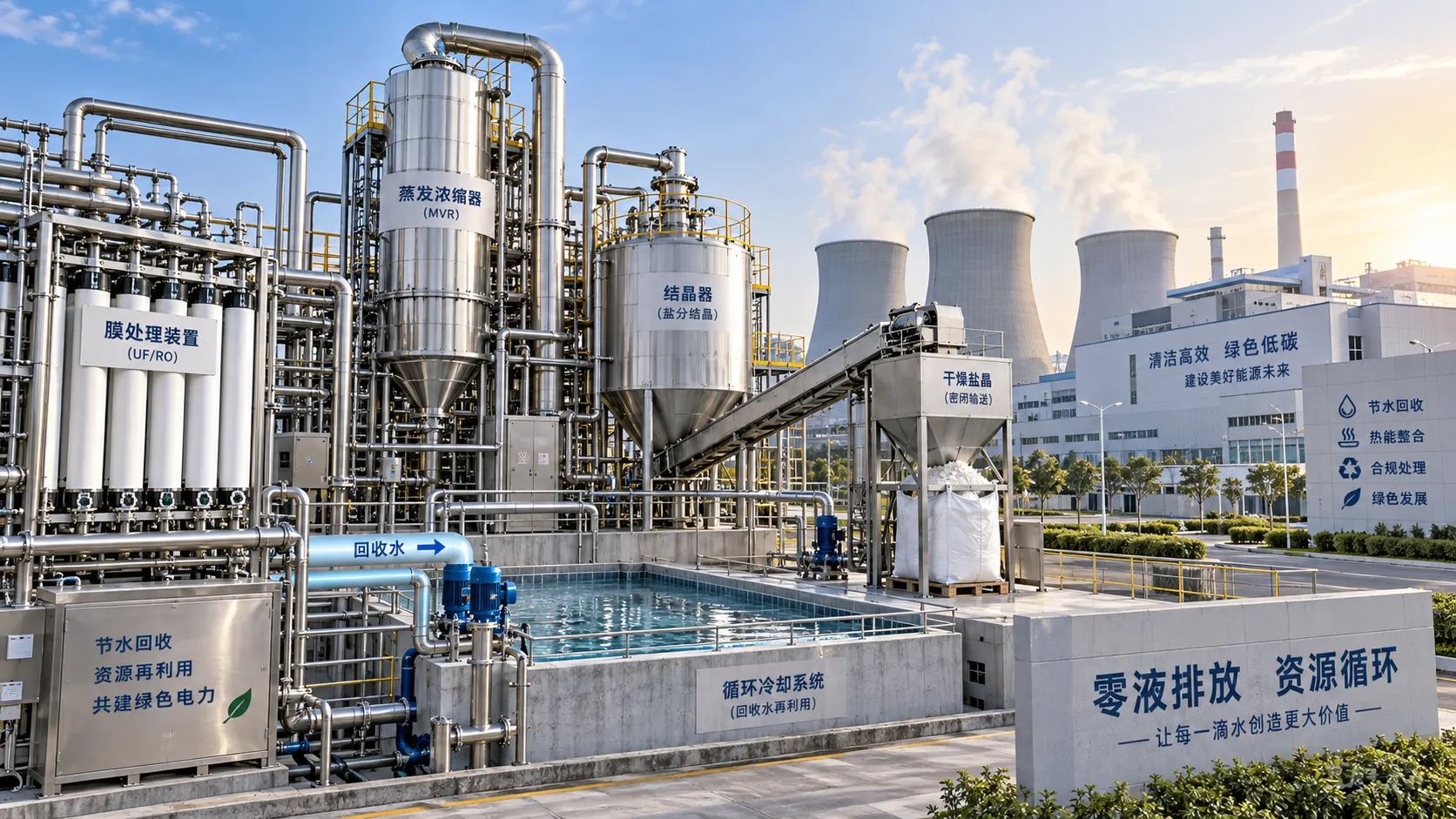
When do ZLD systems for power generation justify their energy use?
ZLD systems for power generation: learn when energy-intensive water recovery delivers stronger compliance, resilience, and long-term value.

Which decarbonization pathways are most viable in Southeast Asia?
Decarbonization Southeast Asia: discover practical pathways for clean power, efficiency, electrification, circular recovery, and resilient industrial growth.

How to choose waste sorting equipment for mixed municipal waste
Waste sorting equipment selection guide for mixed municipal waste: compare technologies, improve recovery, reduce downtime, and build reliable output streams.

How to verify standards in an environmental equipment directory
environmental equipment directory standards reference: learn to verify certifications, performance evidence, scope, and project fit for confident, compliant equipment selection.

When high flux membrane water treatment justifies a larger footprint
High flux membrane water treatment can justify a larger footprint when variable feedwater, fouling risk, and uptime demands require resilient, lower-flux operation.