
Industry News
Curation by industry experts
Hot Articles
Popular Tags
How to Evaluate Green Tech Solutions for Water Treatment
Evaluating green tech solutions for water treatment now sits at the intersection of environmental performance, capital discipline, and regulatory survival. What once looked like a sustainability upgrade is increasingly a board-level infrastructure decision, especially where water stress, discharge limits, carbon accounting, and supply-chain scrutiny are tightening at the same time.
That shift matters across industrial parks, municipal systems, desalination projects, resource recovery facilities, and other complex assets. In practice, the question is not whether a technology is labeled green. The real question is whether it can deliver stable treatment results, manageable lifecycle cost, and enough technical resilience to remain viable under future operating conditions.
Seen through the lens of ESD’s intelligence focus, water treatment should be judged as part of a broader ecological defense system. Purification efficiency, closed-loop resource logic, equipment reliability, and compliance readiness all need to be read together, not as isolated metrics.
What counts as a green solution in water treatment
The term covers more than low-emission branding. In water infrastructure, green technology usually refers to systems that reduce environmental burden while maintaining or improving treatment performance.
That can include high-efficiency membrane filtration, biological treatment upgrades, advanced oxidation, energy recovery, brine concentration, ZLD architecture, smart dosing, and digital control platforms that reduce waste and power use.
In some projects, the green value comes from lower chemical consumption. In others, it comes from water reuse, heat integration, reduced sludge production, or the recovery of salts, metals, or process water.
This is why evaluating green tech solutions for water treatment requires a systems view. A solution may look efficient in one unit process, yet create higher downstream burden in concentrate handling, maintenance cycles, or energy demand.
Why the market is paying closer attention
Several forces are reshaping investment criteria. Water scarcity is increasing the value of reuse. Carbon pressure is changing how treatment energy intensity is judged. Compliance frameworks are becoming more granular and less forgiving.
Cross-border trade is also influencing technical choices. Mechanisms such as CBAM are pushing environmental performance from a local permit issue into a commercial competitiveness issue.
At the same time, industrial water streams are becoming harder to treat. High salinity, refractory organics, emerging contaminants, and fluctuating loads are exposing the limits of older designs.
For that reason, the most relevant green tech solutions for water treatment are often those that combine purification with operational intelligence. ESD’s perspective is useful here: technology selection should connect physicochemical parameters, resource recovery logic, and future compliance scenarios.
The first filter: define the treatment mission clearly
A strong evaluation starts before vendor comparison. The treatment mission must be defined with enough precision to avoid buying an elegant solution for the wrong problem.
The core variables usually include influent composition, flow variability, target effluent quality, reuse goals, land constraints, local energy price, sludge or brine handling routes, and expected regulatory evolution.
For example, a food processing facility and a petrochemical complex may both seek water reuse, but the correct technical pathway can differ sharply because fouling mechanisms, organics profile, and concentrate management risk are different.
A desalination-linked project adds another layer. Recovery rate, pretreatment robustness, membrane durability, and brine discharge conditions can determine whether a concept is truly sustainable or simply shifts environmental load elsewhere.
Questions that shape the brief
- Is the goal compliance, reuse, resource recovery, or full ZLD?
- How stable is the influent across seasons, batches, or shutdown cycles?
- Which parameter is hardest to control: COD, TDS, ammonia, boron, PFAS, metals, or pathogens?
- What is the acceptable trade-off between CAPEX, OPEX, and process complexity?
- How much future tightening should the design absorb without major retrofit?
How to compare technologies without being misled
When comparing green tech solutions for water treatment, headline efficiency numbers rarely tell the full story. A better method is to test each option across six practical dimensions.
This framework helps separate attractive pilot claims from bankable project performance. It also keeps sustainability language anchored to engineering reality.
Where evaluation criteria change by scenario
Not every site should judge technologies the same way. The right weighting depends on the treatment context.
Industrial wastewater and ZLD programs
Here, concentrate management often becomes the decisive issue. A membrane train may look efficient until evaporation load, scaling risk, and crystallizer energy are modeled properly.
For these cases, green tech solutions for water treatment should be tested for full mass balance, not only front-end separation efficiency.
Municipal reuse and public infrastructure
The priority may shift toward reliability, public health margins, operator simplicity, and long asset life. Digital monitoring and energy optimization can be more valuable than exotic process complexity.
Seawater desalination and high-salinity treatment
Pretreatment quality, membrane fouling behavior, and specific energy consumption dominate the conversation. The best option is often the one that preserves stable recovery under variable feed conditions.
Resource recovery linked systems
Some facilities should evaluate water treatment together with waste recovery and circular economy targets. Reclaiming salts, nutrients, heat, or reusable water can change project economics materially.
Signals that deserve closer attention during due diligence
A disciplined review usually reveals whether a proposed solution is mature enough for deployment or still too dependent on ideal assumptions.
- Pilot data comes from water chemistry close to the target site, not a simplified surrogate stream.
- Performance guarantees specify ranges, not just best-case values.
- Cleaning frequency, membrane life, and consumable replacement are documented transparently.
- Automation logic supports abnormal loads, not only steady-state operation.
- The residual stream has a credible disposal or recovery pathway.
- The design can adapt to future tightening in discharge, reuse, or carbon reporting rules.
This is where strategic intelligence becomes valuable. ESD’s approach of linking equipment evolution, regulatory signals, and commercial demand helps identify whether a solution is aligned with long-horizon infrastructure trends rather than short-cycle procurement logic.
A practical decision model for final selection
A workable final decision often combines quantitative scoring with scenario testing. The objective is not to find a perfect technology. It is to find the most resilient fit.
One useful approach is to score each candidate across compliance certainty, water recovery value, energy intensity, residual burden, maintenance complexity, digital visibility, and upgrade flexibility.
Then stress-test the top options against three conditions: tighter regulations, worse influent quality, and higher energy cost. Some solutions lose their economic case very quickly under those shifts.
The most robust green tech solutions for water treatment are usually not the cheapest on day one. They are the ones that preserve treatment integrity and financial predictability across changing constraints.
From evaluation to action
The next step is to translate ambition into a tighter evaluation brief. That means defining water quality targets, ranking risk factors, mapping residual handling routes, and clarifying which future regulations could reshape the investment case.
From there, comparing green tech solutions for water treatment becomes less subjective. Technical claims can be tested against site-specific chemistry, lifecycle cost, and the strategic value of water reuse or resource recovery.
In high-stakes projects, the smartest choice is rarely the most fashionable technology. It is the solution that fits the process, survives regulatory change, and strengthens the broader ecological shield around the asset.
Recommended News
Which decarbonization pathways are most viable in Southeast Asia?
Decarbonization Southeast Asia: discover practical pathways for clean power, efficiency, electrification, circular recovery, and resilient industrial growth.
How to choose waste sorting equipment for mixed municipal waste
Waste sorting equipment selection guide for mixed municipal waste: compare technologies, improve recovery, reduce downtime, and build reliable output streams.
How to verify standards in an environmental equipment directory
environmental equipment directory standards reference: learn to verify certifications, performance evidence, scope, and project fit for confident, compliant equipment selection.
When high flux membrane water treatment justifies a larger footprint
High flux membrane water treatment can justify a larger footprint when variable feedwater, fouling risk, and uptime demands require resilient, lower-flux operation.
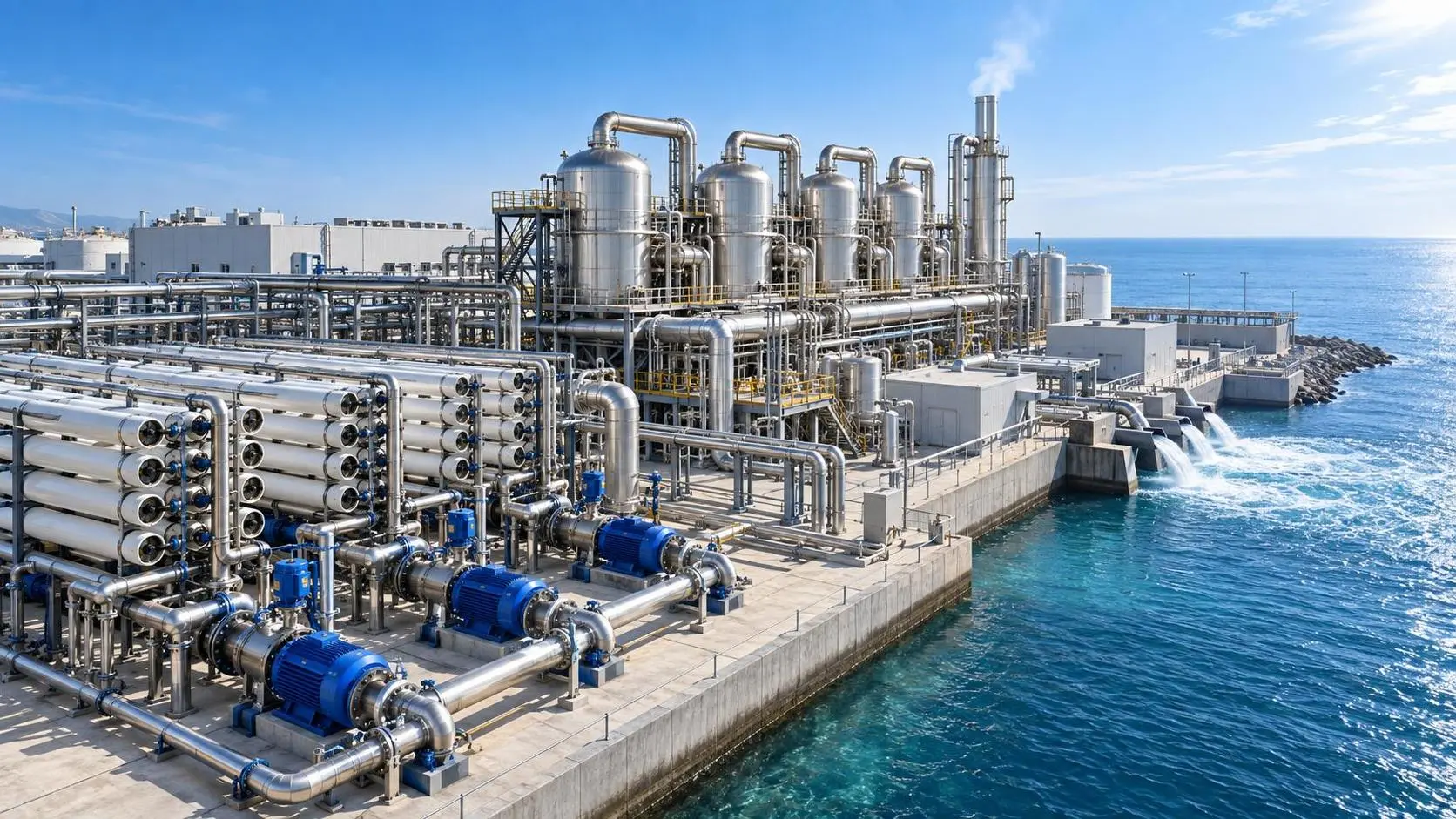
RO vs MED desalination: which is more energy-efficient at scale?
Desalination technology comparison: RO vs MED at scale. See how energy use, waste heat, feedwater, carbon, and flexibility determine the best choice.
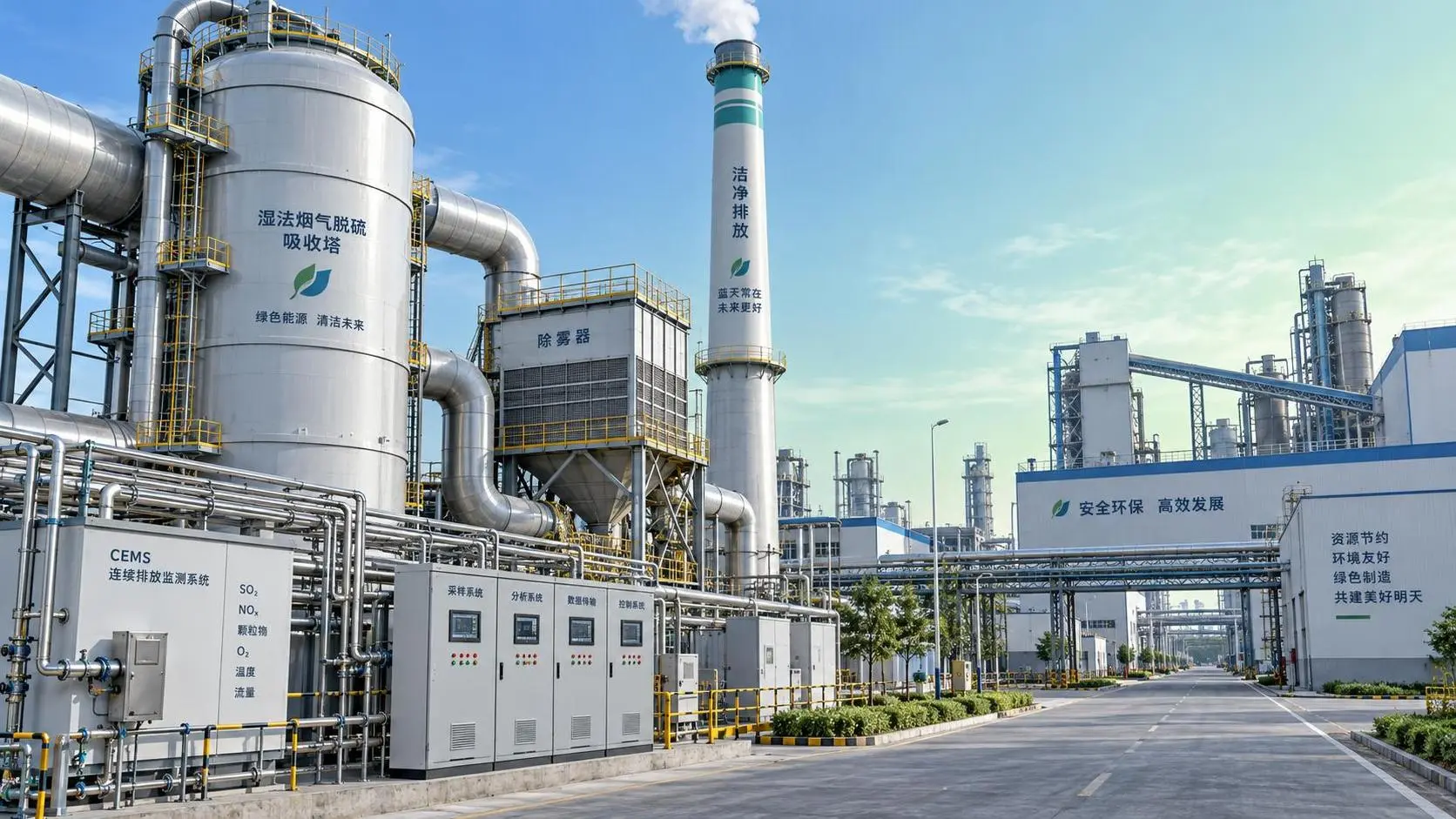
Which ISO standards apply to flue gas treatment systems?
Flue gas treatment systems ISO standards: explore key requirements for emissions testing, CEMS, safety, fabrication, corrosion control, and compliant project evaluation.

When corrosion resistant purification systems are needed for brine treatment
Corrosion resistant purification systems for brine treatment: assess chloride, heat, scaling, materials, and lifecycle reliability for demanding water projects.

How preventive maintenance reduces seawater desalination equipment downtime
Seawater desalination equipment maintenance reduces downtime through proactive monitoring, pretreatment protection, and planned repairs. Explore practical strategies for reliable RO performance.
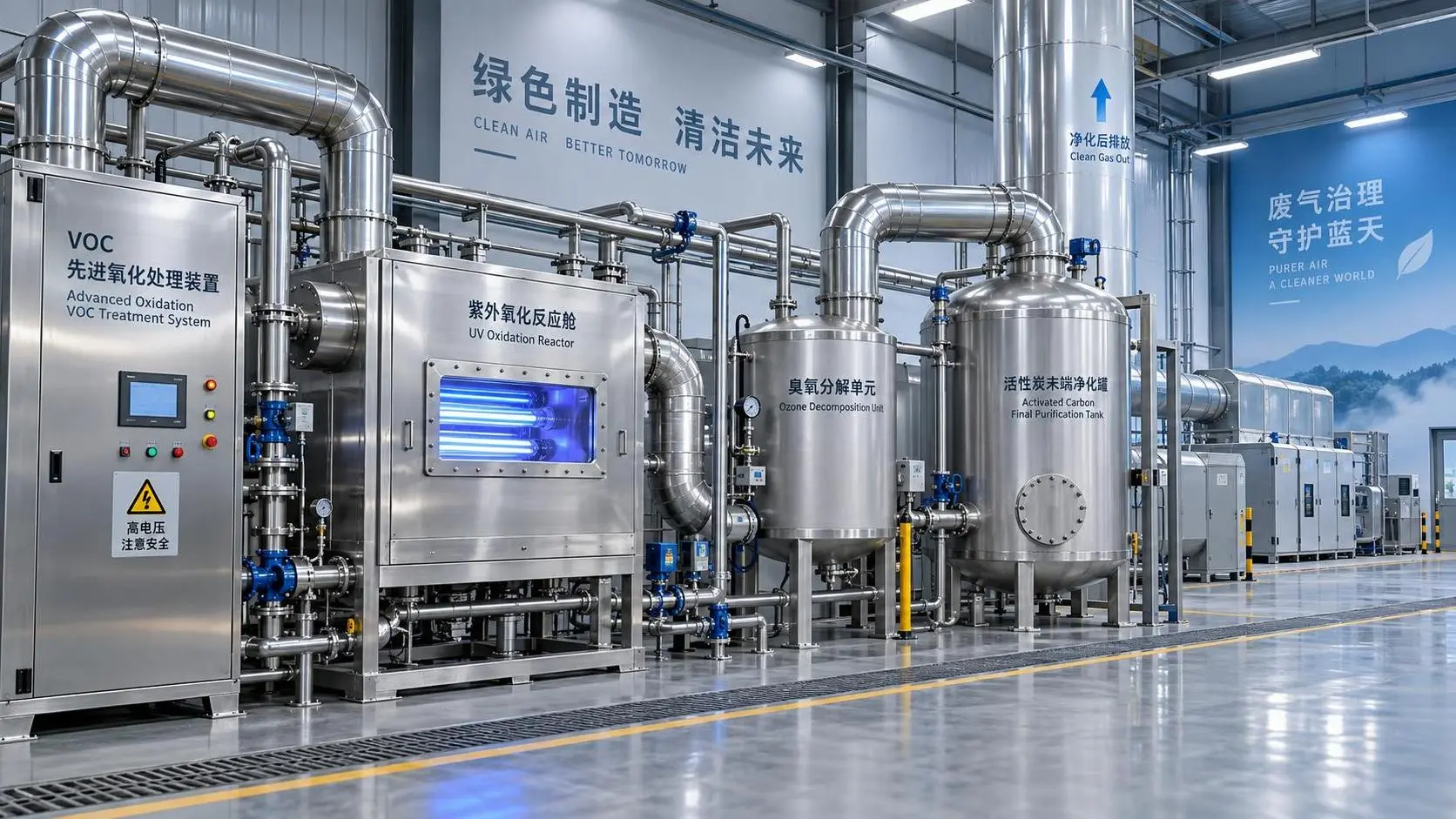
When are advanced oxidation processes the right choice for VOC control?
Advanced oxidation processes for VOC control: learn when AOPs outperform conventional options, manage by-products, and achieve reliable compliance.