
Industry News
Curation by industry experts
Hot Articles
Popular Tags
How to verify standards in an environmental equipment directory
How to Verify Standards in an Environmental Equipment Directory
For technical evaluators, an environmental equipment directory standards reference is not simply a way to narrow down suppliers. It is a working tool for testing whether an equipment claim can survive engineering review, permitting scrutiny, site conditions, and years of operation. That matters whether the asset is a Zero Liquid Discharge train for difficult industrial effluent, a seawater reverse osmosis system, a flue-gas treatment package, an AI-enabled sorting line, or a containment solution for radioactive waste.
The central mistake is to treat a listed standard as proof by itself. A manufacturer may accurately state that its organization operates under a quality-management system, while the proposed equipment has not been tested for the duty point, material exposure, emissions limit, electrical classification, or jurisdiction that applies to the project. Standard verification is therefore an exercise in matching: matching the standard to the equipment, the equipment to the operating envelope, and the operating envelope to the legal and contractual requirement.
A well-built directory helps make this matching visible. It should not flatten highly different technologies into a generic “compliant” label. The relevant questions for a SWRO membrane element are not the same as those for an SCR reactor, a waste pyrolysis unit, or a vitrification process line. Technical reviewers need traceable references, current documents, defined scope, and evidence that the cited requirements apply to the actual configuration being evaluated.
Start with the project requirement, not the supplier profile
Before opening an environmental equipment directory, convert the project brief into a standards map. This does not need to be an elaborate compliance register at the beginning. It does need to separate mandatory obligations from preferred practices and internal specifications. A directory entry can then be reviewed against something concrete instead of against a vague expectation of “international standards.”
The map usually has several layers. The first is the applicable law, permit condition, tender requirement, or owner specification in the installation market. The second covers product safety, pressure systems, electrical equipment, hazardous-area requirements, structural design, materials, and testing. The third addresses process performance: effluent quality, stack emissions, recovery purity, membrane rejection, availability obligations, or containment integrity. A final layer often covers data handling, cybersecurity, instrumentation, documentation, and maintainability.
This sequence is important because a technically impressive machine can still be unsuitable if its documentation, electrical architecture, pressure boundary, or control system does not satisfy local requirements. Conversely, an equipment package may carry several broad certifications yet remain poorly matched to the feed chemistry, climate, corrosive atmosphere, turndown range, or maintenance conditions of a particular facility.
Read every standards claim in context
When a directory lists a standard, check four things immediately: the issuing body, the exact edition, the scope, and the evidence type. A reference without an edition may point to a withdrawn or superseded document. A reference without scope may apply to a component rather than the complete system. And a logo, declaration, or marketing phrase is not interchangeable with an independent test report or project-specific inspection record.
It is also useful to distinguish management-system standards from equipment standards. ISO 9001 and ISO 14001, for example, concern organizational management systems; they can be relevant indicators of process discipline, but they do not certify that a specific desalination skid will meet a required permeate quality or that a gas-cleaning system will achieve a site-specific emissions limit. The same caution applies to broad statements such as “CE compliant.” In relevant markets, conformity marking depends on the applicable legislation and technical documentation for the product placed on that market; it is not a universal performance certificate.
Ask what exactly was tested, by whom, and under what conditions. Was the evidence generated on a production unit, a representative pilot, a component sample, or a modeled configuration? Does it cover normal operation only, or start-up, shutdown, upset conditions, cleaning cycles, and failure modes? These questions are not administrative detail. Environmental equipment often fails evaluation at the boundaries of operation rather than at the design point shown in a brochure.
A practical evidence hierarchy
Not all evidence carries the same decision value. A directory is most useful when it makes the source type clear rather than presenting all documentation as equivalent.
- Applicable regulation, permit requirement, or owner specification identifies what must be achieved.
- An accredited or otherwise recognized third-party test, inspection, or certification may support a defined claim, provided its scope is relevant.
- Factory acceptance test records, material certificates, calibration records, and inspection plans support traceability for the supplied configuration.
- A manufacturer declaration is useful, but should be reviewed with supporting technical files where the risk is significant.
- A directory statement with no linked document, revision date, or scope should be treated as a lead for further verification, not as approval evidence.
For critical assets, request the document reference and its boundary conditions rather than merely asking whether a standard is met. That small change in wording often reveals whether the supplier’s technical team has connected the claim to the proposed design.
Verify the parameters that standards do not settle on their own
Standards provide a framework, but they rarely eliminate the need for engineering judgment. Environmental performance is usually tied to the chemistry, loading profile, operating strategy, and downstream obligations of the site. Two units built to the same general design basis can behave very differently when exposed to different influent variability or maintenance realities.
For wastewater and ZLD systems, verify the influent characterization behind the design. Total dissolved solids alone is not enough. Review likely scaling species, silica behavior, organic loading, suspended solids, oil presence, pH range, temperature, cleaning assumptions, and the destination of every concentrated stream. A claimed recovery rate is only meaningful when the feed definition, pretreatment arrangement, evaporation or crystallization scope, and solids handling basis are disclosed. The relevant compliance question is often not just “does the process remove contaminants?” but “where do they go, and how is that route controlled?”
For SWRO desalination equipment, the evaluation should connect membrane data to the complete train. Product-water quality, energy demand, recovery, boron management where relevant, intake conditions, pretreatment performance, pressure-vessel design, corrosion resistance, chemical dosing, and brine discharge constraints all influence suitability. Membrane test data from controlled conditions should not be read as a guaranteed site outcome. Confirm the test water, temperature, pressure, recovery, stabilization period, and cleaning protocol before using it in a comparison.
Flue-gas treatment requires the same discipline. A stated removal efficiency has little value unless the inlet gas composition, flow range, temperature window, oxygen concentration, particulate loading, reagent quality, and measurement basis are known. For SCR systems, low-temperature catalyst performance may be relevant, but so are poisoning risks, ammonia slip requirements, reactor layout, and the monitoring approach. For wet scrubbing or FGD, reviewers must look beyond absorber efficiency to wastewater handling, scaling, corrosion allowances, fan integration, and disposal or reuse pathways for by-products.
Solid waste recovery systems should be assessed against feed variability rather than nominal throughput alone. Sorting accuracy may depend on particle size distribution, moisture, contamination, belt loading, material presentation, sensor selection, and the definition of a correctly sorted item. Pyrolysis evaluations need an equally broad boundary: feed preparation, emissions control, char and condensate management, fire protection, residue classification, and continuous-operation assumptions all belong in the review.
Check the boundary between equipment, package, and plant
Directory entries often describe equipment at a level that is too narrow for plant-level decisions. A pump may meet the required material and pressure specification, yet the skid can fail its duty because of poor pipe routing, inadequate instrumentation, unsuitable valve selection, or an undersized control philosophy. A sorting robot can be technically capable while the surrounding feed-conditioning system prevents stable performance.
Define the verification boundary early. Is the supplier responsible only for a core machine, or for a packaged subsystem with controls, safety interlocks, commissioning support, and performance testing? Which interfaces remain with the EPC contractor or owner? This becomes especially important in multi-vendor projects, where compliance gaps often appear between disciplines rather than within a single item of equipment.
Documentation quality is a technical signal
A complete document set does not guarantee a good design, but inconsistent documentation is rarely harmless. Technical evaluators should look for alignment among the data sheet, process flow diagram, P&ID, utility list, instrument list, general arrangement, control narrative, material schedule, and test plan. Differences in flow rate, pressure, temperature, units, or battery limits may indicate an immature design or an unclear scope division.
Revision control deserves attention. A standard cited in a proposal may differ from the one used in fabrication documents. A replacement component may alter electrical, materials, or safety assumptions. For long-lead environmental projects, establish how revisions will be controlled, who approves deviations, and what evidence is required before a change is accepted. This is particularly valuable where system reliability is inseparable from containment and traceability, as in nuclear waste management.
Nuclear applications call for an even narrower distinction between general industrial capability and application-specific qualification. Requirements can depend on national regulatory frameworks, waste form, classification, site license conditions, radiation environment, quality assurance provisions, and long-term storage or disposal strategy. A directory can identify relevant technologies and documentation pathways, but it cannot replace the project’s formal safety case or regulatory review.
Use a directory as an intelligence layer, not a final approval gate
The strongest environmental equipment directories reduce the time needed to identify what must be checked. They connect technologies with operating parameters, applicable standards families, regulatory context, material risks, and evidence requests. Their value lies in making comparisons more disciplined before the evaluation team commits significant effort to technical clarification.
This is the role envisioned by Global Eco-Shield Dynamics (ESD). Its focus spans the five linked areas that increasingly define environmental infrastructure: large-scale water treatment, solid waste and resource recovery, flue-gas control, seawater desalination, and nuclear waste management. Rather than treating these as isolated equipment categories, ESD’s intelligence approach connects purification limits, circular-material flows, reliability constraints, and changing compliance expectations. That perspective is useful when a design decision in one area creates a burden elsewhere, such as concentrate disposal from water treatment or residue handling from air-pollution control.
For evaluators, the practical outcome should be a better question set. A directory record may reveal that a system appears promising; the next step is to test the claim against the project’s actual compliance matrix, duty profile, interface definition, and evidence requirements. This is more rigorous than selecting equipment because its headline specification looks familiar.
A disciplined final review
Before accepting any standards claim, confirm that the cited requirement is current and applicable, that the evidence covers the intended equipment and operating conditions, and that responsibility is defined across the full system boundary. Then test the less visible issues: monitoring, calibration, cleaning, consumables, spare parts, operator intervention, abnormal conditions, waste outputs, and the change-control process after delivery.
An environmental equipment directory standards reference is most valuable when it leads to this level of verification. It should help technical teams find the right documents, identify missing evidence early, and avoid confusing a generic certification statement with project readiness. In complex environmental infrastructure, compliance is not a badge attached to a machine. It is a chain of technical decisions that must remain intact from design basis through operation.
- water treatment
- ZLD systems
- solid waste recovery
- seawater desalination
- nuclear waste management
- radioactive waste
- resource recovery
- waste recovery systems
- desalination equipment
- zero liquid discharge
- seawater reverse osmosis
- seawater reverse osmosis system
- Environmental equipment directory
- environmental equipment directory standards reference
- SWRO membrane element
Recommended News

When high flux membrane water treatment justifies a larger footprint
High flux membrane water treatment can justify a larger footprint when variable feedwater, fouling risk, and uptime demands require resilient, lower-flux operation.

RO vs MED desalination: which is more energy-efficient at scale?
Desalination technology comparison: RO vs MED at scale. See how energy use, waste heat, feedwater, carbon, and flexibility determine the best choice.
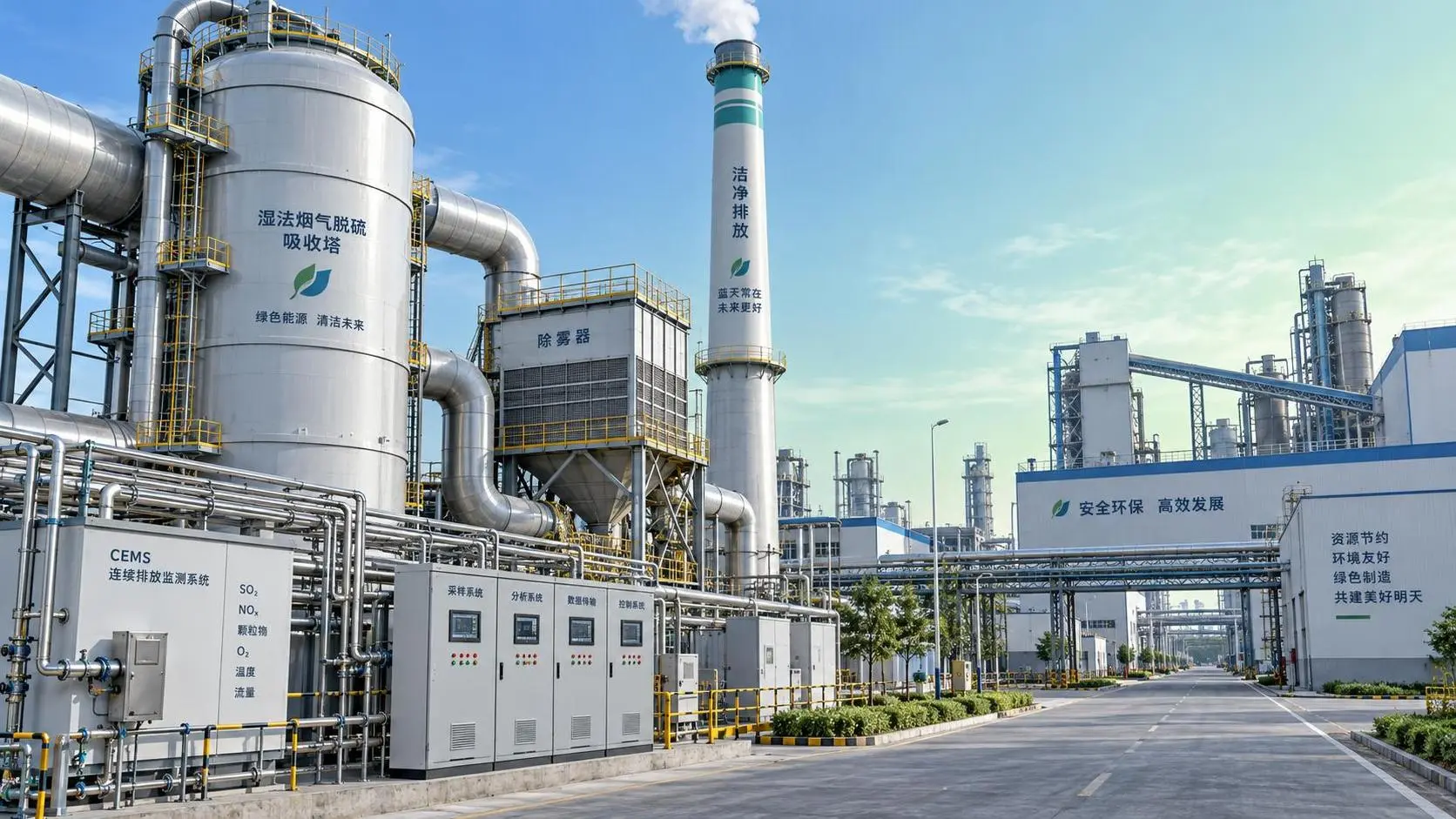
Which ISO standards apply to flue gas treatment systems?
Flue gas treatment systems ISO standards: explore key requirements for emissions testing, CEMS, safety, fabrication, corrosion control, and compliant project evaluation.

When corrosion resistant purification systems are needed for brine treatment
Corrosion resistant purification systems for brine treatment: assess chloride, heat, scaling, materials, and lifecycle reliability for demanding water projects.

How preventive maintenance reduces seawater desalination equipment downtime
Seawater desalination equipment maintenance reduces downtime through proactive monitoring, pretreatment protection, and planned repairs. Explore practical strategies for reliable RO performance.
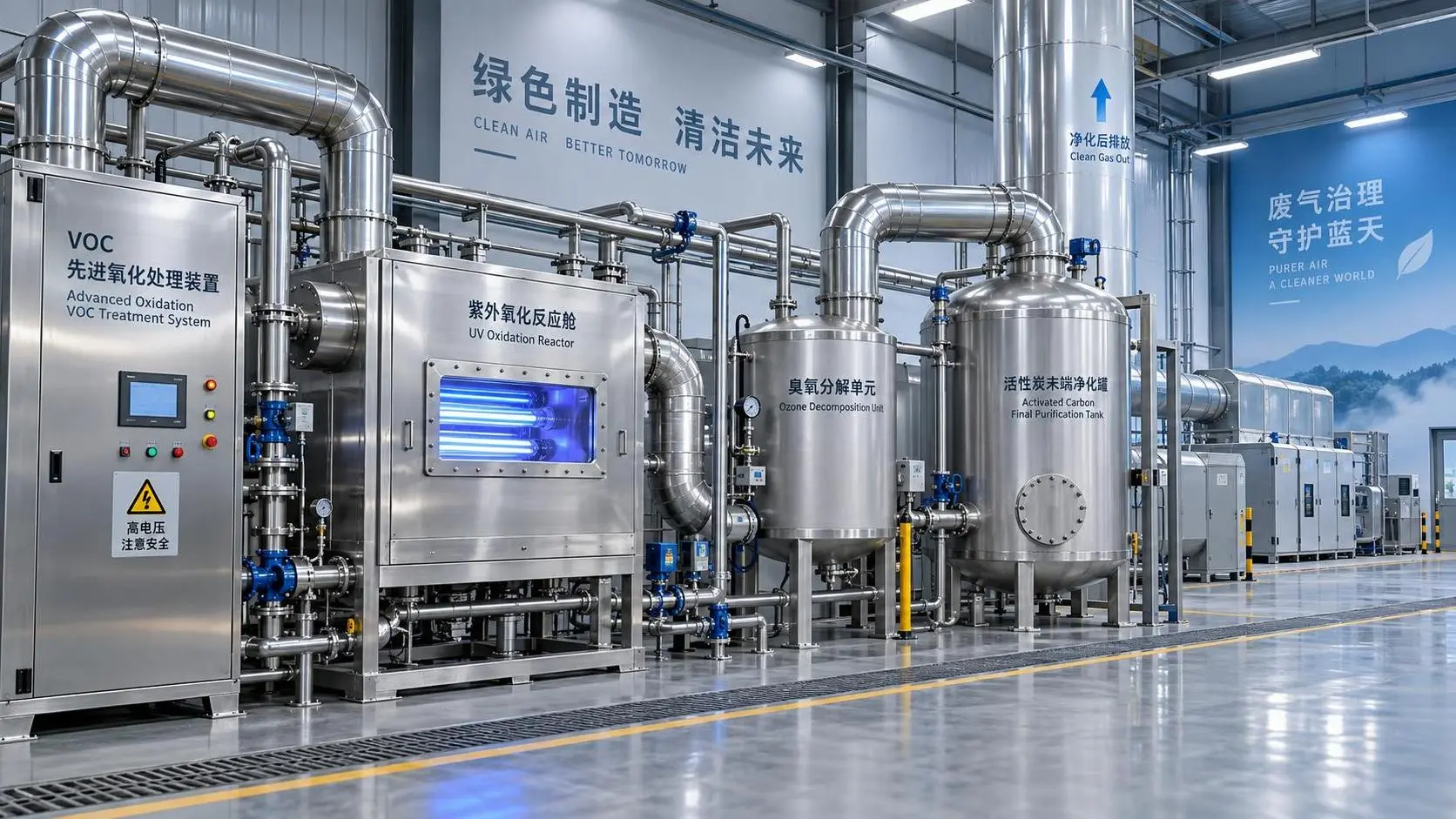
When are advanced oxidation processes the right choice for VOC control?
Advanced oxidation processes for VOC control: learn when AOPs outperform conventional options, manage by-products, and achieve reliable compliance.
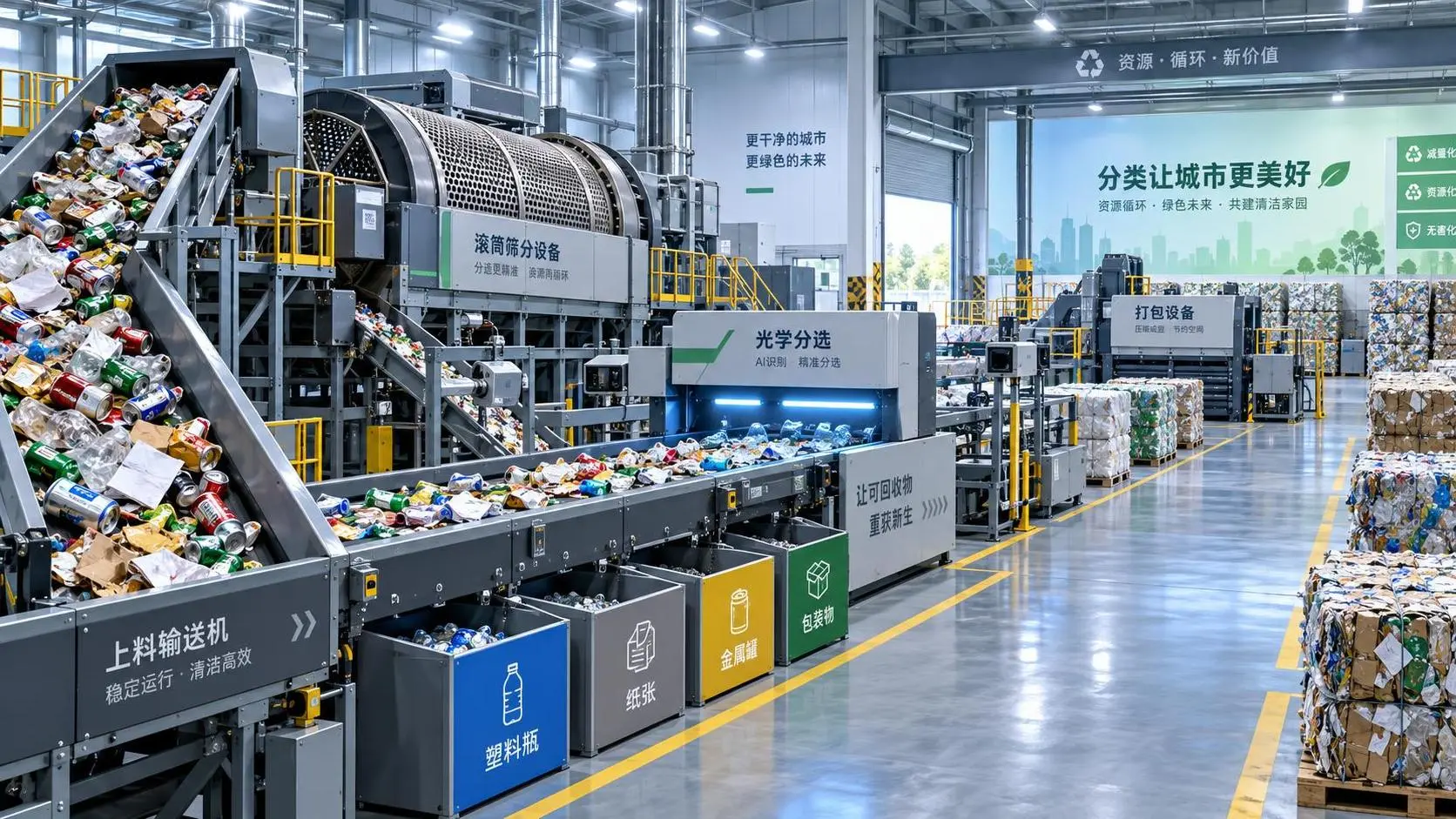
What throughput should municipal waste sorting equipment deliver?
Waste sorting equipment for municipal waste: learn how to set reliable throughput based on peak loads, material quality, uptime, and recovery targets.

What carbon neutrality means for corporate investment decisions
Carbon neutrality is transforming corporate investment decisions. Explore how lifecycle economics, efficiency, compliance, and resilience can drive measurable returns and lasting advantage.
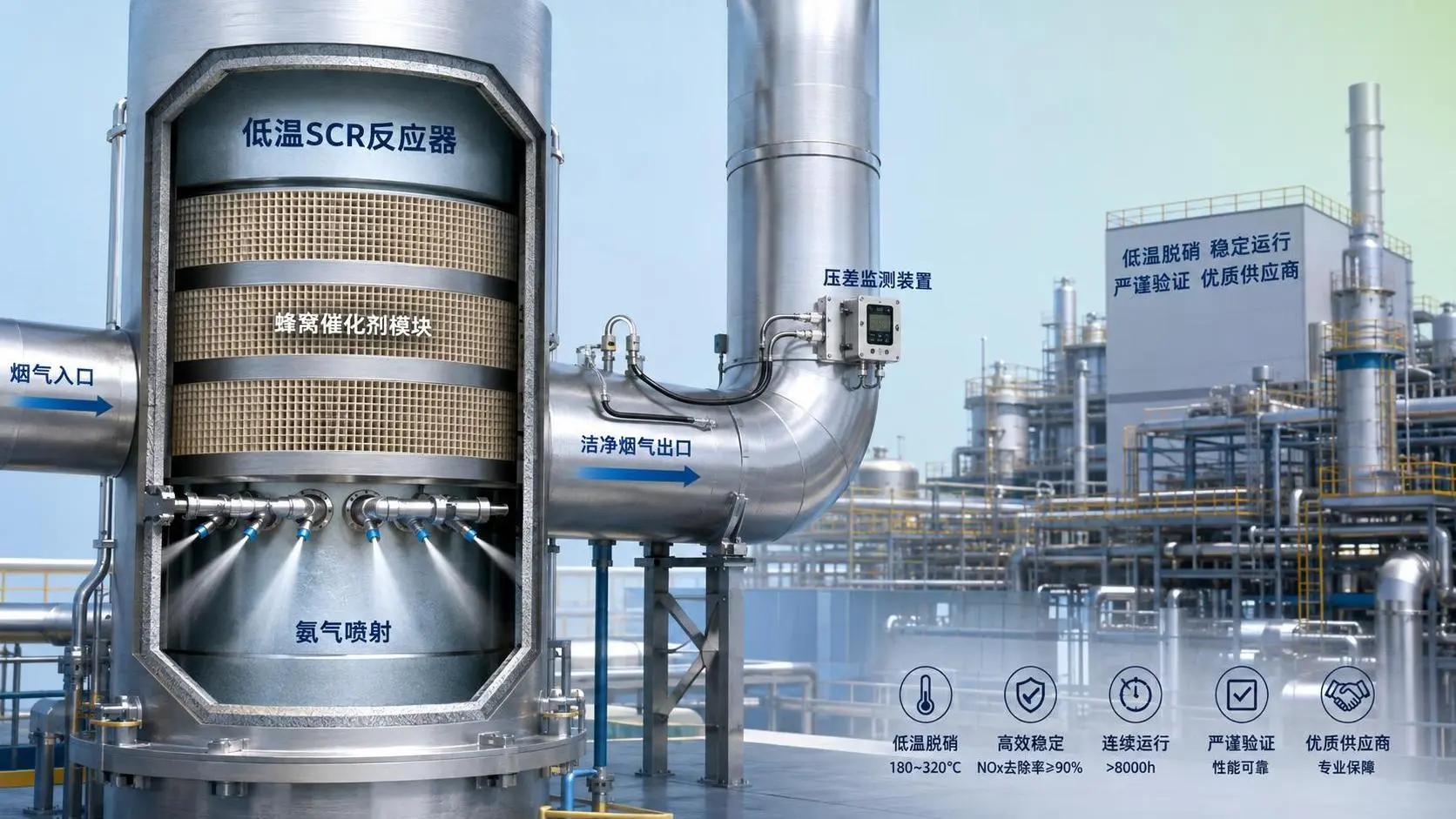
What to verify before choosing a low temperature SCR supplier
Low temperature SCR supplier checklist: verify catalyst temperature range, sulfur resistance, ammonia slip, pressure drop, lifecycle cost, and support before award.