
Industry News
Curation by industry experts
Hot Articles
Popular Tags
How preventive maintenance reduces seawater desalination equipment downtime
Preventive Maintenance Is a Downtime-Control Strategy, Not a Calendar Exercise
For an after-sales maintenance team, the value of preventive maintenance is measured by one practical outcome: fewer forced shutdowns and shorter recovery time when a problem does occur. In seawater desalination, a failure rarely remains isolated. A degraded pretreatment filter can accelerate membrane fouling; a developing high-pressure pump problem can disrupt feed pressure and stress downstream equipment; a missed energy recovery device issue can raise power demand and create unstable operation. By the time an alarm becomes a trip, the plant may be dealing with lost production, emergency labor, uncertain spare-part availability, and a more complicated restart.
Effective seawater desalination equipment maintenance reduces downtime because it finds deterioration while the unit can still be controlled, scheduled, and repaired during an operational window. It does not eliminate every failure. Marine intake conditions, feedwater variability, electrical events, and installation defects can still create unexpected interruptions. It does, however, prevent many common failures from progressing until the only remaining option is an emergency outage.
The practical challenge is deciding what to inspect, how often to inspect it, and which operating changes require action before a shutdown is forced. A maintenance program that simply follows a generic service interval can create unnecessary work in some areas while missing fast-developing problems in others. The most useful programs combine equipment-specific tasks with operating data and clear escalation rules.
Downtime Usually Begins as a Small Performance Shift
Most critical desalination assets give warning before they fail completely. The warning may not be a dramatic alarm. It may be a gradual increase in differential pressure, a small loss of normalized permeate flow, more frequent backwashing, unstable vibration readings, repeated seal adjustments, or a change in chemical consumption. These indicators are often dismissed when production remains close to target. That is where preventable downtime begins.
Maintenance teams should focus on trends rather than isolated readings. A single conductivity result or pressure value can be affected by feedwater temperature, salinity, production rate, or instrument accuracy. A sustained deviation from the plant's normal operating envelope is more informative. Reviewing data against comparable operating conditions helps distinguish a genuine equipment issue from ordinary process variation.
For reverse osmosis trains, the most useful early-warning signals commonly include:
- Rising normalized differential pressure across cartridge filters, media filters, or membrane stages.
- Declining normalized permeate flow at a similar recovery and feedwater condition.
- Increasing salt passage or a gradual deterioration in permeate conductivity.
- Higher high-pressure pump current or discharge pressure needed to maintain output.
- Unstable pressure, flow, or vibration around pumps and energy recovery devices.
- More frequent cleaning-in-place cycles, shorter intervals between cleanings, or reduced cleaning effectiveness.
- Repeated low-level alarms that operators reset without a documented root-cause review.
These signals do not all point to the same fault. Rising pressure differential may indicate filter loading, biological growth, scaling, particulate intrusion, or a restriction in piping. Higher energy demand may involve membrane fouling, pump wear, control valve behavior, or an energy recovery device issue. Preventive maintenance works when the team treats abnormal trends as prompts for diagnosis, rather than automatically replacing the most visible component.
Protect Pretreatment First
In many plants, the reverse osmosis train receives the most attention because membrane replacement is expensive and production-critical. Yet the reliability of the RO system is strongly determined upstream. Poorly controlled pretreatment shortens the interval before membrane cleaning, increases the likelihood of irreversible fouling, and can create sudden train instability after a change in intake water quality.
A preventive program should therefore give equal discipline to intake screens, clarifiers where installed, dissolved air flotation systems, media filters, ultrafiltration or microfiltration units, cartridge filters, chemical dosing equipment, and associated instrumentation. The maintenance objective is to keep the feed to the RO system within its intended quality range, not merely to keep upstream equipment running.
Filter maintenance is a good example. Changing cartridges only after a high differential-pressure alarm may protect the membranes in the immediate sense, but it can leave little margin during a sudden increase in solids loading. Conversely, changing every cartridge on a rigid date can waste inventory and labor. A better approach uses differential-pressure trend, feedwater condition, filter history, and the consequences of an unplanned changeout to establish a planned replacement point.
Chemical dosing systems also deserve closer attention than they often receive. Antiscalant, coagulant, disinfectant, dechlorination chemicals, and cleaning chemicals are all part of asset reliability. Pump stroke accuracy, calibration, tubing condition, injection quills, storage tank integrity, day-tank level measurement, and chemical compatibility can affect membrane protection. A dosing pump that runs but delivers an incorrect concentration may create a failure that only becomes visible weeks later.
Instrument Reliability Is Part of Equipment Reliability
Preventive decisions depend on trustworthy measurements. If pressure transmitters drift, flowmeters are inaccurate, conductivity probes are fouled, or analyzers are poorly maintained, operators may respond to a false condition or fail to see a real one. This is especially important where control logic uses those instruments to start pumps, initiate backwash, modulate valves, or trigger protective shutdowns.
Calibration should not be treated as isolated compliance work. After-sales teams need to identify which instruments influence membrane protection, pump protection, chemical dosing, and production acceptance. Those instruments should have defined inspection and calibration routines, with records that make it possible to compare a suspected process problem against measurement confidence.
Maintain Pumps and Energy Recovery Devices Around Condition, Not Just Runtime
High-pressure pumps and energy recovery devices operate under severe service conditions. Pressure, salinity, corrosion exposure, vibration, alignment, lubrication quality, seal performance, and hydraulic instability all affect their service life. A pump can continue operating after early signs of wear appear, but continued operation may convert a repairable seal, bearing, coupling, or impeller issue into a larger mechanical failure.
Runtime-based service intervals remain useful for planned overhaul tasks, but they should not be the only trigger. Condition monitoring gives maintenance teams an earlier and more specific view of developing faults. Depending on plant design and equipment criticality, this may include vibration measurements, bearing temperature, motor current, suction and discharge pressure stability, leakage inspection, oil analysis, and coupling alignment checks.
There is a balance to maintain. Overreacting to every vibration variation can lead to unnecessary shutdowns; ignoring a persistent trend because the pump is still achieving design pressure creates a more expensive event later. The decision should consider the direction and rate of change, the availability of standby capacity, the fault's potential to damage connected equipment, and the time required to obtain parts.
Energy recovery devices require the same level of attention because their reliability affects both availability and energy performance. Seal condition, rotor or chamber wear, pressure balance, flushing arrangements, isolation valves, and instrumentation should be inspected under a documented routine. A loss of energy recovery performance can be mistaken for a general rise in RO energy consumption. Tracking device-specific pressure and flow behavior helps isolate the cause before the issue affects the whole train.
Membrane Maintenance Should Be Based on Performance Loss and Cleaning Response
Membranes are often treated as consumables, but premature replacement is frequently the end result of upstream control failures, poor cleaning practice, or delayed investigation of changing performance. Preventive membrane maintenance begins with reliable baseline data after commissioning, membrane replacement, or a confirmed successful cleaning. That baseline should be normalized for the operating conditions used by the plant so that later comparisons are meaningful.
A falling permeate flow or rising salt passage should lead to a structured review: feedwater quality, pretreatment performance, pressure differential by stage, recovery, chemical dosing, cleaning history, and evidence of mechanical damage or leakage. Cleaning should be performed when the trend and plant limits justify it, using procedures compatible with the identified foulant and membrane supplier guidance. Cleaning too late can reduce recoverability. Cleaning too often, with the wrong chemistry or poor rinse control, can also reduce membrane life.
After each cleaning-in-place event, the team should verify whether the expected performance has returned and document the result. If cleaning recovery progressively declines, repeating the same procedure is unlikely to solve the underlying issue. The maintenance response should move upstream to identify the source of fouling or investigate membrane damage, spacer blockage, pressure vessel issues, or bypass conditions.
Membrane replacement planning should also account for the condition of O-rings, interconnectors, end adapters, pressure vessels, and brine seals. A train restart after membrane work can be delayed by a small sealing defect, an incorrectly installed component, or inadequate flushing and preservation procedures. A controlled checklist for disassembly, installation, flushing, pressure ramp-up, and post-startup verification reduces that risk.
Planned Outages Need a Defined Scope and a Readiness Check
Preventive maintenance only reduces downtime when planned work is actually shorter and more predictable than emergency work. That requires preparation before the train is isolated. Teams should confirm work scope, permits, lockout requirements, confined-space needs where applicable, lifting arrangements, test equipment, consumables, and the availability of correct spare parts. A scheduled shutdown can still overrun if a seal kit is incomplete, a fastener is corroded beyond expectation, or a calibrated instrument is unavailable for recommissioning.
Critical spares should be identified from consequence rather than purchase price alone. A relatively low-cost component that has a long lead time and can stop an entire train may deserve more attention than an expensive part that can be repaired locally or bypassed. Common examples include pump seals, bearings, couplings, control valves, actuator components, critical transmitters, cartridge filters, dosing pump parts, membrane vessel components, and electrical protection devices. Stocking decisions should reflect actual equipment configuration; generic spare lists often include items that do not fit the installed model or omit small components needed to complete the repair.
A planned outage should close with a formal return-to-service check. This includes confirming valve line-up, leak checks, pump rotation where relevant, lubrication status, protective device settings, chemical availability, instrument response, and a controlled pressure ramp. Post-maintenance performance should be recorded against the pre-shutdown condition. Without this final comparison, teams may not know whether a repair solved the original issue or introduced a new restriction, alignment problem, or measurement error.
Use Failure History to Improve the Maintenance Plan
A preventive maintenance plan should evolve. Repeated corrective work on the same valve, recurring cartridge filter blockage, repeated pump seal failures, or frequent membrane cleaning are signals that the existing task list is treating symptoms. Maintenance records need enough detail to reveal patterns: what failed, what was observed beforehand, which part was changed, what operating conditions existed, how long the outage lasted, and whether the repair restored stable performance.
A simple failure review after significant downtime can produce better results than adding more routine inspections. The review should distinguish between immediate cause and contributing conditions. For example, a failed bearing may be the immediate cause of a pump shutdown, while misalignment, inadequate lubrication, poor foundation condition, process cavitation, or water ingress may be the reason the bearing failed prematurely. Replacing the bearing without addressing those conditions preserves the failure cycle.
What a Practical Preventive Program Looks Like
The strongest programs are neither excessively complex nor dependent on a single senior technician's memory. They define the asset hierarchy, inspection routines, limits for escalation, spare-part responsibilities, and restart controls. Daily operator observations, weekly checks, periodic condition monitoring, planned shutdown tasks, and event-driven investigations should feed into the same maintenance history.
For after-sales teams, the immediate priority is usually to establish a short list of production-critical assets and their leading failure indicators. Start with the pretreatment barriers, high-pressure pumps, energy recovery devices, RO trains, chemical dosing systems, electrical protection, and the instruments that govern protective actions. For each item, identify what normal operation looks like, what change requires investigation, who owns the response, and what materials or access are needed to repair it.
Preventive maintenance reduces desalination downtime when it turns equipment behavior into planned decisions. The aim is not to perform more maintenance for its own sake. It is to detect deterioration early enough that the plant can choose the timing, scope, and resources of the intervention instead of allowing the failure to choose them.
Recommended News
How moisture affects material separation in solid waste recovery
Improve solid waste recovery material separation by understanding moisture effects on screening and sorting. Discover practical ways to boost recovery, purity, and throughput.
How to set recovery rates in seawater reverse osmosis system design
Explore seawater desalination systems engineering: learn to set SWRO recovery rates that balance energy, scaling risks, and water quality for reliable, cost-effective operation.
When is compaction suitable for solid nuclear waste treatment?
Is compaction right for solid nuclear waste treatment? Discover suitable waste streams, key safety checks, and disposal requirements to reduce package volume and optimize costs.
How solids concentration affects dewatering in waste recovery systems
Optimize waste recovery systems dewatering with insights on solids concentration. Learn to balance throughput, cake dryness, and solids capture while avoiding costly equipment overloads.
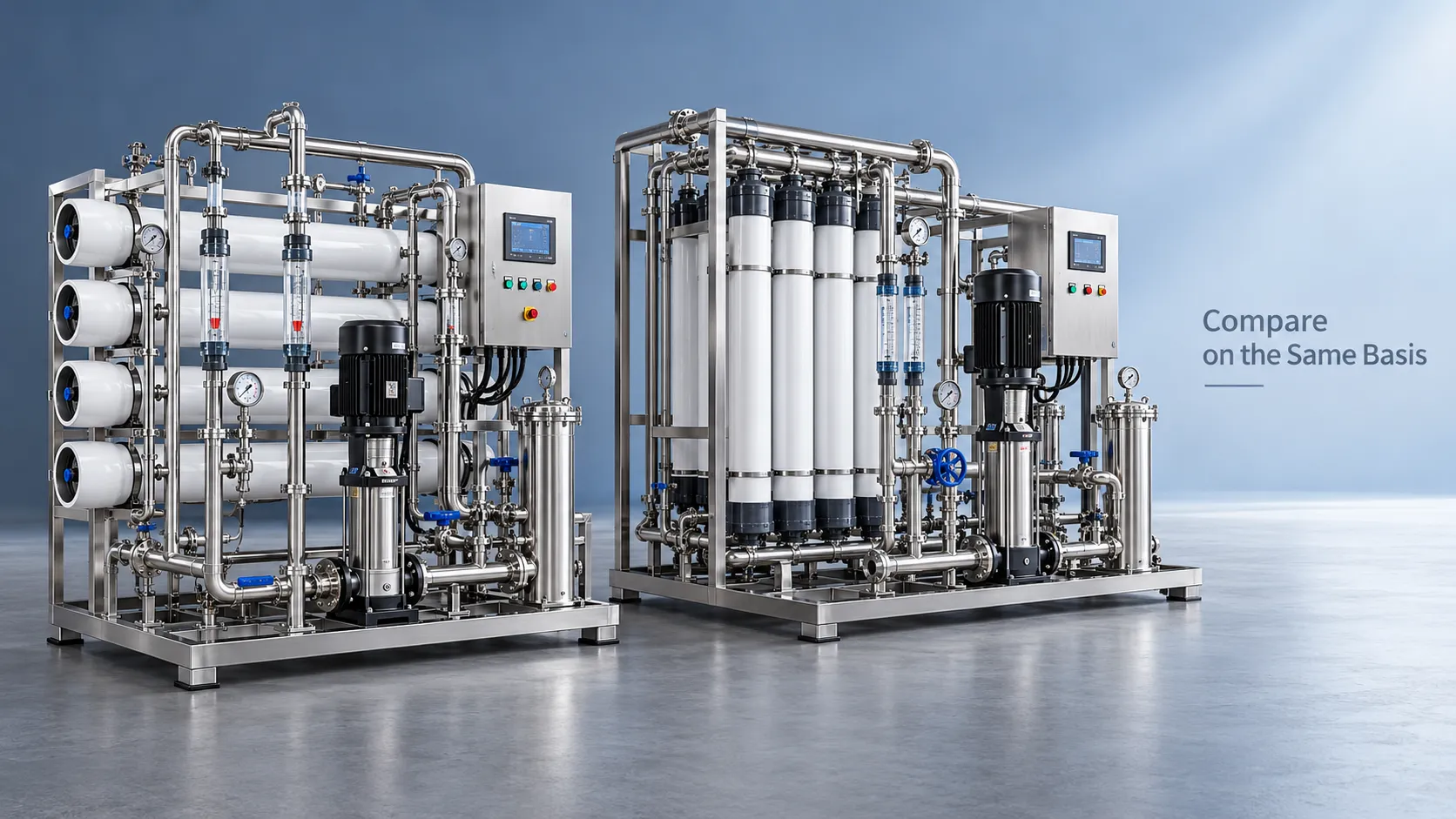
How to compare technical specs in an environmental equipment directory
Use this environmental equipment directory technical guide to compare capacity, energy use, compliance, and supplier evidence. Build a defensible shortlist and choose with confidence.
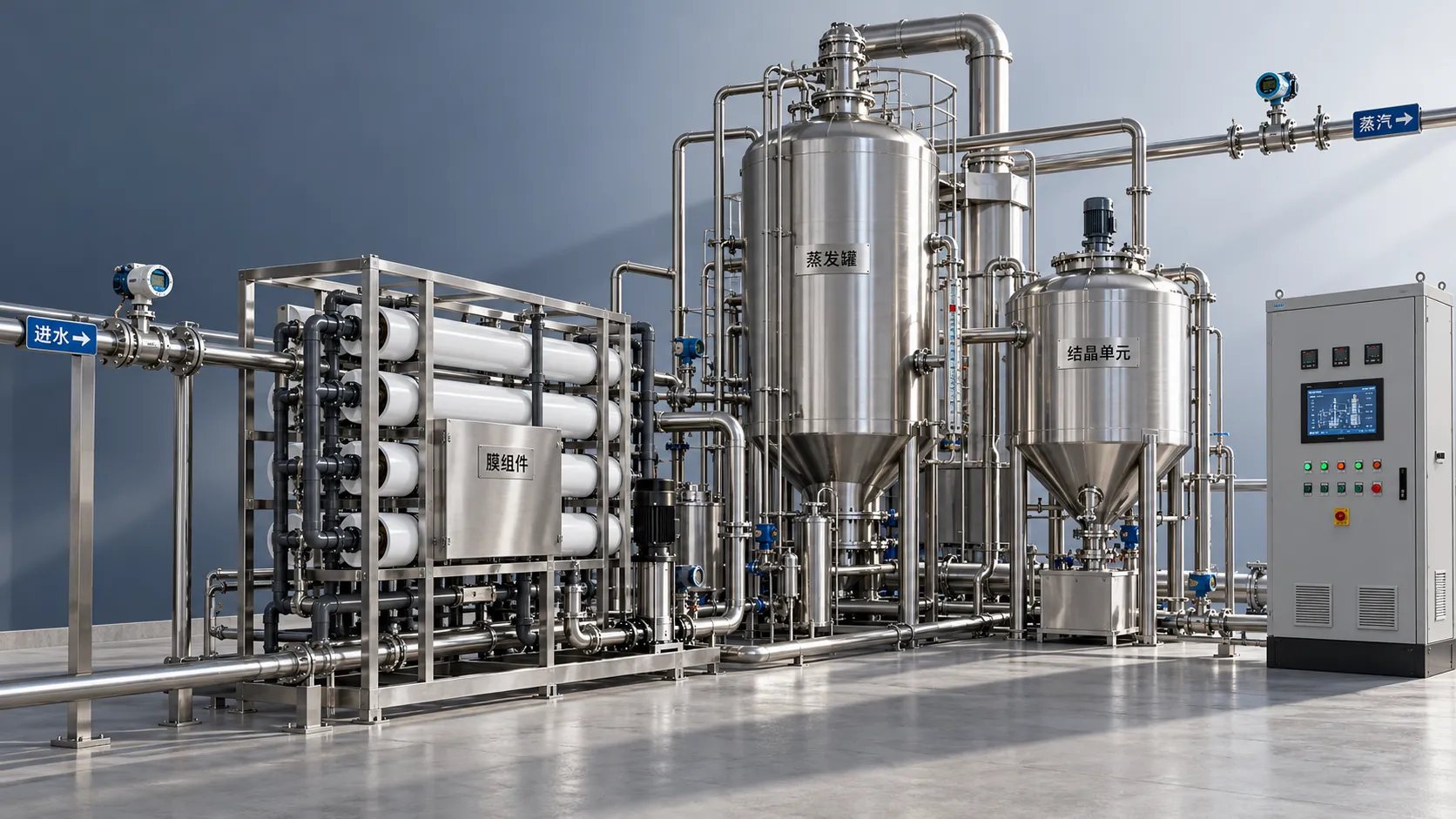
How to assess a zero liquid discharge equipment supplier’s energy claims
Assess a zero liquid discharge equipment supplier’s energy claims. Learn how to verify system boundaries, compare real costs, and demand testable guarantees before you buy.
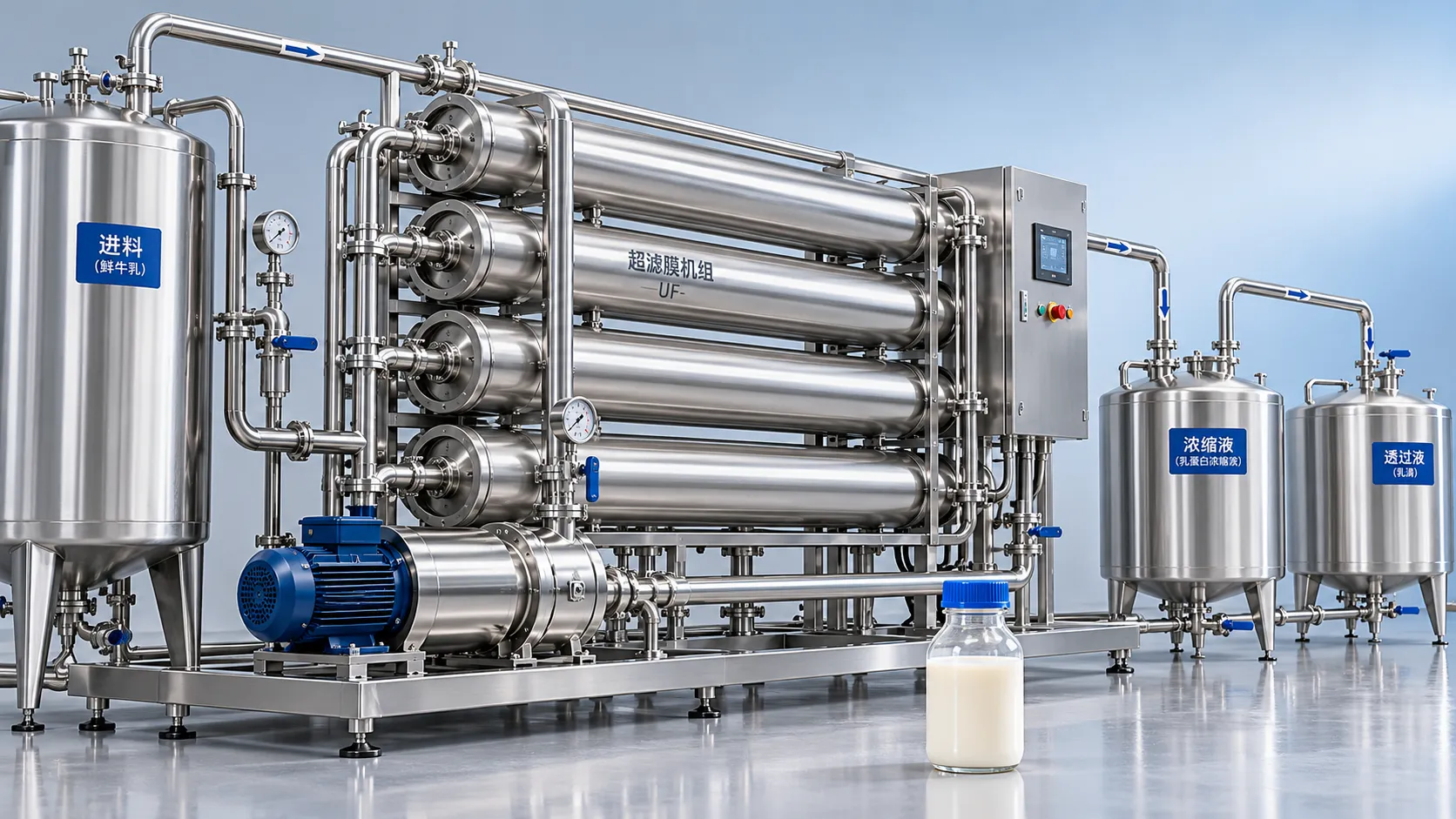
Which membrane filtration process suits dairy protein concentration?
Explore membrane filtration for dairy: compare UF, MF, and RO to select the right process for protein concentration, lactose reduction, and better recovery. Find your best fit.
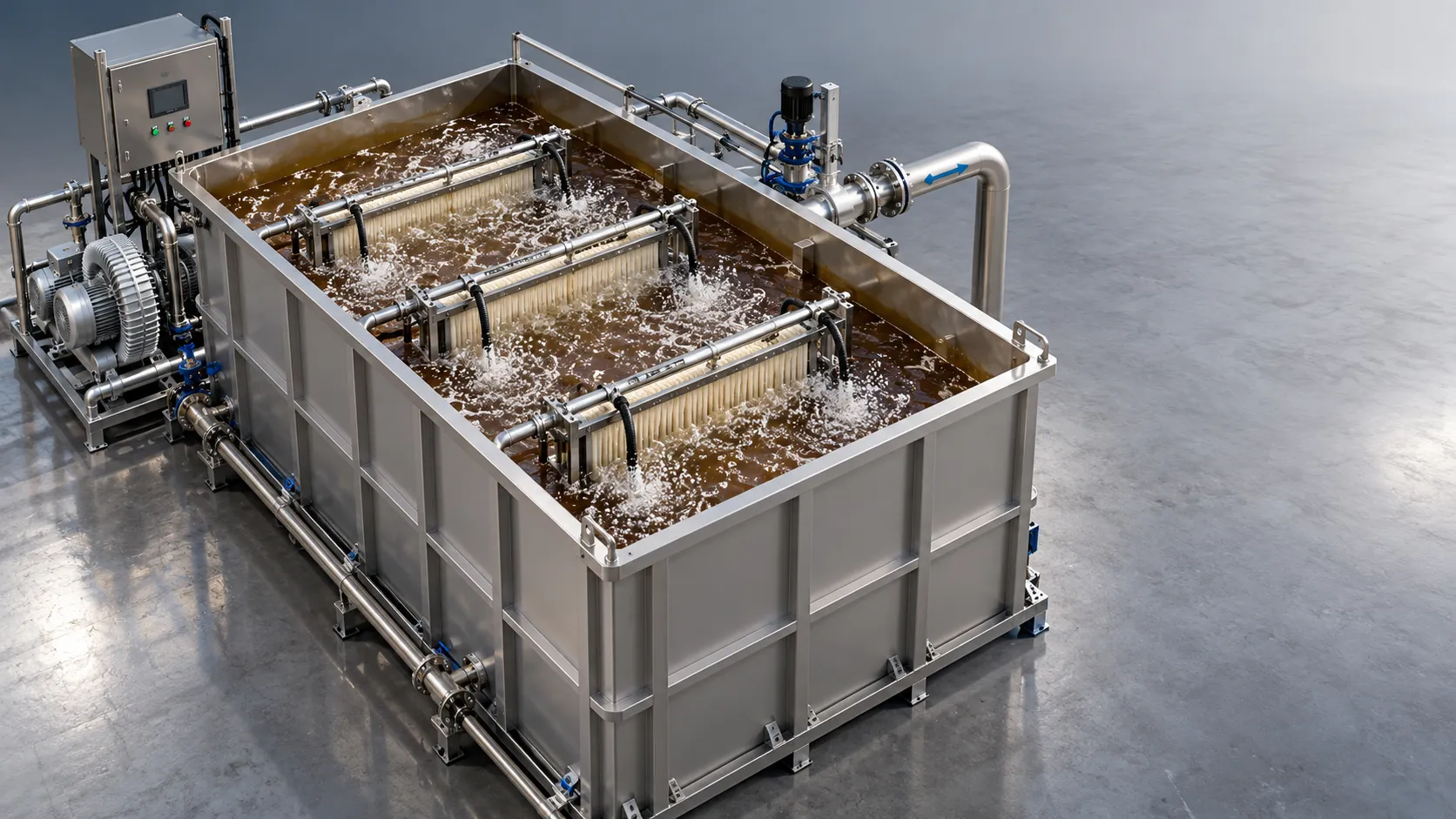
When is an MBR suitable for wastewater purification for bioprocessing?
For wastewater purification for bioprocessing, discover when an MBR fits your needs. Compare water quality, fouling risks, and lifecycle costs before investing.
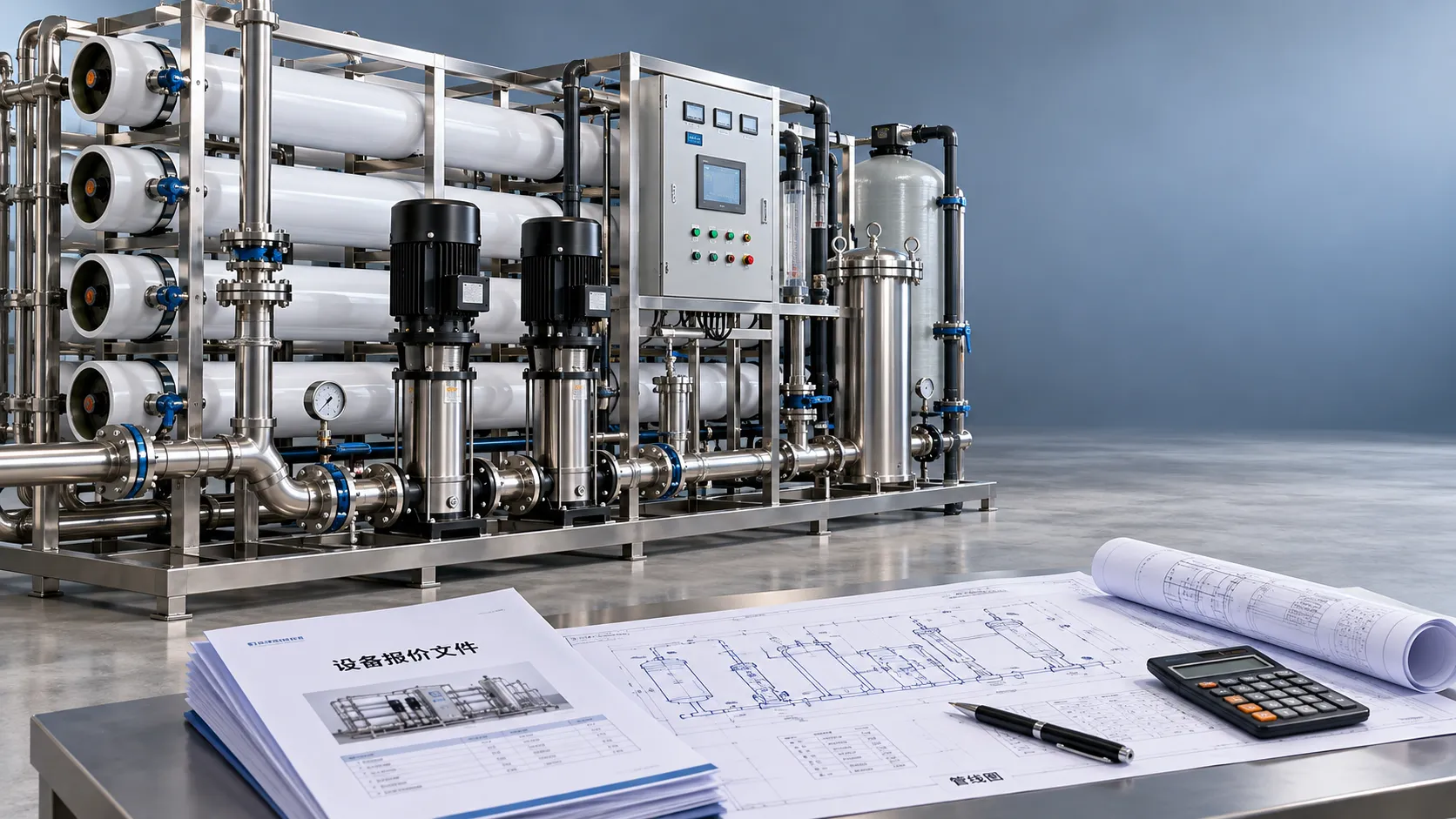
How to check a water treatment quotation for hidden project costs
Review your water treatment quotation for hidden costs, scope gaps, and operating expenses. Learn what to check before signing to protect your budget and avoid costly surprises.