
Industry News
Curation by industry experts
Hot Articles
Popular Tags
How to Evaluate a Nuclear Waste Treatment Supplier for Long-Term Risk and Compliance
Evaluating a nuclear waste treatment supplier is rarely a narrow sourcing exercise. It shapes regulatory exposure, operating continuity, public credibility, and long-term liability across the full life of a facility, project, or waste inventory.
That is why the best decisions are not driven by equipment claims alone. A credible review must connect treatment performance, compliance behavior, traceability systems, and lifecycle accountability under stricter global environmental rules.
In the broader ecological engineering landscape, nuclear waste management sits beside water treatment, resource recovery, flue gas control, and desalination as a boundary-protection function. The standards are different, but the strategic logic is similar: risk must be controlled at system level, not only at unit level.
Why supplier evaluation has become more demanding
A nuclear waste treatment supplier now operates under pressure from several directions. Regulators expect stronger documentation. Project owners expect better predictability. Communities expect transparency. Insurers and investors increasingly look at environmental governance quality.
At the same time, waste streams are not uniform. Low-level waste, intermediate waste, contaminated liquids, sludges, resins, metallic debris, and vitrified forms require different treatment routes, packaging logic, and monitoring methods.
This makes supplier selection more complex than comparing capacity or price. The real question is whether the supplier can reduce uncertainty over many years, including during audits, incidents, technology upgrades, and regulatory change.
What a nuclear waste treatment supplier actually provides
The term covers more than disposal support. A nuclear waste treatment supplier may provide characterization, segregation, immobilization, decontamination, volume reduction, conditioning, packaging, storage interface planning, and digital record management.
Some suppliers focus on specialized process steps such as vitrification, cementation, incineration, evaporation, ion exchange, or encapsulation. Others act as integrated partners across engineering, compliance support, transport coordination, and post-treatment verification.
That distinction matters. If a project involves multiple waste classes and cross-border reporting obligations, fragmented vendor structures can create accountability gaps that only appear later.
Core evaluation lens
A strong evaluation framework asks one practical question: can this supplier manage technical risk and compliance risk together, without shifting hidden burden downstream?
Compliance history matters more than polished claims
Past compliance behavior is one of the clearest indicators of future reliability. Review audit records, inspection outcomes, permit status, reportable incidents, corrective actions, and any enforcement history across relevant jurisdictions.
A capable nuclear waste treatment supplier should explain not only where it complies, but how it manages deviations. That includes root-cause discipline, escalation procedures, retraining cycles, and evidence that lessons were embedded in operations.
This is where intelligence-led review becomes useful. Platforms such as ESD track regulatory evolution, technical shifts, and infrastructure demand patterns across environmental systems. That wider view helps identify whether a supplier is merely compliant today or structurally prepared for tighter rules tomorrow.
- Check permit coverage for each treatment step, not only the main facility.
- Review third-party audits and the closure status of findings.
- Ask for evidence of regulator communication during abnormal events.
- Verify whether subcontractors are included in the same compliance controls.
Treatment reliability is a long-term business issue
Technical performance must be judged under real operating conditions. Laboratory success is useful, but it does not replace evidence from variable feed composition, throughput swings, maintenance windows, and contamination control events.
A nuclear waste treatment supplier should be able to show process stability over time. That includes treatment efficiency, secondary waste generation, containment integrity, monitoring precision, and the consistency of final waste form quality.
Secondary waste is especially important. A process that reduces one hazard while creating unstable byproducts or difficult residual streams may weaken the full compliance picture.
Traceability is no longer optional
The strongest suppliers treat documentation as part of the process, not as an afterthought. Every transfer, treatment action, packaging decision, test result, and exception should be traceable from origin to final status.
This matters because many failures are not caused by treatment chemistry. They arise from broken records, unclear custody, inconsistent coding, or weak interface control between operators, labs, transport partners, and storage sites.
A reliable nuclear waste treatment supplier should support digital evidence trails that can withstand regulator review years later. That includes metadata discipline, revision history, retention rules, and role-based access control.
Questions worth asking
- How are waste batches identified, sampled, and reconciled after treatment?
- Can the supplier demonstrate end-to-end chain of custody?
- What happens if data discrepancies appear during audit or shipment release?
- How long are records retained, and in what format?
Lifecycle accountability separates durable partners from short-term vendors
The useful comparison is not bid price versus bid price. It is lifetime risk versus lifetime control. A lower-cost supplier can become expensive if repackaging, retreatment, permit amendment, or dispute resolution appears later.
Lifecycle accountability includes technical support after commissioning, response during nonconformance events, waste acceptance coordination, and clear responsibility boundaries when conditions change.
In nuclear waste management, delayed consequences are common. A final waste form may pass initial review yet face storage, transport, or disposal constraints later. Suppliers should therefore show compatibility with downstream infrastructure, not just upstream treatment success.
This systems view aligns with ESD’s broader perspective across water, air, waste, and resource recovery. High-reliability environmental infrastructure performs best when process physics, compliance logic, and commercial accountability are considered together.
Different project scenarios require different supplier strengths
Not every nuclear waste treatment supplier should be assessed the same way. The right fit depends on waste profile, site maturity, geographic exposure, and the degree of integration required.
Typical scenarios
- Legacy waste remediation often favors suppliers with characterization depth and irregular inventory handling experience.
- Operating plant support may require stronger uptime, packaging throughput, and outage coordination.
- Cross-border projects demand sharper control of documentation harmonization and transport interfaces.
- Advanced treatment upgrades need evidence that new process claims can scale beyond pilot conditions.
Usually, the highest-risk mismatch appears when a supplier is technically competent but organizationally unprepared for the reporting, verification, and stakeholder pressure attached to the project.
A practical framework for shortlisting suppliers
A disciplined shortlist should combine quantitative evidence with structured judgment. The goal is not to predict everything. It is to reduce blind spots before contractual commitment.
Five areas to score
- Regulatory resilience: permit depth, audit record, jurisdictional readiness.
- Process robustness: performance history, feed variability tolerance, secondary waste control.
- Traceability quality: digital records, custody integrity, exception management.
- Lifecycle support: post-treatment accountability, downstream compatibility, incident response.
- Strategic fit: scalability, financial durability, alignment with future compliance direction.
Site visits, reference checks, and document review should test the same framework. If those three views tell different stories, the gap itself is a decision signal.
Where to focus next
The most useful next step is to map the waste stream, compliance obligations, and downstream endpoints before comparing suppliers. That sequence sharpens the evaluation and prevents attractive proposals from defining the problem too early.
From there, build a supplier review matrix that weights compliance history, treatment reliability, traceability, and lifecycle responsibility. A nuclear waste treatment supplier should be judged by how well it controls future risk, not only present scope.
In a market shaped by tighter environmental governance and more complex infrastructure decisions, better intelligence leads to better selection. The right supplier is the one that can stand up to technical scrutiny, regulatory pressure, and time.
Recommended News
How to verify a water treatment system factory’s production capacity
Verify a water treatment systems factory’s production capacity through records, bottlenecks, component availability, and testing. Learn what to check before accepting a delivery promise.
When does EPC environmental project support reduce delivery risk?
EPC environmental project support engineering reduces delivery risk by aligning design, procurement, compliance, construction, and commissioning decisions.
How nuclear plants select a radioactive waste solidification method
Radioactive waste management for nuclear plants: compare vitrification, cementation, polymers, and ceramics to select a compliant, durable solidification solution.
Activated Sludge Cost: Budgeting Energy, Chemicals, Sludge, and Labor
Activated sludge cost explained: compare energy, chemicals, sludge disposal, labor, and compliance risks to build a reliable lifecycle budget.
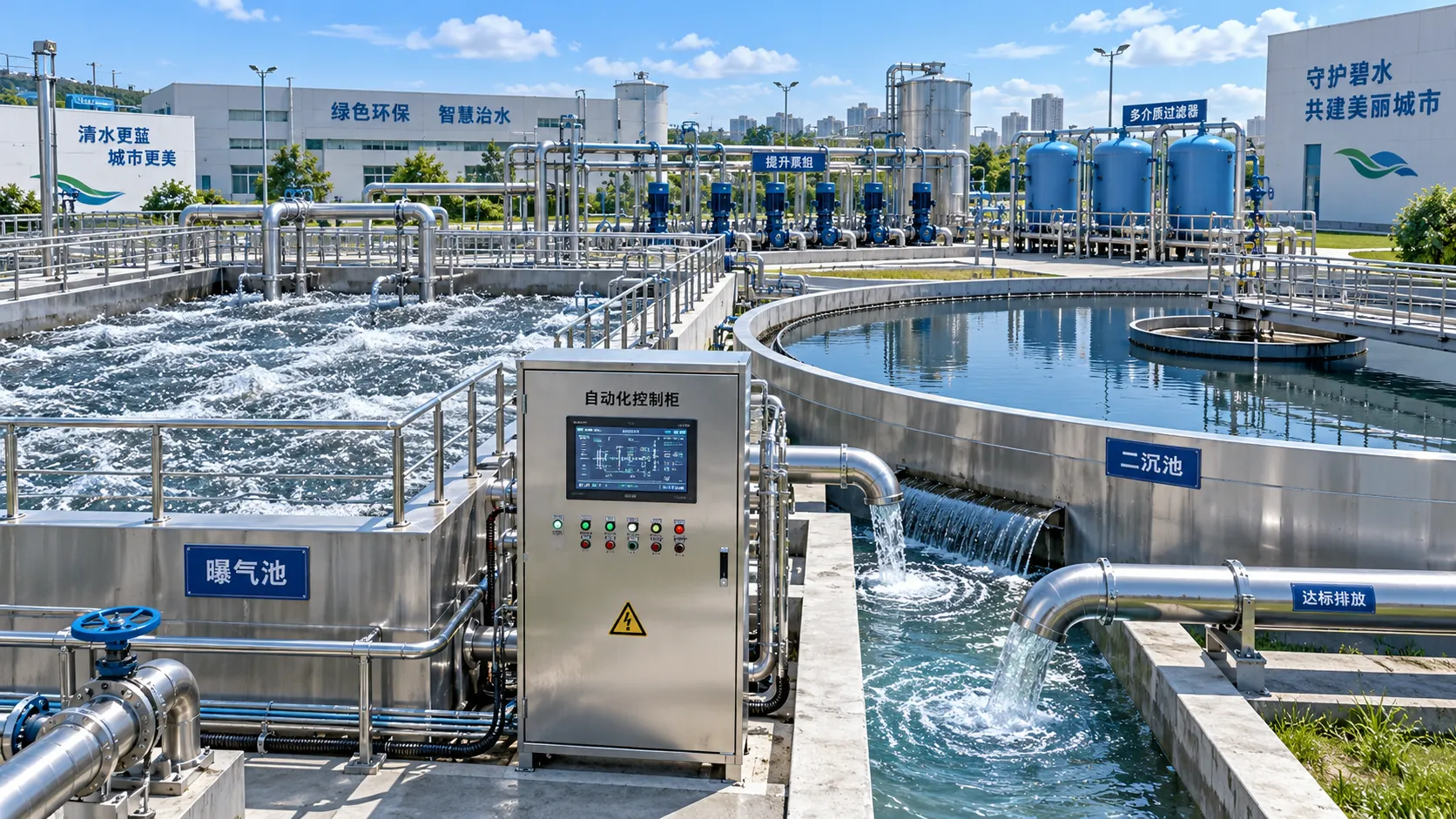
When Should Municipal Wastewater Plants Upgrade Treatment Capacity and Controls?
Municipal wastewater treatment upgrades: learn when capacity, controls, and resilient planning are needed to protect compliance and optimize plant performance.

How to size advanced oxidation equipment for variable wastewater loads
Advanced oxidation equipment guide for sizing AOP systems under variable wastewater loads, improving compliance, efficiency, and lifecycle cost control.

How to select FGD systems for coal boilers based on sulfur content
FGD systems for coal boilers: learn how sulfur content, fuel variability, emissions limits, water, waste, and retrofit constraints guide a compliant, cost-effective scrubber choice.

How to size a desulfurization equipment scrubber for variable gas flow
Desulfurization equipment scrubber sizing for variable gas flow: optimize SO2 removal, pressure drop, liquid-to-gas control, and compliance across every load.

When does repeatable metals recovery infrastructure justify the investment?
Repeatable metals recovery infrastructure: discover when consistent feedstock, lower disposal costs, compliance control, and reliable offtake justify investment.