Carbon Neutrality and Corporate Investment Decisions
Introduction: Carbon neutrality is reshaping how corporate leaders evaluate capital allocation, technology adoption, supply-chain resilience, and long-term compliance risk across environmental infrastructure markets.
For investors and executives, the central question is no longer whether decarbonization matters, but which assets can deliver verifiable environmental value alongside durable commercial returns.
In water treatment, resource recovery, desalination, flue-gas control, and nuclear waste management, carbon neutrality increasingly functions as a practical investment-screening framework rather than a communications objective.
Carbon Neutrality Changes the Definition of a Good Investment
Carbon neutrality means balancing greenhouse-gas emissions with reductions, removals, or credible offsets, but corporate investment decisions require a far more operational interpretation of that goal.
Executives must determine whether an asset reduces lifecycle emissions, protects revenue, improves regulatory readiness, or creates measurable savings under increasingly carbon-constrained market conditions.
A project can appear environmentally beneficial while still performing poorly financially if it raises energy demand, depends on unreliable credits, or lacks measurable operating efficiency.
Conversely, a high-efficiency treatment plant may create strategic value even before carbon prices rise because it reduces electricity consumption, chemical use, discharge risk, and downtime.
Corporate investment committees should therefore evaluate carbon neutrality as a portfolio discipline that connects emissions data, capital productivity, resilience, compliance, and market access.
This approach moves the discussion beyond annual sustainability reports and into practical decisions about equipment replacement, project development, procurement criteria, and technology partnerships.
The strongest investments are usually not those with the lowest headline emissions alone, but those that improve multiple business variables at the same time.
For example, a water-reuse system can reduce freshwater exposure, lower wastewater discharge charges, support permit renewal, and cut indirect emissions from pumping and treatment.
That combination makes carbon neutrality relevant to financial performance, especially in industries exposed to resource scarcity, energy volatility, public procurement requirements, and environmental liability.
Start With Material Emissions and Business Exposure
Not every emission source deserves equal investment attention, so leaders should begin by identifying the emissions, assets, and operations most material to enterprise value.
For industrial operators, major emissions may originate from purchased electricity, thermal processes, transport, chemical inputs, waste disposal, and upstream material production.
For equipment suppliers, the most significant impact may occur during customer operation, where energy-intensive systems create far more emissions than manufacturing activities themselves.
This distinction matters because an environmental technology provider should design investment strategy around lifecycle performance, not only factory-level emissions reductions.
Companies should map Scope 1, Scope 2, and relevant Scope 3 emissions, then connect each category to cost, regulation, customer demand, and operational vulnerability.
Scope 1 covers direct fuel and process emissions, while Scope 2 commonly reflects purchased electricity used for pumping, aeration, compression, filtration, or thermal treatment.
Scope 3 emissions include supply-chain, customer-use, and end-of-life impacts, often becoming decisive when buyers compare long-lived capital equipment through lifecycle procurement models.
A materiality assessment should also identify where emissions overlap with critical constraints, including water shortages, permit limits, landfill restrictions, air-quality standards, and power-grid instability.
Investment priorities become clearer when leaders identify assets that simultaneously address carbon exposure and an existing operational, regulatory, or commercial bottleneck.
Evaluate Projects Through Lifecycle Economics
Carbon neutrality should not be assessed through equipment purchase price alone because environmental infrastructure often creates value over operating periods lasting decades.
A disciplined business case compares total lifecycle cost, emissions performance, maintenance requirements, resource recovery potential, compliance exposure, and residual asset value.
Capital expenditure is only one component of investment quality, particularly for desalination, wastewater treatment, flue-gas systems, and waste-processing facilities with significant energy requirements.
Operating expenditure can determine whether a technically advanced project succeeds, since electricity, membranes, reagents, labor, replacement parts, and disposal costs accumulate over time.
Decision makers should model multiple scenarios rather than relying on a single forecast for energy prices, carbon costs, water tariffs, utilization rates, and regulatory conditions.
Scenario analysis reveals whether a project remains attractive when assumptions change, which is essential for assets exposed to volatile power markets or tightening environmental standards.
Internal carbon pricing can make hidden financial risks visible by assigning a planning value to emissions that may later face taxes, trading obligations, border measures, or customer scrutiny.
Even where formal carbon prices remain low, a shadow carbon price helps compare alternatives that differ in fuel use, electricity demand, process efficiency, and future retrofit needs.
The goal is not to force every project into a simplistic emissions formula, but to ensure climate-related costs and opportunities receive the same rigor as conventional financial variables.
Prioritize Energy Efficiency Before Offset Purchases
For most corporations, direct emissions reduction through efficiency is more investable than dependence on offsets because savings can be measured, controlled, and repeated.
Energy efficiency also strengthens project economics by lowering operating costs, reducing exposure to electricity-price volatility, and decreasing the scale of renewable energy procurement required later.
In wastewater treatment, aeration systems, pumping networks, sludge handling, and advanced oxidation processes are frequent targets for energy optimization and digital control.
Variable-speed drives, high-efficiency blowers, automated load balancing, oxygen control, and predictive maintenance can reduce energy intensity without compromising treatment reliability.
For seawater desalination, energy recovery devices, optimized membrane configurations, pressure management, and intake design can materially influence lifecycle carbon performance and unit water costs.
In flue-gas treatment, investment decisions should consider fan power, reagent consumption, heat integration, catalyst lifespan, and system performance under variable operating conditions.
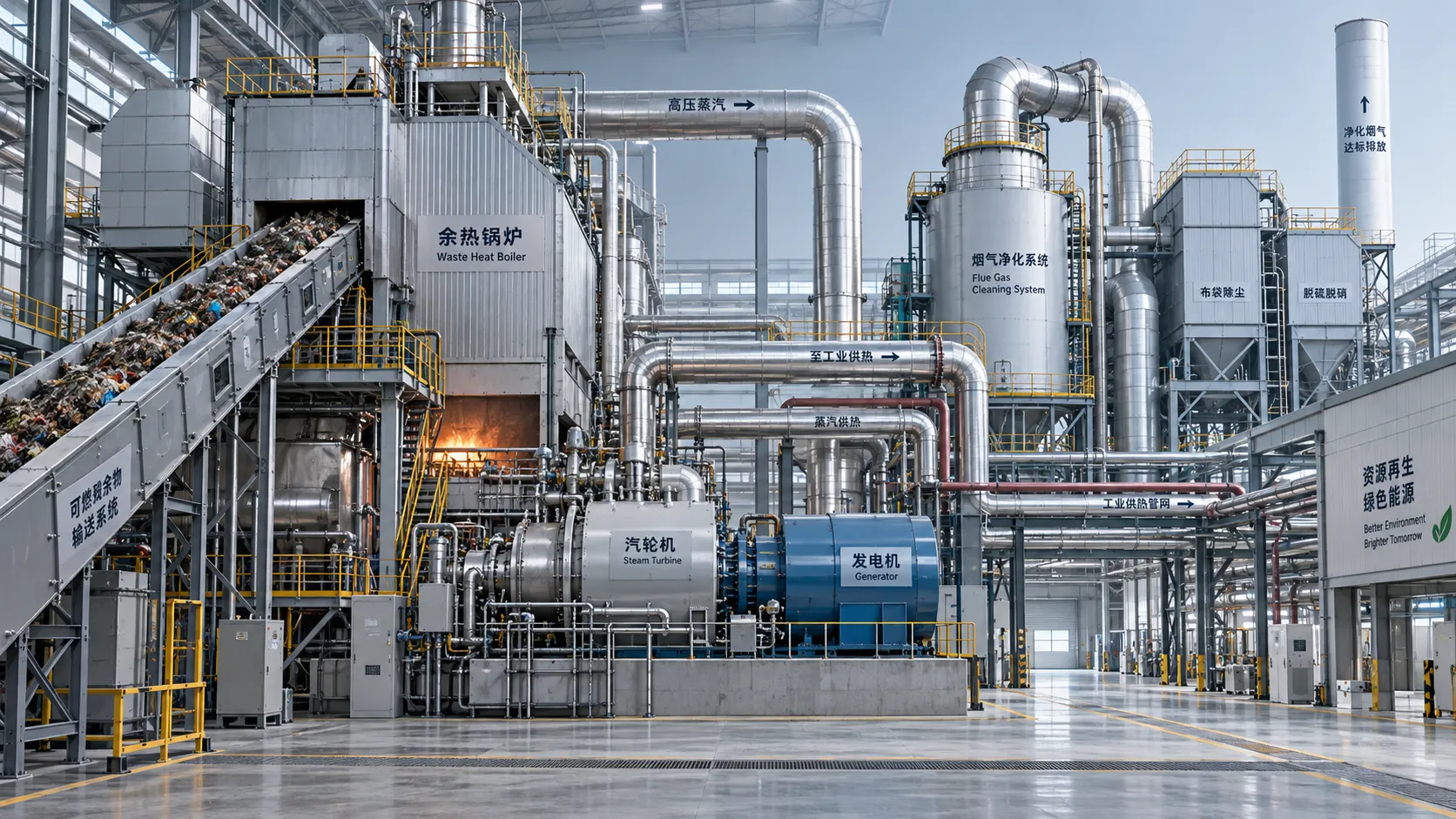
Resource recovery facilities should assess whether sorting, pyrolysis, digestion, recycling, or material extraction reduces emissions compared with disposal and virgin-material production.
Offsets may still have a role for residual emissions that cannot yet be eliminated, but they should not substitute for credible operational decarbonization plans.
Corporate boards should be cautious when a carbon-neutrality claim depends heavily on credits without clear evidence of additionality, permanence, verification, and long-term availability.
Invest in Assets That Create Multiple Strategic Benefits
The most resilient carbon-neutrality investments solve more than one problem, making their value less dependent on a single subsidy, carbon price, or policy commitment.
Water recycling infrastructure, for instance, can reduce emissions and create a more secure water supply in regions where drought, restrictions, or industrial competition threaten production continuity.
Zero Liquid Discharge systems may involve substantial capital costs, yet they can be justified where discharge permits are constrained, brine disposal is expensive, or water reuse supports expansion.
Solid waste recovery technologies can reduce landfill dependence while generating recovered metals, plastics, fuels, or secondary materials that support circular-economy revenues.
However, recovery projects should be tested against feedstock quality, contamination rates, offtake agreements, logistics costs, and the real market value of recovered outputs.
Flue-gas treatment investments may primarily address local pollutants, but they can also protect operating licenses, improve community acceptance, and support industrial modernization programs.
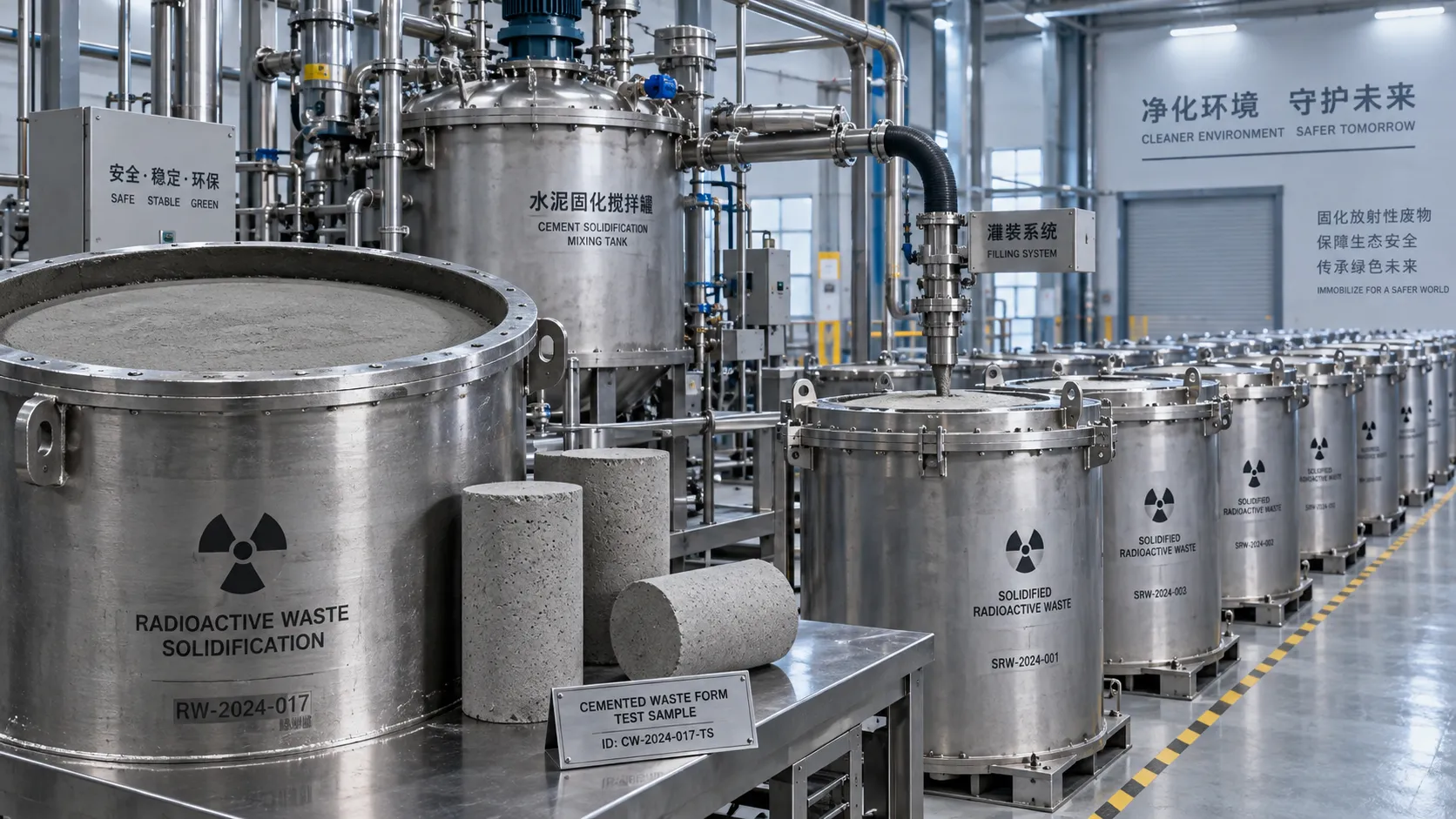
Nuclear waste management systems represent another case where investment value extends beyond direct carbon accounting into safety assurance, regulatory confidence, and long-term clean-energy credibility.
Corporate leaders should identify these co-benefits explicitly because they often explain why a project remains strategically necessary even when short-term carbon savings appear modest.
A portfolio of multi-benefit assets is generally more defensible than a narrow collection of projects selected solely because they produce attractive emissions-reduction headlines.
Factor Regulation and Market Access Into Returns
Environmental regulation is becoming a direct investment variable as governments tighten emissions reporting, industrial permitting, waste rules, water standards, and product-level sustainability requirements.
Companies operating internationally must track how regulations affect not only facilities, but also supply chains, tender eligibility, financing conditions, and customer procurement decisions.
The Carbon Border Adjustment Mechanism, or CBAM, illustrates how carbon exposure can affect cross-border competitiveness by linking embedded emissions to trade-related compliance obligations.
Although CBAM currently applies to defined sectors, its wider significance is clear: emissions data, reporting quality, and production efficiency increasingly influence commercial access.
Environmental equipment manufacturers should expect more customers to request product carbon information, energy-performance guarantees, lifecycle documentation, and transparent operating assumptions.
Public infrastructure tenders may also favor bidders that demonstrate lower lifecycle emissions, local resource efficiency, durable maintenance plans, and credible environmental compliance capability.
Investment committees should therefore assess regulatory timing carefully, including implementation dates, reporting thresholds, enforcement history, and the cost of delayed compliance.
Early investment can create an advantage where environmental requirements are predictable, while premature investment may be risky where technical standards remain unsettled or commercially unproven.
The key is to distinguish between policy signals that are likely to shape asset economics and aspirational announcements that have not yet created enforceable market consequences.
Use Better Metrics Than a Single Carbon Number
A single emissions figure rarely captures investment quality, so corporations should use a balanced scorecard that combines carbon, financial, operational, and risk indicators.
Useful metrics include emissions avoided per unit of output, energy consumed per cubic meter treated, recovered material yield, water reused, pollutant removal efficiency, and downtime avoided.
Financial metrics should include net present value, internal rate of return, payback period, operating-cost sensitivity, maintenance expenditure, and revenue from recovered resources or contracts.
Risk indicators can include permit exposure, dependence on imported chemicals, electricity-price sensitivity, feedstock instability, technology maturity, and supplier concentration.
For projects with complex environmental benefits, management should establish a baseline before deployment and define how outcomes will be measured, verified, and reported after commissioning.
This prevents a common failure: approving a project based on estimated climate benefits without establishing whether actual operating data will support those claims.
Digital monitoring systems can improve governance by collecting energy, water, emissions, chemical, maintenance, and throughput data from critical equipment throughout the asset lifecycle.
Reliable measurement also helps companies communicate performance credibly to lenders, customers, insurers, regulators, and investors who increasingly scrutinize sustainability assertions.
When metrics are linked to operational accountability, carbon neutrality becomes a management process rather than a distant target assigned only to sustainability teams.
Build a Carbon-Neutrality Investment Governance Process
Effective investment governance requires collaboration between finance, operations, engineering, procurement, environmental specialists, legal teams, and senior executives responsible for strategic priorities.
Finance teams should ensure climate assumptions are reflected in capital models, while technical teams validate whether projected efficiency and emissions reductions are operationally achievable.
Procurement teams can influence outcomes by requiring lifecycle data, repairability, energy guarantees, spare-parts availability, and supplier transparency during equipment selection.
Environmental and legal teams should evaluate permit requirements, reporting obligations, liability risks, and the credibility of any carbon-neutrality claims associated with the investment.
A formal stage-gate process can prevent weak projects from progressing too quickly, especially when they depend on immature technology, uncertain incentives, or uncontracted revenue streams.
Early stages should test strategic fit and materiality, while later stages should validate engineering design, commercial assumptions, financing terms, and measurement methodology.
Post-investment reviews are equally important because they reveal whether projected emissions reductions, operating savings, and resilience benefits were actually realized in practice.
Those findings should inform future capital allocation, supplier qualification, retrofit decisions, and enterprise-wide carbon-neutrality planning across sites and business units.
Companies that learn from operating data can improve investment quality over time, whereas those that treat sustainability projects as isolated initiatives often repeat expensive mistakes.
Conclusion: Make Carbon Neutrality a Capital Allocation Discipline
Carbon neutrality means that corporate investment decisions must account for emissions, resource efficiency, regulation, resilience, and lifecycle economics as connected business considerations.
For environmental infrastructure, the strongest opportunities are assets that lower measurable emissions while improving water security, materials recovery, operating reliability, compliance readiness, or market access.
Executives should prioritize projects with credible baselines, transparent assumptions, scalable technology, measurable performance, and benefits that remain valuable under changing carbon and energy scenarios.
That discipline allows companies to move beyond symbolic commitments and build investment portfolios capable of delivering practical environmental performance alongside durable commercial advantage.