
Industry News
Curation by industry experts
Hot Articles
Popular Tags
The Hidden Drivers Behind Water Purification Cost Analysis
Why water purification cost analysis is becoming more complex
For business evaluators, water purification cost analysis rarely starts and ends with equipment pricing.
The real economics often hide inside feedwater instability, energy demand, membrane replacement cycles, sludge disposal, and compliance risk.
As discharge limits tighten and reuse targets rise, projects that looked affordable on paper can become expensive in operation.
That is why water purification cost analysis now matters as a strategic discipline, not a simple budgeting exercise.
A more accurate view links capital cost, operating cost, treatment resilience, and long-term environmental exposure.
This shift is especially visible across industrial wastewater, municipal reuse, desalination, and high-recovery treatment systems.
The market signal is clear: hidden costs now shape investment outcomes
Across global environmental infrastructure, decision logic is changing from lowest purchase price to lowest life-cycle burden.
Several trend signals explain this transition in water purification cost analysis.
- Feedwater quality is becoming less predictable because of industrial concentration shifts and climate stress.
- Electricity prices remain volatile, increasing sensitivity to pumping, aeration, and pressure-driven separation.
- Regulations increasingly penalize non-compliance, trace pollutants, and concentrate disposal failures.
- Water reuse targets push systems toward higher recovery, often raising scaling and fouling pressure.
- Asset owners now expect treatment plants to deliver resilience, not just nominal design performance.
In this environment, water purification cost analysis must test how systems behave under stress, not only under ideal laboratory assumptions.
The hidden drivers behind water purification cost analysis
The most important cost drivers are often underestimated during early project comparisons.
A structured view helps reveal where total expenditure actually accumulates.
Key cost driver map
Feedwater quality is the first hidden multiplier
Water purification cost analysis often fails when source water is treated as static.
In reality, salinity, hardness, COD, silica, oil traces, pathogens, and seasonal swings alter process economics.
A system optimized for average conditions may become expensive when peak contamination arrives.
That means more pretreatment, more chemical cleaning, and shorter component life.
Energy intensity quietly dominates long-term cost
Energy is one of the most persistent variables in water purification cost analysis.
Pressure-driven systems, thermal processes, and advanced oxidation units all carry different electricity profiles.
Even small efficiency gaps can become large annual cost differences at industrial scale.
Where tariffs fluctuate, energy sensitivity should be stress-tested before technology selection.
Membrane life and fouling behavior are frequently mispriced
Membrane systems often look attractive because of compact design and strong separation performance.
However, water purification cost analysis must include fouling patterns, clean-in-place frequency, flux decline, and replacement timing.
Low-cost membranes can become expensive if they require frequent shutdowns or suffer from unstable permeability.
The same logic applies to activated carbon, ion exchange resin, and specialty adsorbents.
Why residual management is moving into the center of cost decisions
Treatment never ends at clean water output.
Sludge, brine, spent media, and concentrated contaminants can define the real project burden.
This is especially true for high-recovery industrial systems and desalination-linked applications.
- Dewatering and hauling costs rise with sludge volume and hazardous classification.
- Brine management becomes difficult where discharge permits are restrictive.
- Concentrate minimization can require evaporation, crystallization, or ZLD support.
- Residual treatment often increases both energy and maintenance needs.
A weak residual strategy can distort water purification cost analysis more than the core process itself.
Compliance pressure is turning risk into a measurable cost line
Environmental compliance used to be treated as an external requirement.
Now it directly affects engineering margins, monitoring systems, documentation, and operating discipline.
Water purification cost analysis should therefore assign value to compliance resilience.
Systems with narrow process windows may appear cheaper but carry a higher probability of violation events.
That can trigger fines, forced upgrades, output restrictions, or reputation loss.
New compliance-linked cost layers
- Online monitoring and data integrity systems
- Trace contaminant removal requirements
- Redundancy design for upset conditions
- Audit-ready reporting and sampling programs
- Future retrofit capacity for stricter discharge limits
How these drivers affect different treatment scenarios
The same water purification cost analysis framework produces different conclusions across applications.
This is why benchmark comparisons must be scenario-specific rather than technology-generic.
What deserves closer attention before any financial conclusion
Better water purification cost analysis depends on asking sharper early-stage questions.
- What is the full feedwater range, not just the average composition?
- How much of annual cost is tied to power pricing volatility?
- What is the expected cleaning frequency under real operating conditions?
- How will sludge, brine, or spent media be managed over time?
- Does the design leave enough margin for future compliance tightening?
- What happens financially when recovery targets increase?
- How much downtime risk is embedded in the process configuration?
A more reliable response is to compare systems by life-cycle logic
Short-term affordability should be separated from durable economic performance.
The strongest response is to structure water purification cost analysis around total life-cycle behavior.
- Model several feedwater scenarios, including upset conditions.
- Calculate energy exposure under multiple tariff assumptions.
- Price consumables by actual replacement behavior, not vendor best case.
- Quantify residual management from day one.
- Assign value to compliance flexibility and operational redundancy.
- Review upgrade pathways for reuse, ZLD, or tighter discharge limits.
This approach reduces the risk of selecting a system that is cheap to buy but costly to keep stable.
The next step in water purification cost analysis is deeper intelligence
The hidden drivers behind water purification cost analysis are no longer secondary details.
They are now central to investment quality, compliance durability, and long-term operating confidence.
A sound evaluation should connect process chemistry, residual pathways, energy structure, and regulatory direction.
That wider lens makes technology comparison more realistic and financial judgment more defensible.
For ongoing sector insight, ESD tracks purification technologies, recovery systems, desalination economics, and compliance evolution across global ecological engineering markets.
Recommended News
How feed salinity affects energy use in ZLD system brine treatment
ZLD system brine treatment: discover how feed salinity drives energy use, scaling risk, and technology choices for efficient, reliable zero liquid discharge.
How coastal cities can select desalination solutions for peak demand
Seawater desalination solutions for coastal cities: compare firm peak capacity, intake risk, energy resilience, and lifecycle value to secure reliable water supply.
How SCR denitrification systems in Europe meet Industrial Emissions rules
SCR denitrification systems Europe: learn how permit-led design, ammonia-slip control, catalyst management and monitoring support Industrial Emissions compliance.
When does MBR equipment make sense for wastewater reuse?
Water treatment equipment for wastewater reuse: learn when MBR delivers compact, reliable low-solids effluent—and when alternative treatment trains offer better value.
How North America shapes global environmental governance standards
Global environmental governance North America: discover how regulation, finance, and procurement raise worldwide standards and reshape environmental projects.
How reactor capacity affects throughput in pyrolysis systems
Pyrolysis systems reactor capacity explained: learn how heat transfer, residence time, feed quality, and emissions controls determine reliable throughput.
When low-temperature reaction equipment is the right fit for heat-sensitive processes
Low-temperature reaction equipment helps protect heat-sensitive streams, improve energy integration, and maintain reliable conversion. Explore key selection factors today.
When do water reuse systems deliver a practical payback?
Water reuse systems deliver practical payback when they cut water, discharge, and downtime costs. Learn how to match treatment, recovery, and reuse quality for lasting ROI.
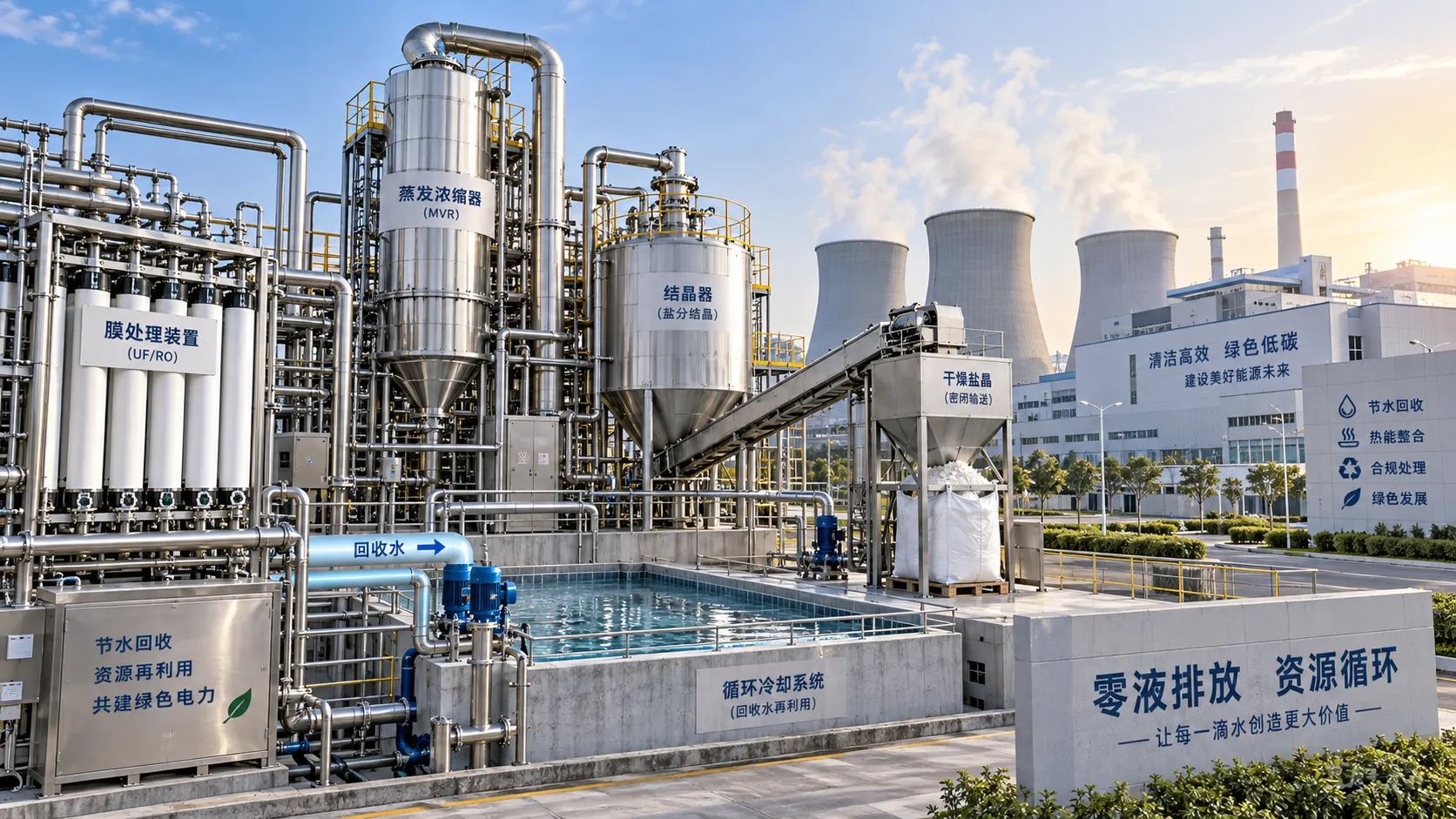
When do ZLD systems for power generation justify their energy use?
ZLD systems for power generation: learn when energy-intensive water recovery delivers stronger compliance, resilience, and long-term value.