
Industry News
Curation by industry experts
Hot Articles
Popular Tags
Why Water Purification Costs Vary More Than Expected
Why do similar treatment projects produce very different budgets? A proper water purification cost analysis starts with that question, not with a catalog price.
In industrial, municipal, and specialized reuse systems, cost is shaped by chemistry, regulation, uptime expectations, and long-term operating risk.
This matters across the broader environmental intelligence landscape tracked by ESD, where purification assets increasingly connect with recovery, compliance, and decarbonization goals.
The headline equipment number may look manageable. The hidden cost structure often is not.
A realistic water purification cost analysis must examine feedwater variability, discharge targets, energy use, membrane replacement, automation depth, and resilience against future regulation.
Cost Basics and What the Price Tag Usually Misses
Water purification costs are commonly divided into CAPEX and OPEX. That split is useful, but incomplete without lifecycle context.
CAPEX includes process equipment, civil works, piping, controls, installation, commissioning, and integration with upstream and downstream units.
OPEX includes power, chemicals, membranes, labor, maintenance, sludge handling, laboratory testing, and compliance reporting.
Two plants with similar flow capacity can still differ sharply in total cost because treatment duty is rarely identical.
One system may remove suspended solids only. Another may target dissolved salts, trace organics, pathogens, boron, silica, or emerging contaminants.
That is why water purification cost analysis should compare treatment objectives, not only equipment sizes.
The core variables behind budget divergence
- Raw water quality and seasonal instability
- Required effluent or product water standard
- Recovery rate and concentrate management
- Energy intensity of the selected process train
- Asset redundancy and reliability design
- Digital monitoring and automation level
Industry Conditions Making Costs Less Predictable
Recent market conditions have made water purification cost analysis more complex than in earlier procurement cycles.
Input inflation affects stainless steel, specialty polymers, pressure vessels, pumps, instrumentation, and electrical components.
At the same time, regulations are tightening around discharge, reuse, PFAS, nutrient removal, and brine handling.
Climate volatility also changes source water behavior. Drought concentration, flooding events, and salinity swings can quickly disrupt original design assumptions.
For intelligence platforms like ESD, these signals matter because equipment cost can no longer be separated from compliance strategy.
The Most Important Technical Drivers in Water Purification Cost Analysis
Feedwater complexity
Feedwater is the first major driver. Turbidity, TDS, hardness, silica, COD, heavy metals, oil, and microbes all influence process selection.
A groundwater project may need modest pretreatment. A chemical plant effluent stream may need equalization, oxidation, softening, biological treatment, RO, and evaporation.
Compliance threshold
The gap between raw water and final target strongly affects cost. Drinking water, ultrapure process water, and reuse water are not priced on the same logic.
Moving from basic discharge compliance to near-ZLD can multiply both CAPEX and OPEX.
Energy demand
Pressure-driven desalination, thermal concentration, advanced oxidation, and high-recirculation polishing systems can impose very different power burdens.
A short-term budget comparison often hides this. Lifecycle energy cost later becomes the decisive financial variable.
Membrane and consumable life
Frequent fouling, scaling, and chemical cleaning can erode the economics of membrane systems.
In a strong water purification cost analysis, replacement intervals should be modeled using realistic source water data, not best-case vendor assumptions.
Automation and monitoring
Advanced automation raises initial cost, but often lowers labor demand, upset frequency, chemical overuse, and unplanned downtime.
For critical infrastructure, online conductivity, TOC, SDI, turbidity, and predictive diagnostics can protect both compliance and asset life.
Why Lifecycle Value Matters More Than Lowest Bid
The lowest bid can become the highest total cost when reliability assumptions fail.
An underdesigned pretreatment block may reduce initial spending, yet trigger membrane loss, unstable recovery, and repeated shutdowns.
A disciplined water purification cost analysis therefore measures value across the full asset life.
- Expected annual availability
- Cost of non-compliance events
- Chemical and membrane consumption trend
- Maintenance access and spare parts security
- Expansion flexibility for future load growth
This lifecycle view is especially important in desalination, industrial reuse, and high-salinity wastewater systems.
Typical Project Types and Their Cost Profiles
Different application scenarios create different budget structures. Comparing unrelated project types often leads to misleading expectations.
This classification helps anchor water purification cost analysis in practical engineering reality rather than generic benchmark numbers.
Practical Evaluation Points Before Budget Approval
Before approving a project, several questions should be answered with traceable evidence.
- Was feedwater characterized across seasons, upset events, and peak contamination periods?
- Are discharge or product water targets aligned with likely future regulations?
- Does the proposal include realistic membrane, resin, and chemical replacement assumptions?
- Has power cost sensitivity been tested under multiple tariff scenarios?
- Is concentrate, sludge, or brine disposal fully priced into the model?
- Can the control system support remote diagnostics and operating optimization?
Strong projects usually show transparent assumptions, not just attractive totals.
That is where ESD-style intelligence is useful: connecting equipment economics with process science, environmental risk, and policy evolution.
A Better Framework for Decision Quality
A high-quality water purification cost analysis should work as a decision framework, not a simple quotation comparison.
The strongest framework combines five layers: source water reality, process performance, operating burden, compliance durability, and expansion resilience.
When these layers are reviewed together, budget gaps between similar-looking projects become easier to explain.
More importantly, they become easier to manage before capital is committed.
For any organization assessing purification infrastructure, the next step is clear: build a lifecycle model, challenge every assumption, and validate the hidden drivers behind cost variability.
That approach turns water purification cost analysis into a practical safeguard for compliance, reliability, and long-term environmental value.
Recommended News
How feed salinity affects energy use in ZLD system brine treatment
ZLD system brine treatment: discover how feed salinity drives energy use, scaling risk, and technology choices for efficient, reliable zero liquid discharge.
How coastal cities can select desalination solutions for peak demand
Seawater desalination solutions for coastal cities: compare firm peak capacity, intake risk, energy resilience, and lifecycle value to secure reliable water supply.
How SCR denitrification systems in Europe meet Industrial Emissions rules
SCR denitrification systems Europe: learn how permit-led design, ammonia-slip control, catalyst management and monitoring support Industrial Emissions compliance.
When does MBR equipment make sense for wastewater reuse?
Water treatment equipment for wastewater reuse: learn when MBR delivers compact, reliable low-solids effluent—and when alternative treatment trains offer better value.
How North America shapes global environmental governance standards
Global environmental governance North America: discover how regulation, finance, and procurement raise worldwide standards and reshape environmental projects.
How reactor capacity affects throughput in pyrolysis systems
Pyrolysis systems reactor capacity explained: learn how heat transfer, residence time, feed quality, and emissions controls determine reliable throughput.
When low-temperature reaction equipment is the right fit for heat-sensitive processes
Low-temperature reaction equipment helps protect heat-sensitive streams, improve energy integration, and maintain reliable conversion. Explore key selection factors today.
When do water reuse systems deliver a practical payback?
Water reuse systems deliver practical payback when they cut water, discharge, and downtime costs. Learn how to match treatment, recovery, and reuse quality for lasting ROI.
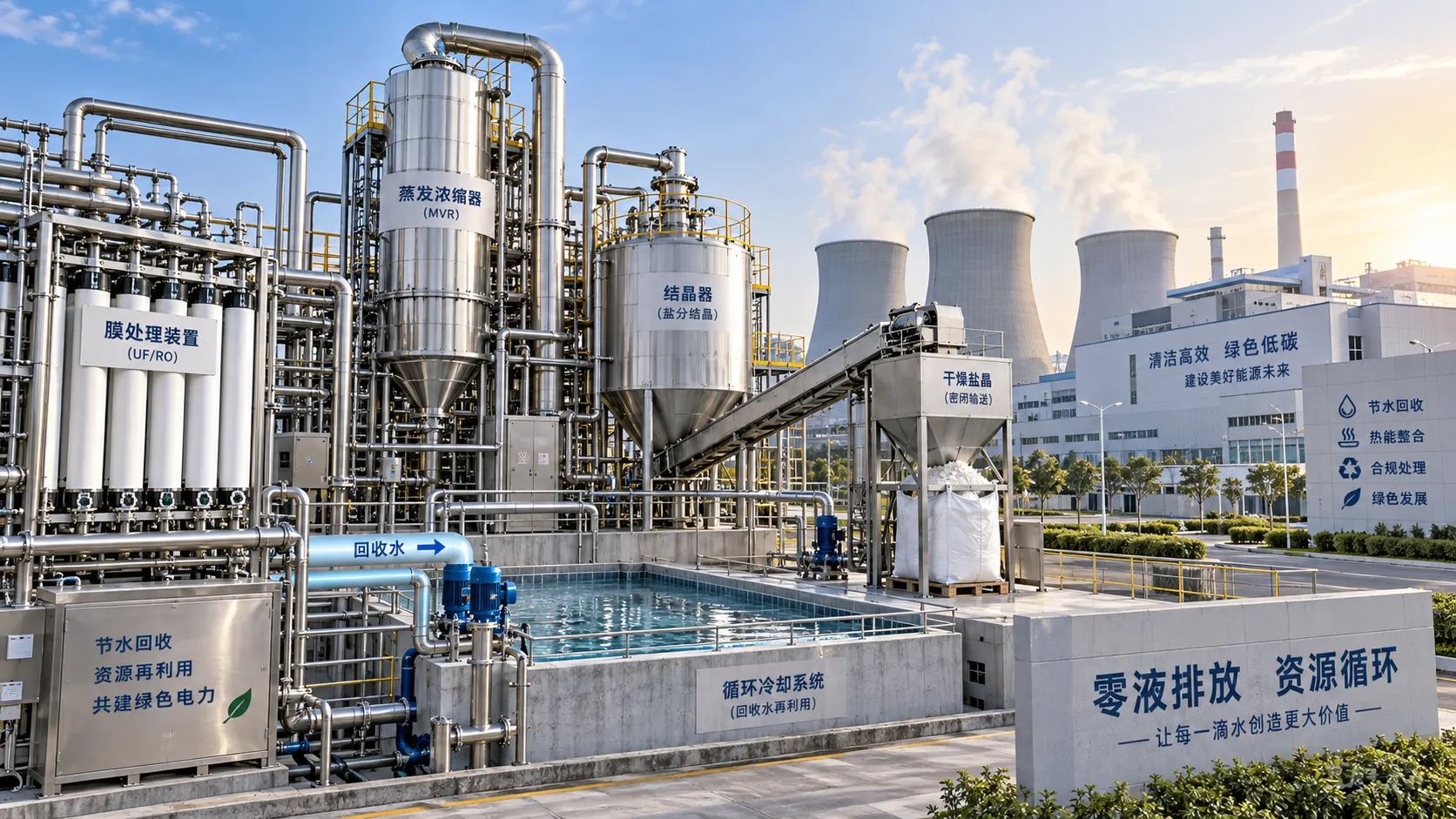
When do ZLD systems for power generation justify their energy use?
ZLD systems for power generation: learn when energy-intensive water recovery delivers stronger compliance, resilience, and long-term value.