
Industry News
Curation by industry experts
Hot Articles
Popular Tags
The hidden reporting burden behind carbon neutrality targets
Carbon neutrality targets are reshaping capital allocation, but for financial approvers the real challenge is not only funding greener operations—it is verifying the hidden reporting burden behind every commitment. From emissions data collection and audit trails to compliance mapping and cross-department coordination, the administrative load can quickly erode project efficiency. Understanding these overlooked costs is essential for making defensible investment decisions, controlling risk, and ensuring that sustainability goals translate into measurable business value.
Why the reporting burden behind carbon neutrality is becoming a board-level issue
Across the environmental and industrial landscape, carbon neutrality is no longer treated as a branding exercise. It is increasingly tied to export access, lender expectations, public procurement eligibility, and operational resilience. For financial approvers, this shift creates a new reality: the cost of a decarbonization project can no longer be assessed only through equipment price, payback period, and energy savings. It must also include the reporting system needed to prove that emissions reductions are real, traceable, and compliant.
This matters especially in sectors connected to large-scale water treatment, waste recovery, flue gas treatment, seawater desalination, and nuclear waste management. These are capital-intensive fields where projects already involve strict engineering documentation, performance guarantees, and regulatory oversight. Once carbon neutrality targets are added, companies face a second layer of accountability: carbon baselines, supplier disclosures, monitoring protocols, internal control reviews, and sometimes third-party assurance. The hidden burden is not theoretical. It directly affects approval timelines, staffing needs, data quality risk, and the credibility of financial forecasts.
In other words, the market is moving from “Can you invest in low-carbon assets?” to “Can you defend the data behind your carbon neutrality claim?” That is the point where finance leaders, compliance teams, and operational managers begin to see reporting not as a support task, but as a strategic cost center that requires disciplined governance.
The trend signal: decarbonization commitments are shifting from ambition statements to evidence-based accountability
One of the clearest trend signals is that stakeholders increasingly ask for evidence rather than narrative. Investors want auditable emissions data. Customers want product-level or project-level carbon visibility. Regulators want consistency between environmental claims and reported performance. Lenders want transition plans that can be tested against operational metrics. For financial approvers, this means carbon neutrality commitments now carry documentation risk similar to other material business disclosures.
This trend is especially visible in infrastructure-heavy environmental industries. A desalination plant, waste-to-resource system, or advanced flue gas treatment line may contribute to environmental improvement, yet still carry significant energy use, upstream material emissions, and complex reporting boundaries. The paradox is important: a project can be environmentally necessary and still be difficult to classify, quantify, and validate under a carbon neutrality framework.
For companies following ESD’s intelligence domains, this is where carbon neutrality stops being a simple energy transition conversation and becomes an operating model issue.
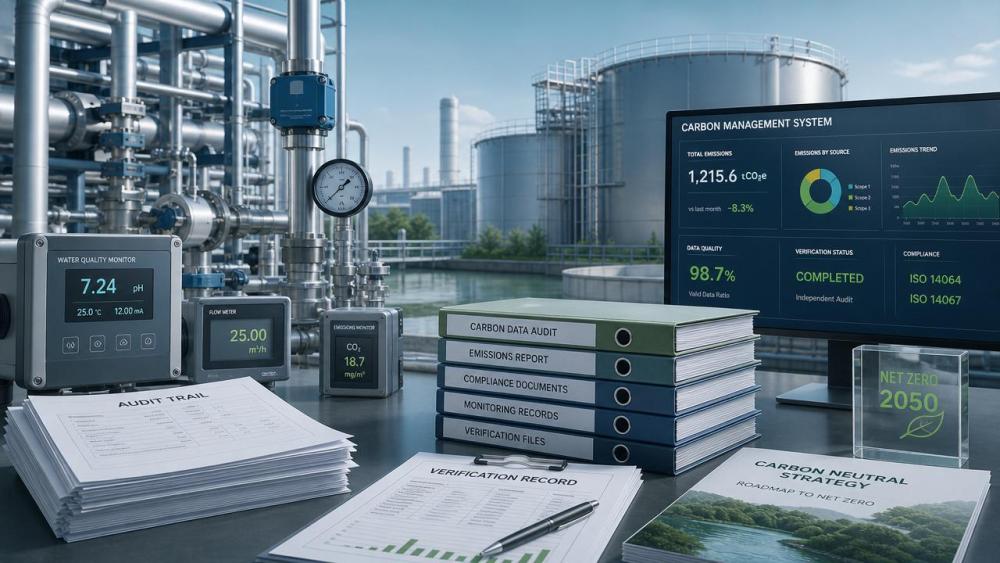
What is driving the hidden reporting burden
Several forces are converging. First, global compliance expectations are expanding. Even when rules differ across regions, the overall direction is similar: more disclosure, more comparability, and less tolerance for vague claims. Second, industrial buyers are tightening supplier qualification. Environmental equipment providers and EPC firms increasingly need to show not only technical performance, but also carbon data discipline. Third, internal governance is changing. Boards and audit committees are more aware that sustainability statements can create reputational and legal exposure if underlying records are weak.
A fourth driver is technological complexity. In high-end environmental systems, the emissions story often spans electricity consumption, chemical inputs, transport, maintenance cycles, replacement parts, and end-of-life treatment. For example, a zero liquid discharge solution may improve water security yet intensify energy demand. An AI-driven sorting line may boost recovery rates yet require difficult data linkage across multiple waste streams. A seawater reverse osmosis installation may support climate adaptation while raising questions about power sourcing and membrane replacement footprints. The reporting burden grows because each operational benefit must be matched with a clear accounting boundary.
This is why carbon neutrality planning now requires more than environmental intent. It requires a reporting design that reflects engineering reality.
Where the burden shows up first in capital approval workflows
For financial approvers, the hidden load rarely appears as a single line item. It surfaces across multiple approval stages. During project screening, teams may struggle to define the baseline and decide which emissions categories are material. During vendor review, the burden appears in inconsistent supplier data formats, uncertain emission factors, and unsupported assumptions. During implementation, it moves into system integration, staff training, and control documentation. After commissioning, it often shifts again into recurring validation, exception handling, and evidence retention.
This diffusion of effort makes the burden easy to underestimate. A business unit may present a favorable decarbonization case based on avoided emissions or lower energy intensity, while omitting the cost of building the reporting chain that supports the claim. Finance teams then inherit the downstream risk: delays in sign-off, disputes over methodology, rework after assurance review, and difficulty reconciling sustainability statements with management reporting.
In practical terms, carbon neutrality can add friction to capital approval when the organization has not yet agreed on ownership. Who confirms the boundary? Who stores the evidence? Who updates the methodology when equipment configuration changes? Who approves supplier substitutions if carbon assumptions shift? These are not abstract governance questions. They determine whether a project remains bankable, scalable, and defensible.
Which business functions feel the impact most
The hidden reporting burden affects more than sustainability teams. It reshapes workflows across finance, engineering, procurement, compliance, and operations. The intensity of impact depends on data maturity and project complexity, but several patterns are emerging.
In complex environmental infrastructure, these functions must collaborate earlier than before. That is one of the biggest operational changes behind carbon neutrality: reporting capability is becoming a prerequisite for credible investment, not a post-project administrative step.
Why environmental equipment sectors face a sharper version of the problem
The sectors covered by ESD are unusually exposed because they sit at the intersection of ecological value, industrial energy demand, and strict compliance obligations. A water treatment upgrade may reduce pollution but raise electricity consumption. A solid waste recovery system may increase circularity but depend on volatile feedstock composition and difficult output tracking. Flue gas treatment systems may improve local air quality while requiring carbon-intensive reagent supply chains. Nuclear waste management adds another layer, where safety, traceability, and long-term stewardship already demand exceptional documentation discipline.
For financial approvers, this means carbon neutrality cannot be reviewed as a generic sustainability topic. It must be assessed in relation to process chemistry, asset reliability, regulatory pathway, and data verifiability. High-end environmental assets often operate in conditions where small design changes alter performance, maintenance cycles, and energy intensity. If reporting frameworks are too simplistic, they can misrepresent the true emissions profile or mask the cost of compliance.
This is also why intelligence-led decision support matters. Market signals such as new disclosure expectations, evolving border carbon mechanisms, and tighter public-sector procurement standards can materially change which projects remain economically attractive after reporting costs are included.
What financial approvers should examine before signing off
A stronger approval process starts with better questions. Instead of asking only whether a project supports carbon neutrality, decision-makers should ask whether the organization can maintain proof over time. That requires attention to data architecture, control ownership, supplier readiness, and the cost of future updates.
Key review points include whether the emissions baseline has been clearly defined, whether the methodology matches operational reality, whether data will be captured automatically or manually, and whether key assumptions depend on supplier declarations that may not be stable. It is also worth testing whether the project economics remain acceptable if reporting costs rise, if assurance requirements become stricter, or if customer requests move from annual summaries to product-level transparency.
Another useful judgment is to separate visible capex from hidden reporting opex. Many carbon neutrality projects are approved with detailed engineering budgets but vague administrative estimates. Over time, that imbalance can weaken returns more than expected. A disciplined approval framework should therefore recognize reporting labor, software integration, third-party verification, methodology maintenance, and exception management as real economic components.
How the next phase of carbon neutrality reporting is likely to evolve
The next phase is likely to bring tighter linkage between operational systems and sustainability reporting. Instead of relying on manually assembled disclosures, companies will increasingly connect meter data, procurement records, maintenance logs, and production outputs into auditable carbon accounting workflows. This favors organizations that build cross-functional reporting discipline early.
At the same time, scrutiny will probably move deeper into supply chains and equipment life cycles. For environmental technology providers, competitive advantage may depend not only on process performance, but also on the ability to provide robust carbon documentation to clients, EPC contractors, and public agencies. In capital projects, that could change bidding dynamics. Suppliers with stronger reporting credibility may gain preference even if their upfront price is not the lowest, because they reduce downstream compliance friction for the buyer.
For finance leaders, the strategic implication is clear: carbon neutrality should be evaluated as a combined investment-and-reporting system. The winners are less likely to be those making the loudest commitments, and more likely to be those capable of producing consistent, defensible, decision-grade evidence.
A practical decision framework for the months ahead
If your organization is assessing projects linked to carbon neutrality, a practical approach is to focus on five judgment areas. First, identify where data originates and who controls it. Second, confirm whether reporting boundaries align with how the asset actually operates. Third, test supplier data reliability before embedding it into ROI assumptions. Fourth, estimate recurring reporting effort separately from implementation effort. Fifth, review whether future regulatory or customer demands could increase the burden after project approval.
For organizations active in water treatment, resource recovery, flue gas systems, desalination, or nuclear waste management, these checks are especially valuable because technical complexity and compliance sensitivity are both high. A project that looks compelling on paper can become difficult to defend if the reporting model is weak. A project with moderate direct returns, by contrast, may prove strategically stronger if its carbon neutrality evidence chain is reliable and scalable.
If a company wants to judge how these trends affect its own pipeline, the most useful questions are straightforward: which projects require the most emissions assumptions, which suppliers provide the least reliable data, which business units own the reporting controls, and which claims would be hardest to support under external review. Those answers often reveal the real cost of carbon neutrality long before it appears in the budget.
Recommended News

How feed salinity affects energy use in ZLD system brine treatment
ZLD system brine treatment: discover how feed salinity drives energy use, scaling risk, and technology choices for efficient, reliable zero liquid discharge.
How coastal cities can select desalination solutions for peak demand
Seawater desalination solutions for coastal cities: compare firm peak capacity, intake risk, energy resilience, and lifecycle value to secure reliable water supply.
How SCR denitrification systems in Europe meet Industrial Emissions rules
SCR denitrification systems Europe: learn how permit-led design, ammonia-slip control, catalyst management and monitoring support Industrial Emissions compliance.

When does MBR equipment make sense for wastewater reuse?
Water treatment equipment for wastewater reuse: learn when MBR delivers compact, reliable low-solids effluent—and when alternative treatment trains offer better value.
How North America shapes global environmental governance standards
Global environmental governance North America: discover how regulation, finance, and procurement raise worldwide standards and reshape environmental projects.

How reactor capacity affects throughput in pyrolysis systems
Pyrolysis systems reactor capacity explained: learn how heat transfer, residence time, feed quality, and emissions controls determine reliable throughput.

When low-temperature reaction equipment is the right fit for heat-sensitive processes
Low-temperature reaction equipment helps protect heat-sensitive streams, improve energy integration, and maintain reliable conversion. Explore key selection factors today.

When do water reuse systems deliver a practical payback?
Water reuse systems deliver practical payback when they cut water, discharge, and downtime costs. Learn how to match treatment, recovery, and reuse quality for lasting ROI.
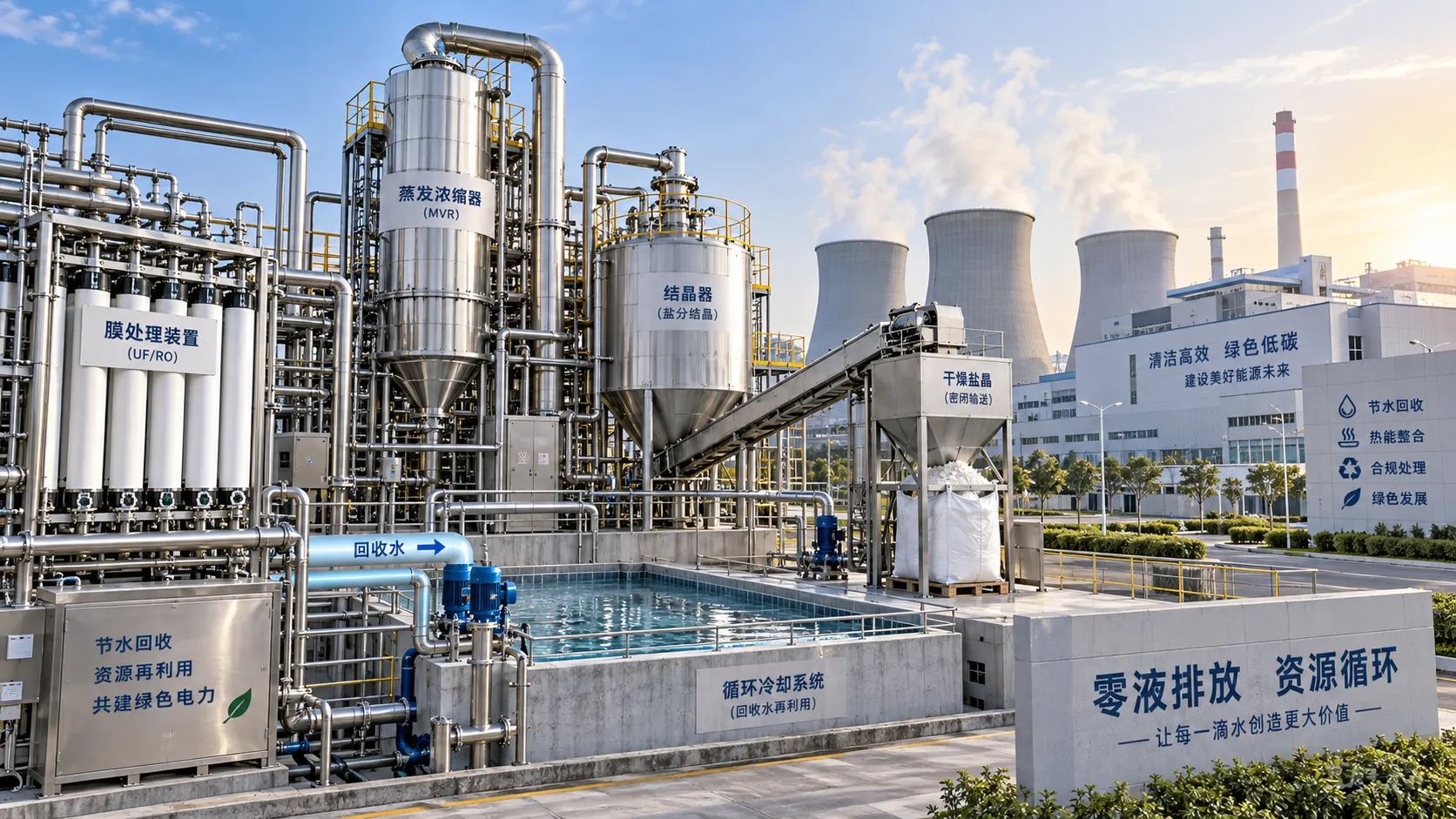
When do ZLD systems for power generation justify their energy use?
ZLD systems for power generation: learn when energy-intensive water recovery delivers stronger compliance, resilience, and long-term value.