
Industry News
Curation by industry experts
Hot Articles
Popular Tags
When Environmental Regulations Training Falls Short
When Environmental Regulations Training Falls Short
When environmental regulations training courses fail, compliance risk quickly becomes an execution risk.
That risk is especially acute in water treatment, waste recovery, desalination, and nuclear waste management.
In these sectors, regulation shapes engineering choices, procurement timing, commissioning plans, reporting duties, and operating continuity.
A weak course may look acceptable on paper, yet still leave teams exposed during audits, permit reviews, and cross-border project delivery.
That is why the quality of environmental regulations training courses now matters far beyond basic legal awareness.
It affects cost control, project bankability, bid credibility, and the long-term resilience of environmental infrastructure.
Why the same training fails across different compliance scenarios
Not every compliance challenge looks the same.
Some sites face emissions thresholds, while others face water discharge caps, waste traceability rules, or radiation handling requirements.
Yet many environmental regulations training courses still use generic modules with limited operational context.
This creates a dangerous mismatch between what people learn and what actual projects demand.
The result is not only misunderstanding.
It is delayed approvals, incomplete records, weak change management, and poor response when regulations shift mid-project.
High-value infrastructure needs training that matches asset type, jurisdiction, process intensity, and reporting complexity.
Common signs that environmental regulations training courses are underperforming
- Courses explain rules, but not site-specific decision points.
- Updates arrive after permits, tenders, or equipment choices are already locked.
- Training covers compliance theory, but not documentation workflows.
- No one links regulatory changes to CAPEX, OPEX, or schedule exposure.
- Global rules like CBAM are mentioned, but not translated into project actions.
Scenario one: Large water treatment projects under tightening discharge limits
Water treatment facilities face some of the fastest-moving compliance demands.
Industrial wastewater, municipal reuse, and ZLD systems all depend on evolving discharge and monitoring requirements.
When environmental regulations training courses stay too general, teams often miss how rule changes affect pretreatment, membrane selection, sludge handling, and online monitoring.
A course may mention effluent standards without addressing what happens when high-salinity streams trigger redesigns or permit amendments.
The core judgment point here is operational translation.
Training must connect regulations to sampling frequency, alarm thresholds, bypass risks, and reporting evidence.
Without that link, compliance teams and engineering teams work from different assumptions.
That gap can become expensive during commissioning or third-party inspections.
Scenario two: Solid waste recovery systems facing traceability and circularity rules
Waste recovery now sits at the intersection of environmental law, material traceability, and circular economy policy.
Pyrolysis systems, AI sorting lines, and urban mining networks must prove more than processing capacity.
They must show legal handling, chain-of-custody integrity, emissions control, and sometimes recycled content validation.
Many environmental regulations training courses miss this integrated compliance picture.
The main judgment point is whether training reflects material flows instead of only legal definitions.
Teams need to know when a recoverable stream becomes a regulated waste, and when export rules or certification duties apply.
If training ignores that transition logic, business models built around recovery value can collapse under compliance friction.
Scenario three: Seawater desalination under energy, intake, and brine scrutiny
Desalination projects operate under growing environmental and social examination.
Permits may hinge on marine intake impacts, brine discharge dispersion, chemical dosing controls, and energy intensity disclosure.
Standard environmental regulations training courses often summarize these topics but rarely explain how they alter design and operating windows.
That omission can weaken both permitting confidence and public acceptance.
The key judgment point is cumulative impact awareness.
Training should show how marine ecology reviews, carbon reporting, and water security obligations interact.
If courses treat them as separate topics, teams may optimize one metric while creating exposure in another.
Scenario four: Nuclear waste management where errors cannot be procedural
Nuclear waste management demands the highest level of regulatory discipline.
Here, environmental regulations training courses must go beyond awareness and into controlled decision behavior.
Waste classification, containment, transport, vitrification stability, and long-term storage all depend on exact procedural interpretation.
A broad compliance course is not enough for such a narrow risk environment.
The central judgment point is consequence sensitivity.
Training must prepare people to manage exceptions, not only routine tasks.
If unusual storage conditions or documentation discrepancies arise, response quality depends on scenario-based training depth.
This is where poor environmental regulations training courses become a direct reliability threat.
How compliance needs differ by scenario
What better environmental regulations training courses should include
High-value sectors need training that behaves like an intelligence system, not a static handbook.
For that reason, stronger environmental regulations training courses should include the following elements.
- Jurisdiction-specific modules tied to actual permit pathways.
- Engineering examples linked to emissions, effluent, waste, and safety thresholds.
- Fast update cycles reflecting regulatory revisions and enforcement trends.
- Documentation drills for audits, inspections, and funding reviews.
- Cross-functional case studies connecting legal, technical, and commercial consequences.
- Scenario planning for CBAM, reporting changes, and supply chain restrictions.
This is where strategic intelligence adds value.
Platforms such as ESD help interpret how global environmental rules influence technical design, equipment demand, and competitive project positioning.
That intelligence can strengthen environmental regulations training courses by making them current, technical, and investment-aware.
Common misjudgments that keep training ineffective
One common mistake is assuming annual refresher sessions are enough.
In reality, complex projects may need event-triggered updates tied to bids, design changes, or new market entry.
Another mistake is treating environmental regulations training courses as an HR requirement rather than a project control tool.
That mindset lowers urgency and weakens accountability.
A third mistake is ignoring technology-specific implications.
Rules do not affect a membrane system, a scrubber, a pyrolysis line, and a vitrification process in the same way.
Finally, many organizations fail to measure whether training changes decisions.
Completion rates alone say nothing about compliance readiness.
Practical next steps for stronger compliance readiness
Start by mapping each asset type to its highest-impact regulatory scenarios.
Then review whether existing environmental regulations training courses address actual decision points, not just policy summaries.
Next, align training updates with project milestones, permit reviews, and major procurement windows.
Add scenario drills for documentation failure, design modification, and compliance escalation.
Finally, use sector intelligence to connect legal changes with technical and commercial outcomes.
In fast-moving environmental markets, better environmental regulations training courses do more than reduce risk.
They improve execution quality, sharpen market credibility, and protect the long-term value of critical infrastructure.
Recommended News

How feed salinity affects energy use in ZLD system brine treatment
ZLD system brine treatment: discover how feed salinity drives energy use, scaling risk, and technology choices for efficient, reliable zero liquid discharge.

How coastal cities can select desalination solutions for peak demand
Seawater desalination solutions for coastal cities: compare firm peak capacity, intake risk, energy resilience, and lifecycle value to secure reliable water supply.

How SCR denitrification systems in Europe meet Industrial Emissions rules
SCR denitrification systems Europe: learn how permit-led design, ammonia-slip control, catalyst management and monitoring support Industrial Emissions compliance.

When does MBR equipment make sense for wastewater reuse?
Water treatment equipment for wastewater reuse: learn when MBR delivers compact, reliable low-solids effluent—and when alternative treatment trains offer better value.

How North America shapes global environmental governance standards
Global environmental governance North America: discover how regulation, finance, and procurement raise worldwide standards and reshape environmental projects.

How reactor capacity affects throughput in pyrolysis systems
Pyrolysis systems reactor capacity explained: learn how heat transfer, residence time, feed quality, and emissions controls determine reliable throughput.

When low-temperature reaction equipment is the right fit for heat-sensitive processes
Low-temperature reaction equipment helps protect heat-sensitive streams, improve energy integration, and maintain reliable conversion. Explore key selection factors today.

When do water reuse systems deliver a practical payback?
Water reuse systems deliver practical payback when they cut water, discharge, and downtime costs. Learn how to match treatment, recovery, and reuse quality for lasting ROI.
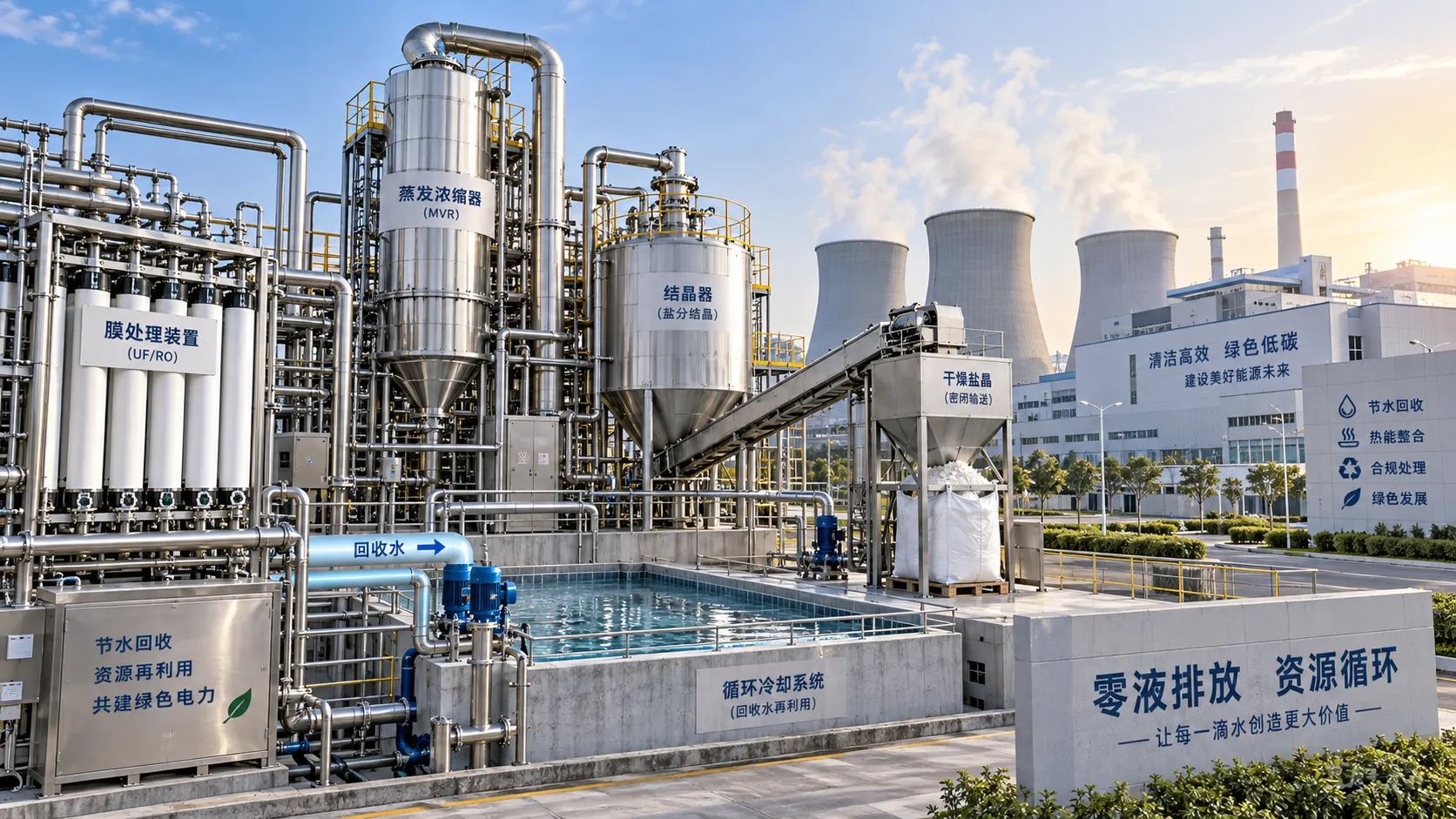
When do ZLD systems for power generation justify their energy use?
ZLD systems for power generation: learn when energy-intensive water recovery delivers stronger compliance, resilience, and long-term value.