
Industry News
Curation by industry experts
Hot Articles
Popular Tags
Waste-to-Resource Technology Trends: Which Recovery Routes Are Gaining Commercial Value
Waste-to-resource technology is moving into a harder commercial phase
Waste-to-resource technology is no longer judged by technical novelty alone.
It is increasingly evaluated by yield stability, compliance resilience, offtake certainty, and capital discipline.
That shift matters because environmental pressure now meets resource scarcity in the same boardroom discussion.
Across water, solids, emissions, and hazardous residues, recovery is becoming part of industrial infrastructure.
The strongest signal is practical rather than rhetorical.
Projects are being approved when recovered outputs can replace imported inputs, avoid disposal exposure, or support carbon reporting.
For a platform such as ESD, which tracks purification limits and closed-loop equipment logic, this transition is especially visible.
The market is rewarding recovery routes that connect process reliability with regulatory defensibility.
Why the market signal has become more visible
Several forces are converging, and together they are changing how waste-to-resource technology is financed and deployed.
Disposal costs are rising.
So are standards for landfill diversion, water reuse, emissions control, traceability, and cross-border carbon accountability.
At the same time, many recovered materials now have clearer downstream demand than they did five years ago.
Battery metals, industrial salts, refuse-derived fuels, biogas, recycled polymers, and process water all sit closer to cash value.
- Resource security has become a strategic concern, not a procurement detail.
- Policy frameworks increasingly reward recovery over disposal.
- Digital sorting, sensor control, and process analytics are reducing quality variability.
- Large infrastructure buyers now ask for circularity metrics alongside cost and uptime.
This is why waste-to-resource technology is gaining commercial value in sectors once considered too complex for circular models.
The commercial conversation has widened from waste handling to feedstock management and recovered product strategy.
Material recovery routes are winning where purity can be defended
Among all recovery paths, material recovery is attracting the most durable interest.
The reason is simple.
When recovered outputs meet specification, they behave like supply, not like waste management byproducts.
That changes valuation models.
Advanced sorting for mixed municipal streams, construction residues, e-scrap, and industrial solids is improving recovery quality.
AI-assisted recognition, robotic picking, and denser data on composition are reducing contamination risk.
In parallel, metallurgical and hydrometallurgical routes are gaining ground in batteries, catalysts, and high-value scrap.
Water-linked recovery is also part of this story.
ZLD systems, brine concentration, and selective separation are turning wastewater lines into sources of salts, minerals, and reusable water.
That fits closely with ESD’s focus on large treatment plants and extreme purification parameters.
The value is not only in recovered material sales.
It also comes from lower freshwater dependence, lower discharge exposure, and stronger compliance positioning.
Where material recovery looks strongest today
The pattern is clear.
Material routes gain value when they can prove specification control and long-term offtake.
Energy recovery is being filtered by carbon and efficiency pressure
Energy recovery still matters, but it is being judged more selectively.
Simple waste-to-energy narratives are losing force in markets where emissions scrutiny is increasing.
What is gaining attention instead are routes with measurable energy efficiency and cleaner output profiles.
Anaerobic digestion, landfill gas upgrading, biomass residue utilization, and certain refuse-derived fuel systems remain active.
Pyrolysis is also moving from speculative discussion to more disciplined evaluation.
But investors now ask tougher questions about feedstock preparation, char handling, syngas cleaning, and end-market dependence.
This is where flue gas treatment and process control become commercially decisive.
A recovery route that generates energy but adds emissions complexity can lose its advantage quickly.
In practical terms, energy recovery looks stronger when it is integrated with heat demand, utility infrastructure, or industrial fuel substitution.
Standalone concepts with uncertain output pricing now face a much harder market.
Chemical recovery is rising, but only where process discipline is mature
Chemical recovery sits in a more nuanced position.
It offers access to difficult streams that mechanical systems cannot handle well.
That includes multilayer plastics, solvent-rich residues, contaminated organics, and complex industrial liquors.
Yet the commercial threshold is higher.
Chemical recovery depends on reaction stability, purification cost, catalyst life, byproduct management, and product acceptance.
Recent momentum comes from two changes.
One is the push for recycled-content pathways that can meet virgin-like performance.
The other is greater willingness to treat contaminated streams as process feedstock rather than disposal burden.
Still, waste-to-resource technology in this category only becomes bankable when mass balance, traceability, and energy use are credible.
That is why intelligence around kinetics, separation performance, and compliance pathways matters as much as the reactor itself.
The impact reaches beyond waste operations
A common mistake is to treat waste-to-resource technology as an isolated utility function.
The real impact spreads across sourcing, engineering, permitting, reporting, and market access.
When a facility recovers process water, procurement exposure changes.
When metal-bearing waste is valorized, raw material strategy changes.
When residues are converted into fuels or chemical inputs, infrastructure planning changes.
- Engineering teams face tighter integration between separation, emissions, and utilities.
- Finance teams need better assumptions on recovery yields and offtake durability.
- Compliance teams must track evolving waste classification and carbon disclosure rules.
- Commercial teams benefit when circular outputs support customer qualification or bid strength.
This broader effect explains why ESD’s cross-sector lens matters.
The most valuable insights often emerge between sectors, not inside one technology silo.
What deserves closer attention over the next cycle
From recent demand patterns, four signals stand out.
- Recovery projects tied to existing industrial assets are moving faster than greenfield concepts.
- Technologies with verified output specifications are attracting more serious counterparties.
- Water-linked recovery is rising in importance as drought risk and discharge pressure intensify.
- Hazardous and difficult residues are becoming strategic targets for specialized recovery routes.
That last point is worth watching closely.
In complex streams, commercial value often appears where regulation is hardest and disposal options are narrowest.
This does not mean every high-tech route will scale smoothly.
It means the premium is shifting toward recovery systems that can operate under extreme conditions with defensible data.
A practical way to judge the next move
The next phase of waste-to-resource technology will reward disciplined selection more than broad enthusiasm.
A useful starting point is to compare recovery routes through five filters.
- Feedstock control: how variable is the incoming stream?
- Output value: is there a qualified market for the recovered product?
- Process burden: what are the energy, emissions, and reagent penalties?
- Compliance advantage: does the route reduce regulatory exposure?
- System fit: can it integrate with existing utilities and treatment assets?
That framework helps separate bankable recovery from expensive diversion.
The commercial winners are likely to be material, energy, and chemical routes that solve several constraints at once.
The immediate task is not to chase every innovation headline.
It is to map waste-to-resource technology against actual feedstocks, local standards, utility economics, and downstream demand.
From there, the next sensible step is to build a staged evaluation plan, monitor key process parameters, and test which recovery route can hold value under real operating pressure.
Recommended News
How high purity heavy metal recovery affects recovered metal value
High purity heavy metal recovery boosts recovered metal value by improving payability, reducing penalties, and unlocking stronger buyer opportunities. Explore smarter netback strategies.
When does environmental equipment intelligence reduce wastewater plant energy use?
Environmental equipment intelligence for wastewater plants cuts energy use through smarter aeration, pumping, and data-driven controls—without compromising compliance. Discover when it delivers measurable savings.
What Evidence Supports the Long-Term Safety Case for Geological Disposal?
Long-term safety of geological disposal: explore the evidence behind multi-barrier systems, site science, uncertainty testing, and auditable safety cases.
What Do Seawater Disinfection Systems Cost Over Their Full Operating Life?
What are the costs associated with seawater disinfection systems? Explore lifecycle expenses for equipment, energy, chemicals, maintenance, compliance, and risk.
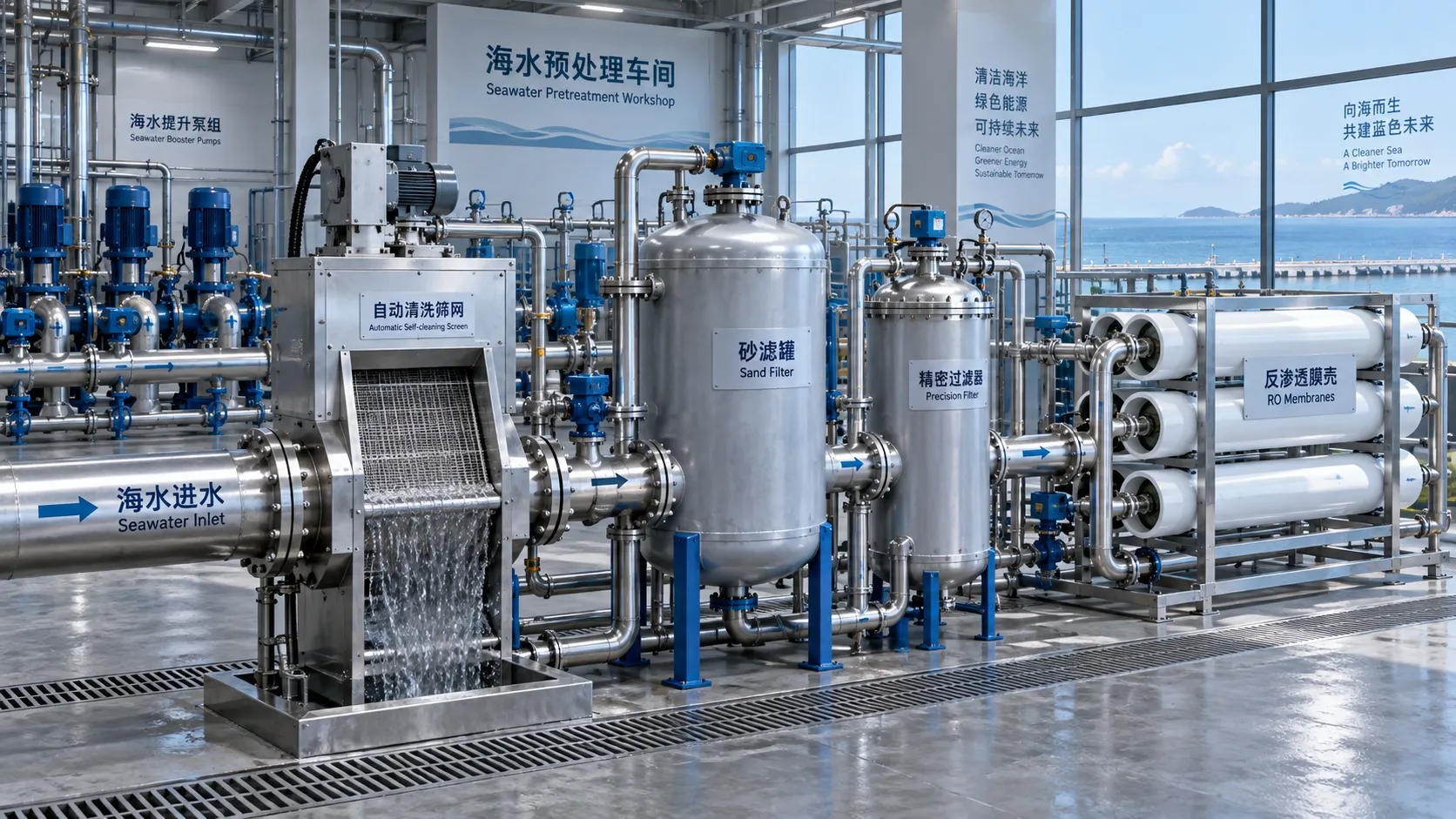
How to Improve Industrial Seawater Quality Before Cooling or Membrane Treatment
How can I improve the quality of seawater used for industrial processes? Explore proven pretreatment strategies for cooling systems and RO membranes.
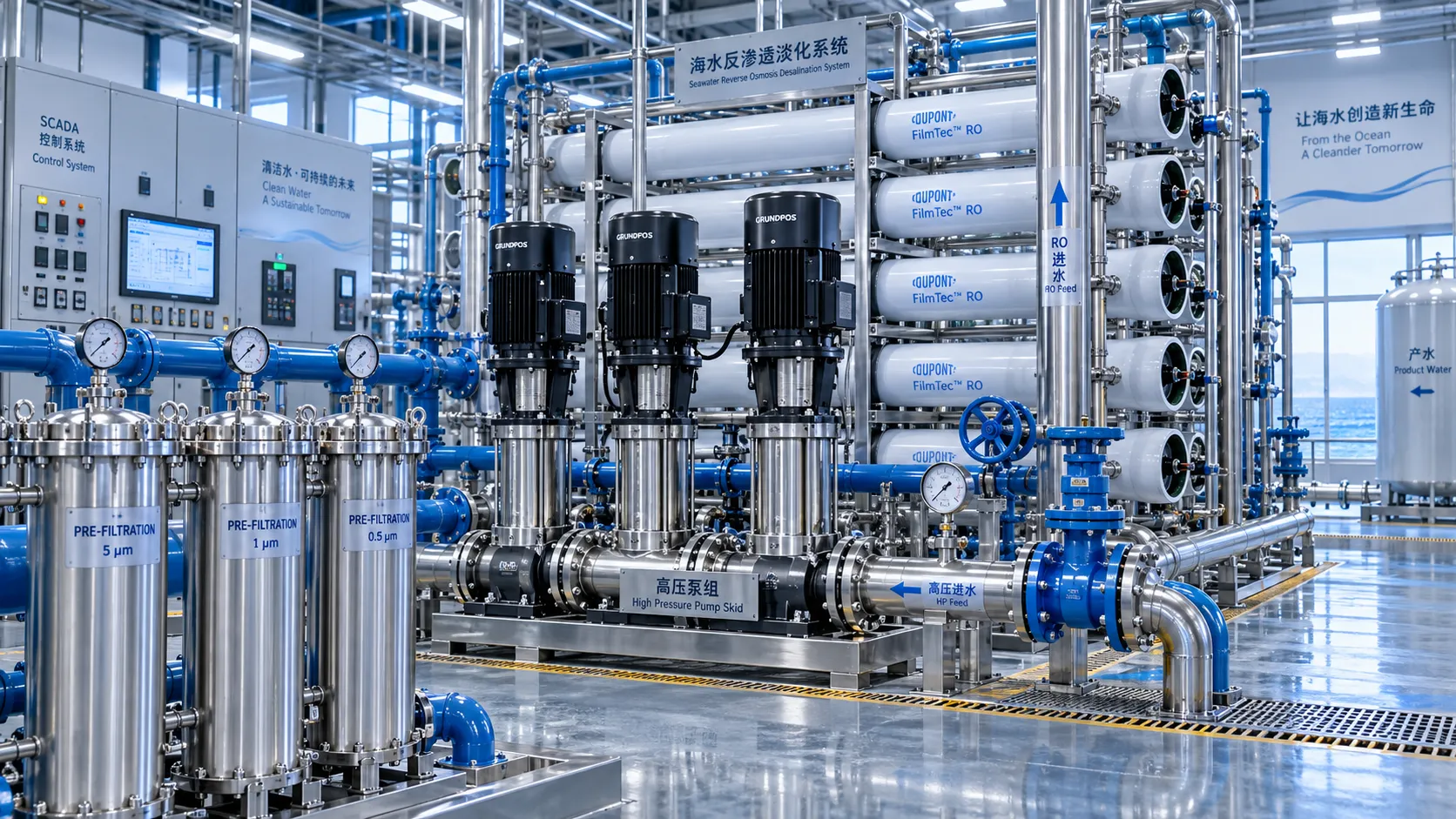
Desalination Plant Maintenance Priorities That Prevent Unplanned Downtime
Desalination plant maintenance priorities that reduce unplanned downtime: protect pretreatment, RO membranes, pumps, chemical dosing, and critical controls.
Which supplier evaluation support tools improve audit consistency?
Supplier evaluation support tools improve audit consistency with controlled checklists, evidence capture, risk scoring, CAPA workflows, and traceable approvals. Explore the essentials.
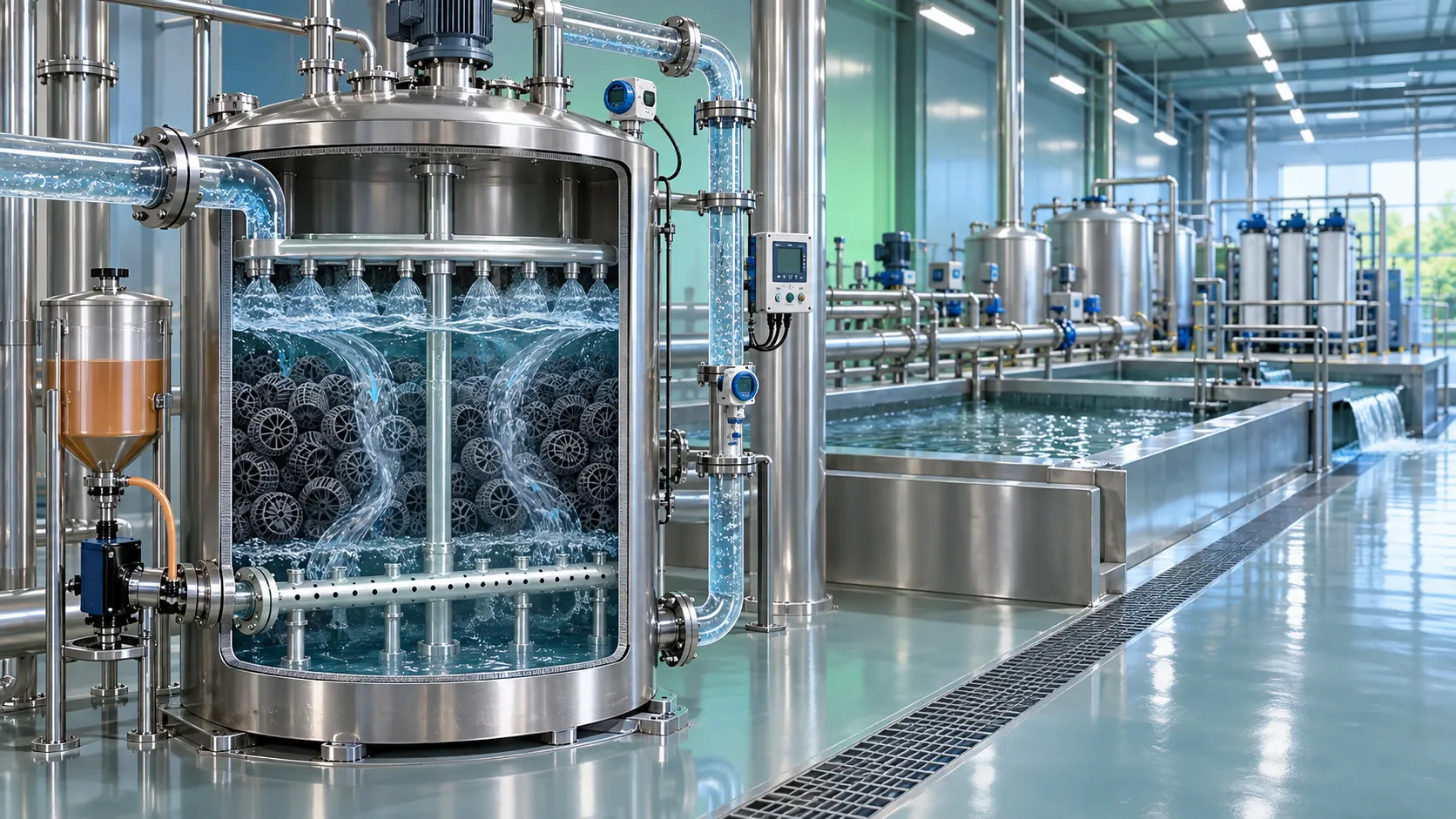
How reactor retention time affects denitrification equipment performance
Denitrification equipment reactor performance depends on retention time, carbon, mixing, and load control. Explore practical insights for reliable nitrogen removal.
How feed salinity affects energy use in ZLD system brine treatment
ZLD system brine treatment: discover how feed salinity drives energy use, scaling risk, and technology choices for efficient, reliable zero liquid discharge.