
Industry News
Curation by industry experts
Hot Articles
Popular Tags
How wastewater salinity affects industrial zero liquid discharge equipment selection
Wastewater salinity is a critical factor in selecting industrial zero liquid discharge equipment, influencing membrane performance, evaporator energy demand, scaling risk, and materials compatibility. For technical evaluators, total dissolved solids alone rarely tell the whole story: salt composition, concentration variability, and target recovery rates can be just as important. The right configuration depends on where a stream stops being economical to concentrate with membranes, what happens as salts approach saturation, and whether the resulting solids have a credible destination.
Start with the salt balance, not a TDS figure
Total dissolved solids (TDS) is useful for establishing the broad concentration range, but it is a poor stand-alone equipment specification. Two wastewaters with similar TDS can behave very differently if one is dominated by sodium chloride and the other contains substantial calcium, sulfate, silica, or organic matter. Their osmotic pressures, scaling tendencies, solubility limits, and corrosion risks will not necessarily match.
A defensible design basis identifies the major dissolved ions, alkalinity, silica, suspended solids, organic load, pH, and temperature. It should also capture constituents that may affect the proposed process or the final solids route, such as metals, ammonia, or volatile organics. Conductivity is useful for tracking changes, but a single conductivity-to-TDS conversion should not replace laboratory analysis across a variable waste stream.
Sampling deserves particular attention when wastewater comes from several processes. A cooling-tower blowdown may be relatively predictable until a chemical cleaning or operating change alters its composition. A manufacturing facility with batch discharges can present a very different problem: the average sample may look manageable while a short-lived slug drives precipitation or upsets biological or membrane pretreatment.
For selection purposes, ask for a mass balance at normal, high-salinity, and other credible challenging conditions. Include flow as well as concentration. A small, very salty stream may justify a different treatment route from a much larger stream with lower TDS but a higher total salt load. Equalization can dampen peaks, but its required volume and mixing arrangements must be checked against the actual timing of the discharges.
How salinity changes the membrane decision
Reverse osmosis (RO) is often attractive upstream of thermal equipment because it can remove water without evaporating it. As dissolved salt concentration rises, however, osmotic pressure rises too. The system needs enough applied pressure to overcome that osmotic pressure and still produce useful permeate flux. At some point, pressure limits, energy use, fouling, or scaling make further membrane recovery unattractive or impractical.
That boundary is not defined by TDS alone. The concentration at the membrane surface can be higher than in the bulk stream, increasing local scaling risk. Temperature, recovery, membrane selection, pretreatment, and the specific ions present all influence the workable operating window. High-pressure or specialized membrane systems may extend concentration in suitable applications, but their pressure ratings, cleaning requirements, and actual feed tolerances need vendor confirmation and, where uncertainty is material, pilot testing.
A higher membrane recovery target is not automatically the cheapest choice. It reduces the volume sent to evaporation, but may require additional softening, more cleaning, higher-pressure equipment, or acceptance of a less stable operating margin. Compare the incremental cost of the last portion of membrane recovery with the thermal capacity it avoids. Include downtime and chemical use, not just membrane power.
Electrodialysis and other electrically driven separation processes can also be considered for appropriate feeds. Their suitability depends on ionic composition, fouling propensity, product-water requirements, and the concentration range. They should be evaluated as part of the entire salt and water balance rather than treated as a universal substitute for RO or evaporation.
Pretreatment should address the limiting salt
The most expensive pretreatment train is not necessarily the most effective one. The useful question is: which constituent prevents the next unit operation from reaching its intended recovery reliably?
Calcium, magnesium, carbonate, and sulfate can create difficult scale conditions as water is removed. Chemical softening may reduce certain hardness-related risks, while clarification and filtration remove the resulting solids before they foul downstream equipment. But softening generates sludge, consumes chemicals, and may not resolve every sulfate or silica limitation. Antiscalants can expand the operating window in some applications; they do not eliminate the need to respect solubility and membrane supplier limits.
Silica requires particular care because its behavior depends on pH, temperature, concentration, and interactions with other constituents. Organics and oil can foul membranes or interfere with heat transfer. In these cases, a design that focuses exclusively on hardness removal can still fail downstream. Pretreatment testing should therefore use representative wastewater and examine the quality of the concentrate, not merely the treated feed.
There is also a trade-off in chemical addition. Adding sodium-based reagents, for example, can change the final salt balance and the character of the crystallizer solids. A pretreatment decision that improves membrane recovery may increase the quantity or complicate the handling of residual solids. Follow the added ions all the way to the end of the process.
The thermal section depends on more than brine volume
Evaporators and crystallizers take over where further membrane concentration is unsuitable or insufficient to meet the project objective. Salinity affects both the duty and the nature of that duty. As brine becomes more concentrated, boiling-point elevation can reduce the effective temperature difference available for heat transfer. Viscosity and scaling can further affect circulation and heat-transfer performance.
Mechanical vapor recompression (MVR) is a common option where electricity, process conditions, and equipment scale make it suitable. Multiple-effect evaporation may be worth comparing where the site has usable steam or an advantageous heat balance. Neither choice is inherently superior: the comparison should reflect local utility prices, heat integration, part-load operation, cleaning frequency, and the properties of the actual brine. An apparently efficient evaporator on a clean-feed basis can become a poor investment if scaling forces frequent shutdowns.
Crystallizer selection requires an even closer look at chemistry. Mixed salts do not necessarily crystallize as a neat, saleable product. They may form fine particles, hydrates, or sticky solids that are difficult to separate and dry. Changes in temperature and concentration can alter which salts precipitate and when. A design that assumes a single dominant salt should be challenged if the wastewater contains significant competing ions.
Ask suppliers to identify the expected slurry characteristics, solids concentration, residence time, and basis for sizing the centrifuge, filter, or other dewatering equipment. Also ask how mother liquor is handled. Returning it to the crystallizer may concentrate impurities or constituents that remain soluble; bleeding it creates a residual stream that must be addressed within the ZLD boundary. Evaporation alone does not make that balance disappear.
Materials and recovered water need their own review
Corrosion risk can increase substantially in hot, concentrated chloride-bearing solutions. Material selection must consider temperature, chloride concentration, pH, oxidants, oxygen exposure, and the possibility of crevices or deposits. A material acceptable in the feed tank may not be suitable in the hot brine circuit. Review pumps, valves, heat exchangers, instrument wetted parts, and welds—not only the main vessel.
More expensive alloys or nonmetallic linings may be justified in specific sections, but compatibility cannot be established from salinity alone. Request a documented materials-of-construction review for normal operation, cleaning, startup, and upset conditions. Chemical cleaning can expose equipment to a very different environment from the process brine.
Recovered water quality also needs a defined destination. RO permeate and evaporator condensate are not interchangeable by default. Ammonia and some volatile compounds can carry over into condensate, potentially requiring additional treatment before reuse. If recovered water is intended for boiler makeup, cooling, or process use, specify the relevant quality requirements at that point of use and test against them.
Compare complete configurations, including the solids exit
The following comparison is a starting point for screening, not a substitute for feed-specific testing and vendor design.
Stream segregation is often worth examining before equipment is sized. Mixing a relatively clean saline stream with a smaller stream containing metals or organics can increase the volume requiring difficult treatment and restrict options for salt recovery. Conversely, combining compatible streams may make a treatment system simpler. The decision depends on collection infrastructure, chemistry, operating schedules, and the proposed solids outlet.
Do not assume crystallized salt is a product. A potential buyer or reuse application will have specifications for composition, moisture, and contaminants; those must be established and verified. If no dependable outlet exists, evaluate storage, transport, classification, and disposal under applicable local requirements. “Zero liquid discharge” describes the liquid-discharge objective within a defined system boundary, not the absence of solid waste or an automatic compliance determination.
What to require before selecting a supplier
Ask each bidder to use the same feed cases, recovery definition, battery limits, utility conditions, and solids assumptions. Otherwise, a lower quoted energy demand may simply reflect a lower recovery target or the exclusion of sludge handling, condensate polishing, or crystallizer operation. Require a transparent water and salt balance, including chemical additions and all purge streams.
The operating comparison should cover power, steam or other heat, cooling, chemicals, consumables, cleaning, labor, maintenance, and residuals management. Check turndown and startup requirements against the plant’s real production schedule. A system optimized for continuous design flow may be awkward to operate when wastewater arrives in batches or when upstream production stops.
Where precipitation, fouling, or solids properties remain uncertain, bench testing and a representative pilot can reduce selection risk. The test plan should define what will be measured, how long stable operation must be demonstrated, and how cleaning or upset conditions will be evaluated. Pilot results still need careful scale-up; they should not be treated as a guarantee without an agreed design and performance basis.
For evaluators reviewing wider equipment and resource-recovery developments, Global Eco-Shield Dynamics (ESD) provides an industry intelligence perspective on water treatment and circular systems. At project level, the decisive document remains the site-specific mass balance: if a bidder cannot explain where each major salt, impurity, and residual stream goes under both normal and challenging conditions, the equipment selection is not yet ready for approval.
Recommended News
When is wet scrubbing suitable for flue gas cleaning?
Flue gas cleaning with wet scrubbing can control acid gases and particles. Discover when it makes sense and how to weigh water, wastewater and operating costs.
How to assess the sorting accuracy of AI waste sorting equipment
Assess AI waste sorting equipment with practical tests for recovery, purity and throughput. Learn how to compare suppliers and make a confident purchase.
Choosing purification systems for chemical plants by contaminant load
Use this industrial purification systems guide for chemical plants to match treatment to contaminant loads, reduce operating risks, and improve water reuse. Explore smarter system choices.
How liquid-to-gas ratio affects wet flue gas scrubbing design
Optimize flue gas scrubbing design with the right liquid-to-gas ratio. Discover how chemistry, hydraulics, and pumping costs shape reliable, cost-effective emissions control.
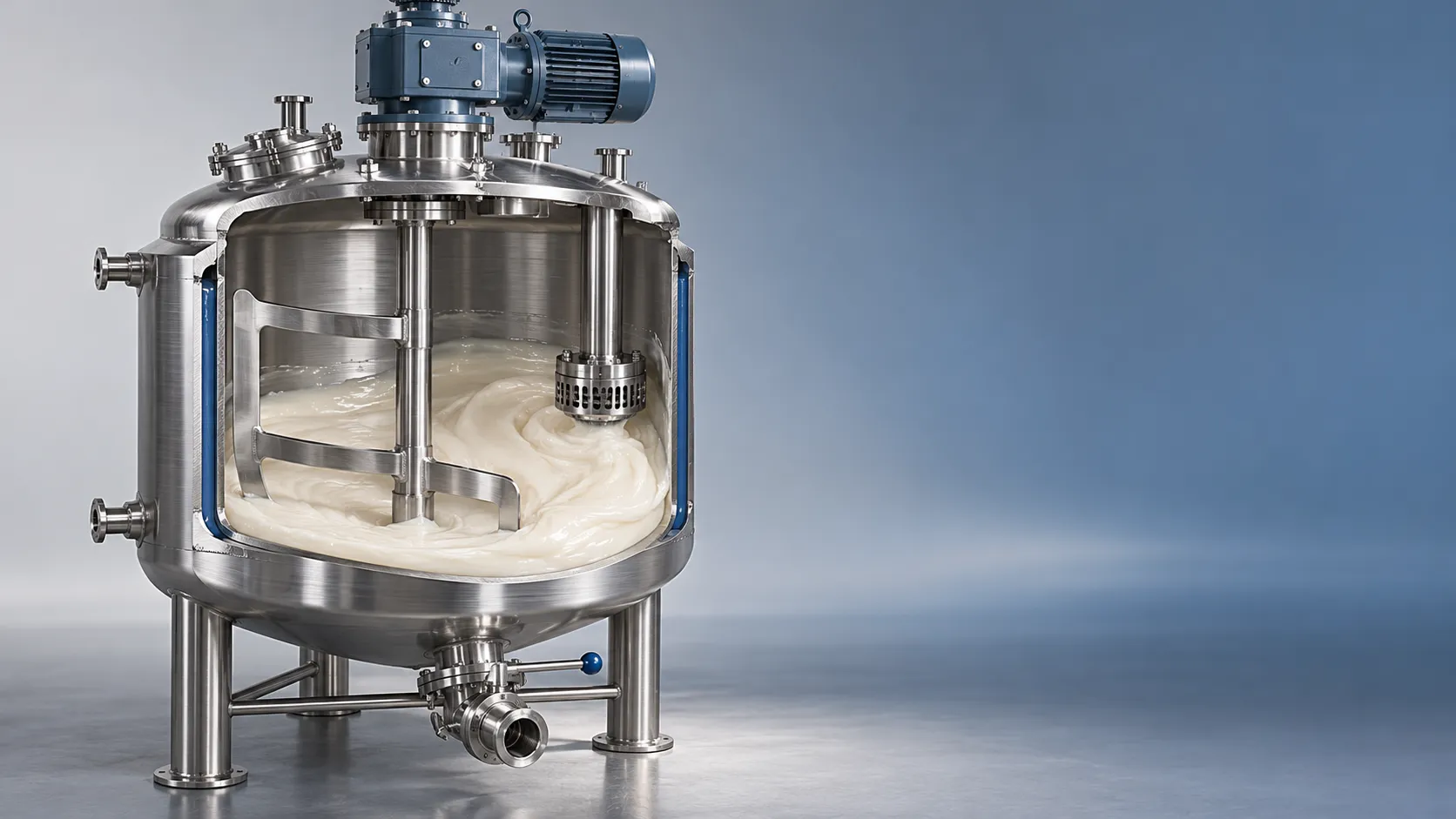
How to size ingredient mixing equipment for viscous formulations
Size mixing ingredient processing equipment for viscous formulations with expert guidance on rheology, torque, and heat removal. Learn how to select a system that delivers reliable batch performance.
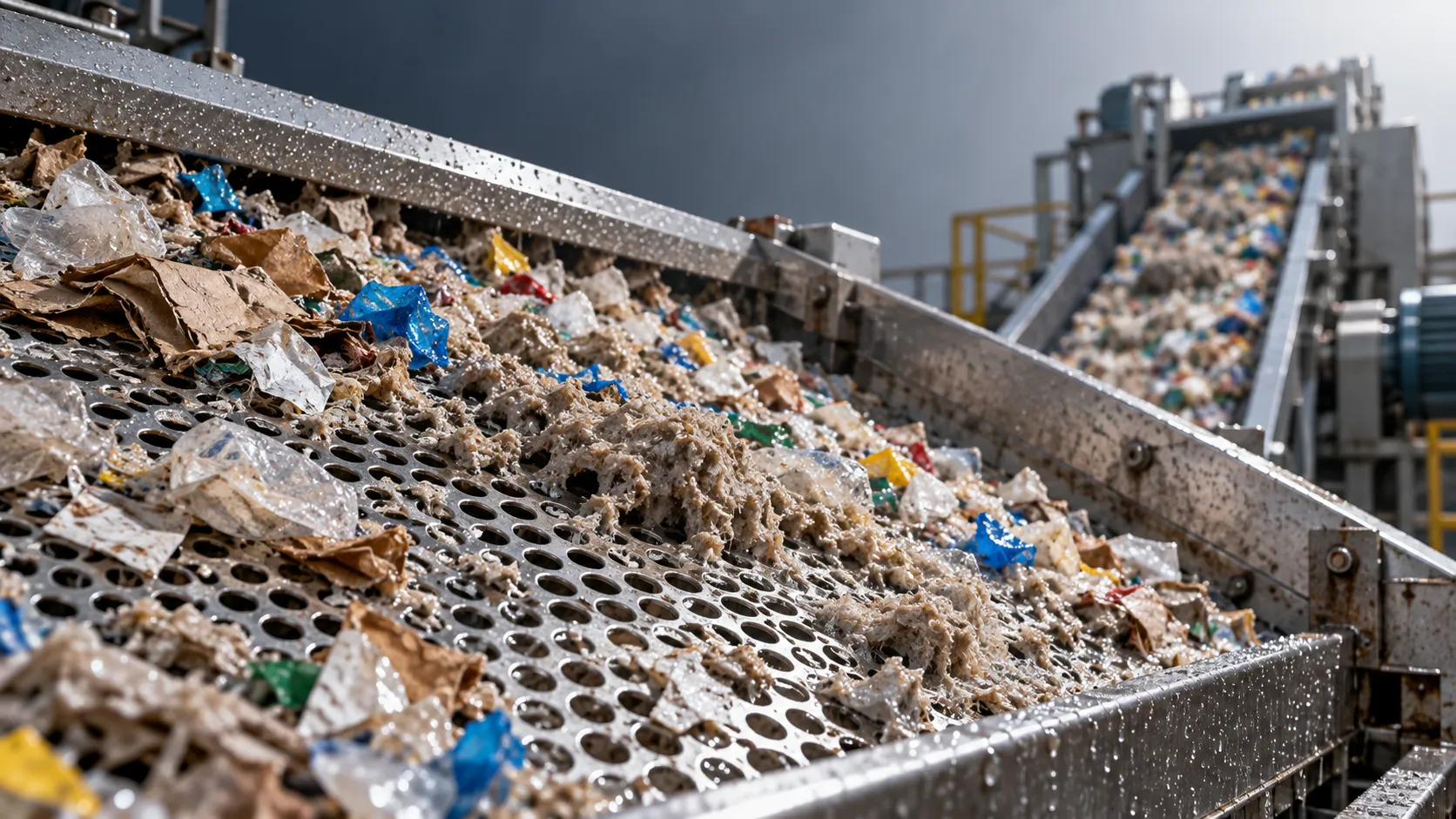
How moisture affects material separation in solid waste recovery
Improve solid waste recovery material separation by understanding moisture effects on screening and sorting. Discover practical ways to boost recovery, purity, and throughput.
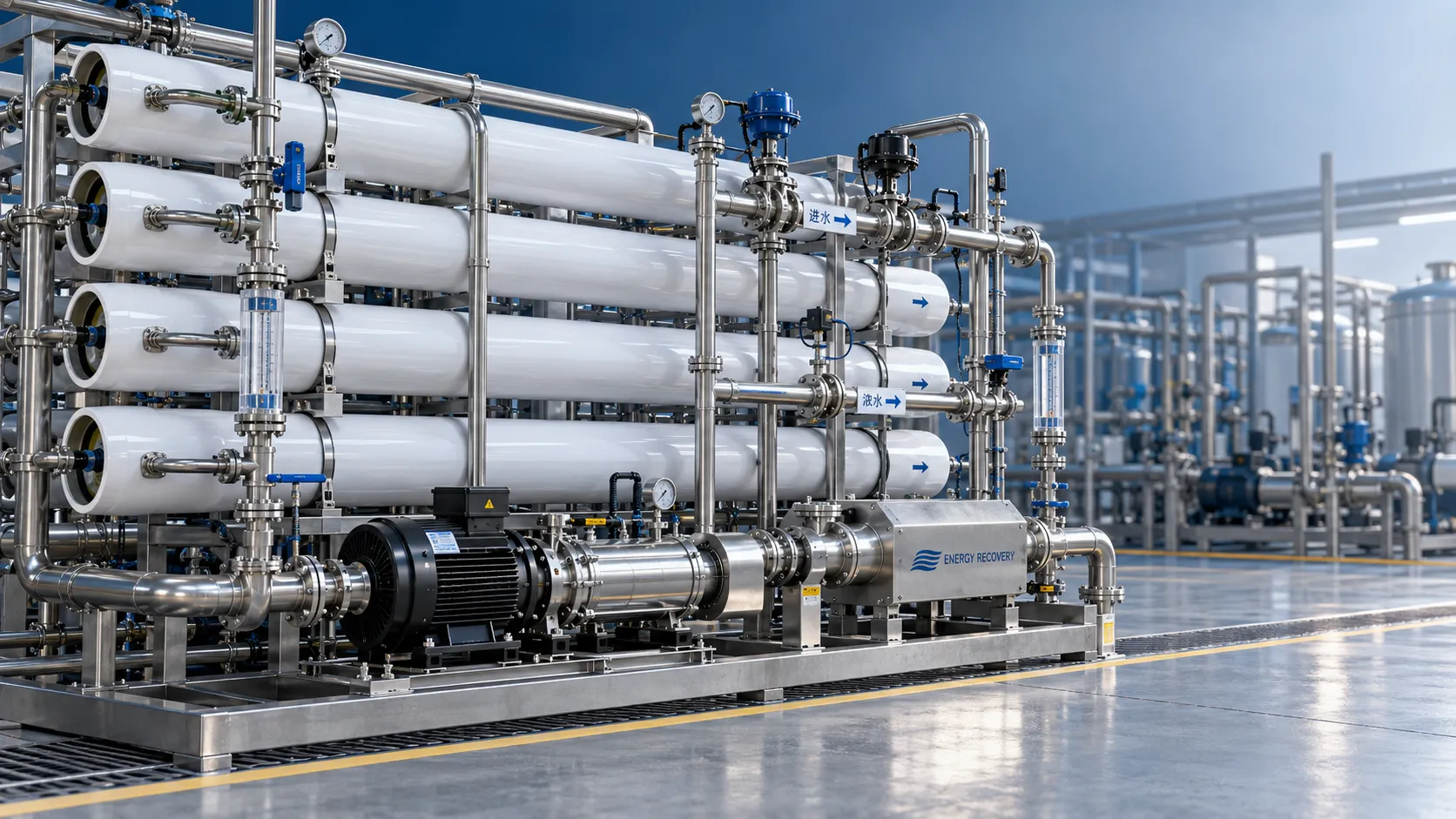
How to set recovery rates in seawater reverse osmosis system design
Explore seawater desalination systems engineering: learn to set SWRO recovery rates that balance energy, scaling risks, and water quality for reliable, cost-effective operation.
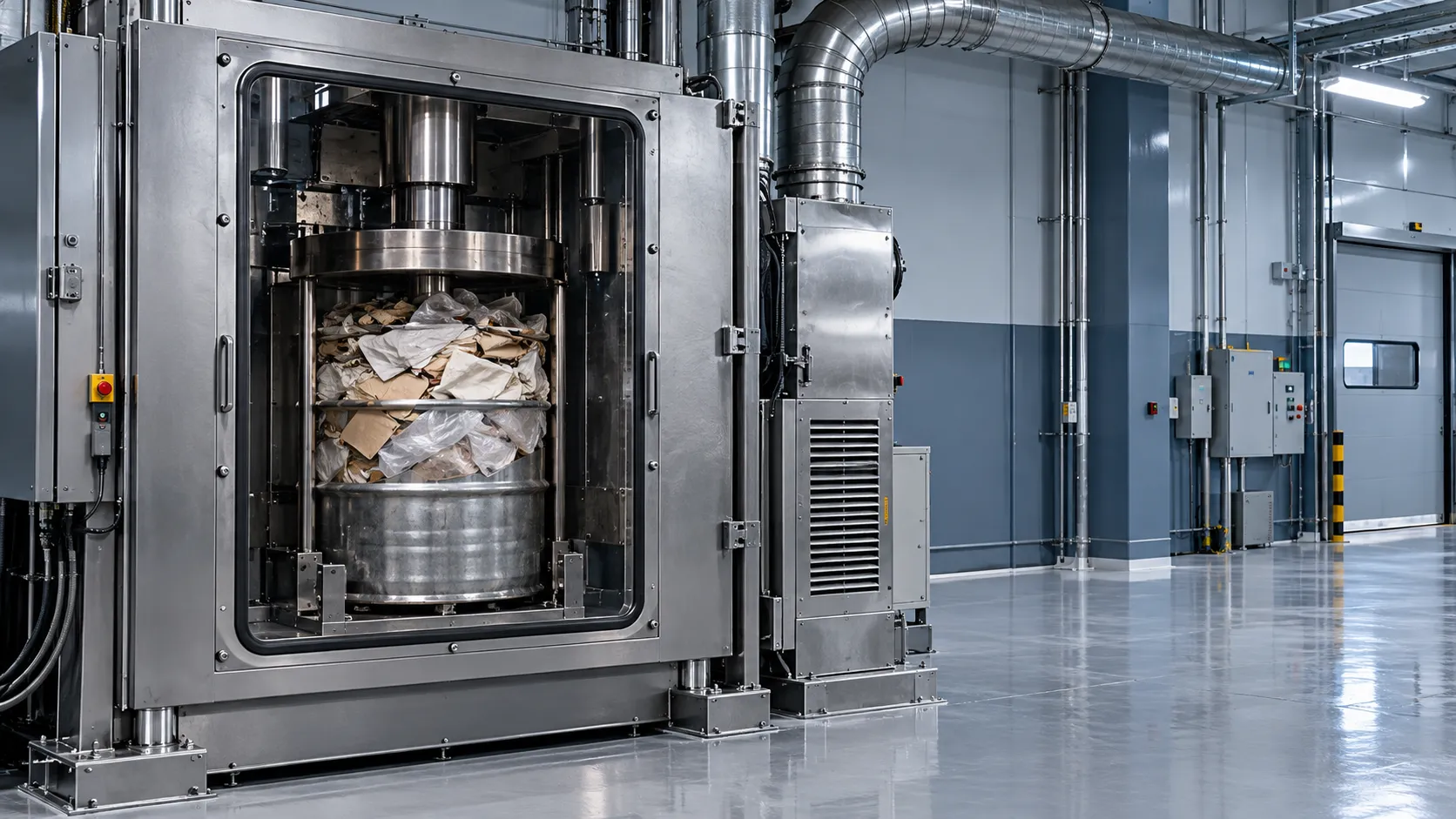
When is compaction suitable for solid nuclear waste treatment?
Is compaction right for solid nuclear waste treatment? Discover suitable waste streams, key safety checks, and disposal requirements to reduce package volume and optimize costs.
How solids concentration affects dewatering in waste recovery systems
Optimize waste recovery systems dewatering with insights on solids concentration. Learn to balance throughput, cake dryness, and solids capture while avoiding costly equipment overloads.