
Industry News
Curation by industry experts
Hot Articles
Popular Tags
Industrial wastewater treatment: the mistakes that drive up OPEX
In industrial wastewater treatment, rising OPEX is rarely caused by one major failure—it usually comes from avoidable design, operation, and procurement mistakes that compound over time. For project managers and engineering leaders, understanding these hidden cost drivers is essential to improving compliance, system reliability, and lifecycle performance while keeping industrial wastewater strategies aligned with tighter environmental and capital-efficiency goals.
In practice, a plant can meet discharge targets in month 1 and still become financially inefficient by month 12. The gap often comes from poor influent characterization, oversized or undersized equipment, unstable chemical dosing, weak automation logic, and procurement decisions based only on CAPEX. In large industrial wastewater systems, even a 3% to 8% decline in recovery, uptime, or energy efficiency can materially change annual operating cost.
For EPC teams, utility owners, and project leaders managing expansion or retrofit programs, the challenge is no longer limited to “can the system run?” The real question is whether the treatment train can run for 24 to 36 months with predictable cost, manageable sludge volume, stable compliance, and enough flexibility to absorb feed variability. That is where the most expensive mistakes usually hide.
Why industrial wastewater OPEX climbs faster than expected
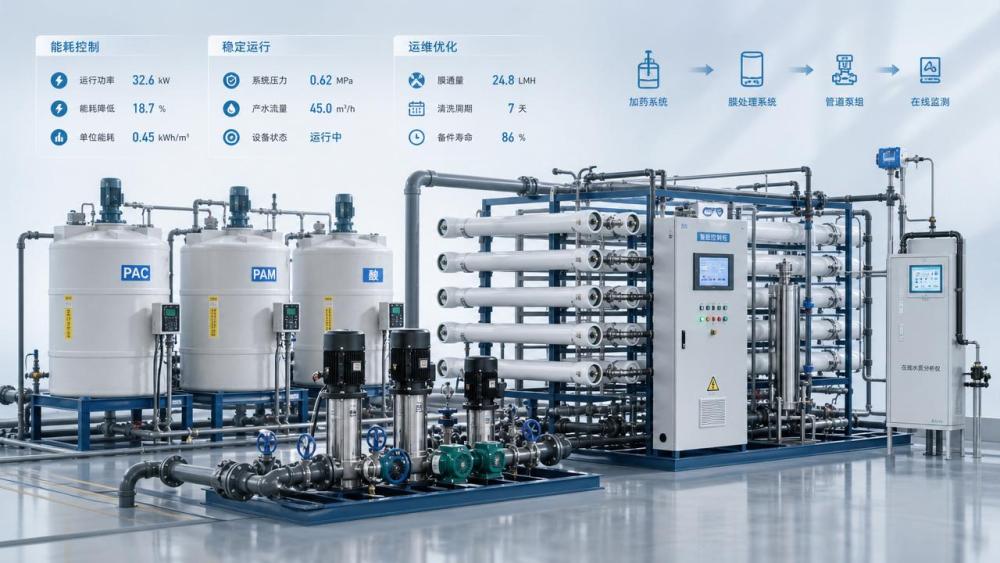
Most industrial wastewater facilities do not suffer from one catastrophic design flaw. Instead, OPEX increases through a chain of small technical mismatches. A treatment line designed around average water quality rather than peak loads may perform acceptably 70% of the time, but it will consume excessive chemicals, membrane cleaning cycles, and operator hours during the remaining 30%.
This pattern is especially common in sectors with fluctuating salinity, COD, TSS, oil content, or heavy metal concentration. Batch discharge, seasonal production shifts, and upstream process changes can push equalization, pretreatment, biological units, or advanced polishing beyond their optimal range. Once that happens, energy use, sludge handling, and maintenance frequency all move in the wrong direction.
The five cost centers project teams underestimate
- Energy demand in aeration, pumping, evaporation, and high-pressure separation
- Chemical consumption for pH control, coagulation, antiscalants, nutrients, and CIP
- Sludge dewatering, transport, and off-site disposal
- Unplanned downtime caused by fouling, scaling, corrosion, or instrumentation drift
- Labor intensity driven by manual sampling, frequent intervention, and poor control logic
Across many industrial wastewater projects, these five areas account for the majority of controllable OPEX. If just two of them are mismanaged, annual operating cost can increase by 10% to 25% without any visible hardware failure. That is why early design review and operating strategy alignment matter as much as equipment selection.
Typical mistakes and their operating consequences
The table below maps common planning and operating errors to their likely cost impact. It is a useful screening tool during FEED, bid evaluation, and post-commissioning performance review for industrial wastewater assets.
A key takeaway is that rising industrial wastewater OPEX is often cumulative. One weak pretreatment step may trigger a second problem in membrane performance, which then drives a third problem in cleaning frequency and wastewater reject management. This is why cost diagnosis should evaluate the full process chain rather than isolated equipment packages.
Design mistakes that lock in higher operating costs
The most expensive OPEX problems are often embedded before procurement is finalized. Once pipe racks, tank volumes, pump curves, control logic, and discharge routing are fixed, the plant may spend the next 10 to 15 years paying for assumptions that were never fully tested. In industrial wastewater projects, design discipline is the first line of cost control.
Mistake 1: Incomplete influent characterization
A 3-day composite sample is rarely enough for a system expected to handle variable industrial wastewater for multiple seasons. Project teams should review at least 4 dimensions: flow profile, contaminant range, shock-load events, and upstream process change probability. Where feasible, data collection over 4 to 8 weeks provides a much stronger basis for sizing equalization, chemical storage, and biological resilience.
Ignoring trace oil, silica, hardness, surfactants, or intermittent toxic compounds can be especially costly. These parameters may not dominate average daily reporting, yet they can determine fouling rate, foaming tendency, microbial inhibition, or concentrate management complexity. When these variables are missed, industrial wastewater systems tend to compensate through higher reagent use and more operator intervention.
Mistake 2: Poor equalization and buffering strategy
Equalization is not just a hydraulic tank. It is an OPEX stabilizer. If retention time is too short, for example below 6 to 8 hours in a highly variable batch-discharge facility, downstream units absorb the shock. Aeration systems cycle inefficiently, clarifiers lose solids control, and membranes see abrupt osmotic changes. A well-designed buffer can reduce chemical peaks, improve biological consistency, and lower alarm frequency.
What to verify during design review
- Peak-to-average flow ratio and hourly discharge pattern
- Minimum and maximum pH swing during production cycles
- Tank mixing intensity, dead-zone risk, and odor control needs
- Emergency storage duration, often 8 to 24 hours for critical facilities
Mistake 3: Overlooking sludge as a major OPEX driver
Many industrial wastewater budgets underestimate sludge generation, polymer demand, and disposal logistics. A treatment train may look efficient on the water side while quietly generating high handling costs on the solids side. Coagulation-heavy schemes, unstable biology, or excessive metal precipitation can all push sludge volume upward. In some plants, sludge management alone represents 20% to 40% of treatment OPEX.
That is why dewatering performance, cake dryness, storage time, and hauling frequency should be analyzed during basic design. A few percentage points of additional solids in the dewatered cake can materially reduce transport cost over a 12-month operating cycle.
Operational mistakes that slowly erode performance
Even a sound design can become expensive if operating discipline is weak. In industrial wastewater treatment, OPEX often rises gradually: blower settings drift, probe calibration intervals slip, CIP thresholds are triggered too late, and chemical dosing remains fixed while influent conditions change. None of these issues looks dramatic on a daily basis, but together they reduce efficiency quarter after quarter.
Mistake 4: Running manual or static dosing in a dynamic process
Static dosing may appear simple, but it is usually expensive in variable industrial wastewater applications. If pH, alkalinity, COD, phosphorus, or scaling tendency shifts through the day, fixed dosing leads to overdosing in one period and underdosing in another. Overdosing increases reagent cost and sludge; underdosing risks permit non-compliance and membrane damage.
A practical improvement is to combine online monitoring with operator-validated control windows. For many facilities, calibrating key probes every 7 to 14 days and reviewing dosing trends weekly can deliver measurable savings without full digital transformation.
Mistake 5: Delayed maintenance and poor cleaning discipline
Fouling is cheapest to control early and most expensive to correct late. This applies to filters, membranes, heat exchangers, evaporation surfaces, pumps, and dosing skids. A membrane system cleaned after a 10% to 15% normalized flux loss generally recovers better than one left until pressure rise becomes severe. The same principle applies to biological systems where diffuser fouling can silently increase power consumption for months.
Project managers should ask for maintenance plans based on condition thresholds, not only calendar intervals. If a site operates 24/7 with variable feed, threshold-based maintenance is usually more cost effective than fixed monthly intervention.
Mistake 6: Treating instrumentation as a secondary package
Cheap or poorly located instruments can distort the entire control strategy. A drifting conductivity meter may cause unnecessary reject, while a poorly maintained DO sensor can push aeration energy above target by 15% or more. In industrial wastewater plants, instrumentation should be treated as core process equipment rather than a minor electrical item.
The table below highlights common operational control points that deserve routine verification.
The pattern is clear: low-cost monitoring discipline prevents high-cost corrective action. For project owners overseeing multiple sites, a simple monthly OPEX dashboard built around 8 to 12 process indicators can reveal inefficiencies before they become budget problems.
Procurement mistakes that create long-term cost penalties
Procurement is where many industrial wastewater projects unintentionally lock in future inefficiency. A bid that is 6% cheaper at award can become 18% more expensive over three years if spare parts are proprietary, pump efficiency is lower, controls are fragmented, or local service response takes too long. For project managers, the goal is not lowest purchase price but lowest defensible lifecycle cost.
What a lifecycle-focused bid review should include
- Specific energy consumption across expected operating range, not only nameplate point
- Chemical compatibility and consumables replacement interval
- Spare parts lead time, ideally categorized as critical, standard, and long-lead
- Service access for cleaning, inspection, and shutdown maintenance
- Control system integration with site SCADA or DCS architecture
This matters particularly in high-salinity, high-COD, or ZLD-oriented industrial wastewater systems, where pretreatment stability and equipment maintainability influence every downstream cost. Procurement should therefore involve operations, maintenance, and process engineering at the same table, not only commercial and project controls.
Mistake 7: Buying equipment without operating envelopes
Many quotations look acceptable until real process variability is considered. If pumps, mixers, blowers, membranes, or thermal units are selected around a narrow design point, they may operate inefficiently through much of the year. A robust package should state performance at low, normal, and peak load conditions, along with cleaning intervals, turndown limits, and feed-quality constraints.
Four procurement questions worth asking suppliers
- What happens to energy use when feed conductivity or solids increase by 20%?
- Which components are expected to require replacement within the first 12, 24, and 36 months?
- How many hours are typically needed for routine maintenance shutdowns?
- What local technical support is available within 24 to 72 hours if critical failure occurs?
How project leaders can reduce industrial wastewater OPEX without major redesign
Not every plant needs a full retrofit to control industrial wastewater operating costs. In many cases, the first gains come from better visibility, tighter control windows, and targeted debottlenecking. A structured optimization program can often identify savings in 30 to 90 days, especially where the plant already has stable baseline operations but poor cost transparency.
A practical 5-step optimization sequence
- Audit the last 6 to 12 months of energy, chemical, sludge, and downtime data
- Rank OPEX drivers by cost impact and frequency, not by anecdotal severity
- Verify instrument accuracy and reset operating thresholds where needed
- Test quick-win changes such as dosing curves, aeration setpoints, and CIP triggers
- Build a 90-day review cycle with process, maintenance, and procurement stakeholders
This sequence is especially useful for multi-line plants, industrial parks, and staged expansion projects where new loads are entering an existing industrial wastewater infrastructure. It gives project leaders a way to improve reliability and cost performance before committing to larger CAPEX decisions.
Where intelligence-led decision support adds value
For organizations navigating stricter discharge limits, resource recovery targets, or desalination-linked water reuse programs, decision quality depends on more than equipment brochures. It requires an integrated view of treatment chemistry, process reliability, regulatory direction, and supplier capability. That is why intelligence platforms focused on advanced environmental infrastructure can help EPC firms and project owners compare technology pathways with better discipline.
Within the broader ecosystem covered by ESD—from large water treatment and ZLD to flue gas systems, seawater desalination, and high-reliability waste management—the same principle applies: lifecycle efficiency is determined by how well extreme process conditions, compliance obligations, and equipment strategy are connected early. Industrial wastewater is no exception.
Final takeaway for project managers
The most expensive industrial wastewater mistakes are rarely dramatic on day one. They appear as recurring chemical overuse, invisible energy drift, rising sludge disposal, shortening cleaning intervals, and avoidable downtime. For project managers and engineering leaders, the winning approach is disciplined: characterize feed thoroughly, design for variability, procure for lifecycle value, and operate from verified process data rather than assumptions.
If you are reviewing an upgrade, a new treatment package, or a cost-reduction roadmap for industrial wastewater assets, now is the right time to benchmark your current design and operating strategy against real lifecycle drivers. Contact us to explore tailored insights, compare solution pathways, and learn more about practical options for reducing OPEX while strengthening compliance and long-term system resilience.
Recommended News
How feed salinity affects energy use in ZLD system brine treatment
ZLD system brine treatment: discover how feed salinity drives energy use, scaling risk, and technology choices for efficient, reliable zero liquid discharge.
How coastal cities can select desalination solutions for peak demand
Seawater desalination solutions for coastal cities: compare firm peak capacity, intake risk, energy resilience, and lifecycle value to secure reliable water supply.
How SCR denitrification systems in Europe meet Industrial Emissions rules
SCR denitrification systems Europe: learn how permit-led design, ammonia-slip control, catalyst management and monitoring support Industrial Emissions compliance.
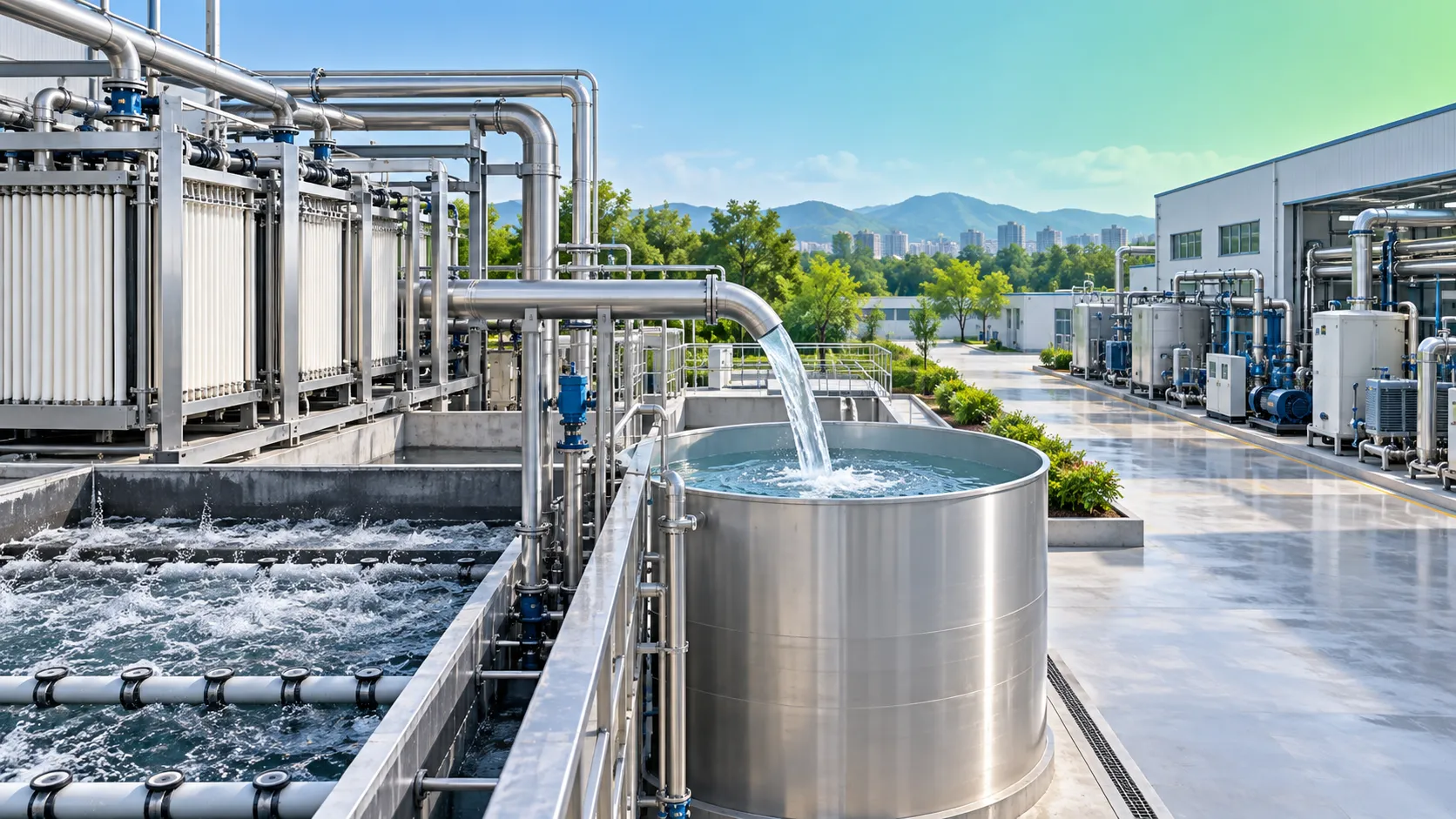
When does MBR equipment make sense for wastewater reuse?
Water treatment equipment for wastewater reuse: learn when MBR delivers compact, reliable low-solids effluent—and when alternative treatment trains offer better value.
How North America shapes global environmental governance standards
Global environmental governance North America: discover how regulation, finance, and procurement raise worldwide standards and reshape environmental projects.
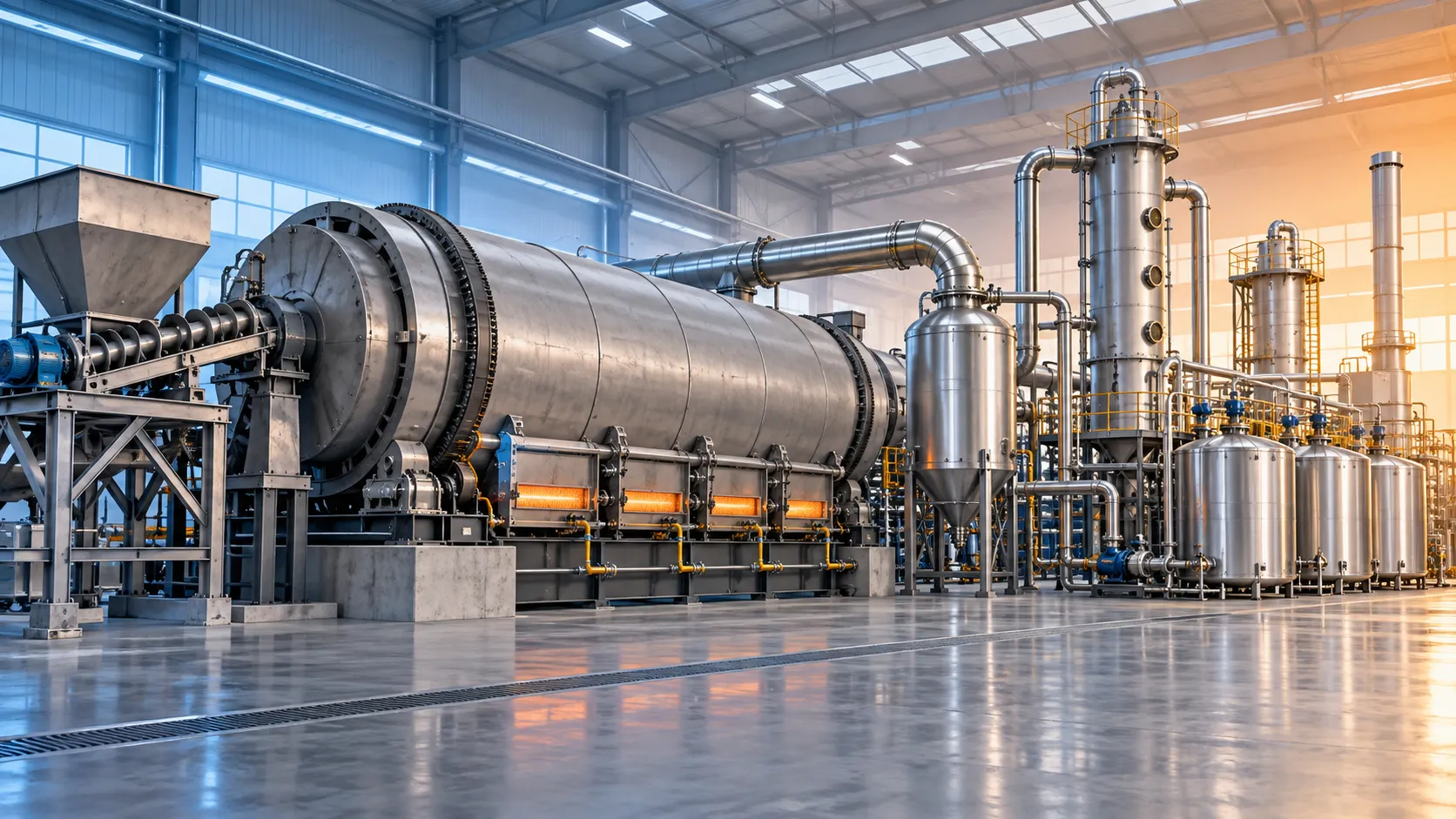
How reactor capacity affects throughput in pyrolysis systems
Pyrolysis systems reactor capacity explained: learn how heat transfer, residence time, feed quality, and emissions controls determine reliable throughput.
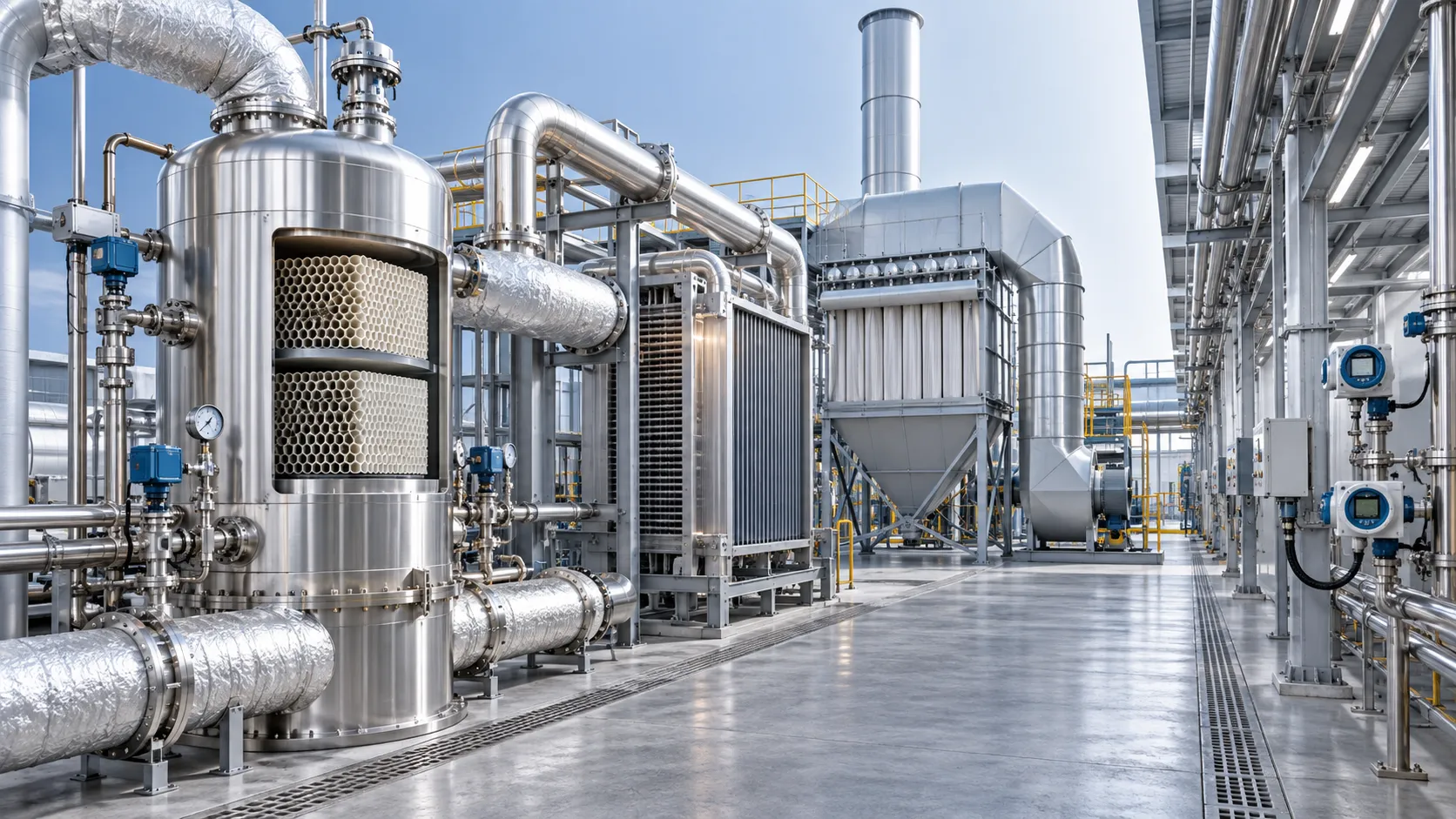
When low-temperature reaction equipment is the right fit for heat-sensitive processes
Low-temperature reaction equipment helps protect heat-sensitive streams, improve energy integration, and maintain reliable conversion. Explore key selection factors today.
When do water reuse systems deliver a practical payback?
Water reuse systems deliver practical payback when they cut water, discharge, and downtime costs. Learn how to match treatment, recovery, and reuse quality for lasting ROI.
When do ZLD systems for power generation justify their energy use?
ZLD systems for power generation: learn when energy-intensive water recovery delivers stronger compliance, resilience, and long-term value.