
Industry News
Curation by industry experts
Hot Articles
Popular Tags
Industrial Waste Recovery Equipment: When Payback Looks Good but Risk Stays High
Industrial waste recovery equipment can look profitable. Why does the investment still feel exposed?
Industrial waste recovery equipment often enters a review process with strong headlines.
Recovered metals, solvents, oils, heat, and secondary fuels can create an attractive payback story.
That story has become louder as circular economy targets tighten and disposal costs keep rising.
Still, a short modeled payback period does not automatically mean a low-risk purchase.
In practice, the return depends on what enters the system every day, not what appears in a spreadsheet once.
Feedstock composition shifts, contamination spikes, moisture changes, and unstable throughput can all reduce recovery value.
The bigger issue is that industrial waste recovery equipment usually sits inside a larger compliance and operations chain.
If one link fails, the financial case weakens quickly.
This is why intelligence-led evaluation matters.
ESD tracks recovery systems alongside water treatment, flue gas control, desalination, and nuclear waste governance.
That wider view helps explain a simple truth.
A recovery line is never just a machine purchase. It is a reliability, regulation, and resource-loop decision.
What should be counted before trusting the payback model?
The first filter is whether the model reflects the real waste stream.
Many proposals assume consistent calorific value, particle size, contamination level, and recovery rate.
Real sites rarely behave that neatly.
A stronger review tests the economics against operating variation, shutdown time, and off-spec output.
It also separates value recovery from cost avoidance.
Those are related, but they are not the same.
Selling recovered material depends on quality and market pricing.
Avoiding landfill, hazardous handling, or transport charges depends on regulation and logistics.
The most dependable evaluations stress-test both sides.
A credible payback model for industrial waste recovery equipment should survive downside cases, not only base cases.
Where do projects usually underestimate technical risk?
The most common error is treating waste like a standard raw material.
It is not.
Industrial waste recovery equipment must process variability while still meeting throughput, emissions, and output targets.
That balancing act is difficult in pyrolysis, solvent recovery, metals separation, and thermal conversion systems.
Another weak point is integration.
A recovery line may require pretreatment, dewatering, sorting, flue gas treatment, wastewater polishing, or residue stabilization.
Once those supporting systems are added, capex and operating complexity can rise sharply.
This is where ESD’s cross-sector lens becomes useful.
A solvent or pyrolysis unit cannot be judged in isolation if the downstream scrubber, ZLD loop, or ash management path is uncertain.
The equipment may still be technically sound, yet the full process train may not be commercially stable.
- Lab results were achieved on selected samples, not mixed production waste.
- Reference sites use different moisture, chloride, sulfur, or heavy metal levels.
- Performance guarantees focus on throughput, but avoid residue quality or emissions consistency.
- Maintenance demand is described in hours, not in spare-part cost and restart risk.
When those signals appear, the equipment may still work, but the business case needs a wider buffer.
Does compliance risk really change the economics that much?
Yes, and often more than early models suggest.
Industrial waste recovery equipment usually sits under overlapping environmental obligations.
A project may start as a resource recovery decision, then become an emissions-control and reporting burden.
Permitting timelines can delay startup.
Residue classification can change disposal routes.
Energy consumption can affect carbon exposure, especially where CBAM-linked supply chains matter.
This is not only a European issue.
Global buyers increasingly ask for verified environmental performance across industrial processes.
A recovery system that saves disposal cost but creates unstable reporting or permit risk may weaken procurement credibility later.
A practical review asks different questions.
- Will the process create secondary wastewater that needs advanced treatment?
- Are off-gas treatment and monitoring included in the original scope?
- Could recovered outputs be reclassified if contamination changes?
- What happens if local environmental limits tighten within three years?
Industrial waste recovery equipment with a durable compliance path is usually worth more than equipment with only a faster nominal payback.
How can similar systems produce very different results across sites?
Because the surrounding operation defines the outcome.
Two sites may buy similar industrial waste recovery equipment and report very different returns.
One has reliable segregation, trained operators, stable utilities, and clear downstream buyers.
The other has mixed feed, limited instrumentation, and no firm offtake path.
The machine is only part of the answer.
The stronger outcome usually comes from process discipline around the equipment.
That includes sampling routines, storage rules, contamination control, and escalation plans when the waste profile drifts.
It also includes commercial discipline.
Recovered materials need stable outlets, quality documentation, and realistic pricing assumptions.
Without that, industrial waste recovery equipment becomes a processing asset without full value capture.
That difference explains why benchmark visits matter more than brochure comparisons.
What is a more reliable way to compare industrial waste recovery equipment offers?
A better comparison starts with risk-weighted value, not lowest capex.
In actual procurement reviews, the more useful question is not, “Which line is cheaper?”
It is, “Which line remains acceptable when inputs, regulations, and uptime are less favorable?”
That pushes the evaluation toward evidence.
- Ask for references using comparable waste chemistry, not just similar industry labels.
- Request guaranteed ranges for recovery rate, residue generation, and energy use.
- Model three cases: expected, constrained, and adverse.
- Separate mandatory environmental systems from optional performance upgrades.
- Check service response, spare-part localization, and operator training depth.
This is also the point where ESD-style strategic intelligence becomes practical rather than theoretical.
When technology data, regulation tracking, and global project references are reviewed together, weak assumptions become easier to spot.
That reduces the chance of buying industrial waste recovery equipment that performs well in presentations but struggles in operation.
So when does a strong payback actually deserve confidence?
Confidence becomes reasonable when the financial case is supported by operating proof, compliance clarity, and market realism.
Industrial waste recovery equipment can absolutely deliver strong returns.
The better projects usually share the same traits.
They know the waste stream well.
They define output quality tightly.
They price compliance honestly.
They test downside scenarios before approval, not after commissioning.
The next step is usually straightforward.
Build a short evaluation sheet covering feedstock variability, integration scope, permit path, output market, and guaranteed performance.
Then compare every industrial waste recovery equipment offer against the same criteria.
That approach will not remove risk.
It does something more useful.
It makes the risk visible early, while there is still time to judge whether the payback is real enough to trust.
Recommended News
How reactor retention time affects denitrification equipment performance
Denitrification equipment reactor performance depends on retention time, carbon, mixing, and load control. Explore practical insights for reliable nitrogen removal.
How feed salinity affects energy use in ZLD system brine treatment
ZLD system brine treatment: discover how feed salinity drives energy use, scaling risk, and technology choices for efficient, reliable zero liquid discharge.
How coastal cities can select desalination solutions for peak demand
Seawater desalination solutions for coastal cities: compare firm peak capacity, intake risk, energy resilience, and lifecycle value to secure reliable water supply.
How SCR denitrification systems in Europe meet Industrial Emissions rules
SCR denitrification systems Europe: learn how permit-led design, ammonia-slip control, catalyst management and monitoring support Industrial Emissions compliance.
When does MBR equipment make sense for wastewater reuse?
Water treatment equipment for wastewater reuse: learn when MBR delivers compact, reliable low-solids effluent—and when alternative treatment trains offer better value.
How North America shapes global environmental governance standards
Global environmental governance North America: discover how regulation, finance, and procurement raise worldwide standards and reshape environmental projects.
How reactor capacity affects throughput in pyrolysis systems
Pyrolysis systems reactor capacity explained: learn how heat transfer, residence time, feed quality, and emissions controls determine reliable throughput.
When low-temperature reaction equipment is the right fit for heat-sensitive processes
Low-temperature reaction equipment helps protect heat-sensitive streams, improve energy integration, and maintain reliable conversion. Explore key selection factors today.
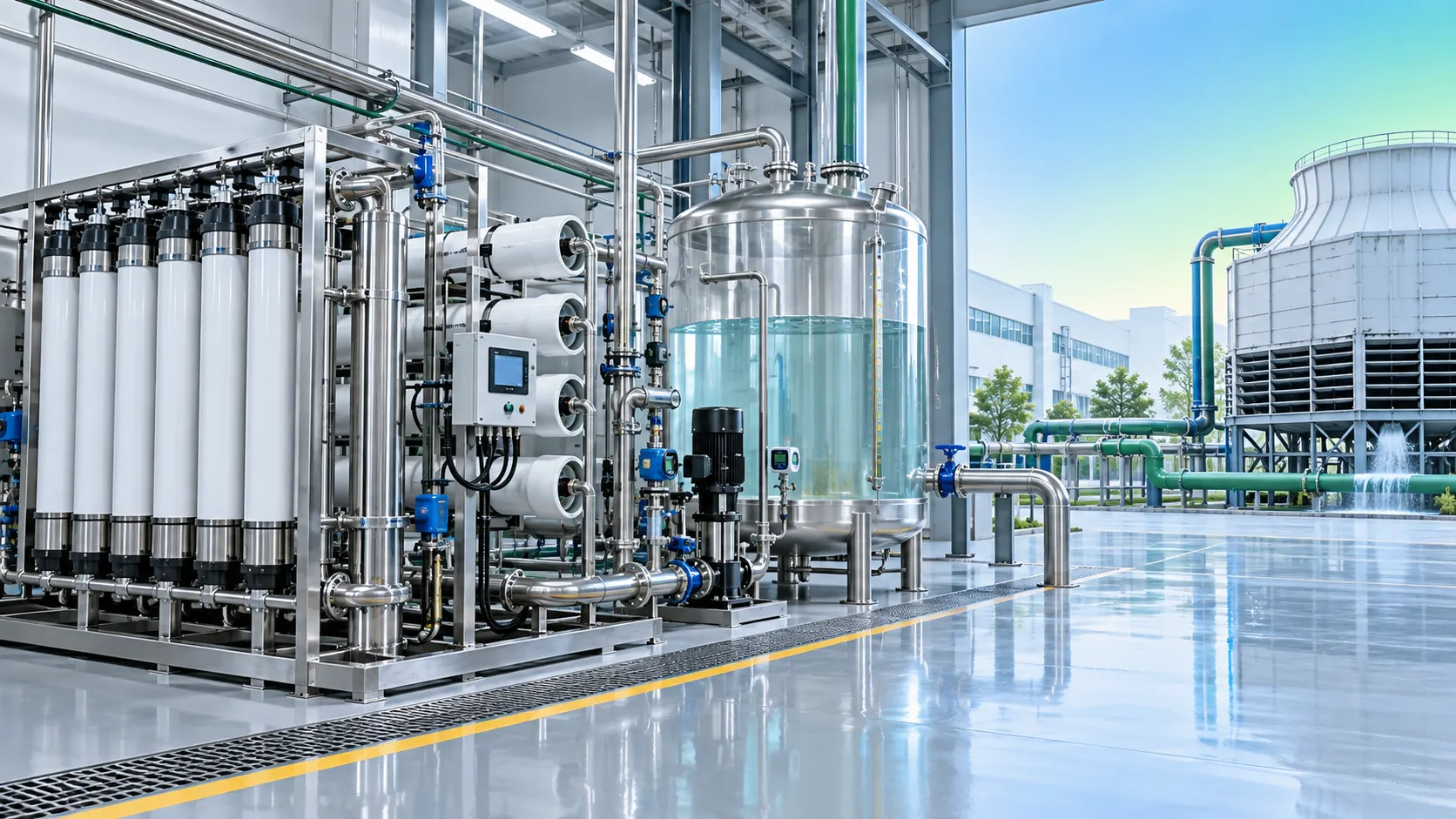
When do water reuse systems deliver a practical payback?
Water reuse systems deliver practical payback when they cut water, discharge, and downtime costs. Learn how to match treatment, recovery, and reuse quality for lasting ROI.