
Industry News
Curation by industry experts
Hot Articles
Popular Tags
Technical Product Comparison: 7 Criteria That Change Equipment Selection
Technical Product Comparison: 7 Criteria That Change Equipment Selection
In high-stakes environmental engineering, a technical product comparison is never just about price or specs.
The real decision sits inside process risk, compliance exposure, uptime pressure, and long-term operating stability.
That is especially true in water treatment, solid waste recovery, seawater desalination, flue gas control, and nuclear waste management.
A useful technical product comparison asks one practical question.
Which option will still perform when feed quality shifts, regulations tighten, and lifecycle costs become visible?
1. Process Fit Comes Before Performance Claims
Every serious technical product comparison should begin with process fit.
A membrane, reactor, scrubber, sorter, or vitrification unit may look strong on paper.
It still fails the selection test if it does not match the actual upstream and downstream conditions.
This means reviewing feed variability, contaminant profile, temperature range, salinity, solids loading, corrosion potential, and integration constraints.
In desalination, for example, membrane output depends heavily on fouling tendency and pretreatment quality.
In waste recovery, sorter accuracy can collapse when the waste stream changes composition across seasons or districts.
What to verify
- Design envelope versus actual operating envelope
- Tolerance to feed fluctuations and process shocks
- Compatibility with existing balance-of-plant systems
- Performance evidence from similar duty conditions
2. Compliance Margin Often Decides the Better Option
A technical product comparison becomes more useful when it measures compliance margin, not just compliance status.
Meeting today’s standard is not enough in sectors shaped by stricter discharge, emissions, traceability, and safety rules.
The stronger choice usually has headroom.
That headroom protects projects from permit revisions, audit pressure, carbon-linked trade measures, and future retrofits.
For flue gas treatment, low-temperature catalyst behavior matters as much as nominal removal efficiency.
For nuclear waste systems, documentation discipline and long-term containment stability may matter more than headline throughput.
Decision signal
If two products perform similarly, the one with wider compliance margin usually lowers strategic risk.
3. Lifecycle Cost Beats Purchase Price
Price still matters, but it should not dominate a technical product comparison.
High-end environmental equipment creates costs slowly, then all at once.
Energy draw, consumables, cleaning frequency, reagent use, spare parts, shutdown losses, and labor intensity usually outweigh procurement savings.
This is where many equipment selections go off track.
A cheaper desalination train can become expensive through membrane replacement cycles and pretreatment instability.
A lower-cost pyrolysis line may struggle with heat recovery efficiency and residue handling.
A smart technical product comparison converts those hidden burdens into a five-year or ten-year ownership model.
Include these cost buckets
- Specific energy consumption
- Consumables and chemicals
- Maintenance intervals and service access
- Downtime impact on plant output
- End-of-life replacement and disposal costs
4. Reliability Under Stress Is More Important Than Peak Output
In actual operations, peak output is rarely the hardest test.
The harder test is stable output during upset conditions.
That is why reliability deserves its own place in any technical product comparison.
Ask how the equipment behaves during power variation, feed contamination spikes, rapid load changes, or operator error.
Review mean time between failures, restart complexity, alarm logic, and critical component redundancy.
This matters even more in remote sites, large EPC projects, and regulated facilities.
When downtime triggers permit risk or public exposure, resilience becomes a buying criterion, not a maintenance topic.
5. Data Quality and Control Architecture Shape Long-Term Value
A modern technical product comparison should look beyond mechanical design.
Control logic, sensor reliability, and data transparency now shape operating performance just as strongly.
Equipment with weak instrumentation can hide fouling, drift, reagent waste, or emissions instability until costs rise.
Better systems make performance visible.
They support predictive maintenance, remote diagnostics, audit-ready records, and cleaner integration with plant control platforms.
From recent market shifts, this is becoming a stronger differentiator.
The more complex the asset, the more valuable trustworthy operating data becomes.
Check these points
- Sensor calibration stability
- Historian and reporting capability
- Open protocol compatibility
- Cybersecurity and remote support controls
6. Supplier Capability Can Change the Technical Outcome
A technical product comparison is also a comparison of execution capability.
Even solid equipment underperforms when the supplier cannot support design review, commissioning, tuning, training, and after-sales response.
This is not a soft factor.
In many projects, supplier maturity directly affects ramp-up speed and first-year performance.
Look at application references, engineering depth, regional service coverage, spare parts lead time, and willingness to share failure history.
When a vendor avoids hard questions about edge cases, that is already part of the technical product comparison.
7. Risk Alignment Creates Better Selection Decisions
The last criterion brings the others together.
A technical product comparison should rank options by risk alignment with the project’s real priorities.
Some facilities can accept higher maintenance if recovery yield is exceptional.
Others need conservative performance because permit failure, water shortage, emissions exceedance, or radiological risk is intolerable.
This also means weighting criteria differently by application.
A municipal ZLD upgrade, an SWRO expansion, and a hazardous waste stabilization project should not share the same scorecard.
The strongest selection decisions are not generic. They are explicitly risk-shaped.
A Practical Technical Product Comparison Framework
To make the process usable, convert each criterion into a weighted matrix.
- Define process conditions and failure consequences first.
- Set weighted scores for process fit, compliance margin, lifecycle cost, reliability, data quality, supplier capability, and risk alignment.
- Require site-specific evidence, not generic brochures.
- Stress-test assumptions using upset scenarios.
- Recalculate rankings with future regulation and energy costs included.
This approach makes a technical product comparison more disciplined and more defendable during internal review.
It also helps separate real technical advantage from polished marketing language.
Final Takeaway
The best technical product comparison is not the one with the largest spreadsheet.
It is the one that reflects operational reality.
When equipment choices affect compliance, resource efficiency, plant continuity, and public trust, selection needs sharper filters.
Focus on process fit, compliance margin, lifecycle cost, reliability, data visibility, supplier strength, and project-specific risk.
That is what changes equipment selection in serious environmental infrastructure.
Before the next procurement round, rebuild the scorecard around these seven criteria and test every claim against plant reality.
Recommended News
How feed salinity affects energy use in ZLD system brine treatment
ZLD system brine treatment: discover how feed salinity drives energy use, scaling risk, and technology choices for efficient, reliable zero liquid discharge.
How coastal cities can select desalination solutions for peak demand
Seawater desalination solutions for coastal cities: compare firm peak capacity, intake risk, energy resilience, and lifecycle value to secure reliable water supply.
How SCR denitrification systems in Europe meet Industrial Emissions rules
SCR denitrification systems Europe: learn how permit-led design, ammonia-slip control, catalyst management and monitoring support Industrial Emissions compliance.
When does MBR equipment make sense for wastewater reuse?
Water treatment equipment for wastewater reuse: learn when MBR delivers compact, reliable low-solids effluent—and when alternative treatment trains offer better value.
How North America shapes global environmental governance standards
Global environmental governance North America: discover how regulation, finance, and procurement raise worldwide standards and reshape environmental projects.
How reactor capacity affects throughput in pyrolysis systems
Pyrolysis systems reactor capacity explained: learn how heat transfer, residence time, feed quality, and emissions controls determine reliable throughput.
When low-temperature reaction equipment is the right fit for heat-sensitive processes
Low-temperature reaction equipment helps protect heat-sensitive streams, improve energy integration, and maintain reliable conversion. Explore key selection factors today.
When do water reuse systems deliver a practical payback?
Water reuse systems deliver practical payback when they cut water, discharge, and downtime costs. Learn how to match treatment, recovery, and reuse quality for lasting ROI.
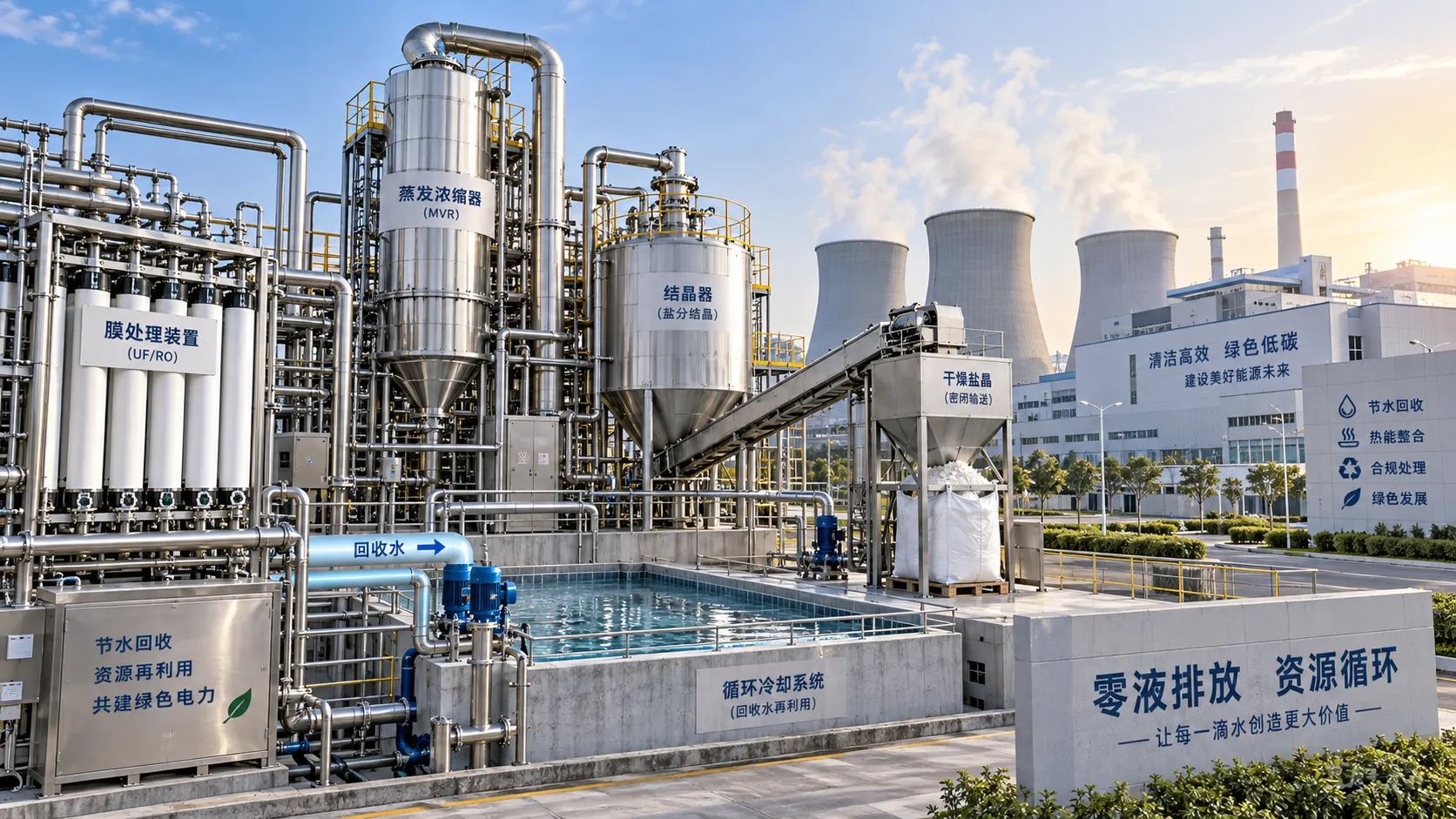
When do ZLD systems for power generation justify their energy use?
ZLD systems for power generation: learn when energy-intensive water recovery delivers stronger compliance, resilience, and long-term value.