A packaged treatment system reduces project risk when the treatment duty is sufficiently defined, the process train has evidence behind it, and one delivery boundary covers the equipment that must operate together. This is most valuable where water quality varies, discharge limits are tight, reuse demand is continuous, or a delayed start-up would disrupt an operating plant. The package is not simply a convenient purchasing format. It is a way to make process responsibility, mechanical interfaces, automation logic, documentation, and commissioning obligations visible before construction begins.
A water treatment equipment package is therefore most defensible when it eliminates uncertainty that would otherwise sit between separate design firms, equipment vendors, civil contractors, electrical installers, and site teams. It may add little value for a simple, stable-duty installation with ample site experience and fully standardized components. It can materially reduce exposure when treatment performance depends on the interaction of pretreatment, chemical dosing, separation equipment, controls, waste handling, and utilities.
Risk falls when the process boundary is real
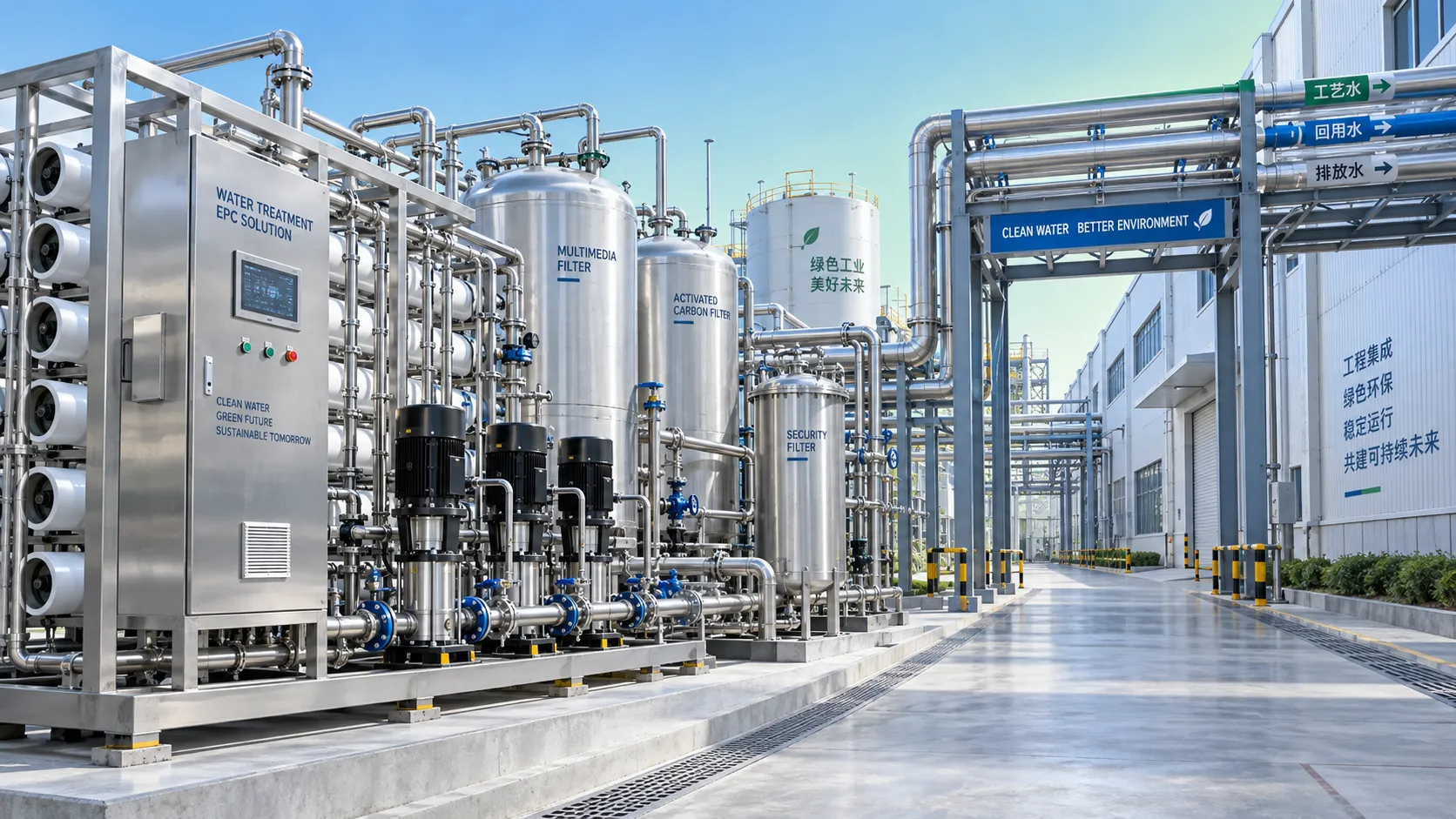
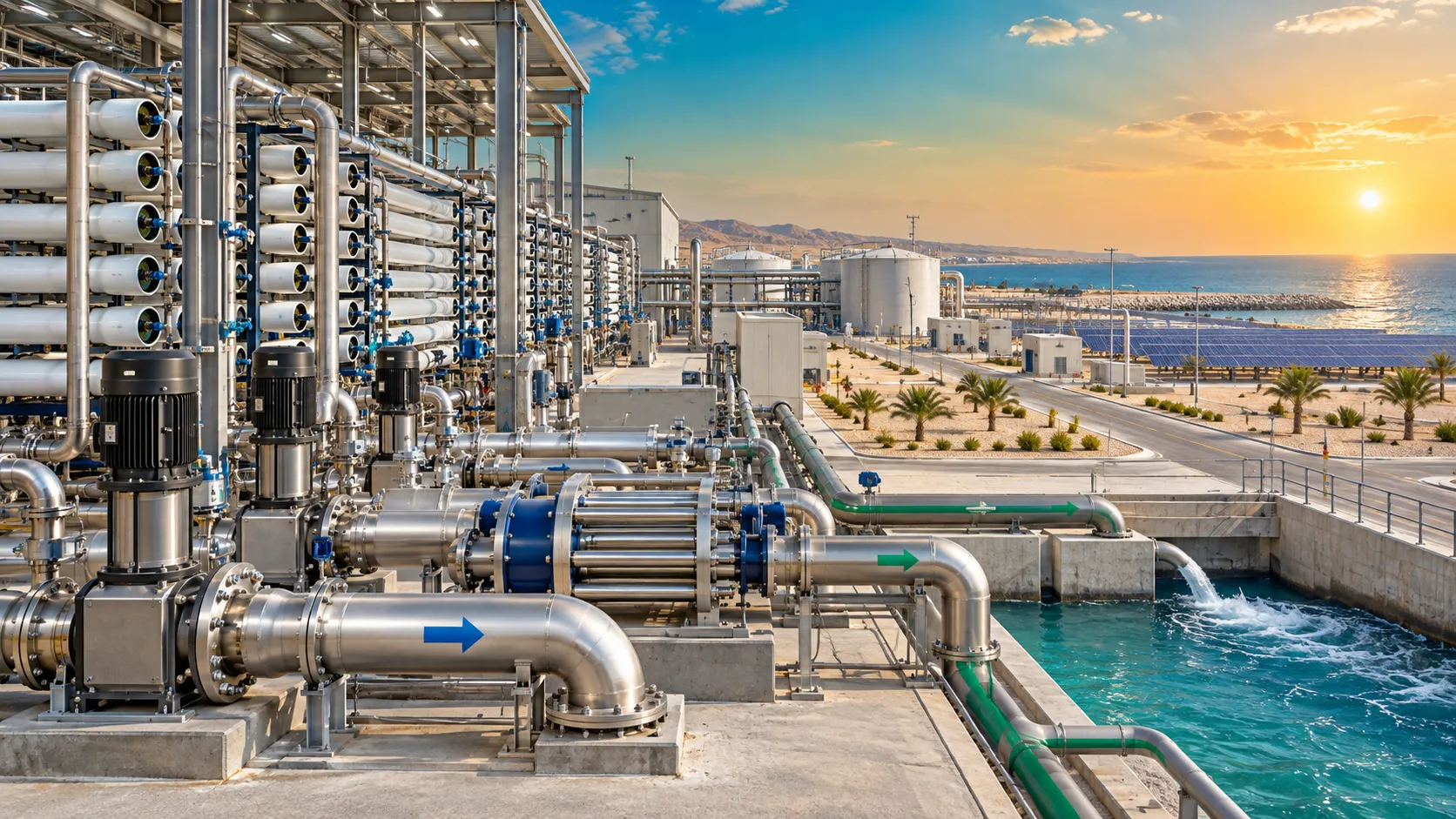
Packages work best when they are defined around an operating process rather than around an arbitrary equipment list. A membrane plant, for example, may include raw-water screening, media or membrane pretreatment, cartridge filtration, high-pressure pumping, reverse osmosis skids, chemical cleaning, permeate conditioning, concentrate routing, and the control architecture that links them. Leaving several of these items outside the package can create a gap at exactly the point where process stability depends on coordination.
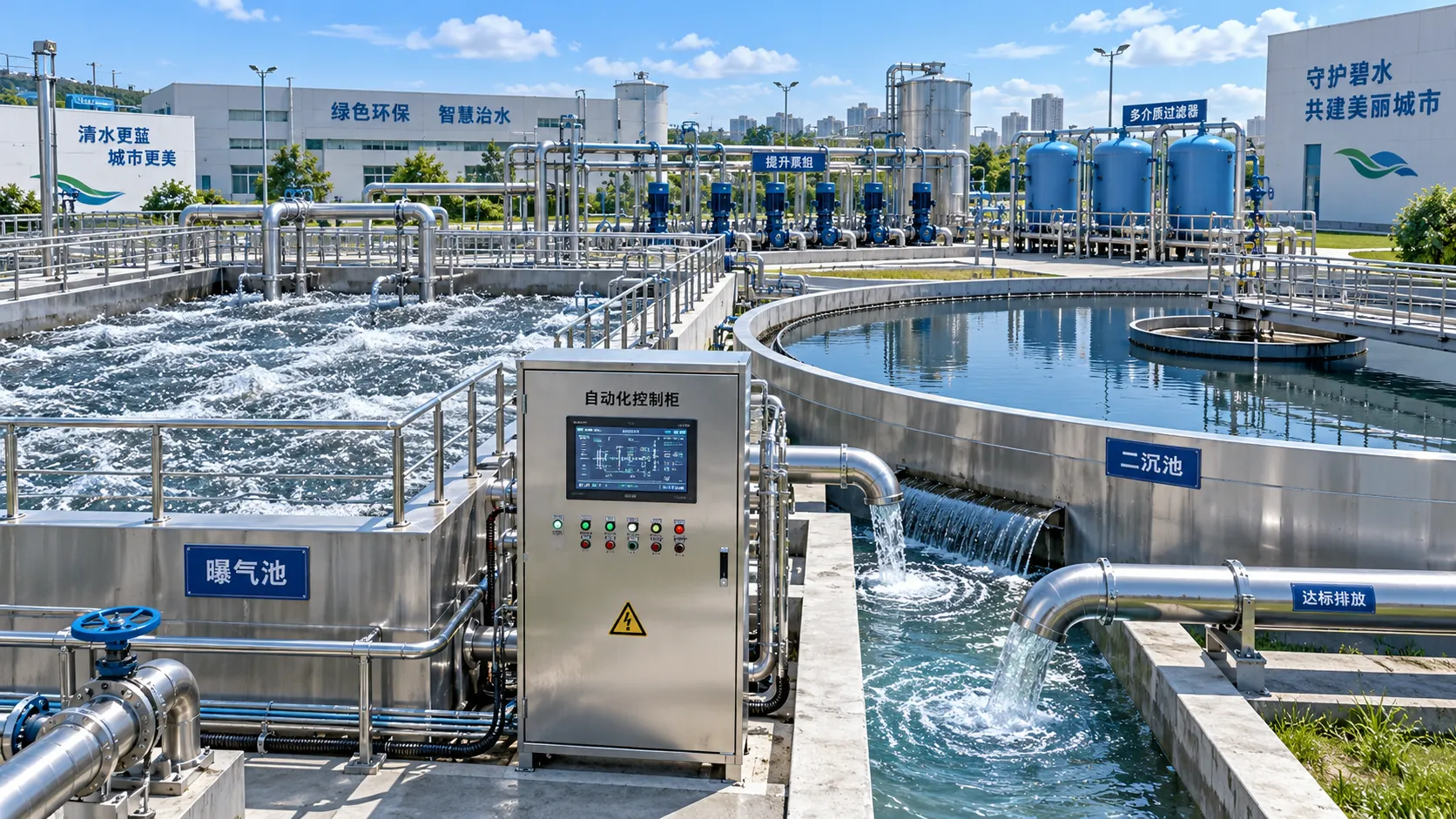
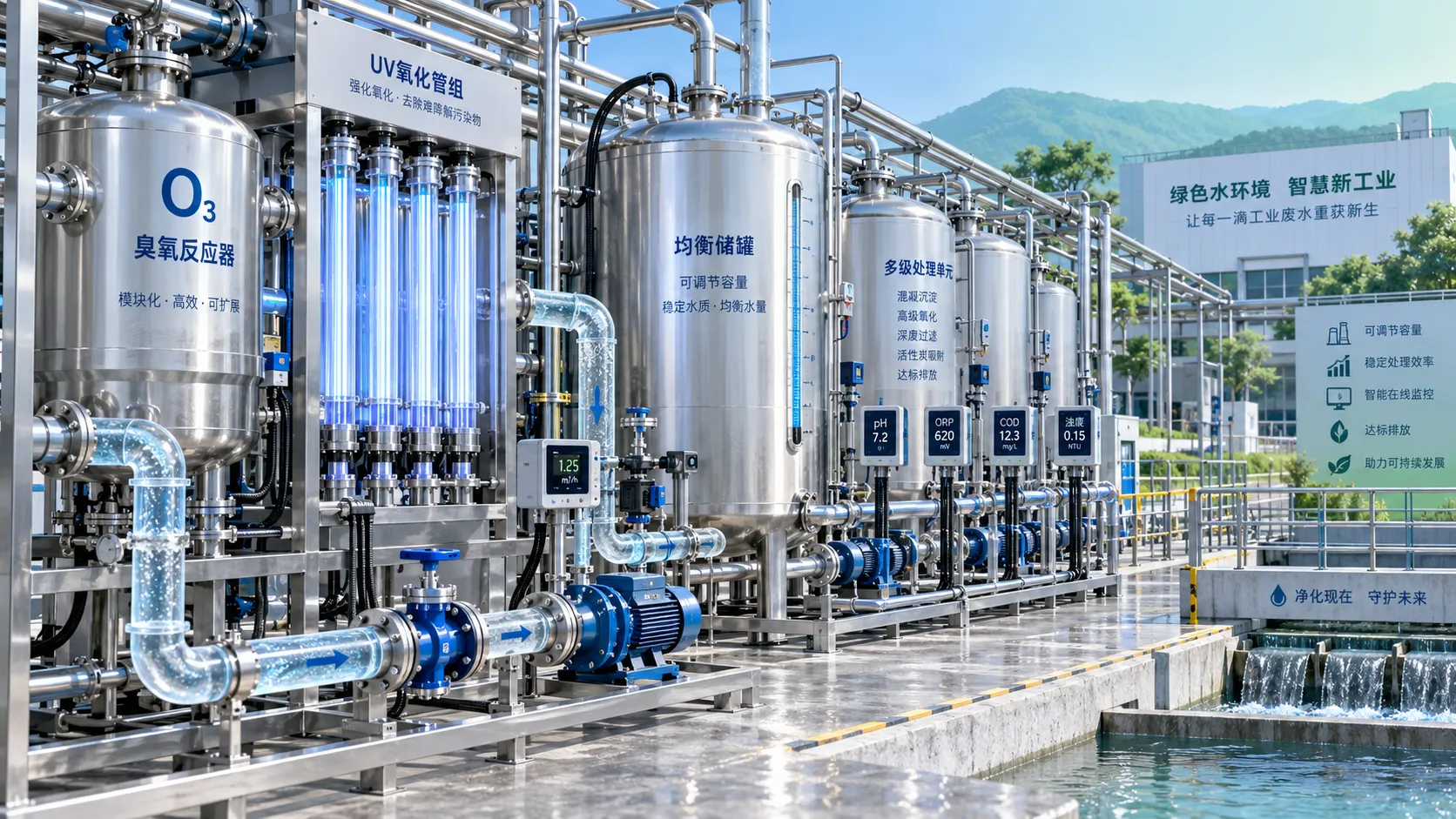
The same applies to industrial wastewater. Equalization, pH adjustment, coagulation, clarification or flotation, biological treatment, tertiary filtration, sludge thickening, and dewatering may each look like separate procurement lots. Yet the design basis for one unit often determines the duty of the next. If the equalization volume is too small for a batch discharge pattern, downstream chemical dosing and solids separation may be blamed for problems that originate upstream. If a filter backwash stream is not included in the hydraulic balance, the plant may not achieve the expected net recovery.
A package reduces risk when the scope explicitly states which streams cross its boundary: influent, treated effluent, reject, backwash, sludge, chemical drains, vents, clean-in-place waste, and emergency overflow. Each stream needs a flow range, quality envelope, pressure condition, connection point, and receiving destination. “Feed water” and “treated water” are not adequate definitions for a complex facility.
Stable influent assumptions matter more than a nominal design flow
Many package failures begin with a specification based on averages. Average flow and average contaminant concentration can be useful for sizing annual consumption, but they do not describe the events that govern equipment selection. Peak flow, minimum flow, short-duration concentration spikes, temperature range, suspended solids character, oil content, salinity, silica, scaling tendency, and cleaning chemicals may all change the process response.
For reverse osmosis, the relevant question is not merely whether feedwater total dissolved solids are within a stated range. Variation in turbidity, silt density, oxidant residual, iron, manganese, organic loading, and temperature can affect pretreatment selection, membrane flux, differential pressure growth, cleaning frequency, and permeate quality. Brackish water and seawater duties also require realistic assumptions for seasonal temperature and intake conditions; pump duty and membrane performance are sensitive to both.
For wastewater treatment, production schedules can be as important as laboratory analyses. A facility may discharge concentrated cleaning solutions, regeneration waste, metal-bearing rinses, or high-COD streams in batches. The package should show how it detects and manages such events. This could involve segregated collection, conductivity or pH monitoring, controlled release from equalization, diversion logic, or a defined shutdown response. A vendor proposal that assumes a smooth continuous influent where the actual site has discontinuous releases is carrying an unresolved process risk.
Integration has to include controls, not only pipework
Mechanical assembly alone does not make a package integrated. The control philosophy determines whether the equipment can recover from common disturbances without creating a safety, compliance, or maintenance issue. Interlocks should be traceable from process intent to instruments, valves, motors, alarms, and shutdown actions.
Consider a pressure filtration and RO train. A high differential pressure across the filter may require a backwash sequence; the RO feed pump must be prevented from operating without adequate filtered-water availability; residual oxidant protection may need to prevent membrane exposure; and clean-in-place operation must isolate the correct valves while controlling temperature, flow, and chemical circulation. If these functions are designed by different parties late in the project, the result can be unclear alarm ownership, conflicting permissives, or manual workarounds that were never tested under load.
The package documentation should identify the control system boundary, the communication protocol where applicable, signal types, ownership of field junction boxes, cable termination responsibilities, and the source of each utility permissive. It should also distinguish local control, remote monitoring, remote command, and emergency shutdown. A pump skid may be mechanically complete but impossible to commission efficiently if its variable-frequency drive, instrument power, level permissive, and upstream/downstream valve feedback are split across uncoordinated scopes.
Alarm rationalization deserves early attention. A long alarm list is not proof of control maturity. Operators need clear priorities, meaningful setpoints, and defined actions for conditions such as high turbidity, low chemical day-tank level, analyzer fault, elevated membrane differential pressure, low air supply, or abnormal sludge blanket level. Where an online analyzer has a slow response, fouling tendency, or maintenance requirement, it should not be treated as an infallible control input without a fallback state.
Compliance exposure is reduced only when performance conditions are specified
Guaranteed values without a test basis are weak protection. A sound package specification connects treatment targets to the actual boundary conditions under which acceptance will be assessed. It should state the relevant influent quality, flow, temperature, recovery, chemical conditions, operating mode, sampling locations, sampling method, stabilization period, and treatment of abnormal but foreseeable events.
For a discharge plant, this may include limits for suspended solids, pH, oil, metals, nutrient species, COD, conductivity, or other site-specific parameters. For reuse, the required quality should be tied to the end use: cooling-water make-up, boiler feed pretreatment, process wash water, irrigation, or another application. A target that is appropriate for discharge may be inadequate for reuse, while an unnecessarily stringent quality target can impose a large and avoidable burden on membranes, resin, evaporation, or chemical use.
Zero liquid discharge schemes require especially careful scope definition. The risk is often shifted rather than removed if concentrate management, crystallizer solids, mother liquor, condensate quality, corrosion allowance, antiscalant compatibility, and waste classification are treated as separate questions. Evaporators and crystallizers can be technically suitable in the right duty, but their thermal integration, turndown behavior, cleaning strategy, and solids conveyance need to be considered with the upstream concentration system.
Fabrication quality must match the liquid and the maintenance environment
Material selection is a project risk issue, not a drafting detail. Carbon steel with an appropriate lining may be suitable for some neutralized wastewater duties, while chlorides, low pH, oxidizing chemicals, abrasive solids, or elevated temperatures may require stainless steel, duplex alloys, fiberglass-reinforced plastic, high-density polyethylene, polypropylene, rubber lining, or another compatible construction. “Stainless steel” is not a complete answer; grade, weld finishing, pickling or passivation where required, gasket selection, bolting, and external exposure all matter.
For chemical dosing systems, wetted pumps, tubing, injection quills, calibration columns, day tanks, bunds, and vent arrangements should be assessed together. Sodium hypochlorite, acids, caustic, coagulants, polymers, and antiscalants have different compatibility and storage requirements. A dosing skid can be correctly selected in isolation yet fail through incompatible isolation valves, poorly routed vents, inaccessible strainers, or an injection point that allows crystallization or poor mixing.
Fabrication records should be proportionate to the consequences of failure. Pressure testing, weld documentation where applicable, lining inspection, electrical test records, instrument calibration certificates, material traceability for critical wetted items, and factory functional tests may be appropriate. The objective is not to generate paperwork for its own sake. It is to expose defects while correction is still possible in the fabrication shop rather than after a skid has been placed in a congested plant room.
Factory completion reduces site uncertainty when it is tested as an operating assembly
Skid-mounted equipment can shorten field work, but only if dimensions and connections have been validated against the actual installation. Transport envelope, lifting points, center of gravity, foundation loads, access routes, door openings, crane capacity, and maintenance withdrawal space need early review. A large skid may arrive complete and still require expensive site modifications if it cannot turn into the plant room or if a membrane vessel cannot be extracted for service.
Before shipment, a factory acceptance test can verify panel wiring, motor rotation logic where practical, valve sequencing, simulated instrument signals, alarm behavior, pump permissives, and communications. Wet testing may be justified for complex systems, although its limitations should be understood: clean-water testing does not prove separation performance on a difficult wastewater. The test procedure should identify which functions are demonstrated at the factory and which remain for site commissioning.
Shipping arrangements deserve the same discipline. Sensitive analyzers, membranes, seals, electrical panels, and loose instruments may need protective packing, moisture control, shock indication, temperature protection, or separate shipment. Preservation requirements for tanks, piping, pumps, and membrane elements should cover the expected storage period and site climate. Unclear preservation instructions can turn a schedule delay into corrosion, biological growth, seal damage, or voided component warranties.
Commissioning is where an accountable package earns its value
Commissioning risk decreases when the supplier's responsibilities extend beyond equipment delivery to a defined sequence of inspections, dry checks, loop tests, flushing, chemical preparation, wet start-up, performance testing, and handover records. The exact boundary must still be explicit. Civil works, incoming power, air, raw-water availability, drain readiness, chemical filling, and disposal routes are often controlled outside the package. A commissioning schedule that assumes these are available without verification can fail even when the skid itself is ready.
A useful commissioning plan identifies prerequisites for every major step. Pipe flushing should be complete before fine filters, membranes, analyzer sample cells, and sensitive control valves are exposed. Chemical systems need verified labeling, containment, flush connections, and compatible personal protective equipment before dosing begins. Instrument loops should be tested against the final control system rather than against temporary signals alone. Where biological processes are included, the ramp-up plan should acknowledge that stable biomass development cannot be treated as an instantaneous mechanical test.
Performance acceptance should also distinguish between defects in supplied equipment and restrictions created by off-package conditions. Insufficient feed pressure, unstable influent, blocked discharge piping, unavailable utilities, or an incorrectly configured plant control system can invalidate a test unless the procedure has a method for recording and resolving them. This protects the project from disputes based on vague statements that the plant “did not perform.”
Lifecycle service should be designed into the scope
Risk does not end at provisional acceptance. A package is stronger when routine maintenance can be performed without unsafe access, excessive dismantling, or dependence on undocumented settings. The design should allow replacement of consumables such as cartridges, membranes, pump seals, analyzer reagents, tubing, filter media, diffuser components, and valve actuators within realistic site constraints.
Spare parts need to be classified by commissioning need, routine consumption, and consequence of failure. Critical spares may include a duty-specific pump component, specialized actuator, proprietary controller module, membrane element, or instrument sensor, depending on the process. Generic lists are unreliable because a small component can stop the entire train if it has a long lead time or requires calibration after replacement.
As-built piping and instrumentation diagrams, electrical drawings, software backups, setpoint registers, cause-and-effect documentation, maintenance manuals, and training records should be available before final handover. The operational value lies in accurate records that reflect the installed system, including approved site changes. A package with polished drawings that no longer match field modifications simply transfers uncertainty into the operating period.
When a package may create risk instead
A packaged approach can increase exposure when it is used to conceal unresolved design choices. This often happens when the process is selected before adequate characterization, when a supplier is asked to cover an unusually broad scope without authority over interfaces, or when the package is forced into a footprint that compromises access and hydraulics. A compact skid cannot compensate for absent equalization volume, inadequate drainage, insufficient headroom, or a discharge route that cannot accept backwash and cleaning waste.
Risk also rises when comparison focuses on the initial equipment price while exclusions remain vague. Differences in automation, hazardous-area requirements, standby philosophy, corrosion protection, electrical enclosure rating, factory testing, instruments, freight, installation support, and start-up attendance can change the actual project exposure considerably. The appropriate comparison is a common technical basis with clear deviations, not a list of nominally similar equipment names.
The package reduces risk when it makes the difficult parts of delivery explicit: variable influent, handover points, control dependencies, acceptance conditions, fabrication evidence, transport constraints, and long-term maintainability. Where those items are still uncertain, the most useful next action is to resolve them in the process and interface definition before equipment is released for manufacture.