
Industry News
Curation by industry experts
Hot Articles
Popular Tags
Zero Liquid Discharge Crystallizer Selection: Energy, Recovery, and OPEX
Selecting a zero liquid discharge crystallizer is no longer a narrow equipment choice. It sits at the intersection of compliance, energy strategy, salt recovery, and long-term operating discipline in high-salinity treatment systems.
For projects handling industrial brine, desalination concentrate, hazardous wastewater, or mixed dissolved solids, crystallization often becomes the final technical gate. The wrong design can lock a plant into excessive steam demand, unstable solids handling, and avoidable OPEX.
That is why the zero liquid discharge crystallizer has become a priority topic across large water treatment programs tracked by ESD. In today’s environmental infrastructure market, lifecycle economics matters as much as final discharge performance.
Why crystallizer selection now carries more strategic weight
ZLD targets used to be driven mainly by discharge permits. That is still true, but the decision framework has widened.
Carbon pressure, water scarcity, resource recovery goals, and tighter waste classification rules are changing how owners evaluate the last stage of concentration.
A zero liquid discharge crystallizer affects not only water compliance, but also heat integration, solids value, downstream dewatering, corrosion risk, and maintenance planning.
This is especially relevant in sectors where brine chemistry shifts over time, such as power generation, mining, chemicals, semiconductors, refining, landfill leachate treatment, and seawater desalination.
From ESD’s broader intelligence perspective, this mirrors a larger industrial pattern. End-of-pipe systems are being judged as resource platforms, not only as compliance assets.
What a zero liquid discharge crystallizer actually does
In simple terms, the unit pushes concentrated brine beyond saturation until salts crystallize and remaining water is evaporated or condensed for reuse.
That sounds straightforward, but the physics is unforgiving. Solubility limits, boiling point elevation, viscosity, scaling tendency, and impurity behavior all shape performance.
A zero liquid discharge crystallizer is usually selected after upstream concentration steps, often including membrane treatment, brine concentrators, or forced circulation evaporators.
Its practical job is to convert a difficult liquid liability into two streams: reusable distillate and manageable solids or slurry.
The key issue is that not all crystallizers behave the same under real plant chemistry. Selection depends less on brochure capacity and more on chemical tolerance and operating window.
Energy is the first filter, but not the only one
Energy intensity is often the starting point because crystallization is usually the most power- or steam-hungry stage in a ZLD train.
However, comparing systems only by nameplate energy numbers can be misleading. The real question is how energy behaves under actual feed variability.
Look beyond theoretical thermal efficiency
A system may show attractive specific energy consumption under stable test conditions, yet lose that advantage when suspended solids, silica, organics, or hardness fluctuate.
Heat transfer surfaces foul, recirculation loads rise, and cleaning intervals shorten. In practice, this can erase a projected energy benefit.
Evaluate integration with the full plant
A zero liquid discharge crystallizer should be reviewed with available utilities, waste heat opportunities, condensate reuse, and steam reliability.
In some facilities, a slightly less efficient crystallizer on paper performs better overall because it fits the site’s thermal balance and maintenance model.
Recovery is not only about water yield
Recovery is often discussed as maximum water extraction. That is only part of the value equation.
A well-selected zero liquid discharge crystallizer also shapes the quality and usability of recovered solids. This matters when salts may be reused, sold, stabilized, or sent for specialized disposal.
Crystals that are too fine, too wet, or contaminated with mixed impurities can increase centrifuge load and disposal cost. Higher nominal recovery may still create a worse business outcome.
This is where feed characterization becomes decisive. Sulfates, chlorides, sodium, calcium, magnesium, silica, heavy metals, and organics each influence crystal habit and separation behavior.
Useful recovery questions during evaluation
- What distillate quality is maintained during chemistry swings?
- How stable is solids purity over a full operating campaign?
- Can the crystal size distribution support efficient dewatering?
- Does the design favor recoverable salts or mixed waste solids?
- What pretreatment is needed to protect recovery performance?
Where OPEX usually rises faster than expected
OPEX in a zero liquid discharge crystallizer is rarely defined by energy alone. Hidden cost growth often comes from chemistry-driven instability.
Chemical cleaning, antiscalants, spare parts, metallurgy upgrades, labor intensity, sludge handling, and unplanned downtime can outweigh small differences in utility efficiency.
The most common mistake is underestimating how feed composition changes over seasons, production cycles, or upstream process upsets.
The best OPEX review therefore combines utility consumption with reliability data, maintenance scope, and solids management assumptions.
Technology fit depends on feed and operating philosophy
Different crystallizer types serve different priorities. Some designs emphasize robustness. Others target lower steam use, finer control, or better crystal handling.
Forced circulation systems are often favored for difficult brines because they tolerate fouling better and support stable solids suspension.
Draft tube baffle and Oslo-type configurations may suit cases where crystal growth behavior and size control are especially important.
Mechanical vapor recompression can reduce thermal demand, but its economics depend on electricity pricing, compression limits, and feed cleanliness.
In other words, the right zero liquid discharge crystallizer is not the most advanced option in abstract terms. It is the one aligned with chemistry, utilities, and risk tolerance.
Typical decision scenarios across industries
The selection logic changes by sector because the feed problem changes.
- Power and utilities: high chloride streams, FGD wastewater, and strong reliability requirements.
- Mining and metals: variable dissolved solids, sulfate loads, and abrasive contaminants.
- Chemicals and refining: complex organics, hazardous species, and corrosion exposure.
- Desalination: brine concentration under energy pressure and limited discharge options.
- Specialty waste programs: strict residue handling, trace contaminants, and regulatory scrutiny.
This cross-sector view is one reason ESD tracks crystallization alongside desalination, recovery systems, and extreme compliance technologies. The same unit operation can serve very different economic logics.
How to compare options without reducing the decision to CAPEX
A disciplined comparison usually starts with mass balance and chemistry, then expands into operability. Vendors should be compared on evidence, not only on guarantee sheets.
A stronger evaluation frame includes
- Representative feed envelope, including upset conditions.
- Pilot or reference data for similar brine chemistry.
- Net energy use under expected operating range.
- Distillate quality and solids handling performance.
- Cleaning philosophy, spare parts list, and metallurgy basis.
- Disposal pathway or recovery value for produced salts.
- Control strategy for turndown, startup, and unstable feed periods.
A zero liquid discharge crystallizer that costs more initially may still be the better decision if it avoids frequent shutdowns or lowers residue disposal by a meaningful margin.
What to do next with a live project or screening study
The next step is usually not choosing a brand immediately. It is tightening the decision basis.
Start by validating feed chemistry across time, not from a single sample. Then map utility availability, recovery targets, residue classification, and maintenance constraints.
From there, compare each zero liquid discharge crystallizer option against the same operating scenarios and the same OPEX boundaries. That is where weak assumptions become visible.
For organizations building a broader environmental equipment strategy, this decision also benefits from market intelligence. Regulatory tightening, carbon cost, and recovery economics will continue to reshape what counts as the best fit.
A useful selection outcome is not merely a compliant crystallizer. It is a zero liquid discharge crystallizer that remains efficient, stable, and economically defensible as plant conditions evolve.
Recommended News
How high purity heavy metal recovery affects recovered metal value
High purity heavy metal recovery boosts recovered metal value by improving payability, reducing penalties, and unlocking stronger buyer opportunities. Explore smarter netback strategies.
When does environmental equipment intelligence reduce wastewater plant energy use?
Environmental equipment intelligence for wastewater plants cuts energy use through smarter aeration, pumping, and data-driven controls—without compromising compliance. Discover when it delivers measurable savings.
What Evidence Supports the Long-Term Safety Case for Geological Disposal?
Long-term safety of geological disposal: explore the evidence behind multi-barrier systems, site science, uncertainty testing, and auditable safety cases.
What Do Seawater Disinfection Systems Cost Over Their Full Operating Life?
What are the costs associated with seawater disinfection systems? Explore lifecycle expenses for equipment, energy, chemicals, maintenance, compliance, and risk.
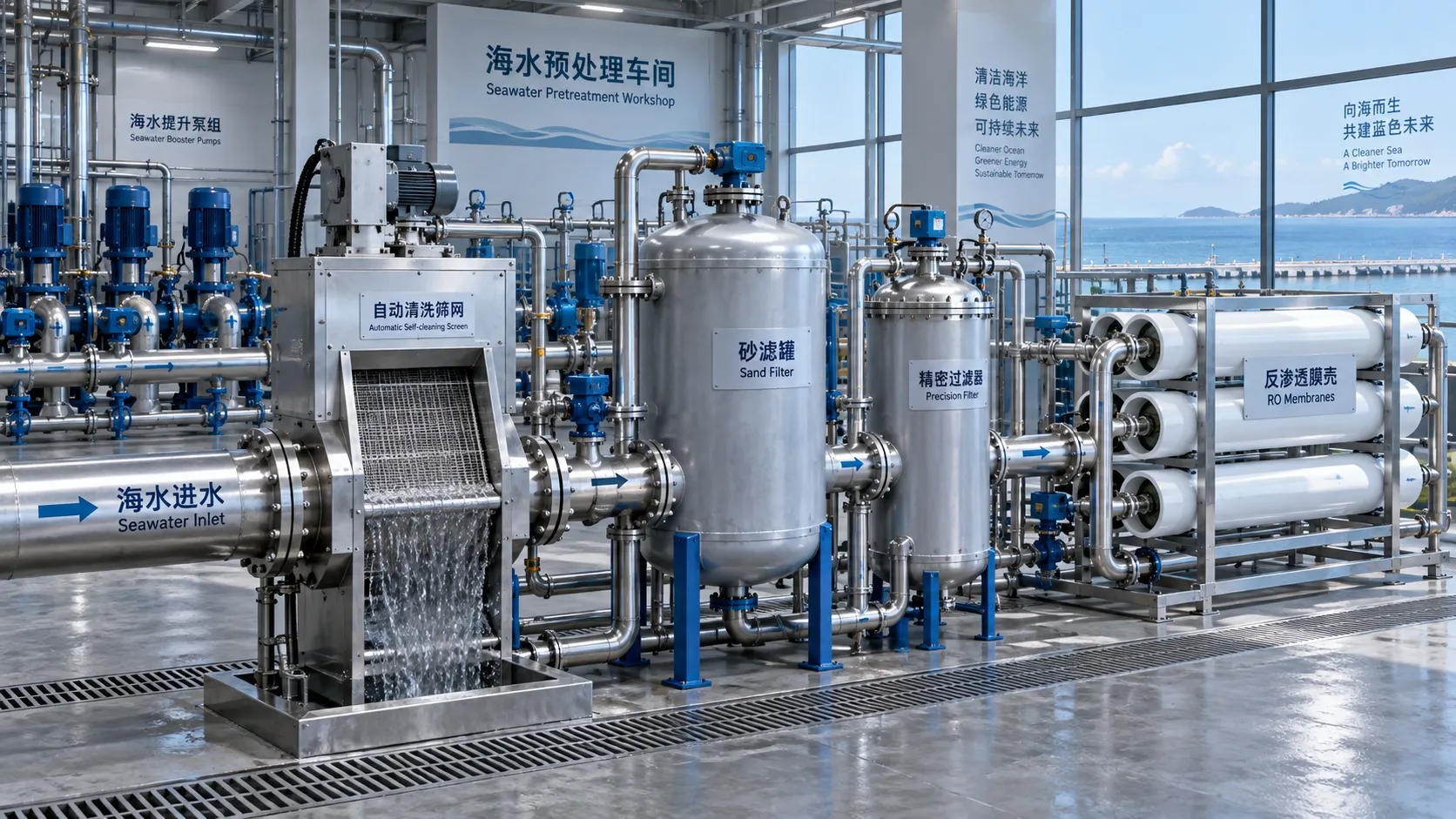
How to Improve Industrial Seawater Quality Before Cooling or Membrane Treatment
How can I improve the quality of seawater used for industrial processes? Explore proven pretreatment strategies for cooling systems and RO membranes.
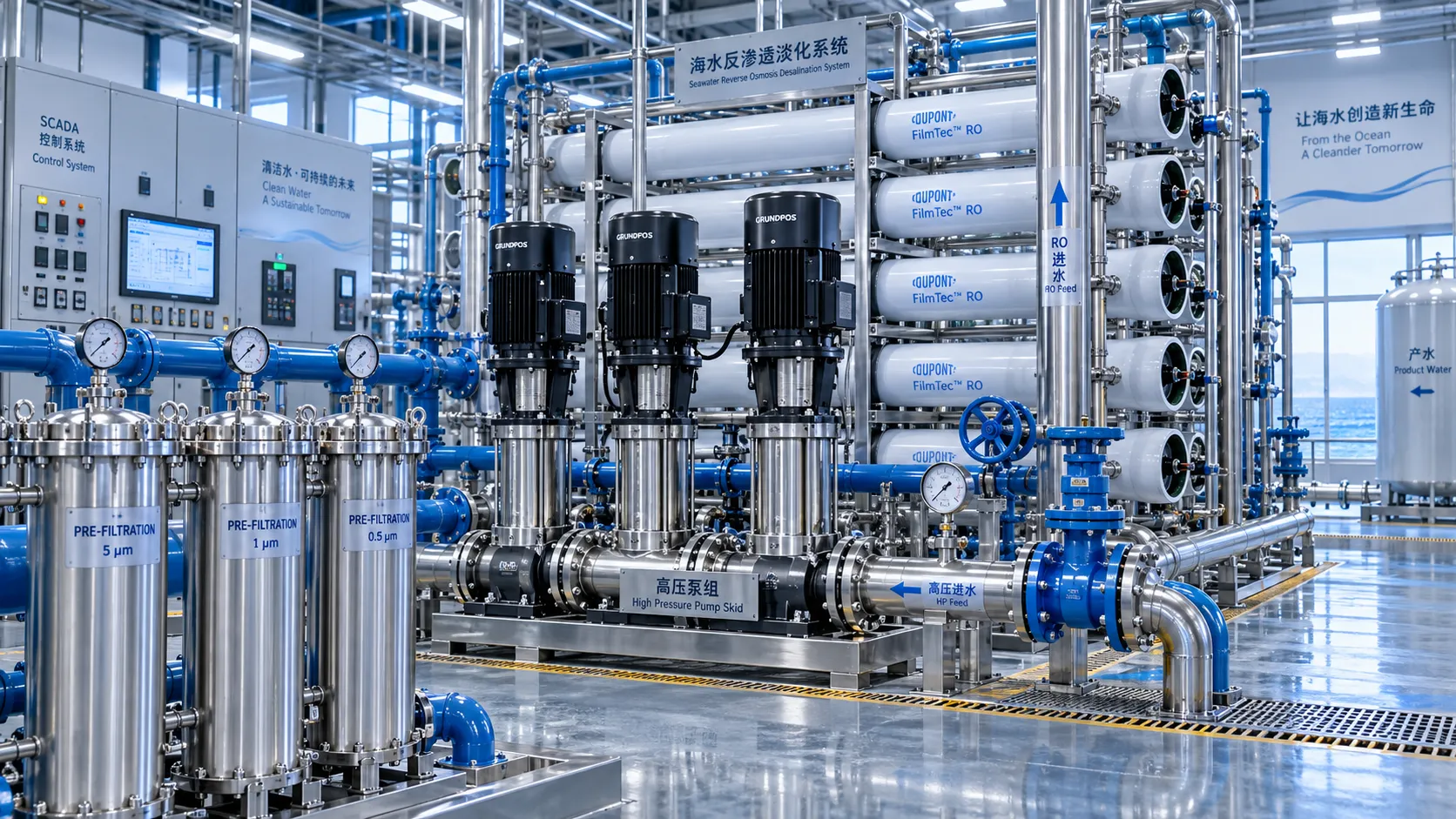
Desalination Plant Maintenance Priorities That Prevent Unplanned Downtime
Desalination plant maintenance priorities that reduce unplanned downtime: protect pretreatment, RO membranes, pumps, chemical dosing, and critical controls.
Which supplier evaluation support tools improve audit consistency?
Supplier evaluation support tools improve audit consistency with controlled checklists, evidence capture, risk scoring, CAPA workflows, and traceable approvals. Explore the essentials.
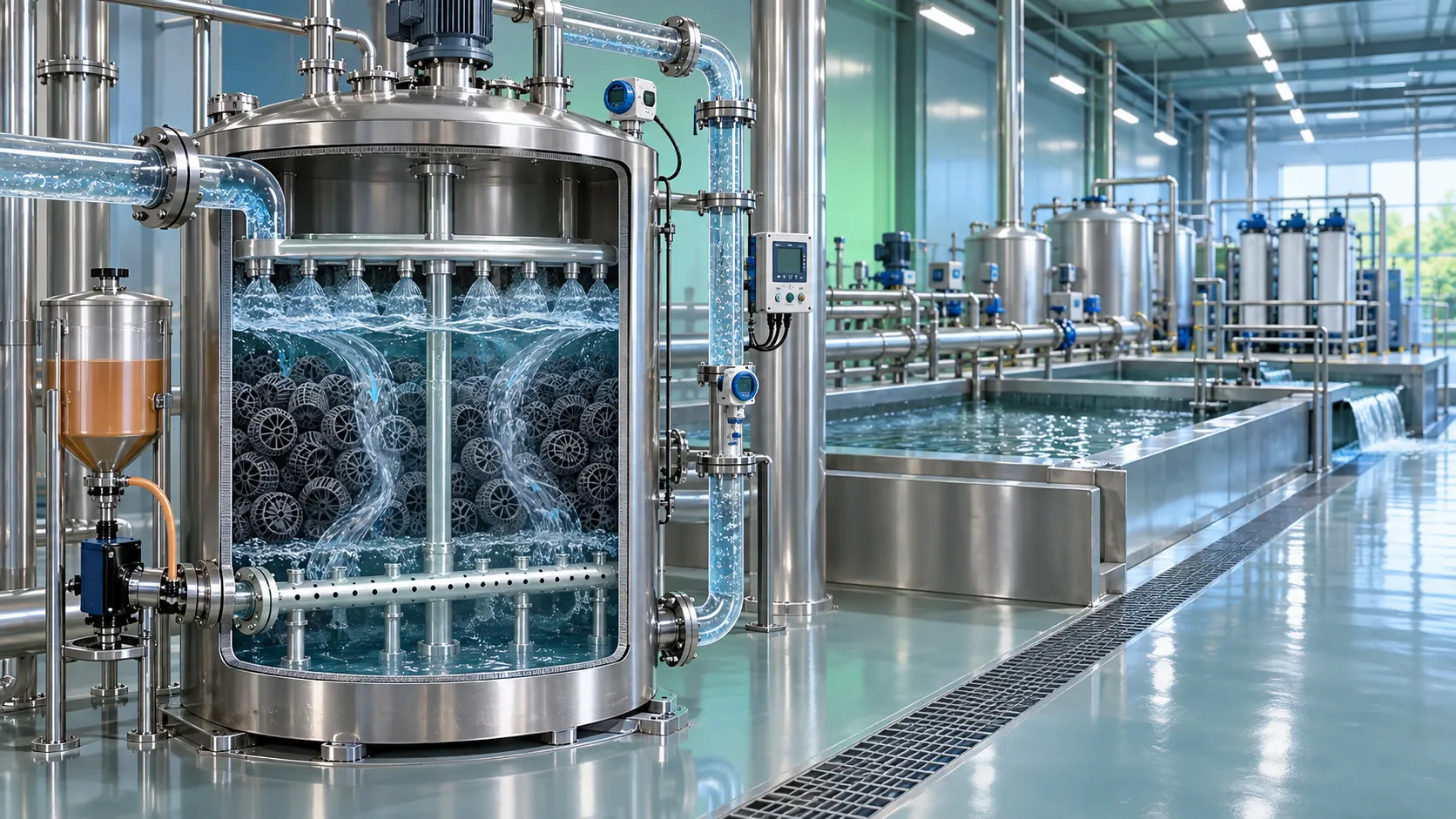
How reactor retention time affects denitrification equipment performance
Denitrification equipment reactor performance depends on retention time, carbon, mixing, and load control. Explore practical insights for reliable nitrogen removal.
How feed salinity affects energy use in ZLD system brine treatment
ZLD system brine treatment: discover how feed salinity drives energy use, scaling risk, and technology choices for efficient, reliable zero liquid discharge.