
Industry News
Curation by industry experts
Hot Articles
Popular Tags
AI Waste Sorting: How to Cut False Sort Rates
For quality control and safety managers, AI waste sorting is no longer just a productivity upgrade—it is a critical tool for reducing false sort rates, preventing contamination risks, and improving compliance performance. As sorting lines become faster and waste streams more complex, understanding how AI systems identify, classify, and correct errors is essential to building safer, more reliable recovery operations.
The core search intent behind “AI waste sorting: how to cut false sort rates” is practical and operational. Readers are not looking for a broad introduction to artificial intelligence. They want to know why false sorts happen, how AI waste sorting systems reduce them, and what actions improve quality, safety, and audit readiness.
For quality control and safety teams, the biggest concern is not model sophistication alone. It is whether the system can consistently separate target materials, minimize cross-contamination, handle hazardous items, and stay stable under changing waste composition, lighting, throughput, and operator conditions.
The most useful content, therefore, is decision-oriented. That includes root causes of false sort rates, key performance metrics, equipment and data factors that influence accuracy, validation methods, safety controls, and a practical roadmap for continuous improvement without disrupting plant operations.
This article focuses on those issues first. It gives less space to generic AI theory and more to the specific operating, compliance, and risk-control questions that matter most in modern material recovery and waste recovery facilities.
Why false sort rates matter more than headline accuracy
In waste recovery operations, false sort rates are often more important than a vendor’s top-line accuracy claim. A line can perform well in a demo but still create downstream problems if wrong picks contaminate bales, miss dangerous items, or send valuable fractions to disposal.
For quality control teams, false sorting directly affects outbound material quality, rebate value, customer complaints, and rework time. For safety managers, the risk is even broader. A misidentified lithium battery, pressurized canister, medical sharps item, or chemical container can trigger fires, injuries, or non-compliance events.
That is why AI waste sorting should be evaluated as a risk-reduction system, not just an automation tool. The real goal is to reduce decision errors at the point of identification and ejection while keeping the process stable across mixed and unpredictable feed conditions.
In practice, cutting false sort rates improves three outcomes at once: cleaner recovered material, fewer safety incidents, and stronger compliance performance. These are the results that matter most when facilities face tighter buyer specifications and stricter environmental oversight.
What usually causes false sorts on AI waste sorting lines
False sorts rarely come from one issue alone. They usually result from the interaction of material variability, sensor limitations, data quality, mechanical timing, and process design. Understanding this chain is the first step toward improvement.
One common cause is poor visual separation in the waste stream. Overlapping items, crushed containers, dirty surfaces, labels, moisture, and irregular shapes make recognition harder. Even strong AI models can struggle when the target object is partially hidden or visually distorted.
Another major factor is insufficient or unbalanced training data. If the model was trained mostly on clean samples, standard packaging, or a narrow regional waste profile, it may underperform on real-world materials that look different because of local brands, damage, residue, or seasonal changes.
Sensor configuration also matters. Camera angle, lighting uniformity, frame rate, spectral range, and lens cleanliness affect what the system can “see.” If image quality drops, classification quality often follows, especially on fast belts or in dusty environments.
Mechanical execution is just as important as AI classification. A correct identification can still become a false sort if belt speed varies, the air jet fires late, the robot gripper slips, or the item rotates after detection. Quality teams should treat perception and actuation as one linked control loop.
Finally, process upstream conditions strongly influence results. Inconsistent feed presentation, overloading, and poor pre-screening increase clutter and reduce the time available for accurate decisions. Many false sorts blamed on AI are actually process discipline problems.
How AI waste sorting reduces false sort rates in real operations
Modern AI waste sorting systems reduce false sort rates by combining better sensing, faster classification, and ongoing learning. But their value comes from how these elements work together under plant conditions, not from any single algorithmic feature.
First, AI improves object recognition beyond rule-based sorting. Instead of relying only on fixed color, size, or shape thresholds, machine learning models detect patterns across texture, contour, label features, and contextual cues. This allows more accurate classification across varied and damaged materials.
Second, multisensor setups expand detection reliability. Combining RGB imaging with near-infrared, hyperspectral, X-ray, or 3D sensing can help distinguish materials that look similar visually but differ in composition. This is especially helpful for plastics, composites, e-waste, and hazardous contaminants.
Third, AI systems can rank confidence scores rather than forcing every item into a hard category. Low-confidence items can be diverted to secondary checks, manual review, or a lower-risk stream. For quality and safety teams, this is often a better strategy than overconfident automated misclassification.
Fourth, continuous feedback loops help the system adapt. When operators or auditors flag false picks, the new examples can be fed back into model retraining. Over time, the sorter becomes more aligned with the facility’s actual material profile and quality requirements.
Finally, AI can support line-level optimization, not just object-level detection. By correlating error patterns with belt loading, shift changes, material origin, or lighting fluctuations, facilities can identify operating conditions that increase false sort rates and address them systematically.
Which metrics quality and safety managers should track
To cut false sort rates, teams need the right measurement framework. Looking only at overall accuracy hides the specific errors that affect quality, safety, and revenue. A better approach is to track performance by material class, risk category, and operating condition.
Start with false positive and false negative rates. A false positive means a non-target item is incorrectly sorted into the target stream. A false negative means a target item is missed. Both matter, but their business impact differs by application and should be weighted accordingly.
For example, in fiber or PET recovery, false positives may drive contamination claims and lower bale pricing. In battery or hazardous waste detection, false negatives may be the higher-risk event because dangerous items remain in the line. The metric priority must follow the operational hazard profile.
Precision, recall, and contamination rate should therefore be monitored by stream. Add throughput-adjusted metrics, such as error rate at different belt speeds and loads. Some systems perform well at moderate capacity but degrade sharply during peak inflow periods.
It is also useful to measure re-sort frequency, manual intervention rate, and audit failure incidents. These indicators translate technical performance into labor burden and compliance impact. If manual correction remains high, the AI system may not yet be delivering control stability.
For management reporting, connect sorting metrics to business outcomes: bale quality, recovery yield, incident reduction, downtime, and claims. That creates a clearer basis for investment decisions and supplier accountability.
How to validate whether an AI waste sorting system is truly reducing errors
Validation should be based on structured trials, not only vendor demonstrations. A controlled pilot under your actual waste profile is the most reliable way to judge whether false sort rates will fall in everyday operation.
Begin with a baseline study of your current line. Measure contamination rates, missed target recovery, manual resorting, and near-miss safety events by stream. Without this baseline, it is difficult to prove that any AI upgrade is delivering real improvement.
Next, test the AI waste sorting system across multiple operating scenarios. Include clean and dirty loads, different material origins, variable moisture levels, seasonal packaging differences, and full-speed belt conditions. Single-condition tests usually overstate performance.
Use blind sampling and third-party or cross-functional verification where possible. Quality staff, operations personnel, and safety managers should all review results. This prevents narrow success criteria and ensures that hidden risks are not ignored.
Pay close attention to edge cases. These include black plastics, flattened cartons, multilayer packaging, food-soiled items, shredded fractions, and damaged batteries. False sort rates often spike in edge conditions, which are exactly where risk control matters most.
Finally, evaluate stability over time. A system that performs well for two weeks but drifts after dust buildup, lighting changes, or software updates may create more risk than benefit. Validation should include maintenance intervals and model governance controls.
What process changes around the AI system make the biggest difference
Even the best AI waste sorting platform cannot compensate for poor line discipline. Facilities that achieve the lowest false sort rates usually improve surrounding process conditions at the same time as they deploy smarter sorting technology.
Feed conditioning is one of the highest-value improvements. Better spacing, singulation, and pre-screening reduce overlap and increase visibility. When objects arrive in a more predictable presentation, classification becomes more accurate and ejection timing improves.
Housekeeping and sensor care are equally important. Dust on lenses, unstable lighting, and reflective contamination can degrade model inputs quickly. Preventive cleaning and calibration routines should be written into the standard operating procedure, not treated as optional maintenance tasks.
Operator training also matters. Staff need to understand what the AI system does well, where confidence is lower, and when manual intervention is required. Clear escalation rules reduce both overreliance and unnecessary overrides.
Facilities should also design exception pathways. Instead of forcing uncertain items through the primary sort, create a secondary inspection route for ambiguous or high-risk objects. This can sharply lower contamination and safety exposure without slowing the entire line.
In many plants, the biggest gains come from combining AI with disciplined operational engineering. Technology identifies faster, but process control ensures those decisions remain reliable shift after shift.
Safety implications: why false sorts are not only a quality problem
For safety managers, false sort rates should be treated as a leading indicator of operational risk. Misclassification can expose workers, equipment, and downstream customers to hazards that are not obvious when reviewing only production metrics.
A missed lithium battery is a clear example. If it enters shredding, compaction, or thermal treatment equipment, the result can be fire, explosion, and major asset damage. Similarly, aerosols, gas cylinders, chemical containers, and clinical waste require accurate separation before further handling.
AI waste sorting can strengthen safety if it is configured with hazard-specific detection logic and linked to response protocols. But if hazard classes are underrepresented in training data, the system may create a false sense of control.
That is why high-risk categories should have stricter confidence thresholds, more frequent validation, and defined fallback actions. Some facilities also use dual-confirmation logic for dangerous items, combining AI detection with additional sensor verification or manual review.
Safety performance should be reviewed alongside sorting accuracy. If near misses, heat events, jam incidents, or emergency stops are concentrated around certain material classes, those patterns should inform retraining priorities and upstream waste acceptance controls.
How to choose an AI waste sorting solution with lower long-term error risk
When selecting a system, quality and safety managers should look beyond marketing claims. The critical question is whether the platform can maintain low false sort rates under the complexity, dirt, and variability of your actual operation.
Ask vendors for class-level performance data, not only overall accuracy. Request evidence from facilities handling similar waste streams, throughput ranges, and contamination profiles. Performance on e-waste, mixed plastics, construction waste, or municipal recyclables can differ significantly.
Review how the system handles confidence scoring, exception routing, retraining frequency, and model version control. A supplier should be able to explain how false sort events are captured, labeled, and converted into measurable improvement.
Also evaluate maintainability. If sensor cleaning, calibration, or component replacement is difficult, performance may degrade faster than expected. Long-term error reduction depends as much on supportability as on initial intelligence.
Cybersecurity and traceability should not be overlooked. Facilities increasingly need audit trails showing how sorting decisions are made, when models were updated, and whether performance changed after software revisions. This is especially relevant in regulated or high-risk waste environments.
Finally, involve cross-functional stakeholders early. Operations, quality, safety, maintenance, and procurement should all participate in solution assessment. False sort reduction is not a single-department objective; it is a plant-wide control issue.
A practical roadmap to reduce false sort rates in the next 90 days
For teams seeking immediate progress, start with a structured ninety-day plan. The aim is not to rebuild the entire line at once, but to identify the most significant error sources and address them in a controlled sequence.
In the first thirty days, establish the baseline. Map current false positive and false negative patterns by material class, shift, supplier source, and belt condition. Record contamination incidents, manual corrections, and safety-related misses linked to sorting failures.
In days thirty to sixty, focus on quick operational fixes. Improve feed presentation, clean and calibrate sensors, tighten lighting consistency, and review ejection timing. These interventions often reduce false sorts before any model retraining begins.
In the final thirty days, refine the AI layer. Label the highest-impact misclassified items, retrain or tune the model if possible, adjust confidence thresholds, and set up exception handling for ambiguous or high-risk categories. Then compare results against the original baseline.
This phased approach helps facilities make practical gains without losing control of production. It also creates a stronger fact base for larger investments in multisensor upgrades, robotics, or advanced analytics.
Conclusion: the best way to cut false sort rates is to treat AI as part of a control system
AI waste sorting can significantly reduce false sort rates, but only when it is deployed as part of a wider quality and safety control framework. The most effective facilities do not rely on algorithm claims alone. They combine good data, stable process conditions, clear metrics, and continuous validation.
For quality control managers, the value lies in cleaner streams, lower contamination, and more consistent recovery performance. For safety managers, the value is stronger hazard detection, fewer dangerous misses, and better operational assurance under increasing throughput pressure.
The key takeaway is simple: false sorts are not just a technology problem. They are a system problem. When facilities measure the right errors, improve the full sensing-to-ejection chain, and build disciplined feedback loops, AI waste sorting becomes a practical tool for safer, more reliable, and more compliant resource recovery.
Recommended News
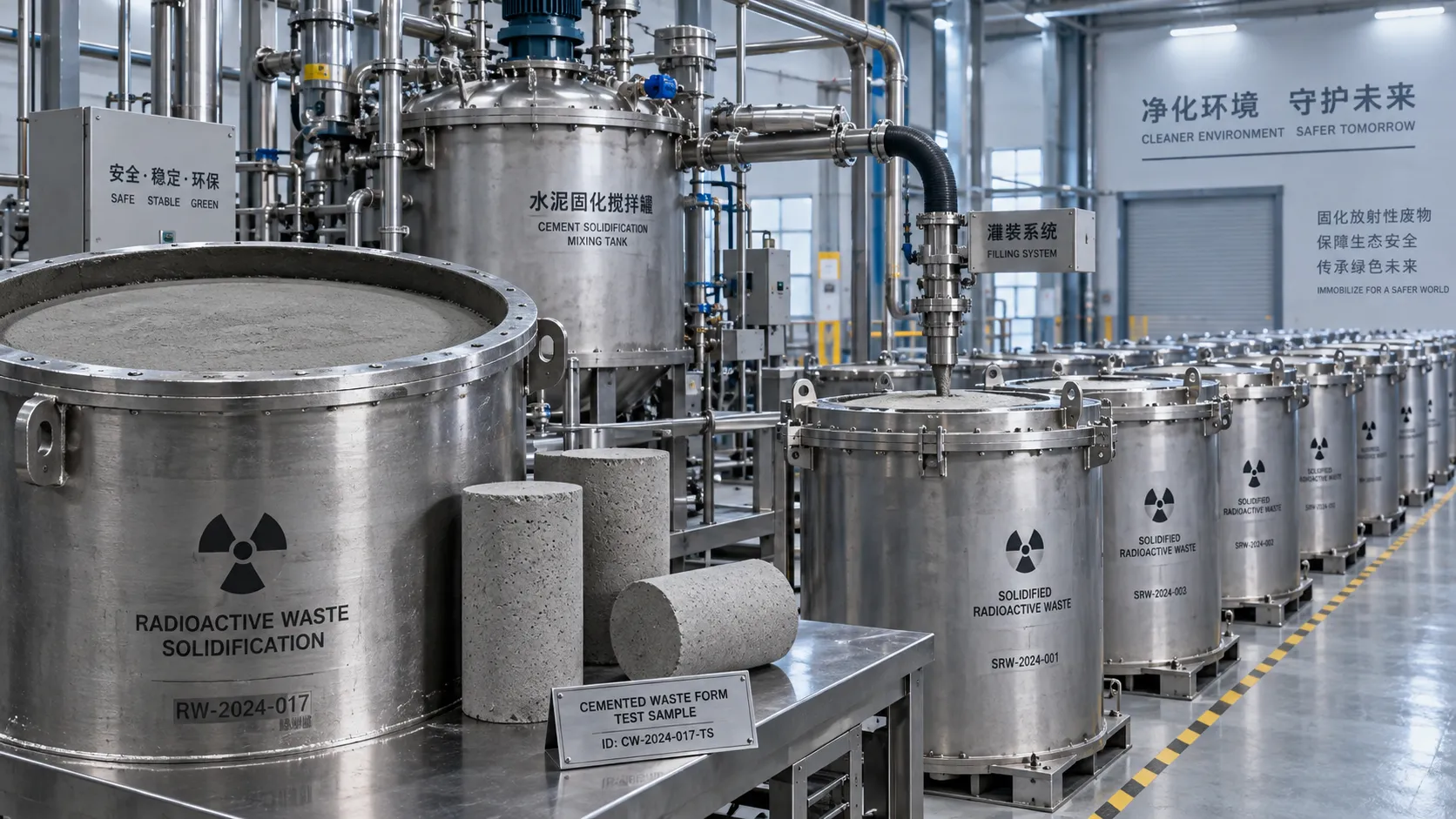
When is cementation suitable for nuclear decommissioning waste?
Explore nuclear waste treatment technology for decommissioning: learn when cementation fits, which risks to assess, and how disposal criteria guide an effective treatment choice.
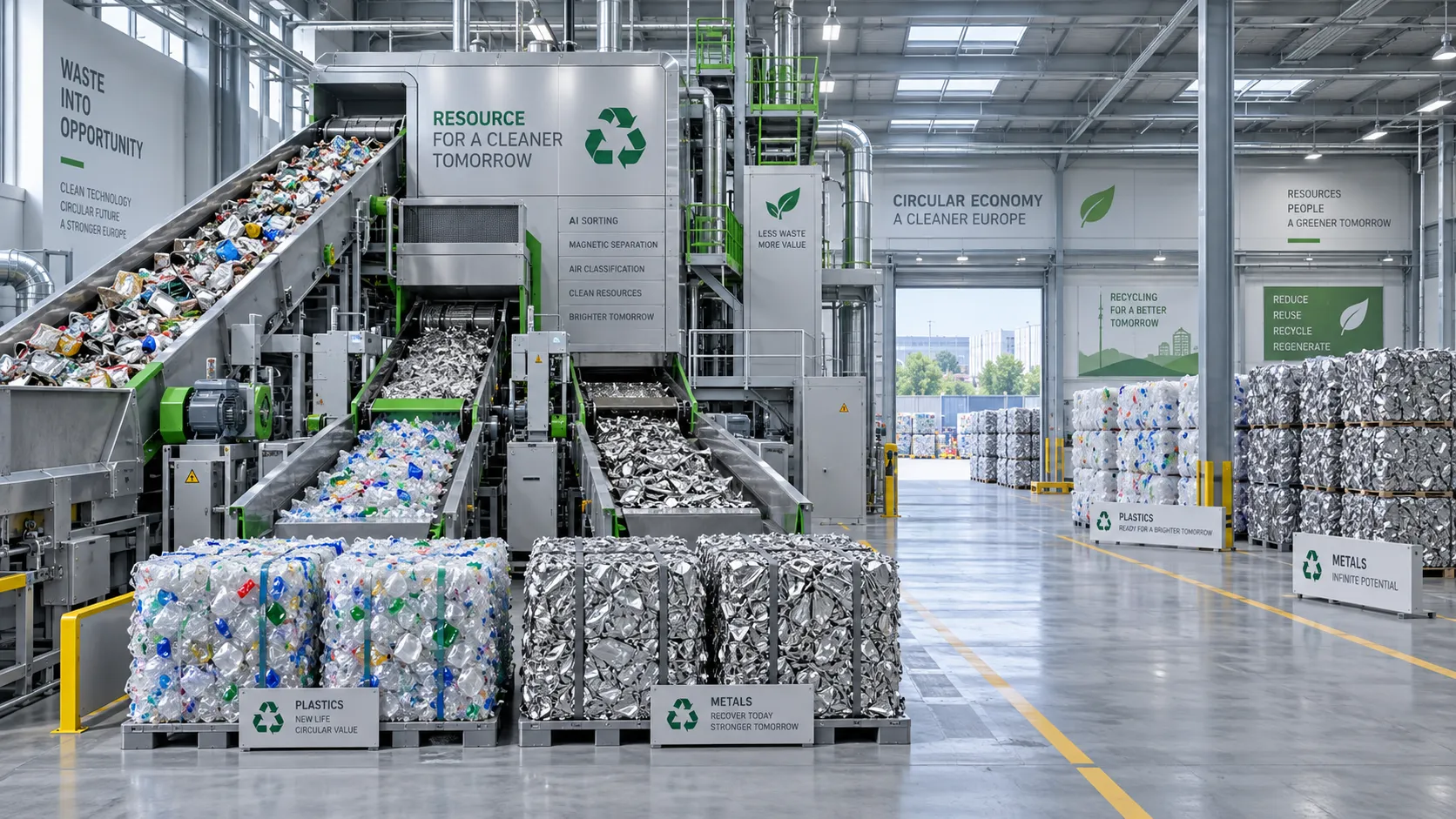
What determines payback for waste-to-resource systems in Europe?
Assess waste-to-resource systems Europe-wide: compare feedstock, recovery yields, costs and contracts to uncover payback drivers and make smarter investment decisions.

How to verify a water treatment system factory’s production capacity
Verify a water treatment systems factory’s production capacity through records, bottlenecks, component availability, and testing. Learn what to check before accepting a delivery promise.

When does EPC environmental project support reduce delivery risk?
EPC environmental project support engineering reduces delivery risk by aligning design, procurement, compliance, construction, and commissioning decisions.

How nuclear plants select a radioactive waste solidification method
Radioactive waste management for nuclear plants: compare vitrification, cementation, polymers, and ceramics to select a compliant, durable solidification solution.

What Drives the Cost of Wastewater System Upgrades in Industrial Parks?
Costs of wastewater system upgrades in industrial parks: uncover key drivers from influent variability and civil works to sludge, energy, compliance, and lifecycle risk.

Comparing Upgrade Costs for Industrial Park Wastewater Treatment Systems
Compare costs for wastewater system upgrades in industrial parks with a lifecycle view of CAPEX, OPEX, compliance, resilience, and future expansion.

Biological Wastewater Oxidation Explained: Aeration Demand and Process Control
Biological wastewater oxidation explained: optimize aeration demand, DO control, nitrification, and sludge age for stable effluent quality and lower energy costs.

Activated Sludge Cost: Budgeting Energy, Chemicals, Sludge, and Labor
Activated sludge cost explained: compare energy, chemicals, sludge disposal, labor, and compliance risks to build a reliable lifecycle budget.