
Industry News
Curation by industry experts
Hot Articles
Popular Tags
Urban Mining: How AI Sorting Improves Recovery Value
Urban mining is no longer a sustainability slogan—it is becoming a project-level value strategy for cities, recyclers, and EPC teams managing complex waste streams. As AI sorting systems evolve from basic identification tools into high-precision recovery engines, project managers can unlock higher material purity, stronger revenue models, and more predictable compliance outcomes. This article explores how intelligent sorting improves recovery value across secondary resource networks, helping decision-makers evaluate technology choices, operational risks, and investment returns in the next generation of solid waste recovery projects.
Why urban mining is becoming a project value issue, not only a recycling topic
For project managers, urban mining changes the financial logic of waste infrastructure. Mixed plastics, metals, e-waste, construction residue, and packaging streams become engineered feedstock.
The challenge is not whether valuable material exists. The challenge is whether a facility can identify, separate, certify, and sell it with stable quality.
AI sorting supports that shift by reducing manual uncertainty, improving product consistency, and giving operators better data on incoming waste composition.
- Municipal projects need higher diversion rates without relying only on landfill taxes or policy pressure.
- Private recyclers need cleaner output fractions that can survive strict buyer specifications.
- EPC teams need process layouts that balance throughput, contamination risk, maintenance access, and future expansion.
- Investors need evidence that recovery value can be measured, audited, and protected during market volatility.
This is where urban mining aligns with ESD’s broader view of ecological infrastructure: waste recovery is part of an industrial immune system, not an isolated sorting room.
Where AI sorting improves recovery value in an urban mining line
An AI sorting system is most valuable when it is positioned according to material behavior, not simply added after a conveyor.
In urban mining projects, cameras, near-infrared sensors, X-ray systems, robotic arms, air jets, and software models must match the feedstock profile.
The following comparison helps project teams locate where AI sorting can produce measurable commercial gains.
The table shows that urban mining value is created through many small improvements. Better pre-sorting protects equipment, while cleaner fractions improve selling price.
The recovery value formula project teams should use
Recovery value is not only tonnage multiplied by market price. It also depends on purity, yield, downtime, residue disposal cost, and buyer acceptance.
A practical urban mining business case should model best, base, and stress scenarios for material price, feed contamination, and maintenance availability.
How to evaluate AI sorting technologies before procurement
Procurement errors often start with vague specifications. “AI-enabled” is not enough; the system must match the waste stream and commercial objective.
For urban mining projects, decision-makers should compare recognition method, ejection accuracy, data capture, integration workload, and service requirements.
The following evaluation table can support early-stage technical clarification with suppliers, EPC partners, and municipal stakeholders.
This framework prevents urban mining procurement from becoming a price-only comparison. A lower equipment price may increase residue cost or downgrade product sales.
Questions to ask during technical clarification
- Can the supplier test local waste samples and report purity, recovery rate, and false rejection separately?
- What preprocessing conditions are required for size, moisture, belt loading, and material distribution?
- How are AI model updates validated before deployment on a live urban mining line?
- Which spare parts are critical, and what is the expected response time for field support?
Which urban mining scenarios benefit most from intelligent sorting?
Not every facility needs the same automation depth. Project value depends on feed complexity, labor cost, land constraints, and downstream buyer requirements.
Urban mining projects usually benefit most when manual sorting cannot maintain stable quality or when valuable materials are hidden in mixed streams.
- Material recovery facilities can use AI sorting to upgrade plastics, paper, cartons, and metals after mechanical screening.
- Construction and demolition plants can separate wood, gypsum board, metals, plastics, and inert aggregates more consistently.
- E-waste facilities can reduce hazardous mistakes by identifying batteries, cable bundles, boards, and contaminated components.
- Industrial parks can integrate urban mining with wastewater treatment, flue gas controls, and residue management for circular compliance.
When AI sorting may not be the first investment
If the incoming material is poorly collected, soaked, heavily mixed with organics, or oversized, basic preprocessing may deliver faster initial gains.
A disciplined urban mining roadmap often starts with collection rules, shredding control, screening design, and then targeted AI sorting deployment.
Cost, ROI, and operational risks project managers must control
The strongest urban mining business cases combine capital discipline with realistic operational assumptions. High recovery claims require evidence from representative samples.
Project managers should calculate total cost of ownership instead of focusing only on equipment purchase price.
The following cost map highlights budget items that often affect payback but are missed during early feasibility work.
A credible urban mining ROI model should include both upside and downside. Higher purity may increase revenue, but downtime and rejected material can erode margins.
Common risk controls during implementation
- Use representative waste trials before finalizing equipment capacity, because clean samples rarely reflect daily facility conditions.
- Set acceptance criteria for purity, recovery rate, throughput, downtime, and false positive rejection.
- Train operators to recognize sensor contamination, belt overloading, incorrect lighting, and abnormal reject patterns.
- Align residue management with permits, buyer contracts, and local environmental reporting obligations.
Compliance and data: the hidden backbone of bankable urban mining
Urban mining projects increasingly face requirements beyond simple recycling tonnage. Buyers, regulators, and financiers want proof of origin, quality, and environmental benefit.
AI sorting supports compliance when process data is connected to weighbridges, material quality checks, and environmental management systems.
Project teams may need to reference general frameworks such as ISO 14001 for environmental management, ISO 45001 for worker safety, and local waste handling rules.
- For plastics, buyers may request contamination limits, polymer type consistency, and documentation for recycled-content supply chains.
- For metals, smelters often evaluate moisture, non-metal inclusions, alloy contamination, and hazardous residues.
- For e-waste, hazardous components require stricter handling procedures, traceability, and worker safety controls.
- For cross-border trade, carbon and circularity reporting may influence commercial terms, especially under evolving climate policy.
Why data quality affects project finance
Urban mining assets become more bankable when operators can prove stable input, output quality, and operating performance over time.
Sorting data can also support tender credibility, especially for EPC teams competing in municipal or industrial circular economy projects.
Implementation roadmap for EPC and facility project teams
A successful urban mining project should move from feedstock intelligence to process validation, rather than from equipment quotation to site construction.
The roadmap below helps project managers control schedule, budget, and performance commitments during AI sorting deployment.
- Define target materials, minimum acceptable purity, expected buyers, residue routes, and reporting requirements before concept design.
- Collect representative samples across seasons, districts, suppliers, or industrial tenants to understand real composition variation.
- Run pilot tests with candidate technologies and compare performance using the same measurement method.
- Design mechanical preprocessing, conveyors, dust control, fire protection, access, utilities, and digital interfaces as one system.
- Commission in phases, starting with stable feed rates and then increasing complexity after operators understand rejection patterns.
- Review commercial performance monthly, linking purity data, buyer feedback, downtime logs, and residue cost.
How ESD supports decision quality
ESD’s Strategic Intelligence Center connects solid waste recovery with water treatment, flue gas control, desalination, and nuclear waste management perspectives.
That cross-sector view helps project leaders evaluate urban mining not as a standalone machine purchase, but as part of a resilient environmental asset portfolio.
For EPC teams, this intelligence is useful during feasibility studies, technical bid preparation, supplier comparison, and compliance risk screening.
FAQ: practical questions about urban mining and AI sorting
How do we know whether AI sorting is suitable for our urban mining project?
Start with feedstock variability and output requirements. If valuable material is mixed, labor quality is unstable, or buyers demand cleaner fractions, AI sorting deserves evaluation.
However, if preprocessing is weak or collection quality is poor, first improve screening, size control, and contamination reduction before installing advanced recognition systems.
What should be included in an acceptance test?
An acceptance test should include throughput, target material recovery, product purity, false rejection, downtime, energy use, and cleaning requirements.
Use local waste samples and define sampling methods clearly. Urban mining performance claims are only useful when the test conditions match daily operations.
Is robotic sorting better than air-jet optical sorting?
Neither option is universally better. Air jets suit high-speed particle separation, while robots can pick irregular objects and specific contaminants.
Many urban mining lines combine technologies. The right choice depends on belt speed, object size, value per pick, contamination risk, and maintenance resources.
How long does implementation usually take?
Timing depends on project scale, civil works, import procedures, utility upgrades, and commissioning complexity. Retrofit projects may move faster than new facilities.
For reliable planning, separate the schedule into feasibility testing, engineering design, procurement, installation, cold commissioning, and performance optimization.
Why choose ESD for urban mining intelligence and project decision support
ESD helps project managers evaluate urban mining opportunities through a disciplined lens: material value, process reliability, compliance exposure, and long-term asset resilience.
Our focus is not limited to equipment headlines. We analyze how AI sorting lines interact with pyrolysis, residue treatment, water systems, emissions control, and circular economy targets.
If your team is preparing an urban mining feasibility study, procurement package, or EPC bid, ESD can support focused technical and commercial clarification.
- Consult us on parameter confirmation, including throughput, particle size, target fractions, purity goals, and utility requirements.
- Request support for technology selection, supplier comparison, pilot testing logic, and acceptance criteria design.
- Discuss delivery planning, retrofit constraints, certification expectations, data reporting, and environmental compliance interfaces.
- Use ESD intelligence to strengthen quotation discussions, risk allocation, customized scheme design, and investment return review.
Urban mining rewards teams that treat waste streams as engineered resources. With the right AI sorting strategy, recovery value becomes measurable, defensible, and scalable.
Recommended News
How to vet ingredient processing equipment manufacturers using trials
Vet ingredient processing equipment manufacturers with real-world trials. Learn how to verify yield, cleaning, energy use, and scale-up before you invest.
When is energy recovery viable in the solid waste recovery process?
When is energy recovery viable in the solid waste recovery process? Explore feedstock quality, net energy, emissions, and costs to assess feasibility and make smarter investment decisions.
When is cementation suitable for nuclear decommissioning waste?
Explore nuclear waste treatment technology for decommissioning: learn when cementation fits, which risks to assess, and how disposal criteria guide an effective treatment choice.
What determines payback for waste-to-resource systems in Europe?
Assess waste-to-resource systems Europe-wide: compare feedstock, recovery yields, costs and contracts to uncover payback drivers and make smarter investment decisions.
How to verify a water treatment system factory’s production capacity
Verify a water treatment systems factory’s production capacity through records, bottlenecks, component availability, and testing. Learn what to check before accepting a delivery promise.
When does EPC environmental project support reduce delivery risk?
EPC environmental project support engineering reduces delivery risk by aligning design, procurement, compliance, construction, and commissioning decisions.
How nuclear plants select a radioactive waste solidification method
Radioactive waste management for nuclear plants: compare vitrification, cementation, polymers, and ceramics to select a compliant, durable solidification solution.
Treating Metal Finishing Wastewater: Removing Metals, Cyanide, and Oil Reliably
Metal finishing wastewater treatment made reliable: learn how to safely remove metals, cyanide, oil, and complex contaminants with proven stream segregation and control strategies.
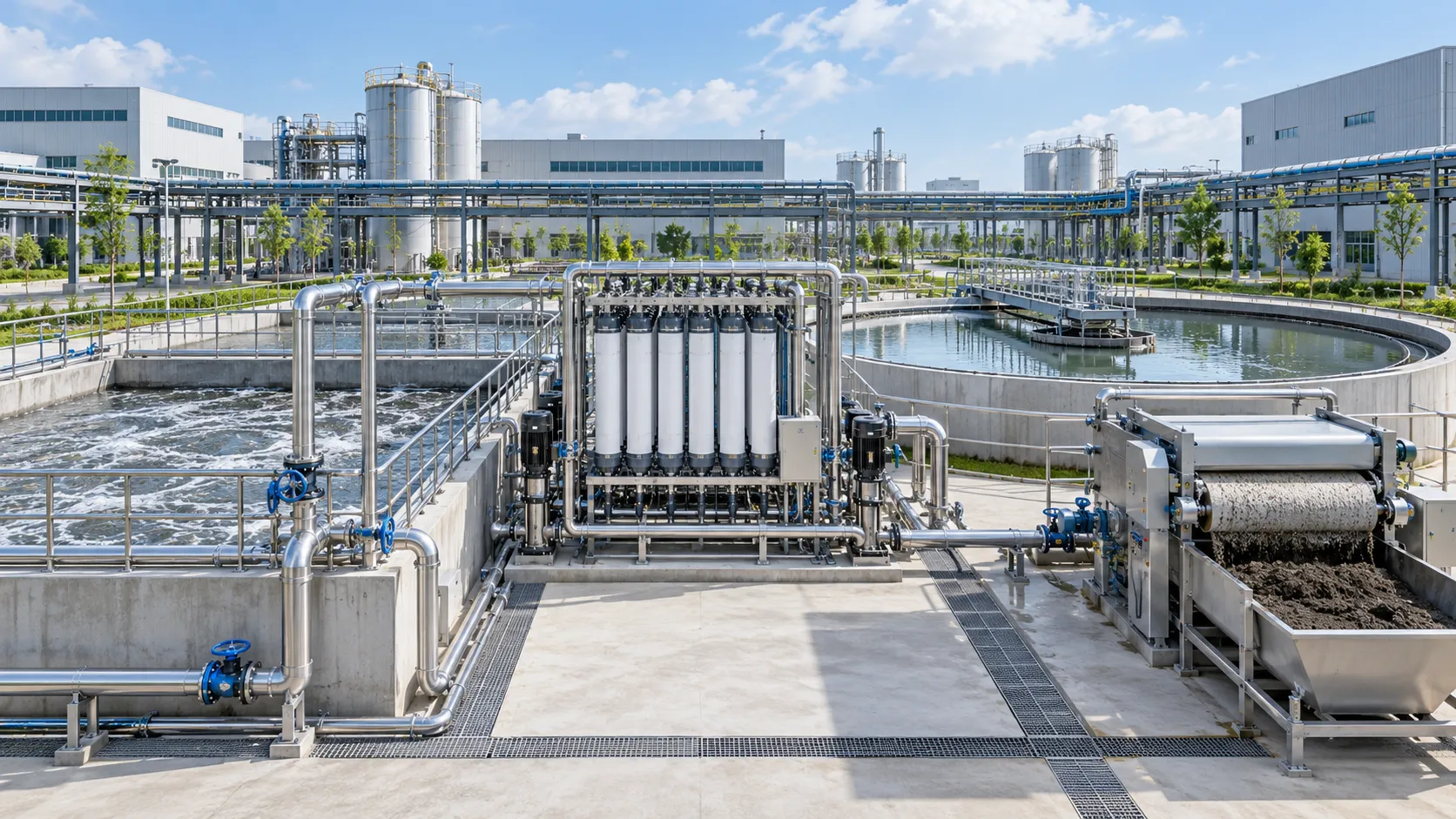
What Drives the Cost of Wastewater System Upgrades in Industrial Parks?
Costs of wastewater system upgrades in industrial parks: uncover key drivers from influent variability and civil works to sludge, energy, compliance, and lifecycle risk.